 Isabella Mueller Baroness of Stainton le Vale
In the shadowy corners of Sigmaringen, a ghostly legend has lingered for generations—a story shrouded in fear and whispers, known as the curse of the “Witch of Sigmaringen.” This eerie tale dates back to the 17th century, a time when witch hunts swept across Europe in a frenzy of paranoia and superstition. Although the details are sparse and entangled in myth, the story remains a chilling reminder of the dark chapters in Sigmaringen’s history.
The story begins with a woman—her name lost to time—who is accused of witchcraft in a town sinking into hysteria. She was not charged with a specific crime, but rather because she was feared, misunderstood, and different. The townspeople, driven by fear and the fiery sermons of zealous inquisitors, demanded justice in the most brutal form imaginable: execution by fire. They gathered in the town square, their faces flickering in the glow of the torches and the firewood that was preparing to blaze into an inferno.
As the flames flared around her, the condemned woman uttered a curse on Sigmaringen with her last breath. She swore that her restless spirit would haunt the streets until her name was cleared and her innocence recognized. From that day on, strange events plagued the town. Candle flames flickered for no reason, livestock fell mysteriously ill, and the church bell sometimes rang of its own accord under a moonless sky.
But was this story born of fear and panic? Historians argue that while there is no concrete evidence for such a specific event, it symbolizes the real terror that gripped communities during the witch trials. Records from this period suggest that many women—and sometimes men—were accused on flimsy grounds, often as a result of personal acts of revenge or a societal scapegoating mentality.
The story takes on another layer with the specter of a mysterious book allegedly linked to the accused “witch.” Found decades later under the floorboards of an old house and containing symbols and spells, this grimoire fueled further speculation about her supernatural abilities. Locals whisper that those who dared to open its pages were haunted by visions and endless nightmares. This discovery only reinforced the town’s fascination with the legend and its lingering fear.
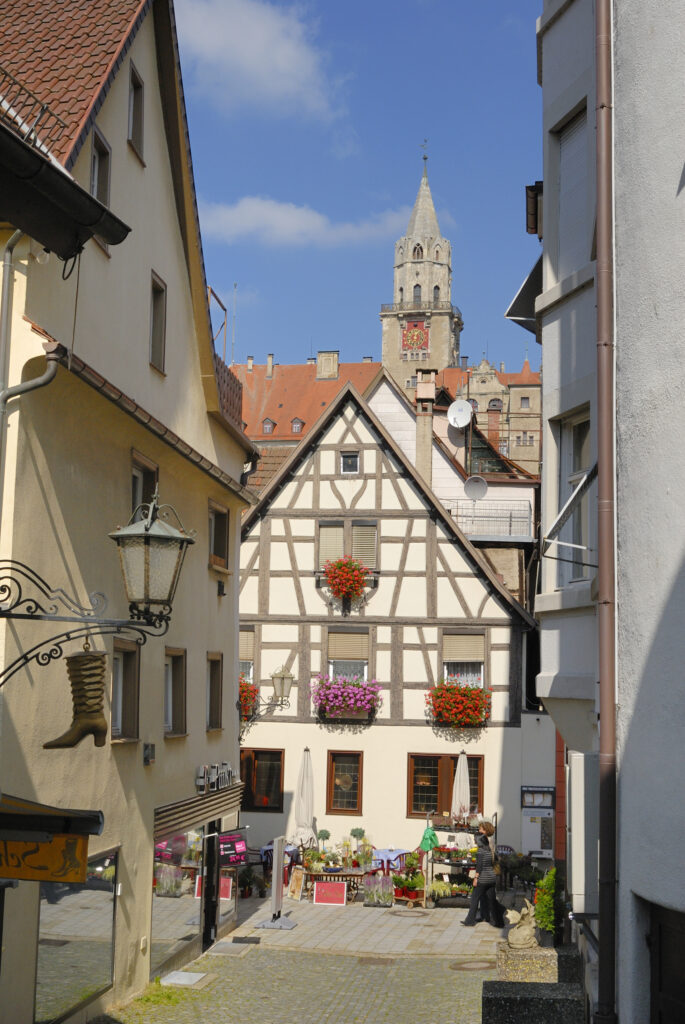
In recent years, paranormal enthusiasts and ghost hunters have flocked to Sigmaringen, eager to communicate with the alleged spirit. Reports of cold spots in certain buildings, photographic anomalies, and unsettling EVPs (Electronic Voice Phenomena) provide more open questions than definitive answers. A particular hotspot for this activity is the location where the witch allegedly met her fiery demise, now a bustling corner café where patrons occasionally report feeling an inexplicable chill even in the warm summer months.
Despite the skepticism of rational-minded people, the legend continues to fascinate tourists and locals alike. Annual ghost tours capitalize on this eerie appeal, winding through dimly lit cobblestone streets while guides recount stories that send chills down the spines of even the most skeptical. For some residents, however, this is more than just folklore—it is a plea for justice. The Sigmaringen Historical Society, made up of local historians and descendants of those involved in the trials, continues to advocate for a formal historical review of the witch trial records in the hope of correcting the past.
In their view, rehabilitation is not about rewriting history, but about acknowledging its injustices. This serves as a powerful reminder of the dangers of mass hysteria and unchecked power. As communities around the world work to correct historical injustices, from witch trials to other regimes of persecution, Sigmaringen’s efforts reflect a broader movement to acknowledge and learn from the mistakes of our ancestors.
Nevertheless, the question remains: does an ancient spirit truly wander Sigmaringen, waiting for its rehabilitation? Or is the witch’s curse nothing more than the echo of a collective guilt passed down through generations?
While the answers remain elusive, the legend lives on, its macabre charm attracting the curious who wish to follow in the footsteps of the past. Every shadow cast by the town’s Gothic architecture seems to hold a secret, every rustle of leaves a whispered spell. Sigmaringen may never find the ultimate truth behind its most famous ghost story, but the witch, her story, and her curse continue to fascinate and haunt people, ensuring that her presence is felt—even if she remains invisible. Thus, the story of the witch lives on within the stone walls and under the clear night sky of Sigmaringen—a terrifying reminder of what once was and a testament to the enduring power of legend over logic. Whether fact or fiction, the curse of the “Witch of Sigmaringen” remains, an indelible mark on the heart and history of the city.