 Isabella Mueller Baroness of Stainton le Vale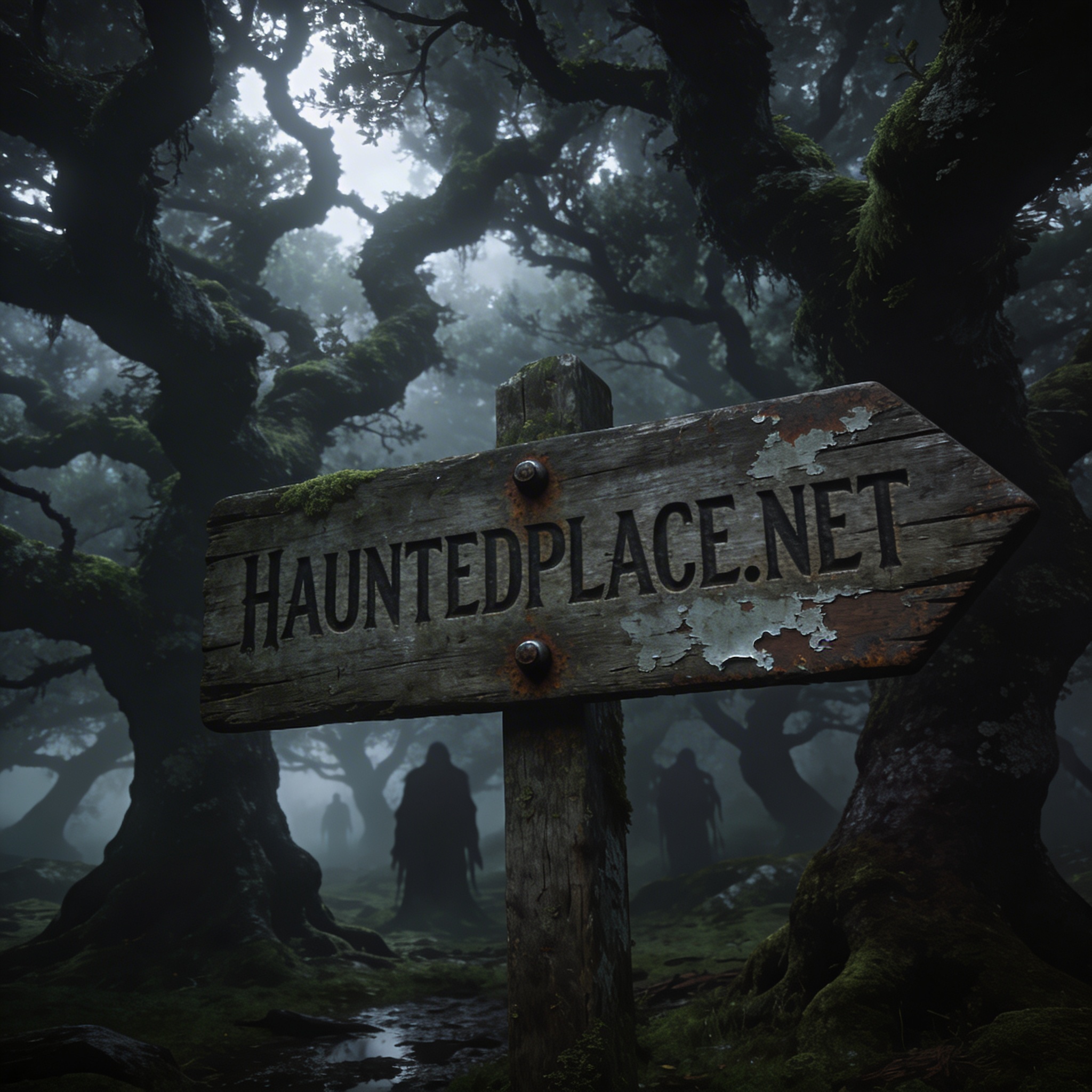
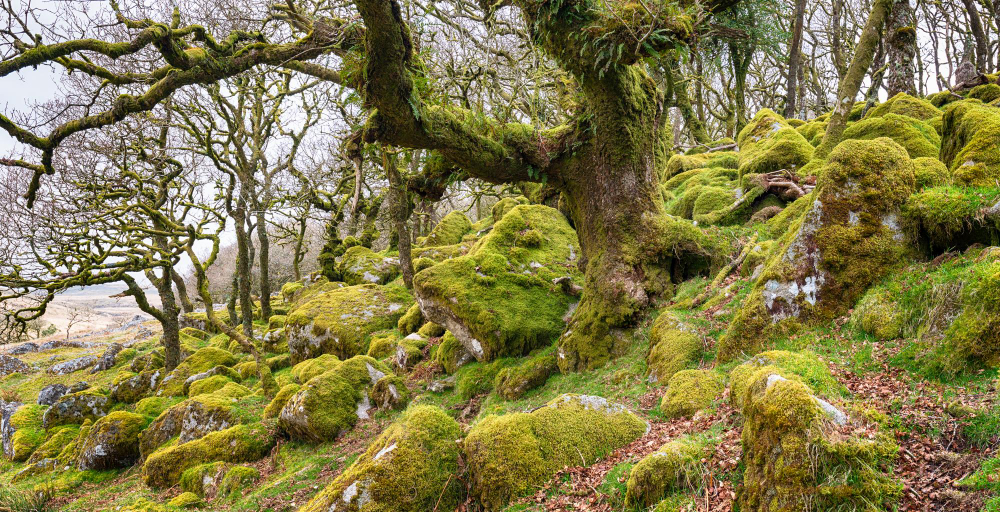
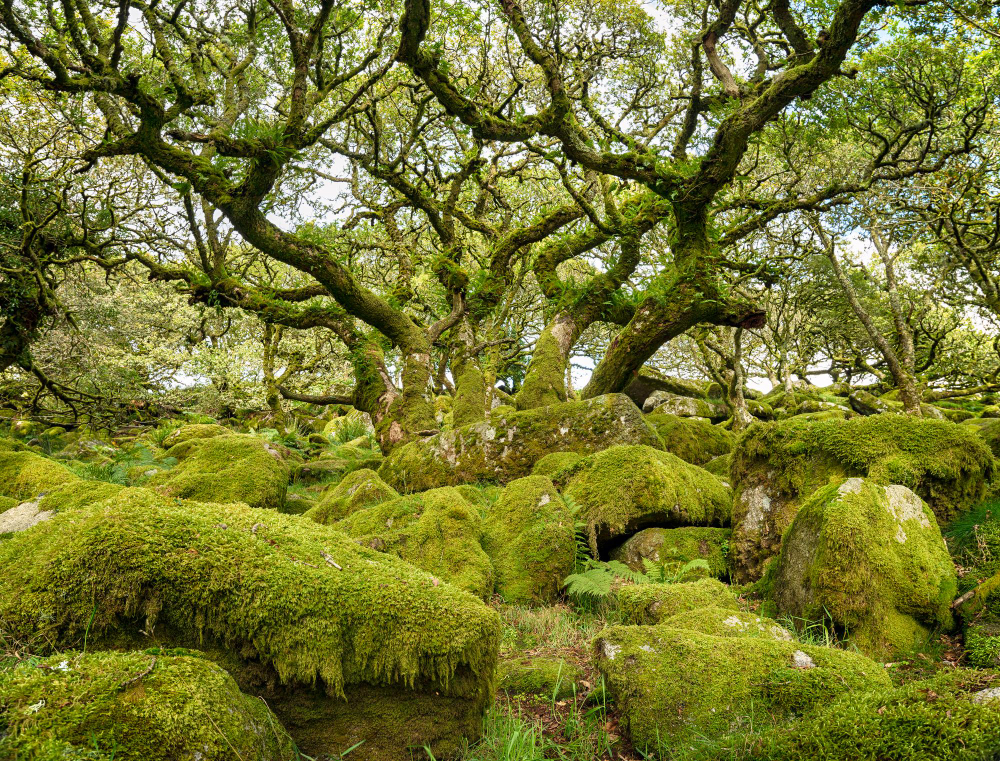
In the heart of Dartmoor, England, lies a place shrouded in eerie mystique and ancient whispers—a spooky forest known as Wistman’s Wood. This ancient forest, with its gnarled, moss-covered trees, presents itself not only as a natural wonder but as a eerie spectacle that invites ghost stories. Under the moonlit sky, these twisted oaks seem to transform into petrified beings, standing silent and menacing in the darkness.
Wistman’s Wood is no ordinary forest. It is a relic from times long past, one of three high-altitude oak forests in Dartmoor believed to have existed since 7000 BC. Yet its seemingly peaceful setting is complemented by an unsettling aura that has captured the imagination of many. Legends of lurking evil and supernatural phenomena persist in folklore, portraying Wistman’s Wood as a realm inhabited by malevolent forces.
The forest is said to be home to ghostly hounds, known as the “Yeth Hounds”—spooky creatures that supposedly roam the moors at night in search of lost souls. Their blood-curdling howls echo through the forest and reverberate in the thick fog that blankets the landscape. It is believed that these ghostly hounds are headless and serve as demonic hunters for the Devil himself. It is easy to understand why the presence of such beings instills fear in those who dare to wander the lonely paths after dark.
Adding to this lore, local legends claim that druids once used this forest as a sacred grove, performing their rituals amidst the towering trees and rocky Tor hills. These ancient inhabitants are said to have left behind dark energies that still influence the area to this day. Some speculate that the stone formations scattered throughout the forest served as sites for Druidic ceremonies or were used for offerings. This interplay of history and mystery fuels the forest’s eerie lore.
There are also tales of a mischievous spirit named “Wish” who is said to dwell in Wistman’s Wood. Wish is described as a mischievous yet malevolent entity capable of manipulating shadows to deceive and disorient visitors. Those who encounter Wish report feelings of confusion and fear, finding themselves inexplicably lost or drawn into dangerous parts of the forest. It is believed that the spirit’s presence is strongest at dusk, when its pranks are shrouded in darkness. Aside from these ghostly inhabitants, the very appearance of Wistman’s Wood itself contributes to its supernatural reputation.
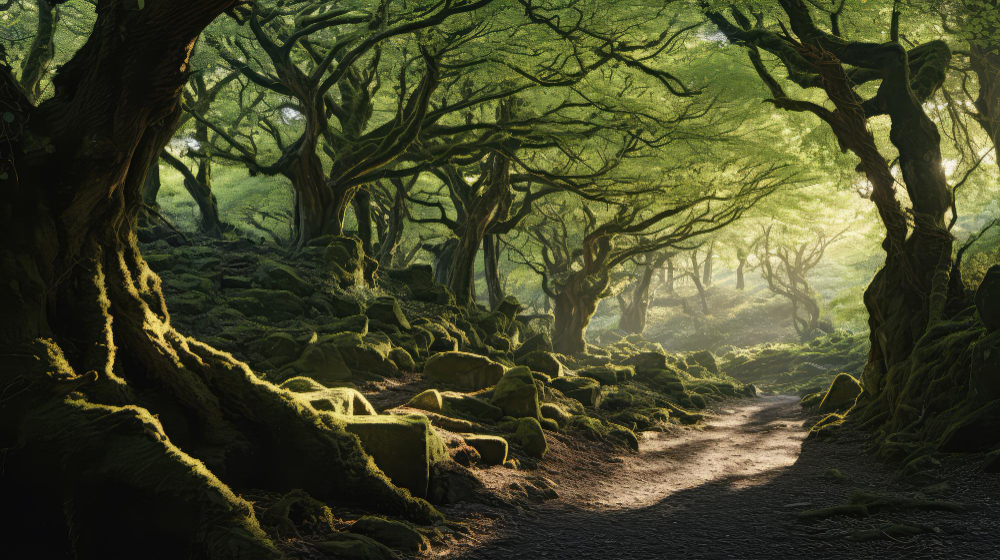
The gnarled branches of its ancient oaks twist into eerie formations, resembling skeletal arms protruding from the earth. Thick carpets of moss hang from the branches, amplifying the sense of the supernatural. The forest floor is a tangle of roots and rocks, creating an almost labyrinthine landscape that traps those who venture too deep. This living embodiment of chaos complements the mystical tales and makes the forest a breeding ground for fear and imagination.
Amid reports of supernatural beings, some have pointed out that the forest’s unique ecology contributes to its unsettling atmosphere. Fungus-infested tree trunks release spores that can induce visual hallucinations, which may further intensify the unsettling experiences reported by visitors. This scientific perspective offers insights into the origin of some ghostly apparitions, though the mysteries of Wistman’s Wood extend far beyond the tangible.
Interestingly, despite its macabre associations, Wistman’s Wood has also attracted researchers interested in biodiversity. The forest’s microclimate fosters a unique ecosystem where rare species of moss and lichen thrive. This blend of life and myth lends additional depth to the forest’s history, contrasting the scientific appreciation of its biodiversity with the eerie folklore that surrounds it.
Rather than relying on eyewitness accounts, the terror of Wistman’s Wood is woven through generations of storytelling, fueled by an inherent fear of the unknown. Its very existence challenges the boundary between reality and imagination, inviting visitors to confront their deepest fears. Those who traverse its ancient paths are often overcome by an omnipresent sense of dread, as if the forest itself were a living entity, watching and waiting.
Although historical records provide little evidence of actual encounters with demons, the overwhelming shadow of the legend continues to cast its veil over Wistman’s Wood. Whether these stories contain a grain of truth or are merely products of human creativity, the forest remains an enigmatic reminder of our deep need to explore and explain the mysterious.
Ultimately, Wistman’s Wood stands as a testament to the powerful interplay between nature and folklore, where the tangible and the intangible are intertwined in a symbiotic dance. Its haunting allure draws the curious and the brave to experience its eerie embrace. As day turns to night and the shadows lengthen, the whispers of the forest grow louder—a manifesto of fear that sets our imaginations racing.
Should you ever find yourself in the heart of Dartmoor, venture into Wistman’s Wood, but proceed with caution. Beyond the embrace of its twisted branches and gloomy clearings, you may find that the boundary between reality and something entirely different blurs—a world where demons laugh and shadows play, where the ancient forest breathes the malice of bygone ages.