 Isabella Mueller Baroness of Stainton le Vale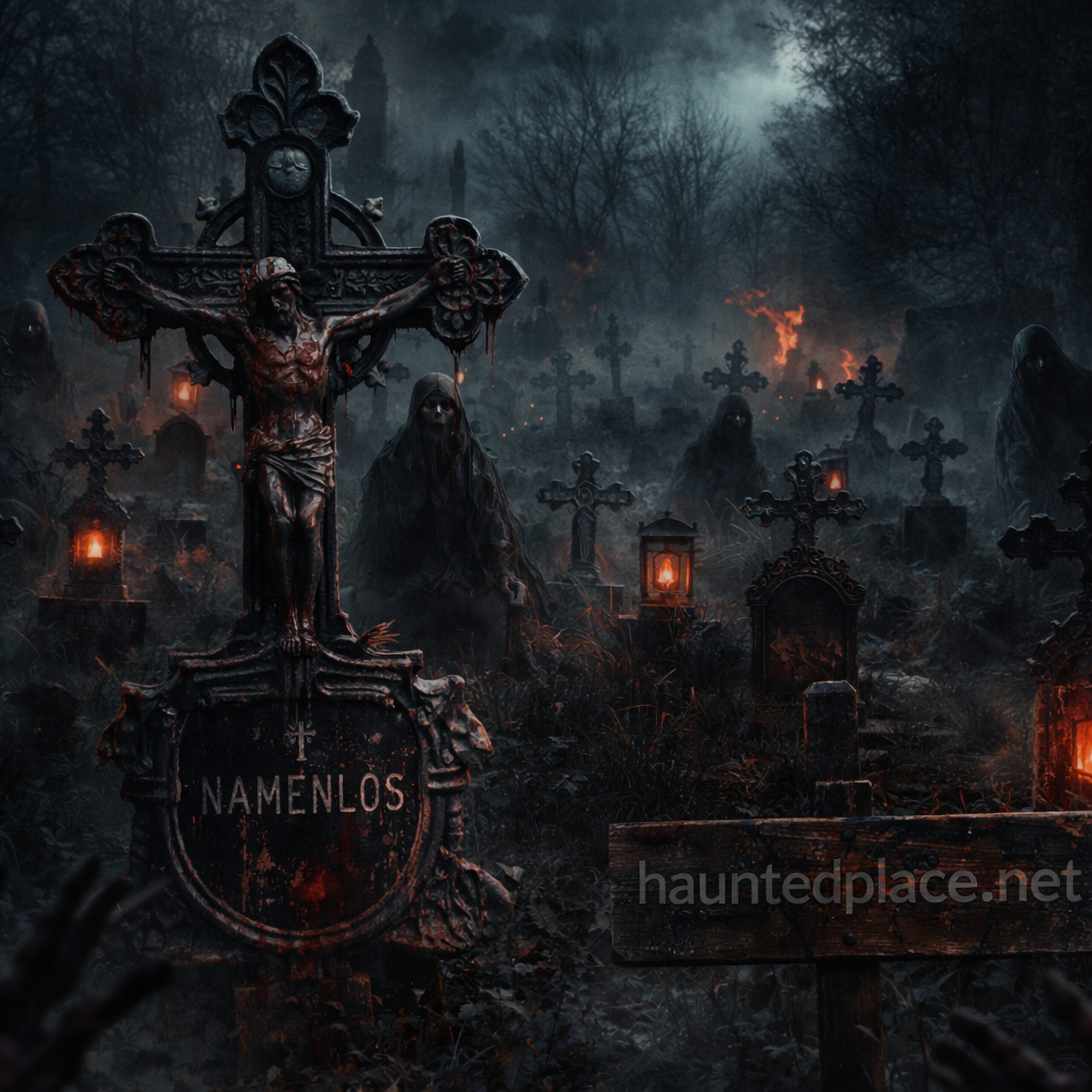
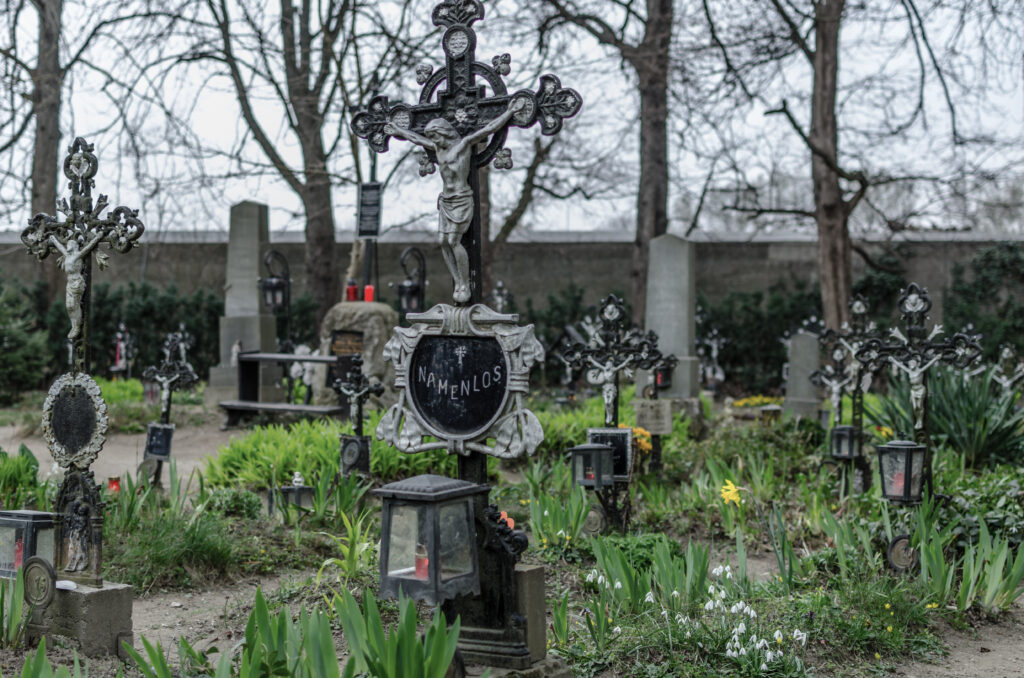
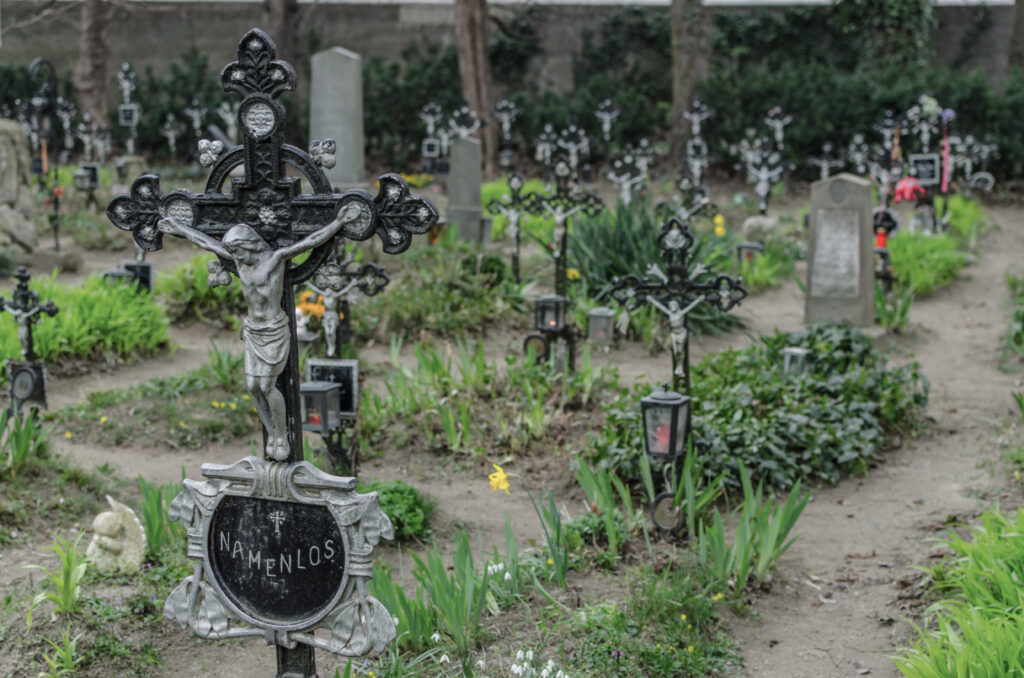
In the dark corners of Vienna, hidden from the busy streets and bright lights of the city, lies a place full of fear and secrets. The “Cemetery of the Nameless” is not just a burial ground—it is a refuge for the uncanny, a reflection of humanity’s deepest fears and darkest legends.
The gateway to the unknown – When you enter this cemetery, even the birds fall silent. A heavy iron gate marks the entrance, decorated with rusty ornaments that stretch across the bars like frozen tears. Behind it lies a realm of death and secrets, where countless nameless graves lie silent and lost among ancient giant trees. It is said that the air here is denser, almost tangible, permeated by the whispers of forgotten voices and past lives.
The Birth of a Legend – The “Cemetery of the Nameless” was created out of necessity. In the 19th century, the bodies washed ashore by the Danube were buried here. Most of these dead remained unidentified, victims of floods and storms, robbed of their identities and without their families ever knowing their fate. The legends surrounding this place tell of restless spirits seeking revenge and redemption, repeating their cycle in endless loops of despair.
Whispered stories and ghostly nights – There are numerous reports of paranormal activity in this cemetery. Visitors report mysterious shadows at dusk, eerie noises, and the persistent feeling of being watched. An old cemetery keeper once told of a night when he heard soft singing, like a chorus of desperate voices rising from the depths of the earth. Other brave souls who dared to enter the cemetery after sunset had similarly spooky experiences. One of the most famous ghost stories is about a woman in white who wanders among the graves on foggy evenings. No one knows exactly who she is or why she lingers there, but the sight of her sends a chill down the spine of anyone who sees her.
Hidden symbols and secrets – Many of the gravestones in the “Cemetery of the Nameless” bear no names, but symbols that conceal deeper meanings. There is an old rumor that some of these symbols are secret signposts to a hidden treasure or an even greater truth related to the history of the cemetery. It is believed that some of the symbols originate from occult practices that were widespread in the 19th century. According to experts, these symbols could be clues to rituals that were used to summon or even torment the souls of the dead. However, their exact meaning remains a mystery that few can decipher.
Evil lurks in the darkness – A particularly dark legend surrounds a man named Johann. He was a cemetery guard at the beginning of the 20th century and was suspected of performing satanic rituals. Several sources report strange lights and dark chants coming from his small hut on the edge of the cemetery. One night, Johann disappeared without a trace, and although no evidence was ever found, many believe he fell victim to his own demonic machinations. Some believe that Johann’s spirit now watches over the cemetery, malicious and ready to punish anyone who dares to enter his former realm. This legend has led to the “Cemetery of the Nameless” being considered a cursed place—a place where evil lurks, just waiting to unleash its power once again.
The case of the young tourists – A modern horror story occurred a few years ago when a group of young tourists visited the cemetery on a full moon night. They wanted to experience the adventure of a lifetime and visit Vienna’s legendary haunted sites. But what began as a harmless outing turned into a nightmarish horror tour. The young people later reported that they were suddenly overcome by an icy cold that penetrated even their thickest jackets. A sweet, almost rotten smell hung in the air, and then they heard it—a whisper that felt like a thousand tiny knives. One of the teenagers, completely terrified, claimed to have seen a dark figure coming straight towards them. In a panic, they fled the cemetery, traumatized and convinced that the “Cemetery of the Nameless” was indeed a gateway to hell.
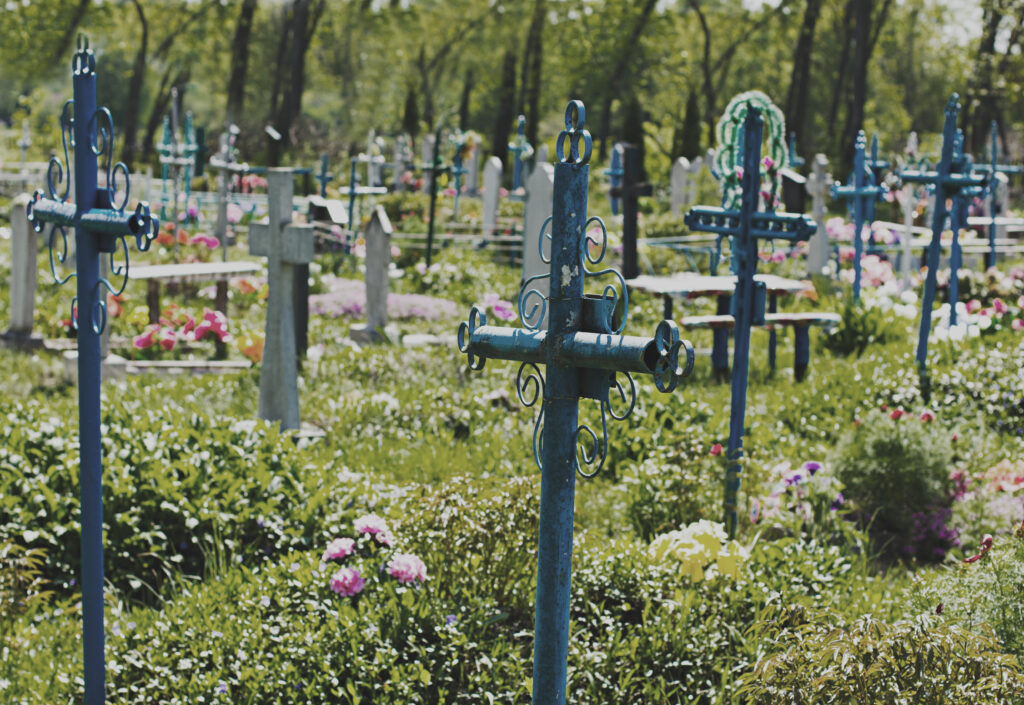
A memorial for the forgotten – Despite all these horror stories, the “Cemetery of the Nameless” remains an important part of Vienna’s history. It is a memorial to those who have been forgotten, whose lives ended tragically and who met their final fate in the depths of the Danube. Each cross, each inscription is a silent witness to times past, a symbol of humanity and the fragility of life.
For those who have the courage to visit this place, the “Cemetery of the Nameless” remains a haunting reminder of how thin the line between life and death, between this world and the next, really is. Perhaps it is precisely these stories that remind us that forgetting is not the end—but only the beginning of a new, ghostly chapter in the eternal narrative of humanity.