 Isabella Mueller Baroness of Stainton le Vale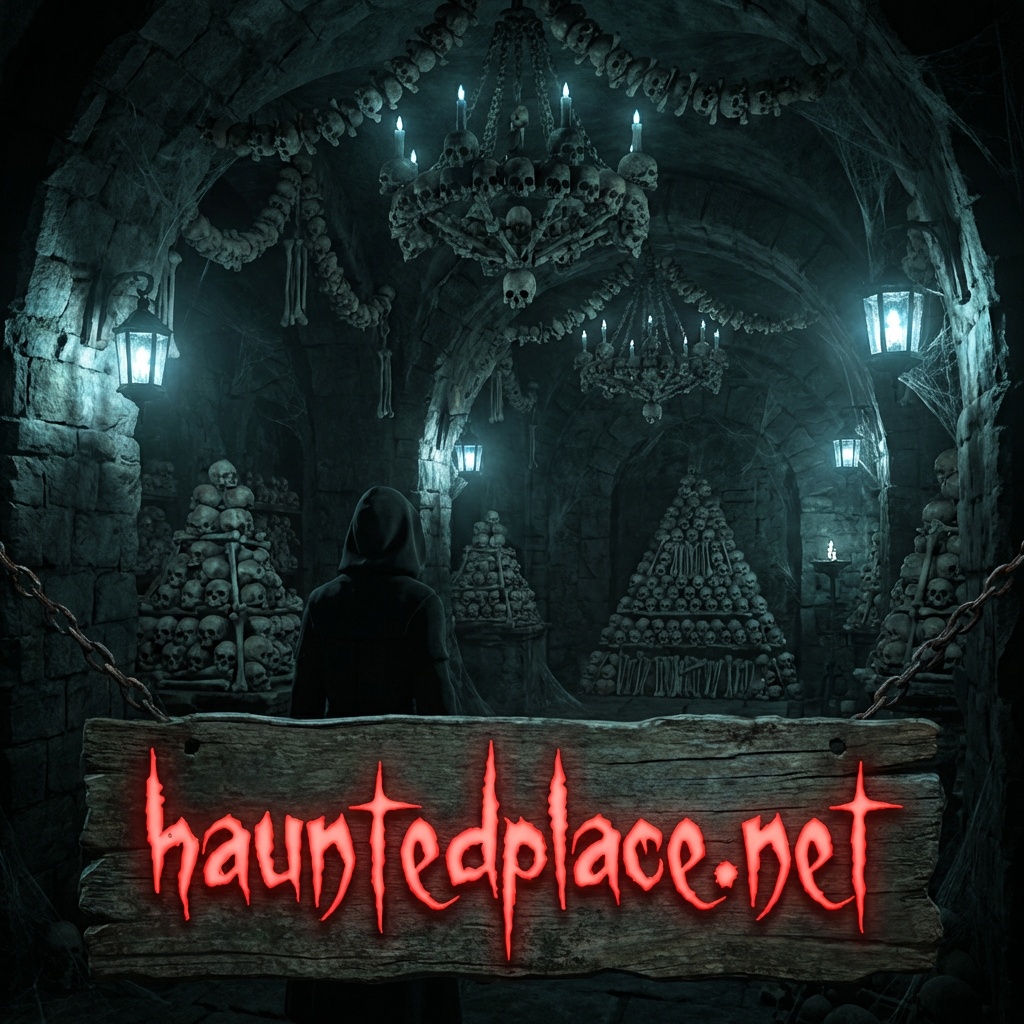
In the quiet town of Kutná Hora in the Czech Republic, there is a monument to mortality that is as eerie as it is artistic. The Sedlec Ossuary, often referred to as the “Bone Church,” is a place that pierces the veil of everyday life and, with its macabre beauty, serves as a somber memento mori.
Origins of darkness – The eerie story begins in 1278, when an abbot named Henry was sent to the Holy Land by the King of Bohemia. Upon his return, Henry brought back a small amount of soil from Golgotha, the place where Christ was crucified. He scattered this holy soil over the abbey’s cemetery, making it a coveted resting place for the dead. It was inevitable that the cemetery would expand during the plague in the 14th century and later during the Hussite Wars in the early 15th century. By this time, there were thousands of corpses there.
The bone manager – Over the centuries, the cemetery became overcrowded, and in 1511, a half-blind monk was tasked with exhuming skeletons to make room for new burials. These bones piled up in the chapel of the ossuary and posed a pressing problem: what should be done with the remains of some 40,000 souls? This is where František Rint came in, a woodcarver employed by the Schwarzenberg family in 1870. His grim task was to arrange the bones in a way that was both respectful and awe-inspiring. The result is breathtaking in its morbidity.
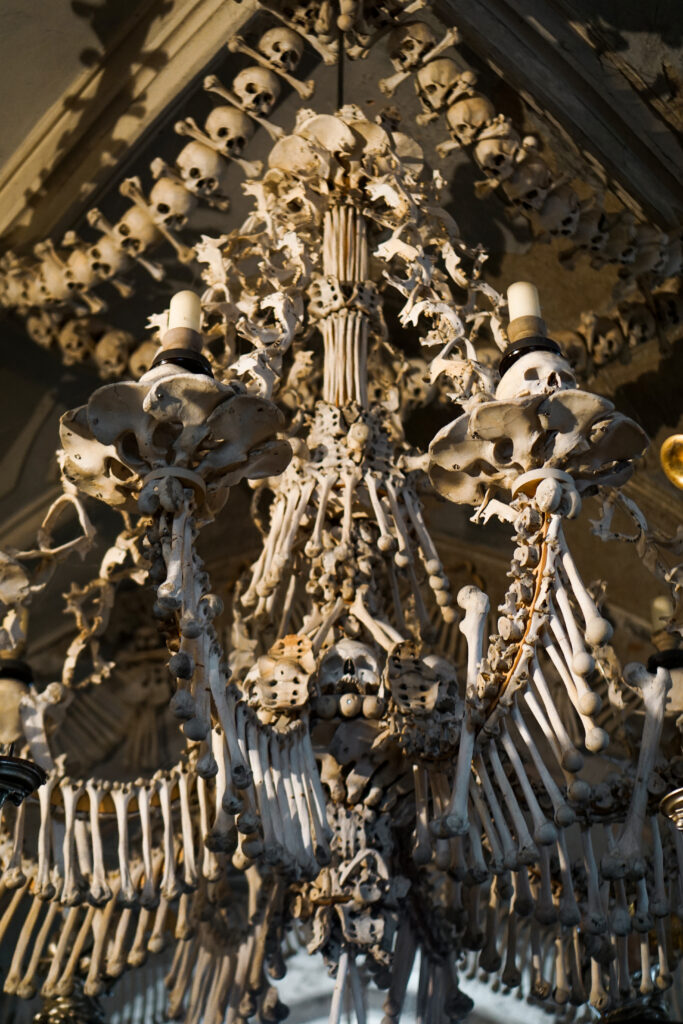
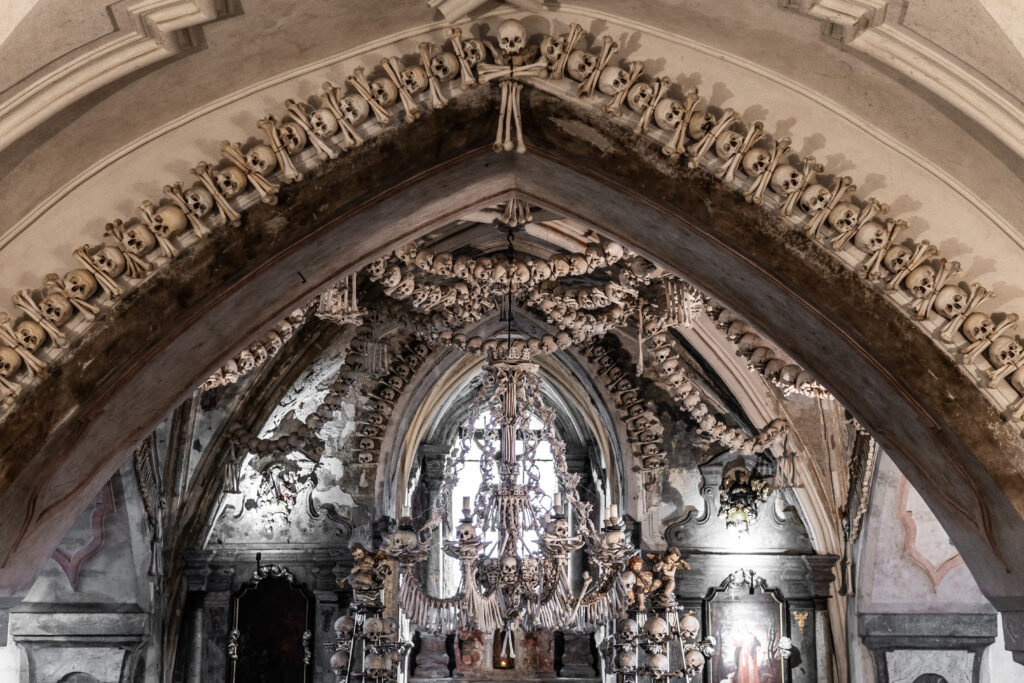
Art amid ashes—Rint’s work in the Sedlec Ossuary goes beyond mere decoration; it is a deliberate meditation on mortality. The centerpiece is a magnificent chandelier made from nearly every bone in the human body, hanging menacingly from the ceiling. Around it hang garlands of skulls, covering the arches like somber tapestries. The Schwarzenberg family crest, made entirely of bone, features intricate designs, including a raven pecking at the eye socket of a severed head – a haunting symbol of the inevitable decay that awaits us all. The walls of the ossuary are lined with skulls forming pyramids, while thigh bones and shinbones create patterns on the ceilings. Every corner of the chapel is a constant reminder of the relentless grip of death, provoking thoughts that are both disturbing and profound.
Whispers from the beyond – The atmosphere in the bone church is palpably eerie. Some visitors claim to hear soft whispers or feel a strange presence, as if the spirits of those whose bones adorn the chapel still linger here. There are numerous legends of ghostly apparitions floating near the chandelier, and stories persist of footsteps echoing in the crypt after dark, even though there is not a living soul to be found. The unusual artistry of the ossuary adds to its spooky appeal and has inspired numerous horror stories and films, all drawn to the palpable eerie atmosphere of the chapel. It serves as the perfect backdrop for tales of horror and the supernatural, offering a tangible connection to the afterlife.
A broader perspective – Further research into ossuaries around the world reveals that Sedlec is not alone in its macabre art. Similar practices in other parts of Europe, such as the Capuchin Crypt in Rome and the Catacombs of Paris, demonstrate a widespread historical desire to engage with death in a tangible way. However, none of these achieve the eerie grandeur of the Sedlec Ossuary. In modern times, the ossuary is more a place of contemplation and curiosity than fear. Visitors from all over the world flock to see its unsettling beauty with their own eyes. Yet despite the crowds of tourists, the chapel retains an aura of solemnity. Photos hardly do justice to the oppressive atmosphere one feels under the bone chandelier, surrounded by the silent echoes of thousands of souls.
Abode of evil – There are also darker legends that have been passed down among the locals for generations. These stories tell that the ossuary is a refuge for dark rituals and necromancy. On moonless nights, it is said, cultists secretly visit the chapel to perform mysterious ceremonies, summon spirits, and gain power over life and death. In these tales, the church is attributed a role as a conduit for evil—an interface where the mortal world comes into contact with dark, unfathomable powers. One legend tells of a particularly eerie incident during World War II, when Nazi officers stationed in the area allegedly conducted experiments and séances within the bone-filled walls of the chapel. What they sought or what they found remains a mystery, buried in secret documents and hushed whispers. Some say that the already ghostly atmosphere of the ossuary became even darker after their departure, as if the place had absorbed the malicious intentions left behind.
The camouflage of death – Amidst the terrifying backdrop, one cannot help but reflect on the fine line between respect for the dead and fascination with death itself. The eeriness of the Sedlec Ossuary lies not only in its physical appearance, but also in the existential questions it raises. Here lies a grotesque beauty, a shrine created from the essence of human life and death. Is it a place of reverence, a stark reminder of our mortality? Or does it serve a darker purpose, channeling energies we barely understand? Every visitor must grapple with these questions and leaves the ossuary with a deeper, albeit unsettling, appreciation for the delicate balance between life and death.
Timeless horror – Today, the Sedlec Ossuary stands as a testament to human creativity and existential fear. It is a place where art and horror merge seamlessly, leaving an indelible impression on the psyche of all who dare to enter. The Bone Church is not just a tourist attraction—it is a grim memento mori, a terrifying confrontation with our inevitable end.
As you leave its shadowy walls, you may hear the dark whispers of the ossuary following you, reminding you that no matter how far you travel, the specter of mortality is always near, ever-present at the edge of life’s fleeting light.
Whether you draw comfort or horror from this realization depends on the strength of your own resolve to face the ultimate unknown.