 Isabella Mueller Baroness of Stainton le Vale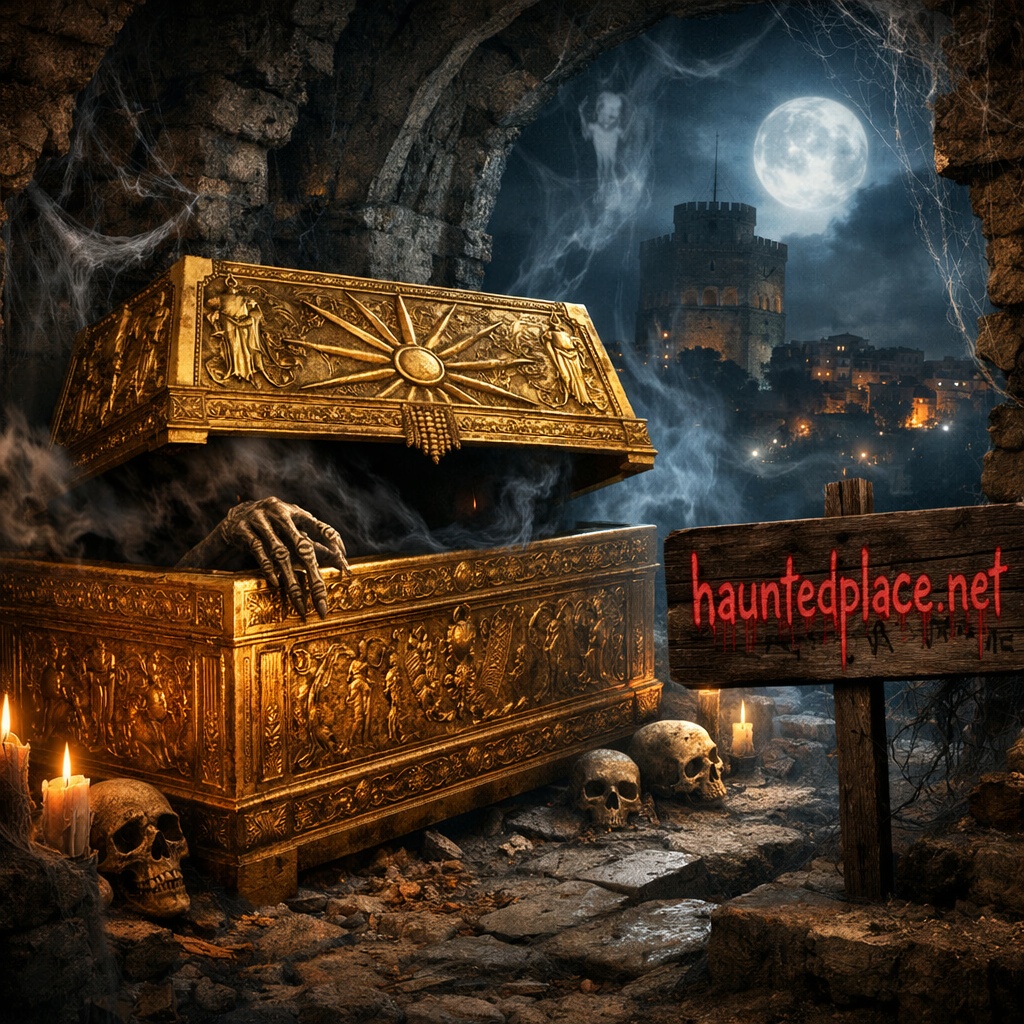
In 1977, a groundbreaking discovery in Vergina, a small town near Thessaloniki, made headlines around the world. Archaeologists unearthed a magnificent golden sarcophagus believed to contain the remains of Philip II, the legendary father of Alexander the Great. But the joy and excitement over this extraordinary discovery were soon overshadowed by an atmosphere of terror. Rumors of a deadly curse that would befall those who dared to open the coffin spread like wildfire.
The so-called “Macedonian Golden Coffin” was carefully transported to Thessaloniki, where it was to be examined more closely. But after its arrival, strange and eerie events began to shake the city. Workers involved in the recovery reported sleepless nights, tormented by nightmares in which they were chased through endless corridors by faceless shadows. Some of them suffered from inexplicable illnesses that even the most experienced doctors could not diagnose.
This curse seemed to haunt anyone who came into contact with the golden coffin. The archaeologist Dr. Nikos Papadakis, who led the excavations, was the first to be haunted by this invisible terror. In his diaries, which were later discovered, he wrote of a presence that pursued him in his dreams and gave him the feeling of being constantly watched. Dr. Papadakis’s health deteriorated rapidly, and he died just a few months later under mysterious circumstances.
The scientists who had opened the coffin were the next victims. Within weeks of the examination, they fell victim to a series of accidents and astonishing misfortunes. One of them, Maria Kalogeropoulou, fell to her death in a strange accident in her laboratory while attempting to catalog some of the precious artifacts. Another, Dimitrios Pavlos, suffered a heart attack, even though he had previously been in excellent health. Their colleagues watched these incidents with growing panic and began to take the curse seriously.
The media picked up the story, and soon all of Greece was gripped by fear. Newspaper articles and television broadcasts warned of the alleged curse and advised the public to stay away from anything associated with the “Macedonian gold coffin.”
Yet despite the growing concern, the Ministry of Culture decided to continue the exhibition, hoping to attract visitors from around the world. The Archaeological Museum of Thessaloniki set up a special room for the golden coffin, which was displayed under strict security measures. But the eerie events did not stop.
Museum guards reported ghostly apparitions and strange noises echoing through the empty halls at night. Visitors complained of sudden nausea and dizziness while viewing the coffin. Some even claimed to hear whispering voices urging them to leave the premises.
Fear reached its peak when a fire broke out in the museum and destroyed part of the exhibition. Fortunately, the golden coffin remained intact, but the fire only intensified the fear of the alleged curse.
There are many theories as to why this particular artifact is associated with such terrible events. Some believe that Philip II himself cast the curse to protect his resting place from looters. Others suspect that it is an ancient magical protective measure of the ancient Macedonians. Finally, there are those who believe the curse is nothing more than a series of unfortunate coincidences, amplified by the human tendency toward fear and sensationalism.
However you look at it, the “Macedonian Golden Coffin” remains a symbol of the inexplicable and the frightening. It reminds us that there are mysteries that run deeper than our science and rationality can comprehend. Thessaloniki will remain in the shadow of this curse for a long time to come, and the stories of these eerie events will likely continue to be passed down from generation to generation.
Thus, the historical discovery merges with the legend to form a dark chapter in the history of Greece, reminding us that some secrets are perhaps better left untouched.