 Isabella Mueller Baroness of Stainton le Vale
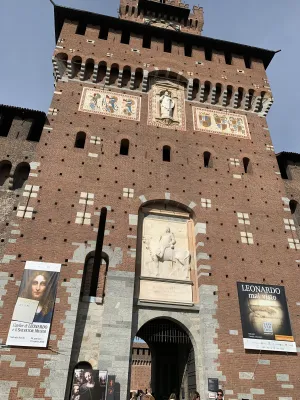
The Visconti family, who ruled Milan in the 13th, 14th, and 15th centuries, left behind a legacy shrouded in mystery and horror. Their coat of arms, depicting a snake with a dog’s head devouring a young boy, remained the heraldic symbol of Castello Sforza even after the Visconti lost power. This grotesque image still evokes a sense of foreboding, reminding us of the dark forces that once ruled the region.
Those familiar with the history of tarot will recognize the name Visconti-Sforza as one of the earliest medieval tarot card decks. It was created around 1450 and was probably commissioned for Francesco Sforza, who married the only daughter of Filippo Maria Visconti (Husband, 2016). Originally, the cards were used for a card game called Tarocchi, but it was not until the 19th century that tarot cards became associated with fortune telling. The archetypal figures of these medieval card decks can also be found in modern tarot cards, whose imagery is characterized by an atmosphere of mysticism and unrest.
One particular card from the Visconti-Sforza tarot remains particularly memorable to viewers: a skeletal figure on a golden background, staring directly at the viewer and holding a scythe. This eerie depiction of death reminds us of the transience of life and the ever-present danger of death.
But let’s delve deeper into the history of the Visconti family.
According to legend, a dragon once terrorized the city of Milan, preying on women and children. It is said that Uberto Visconti, a brave and determined leader, confronted this fearsome creature and defeated it, thereby securing his rule over the city (Abernethy, 2020). Another tale tells of Tarantasio, a dragon who lived in Lake Gerundo and emerged from its waters to devour livestock and infect the land with disease. Although Lake Gerundo no longer exists, the legend of Tarantasio lives on in Lombard folklore.
One fateful day, when Tarantasio emerged from the depths to claim his next victims, he suddenly found himself face to face with an impressive hero wielding a mighty sword. In an epic confrontation, the hero slew the dragon, ending its reign of terror. Some say this hero was Frederick Barbarossa, others claim it was Saint Christopher, and later accounts attribute the deed to a member of the Visconti family.
These stories of dragons and heroes are more than just legends; they reflect the deep fears and hopes of the people who witnessed the rise and fall of the Visconti. The dragons symbolize chaos and destruction, forces that the Visconti had supposedly tamed in order to assert their right to rule.
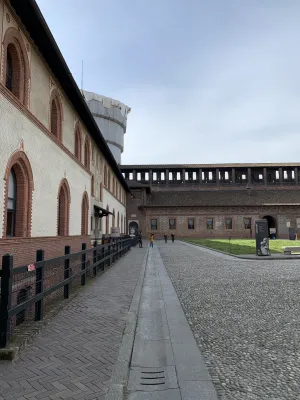
Aside from these mythical tales, the Visconti were known for their cunning and ruthlessness. They navigated the treacherous waters of Italian politics with an iron fist, often resorting to murder and intrigue to maintain their power. Their castle, Castello Sforza, bears witness to their enduring influence and the dark deeds they committed within its walls.
Over the centuries, the paranormal presence associated with the Visconti family seemed to fade into obscurity, only to reappear in disturbing ways. Visitors to Castello Sforza report ghostly apparitions and disembodied whispers echoing through the corridors. These ghostly encounters suggest that the spirits of the Viscontis—or perhaps their vengeful victims—still haunt the castle, unwilling and unable to find peace.
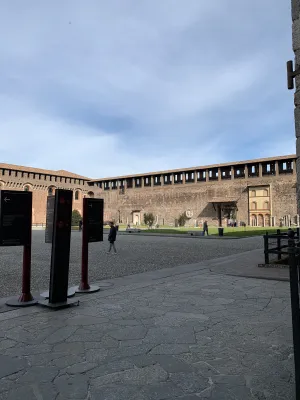
One particularly frightening story comes from a night watchman who was sworn to secrecy until his death. He recounted how, on a bitterly cold winter night, he saw a figure in tattered medieval armor standing in the moonlit courtyard. As he looked closer, he noticed that the figure’s eyes glowed unnaturally, and when it turned toward him, its face transformed into a grotesque mask of torment. Terrified, the guard fled and did not speak of this encounter for many years.
Today’s Milan is a bustling metropolis, but it cannot completely shake off the shadows of its past. Stories about the Visconti and their terrible deeds persist, casting a shadow over the city’s otherwise vibrant streets. Local historians and paranormal researchers continue to explore the darker sides of Milan’s history, uncovering evidence that suggests the malice of the Visconti may have penetrated the soul of the city.
For example, an old manuscript discovered in the archives of a Milan library recounts the ritual practices at the Visconti court. It describes how they summoned spirits and dark beings, possibly to secure their power or to take revenge on their enemies. Such practices could explain the ongoing ghostly activity and general sense of unease that pervades places associated with the Visconti.
In addition, recent archaeological excavations near the long-vanished Lake Gerundo have uncovered ancient artifacts bearing symbols that match those found in medieval texts on demonology. These findings support the theory that the Visconti’s legendary conquest of the dragon involved dark forces beyond human comprehension.
In summary, the legacy of the Visconti family is a tapestry of power, fear, and the supernatural. Their rise to power in medieval Milan is not only a historical fact, but a saga full of legends about dragons, heroes, and occult practices. Even though time has erased many details of their reign, the ghostly echo of their malevolent presence continues to manifest itself in the stories, sightings, and eerie feelings that persist to this day. Whether through the ghostly hauntings of Castello Sforza or the eerie legends that live on in Lombard folklore, the evil embodied by the Visconti remains a dark stain on the annals of history, a grim reminder that some evils can never truly be defeated.