 Isabella Mueller Baroness of Stainton le Vale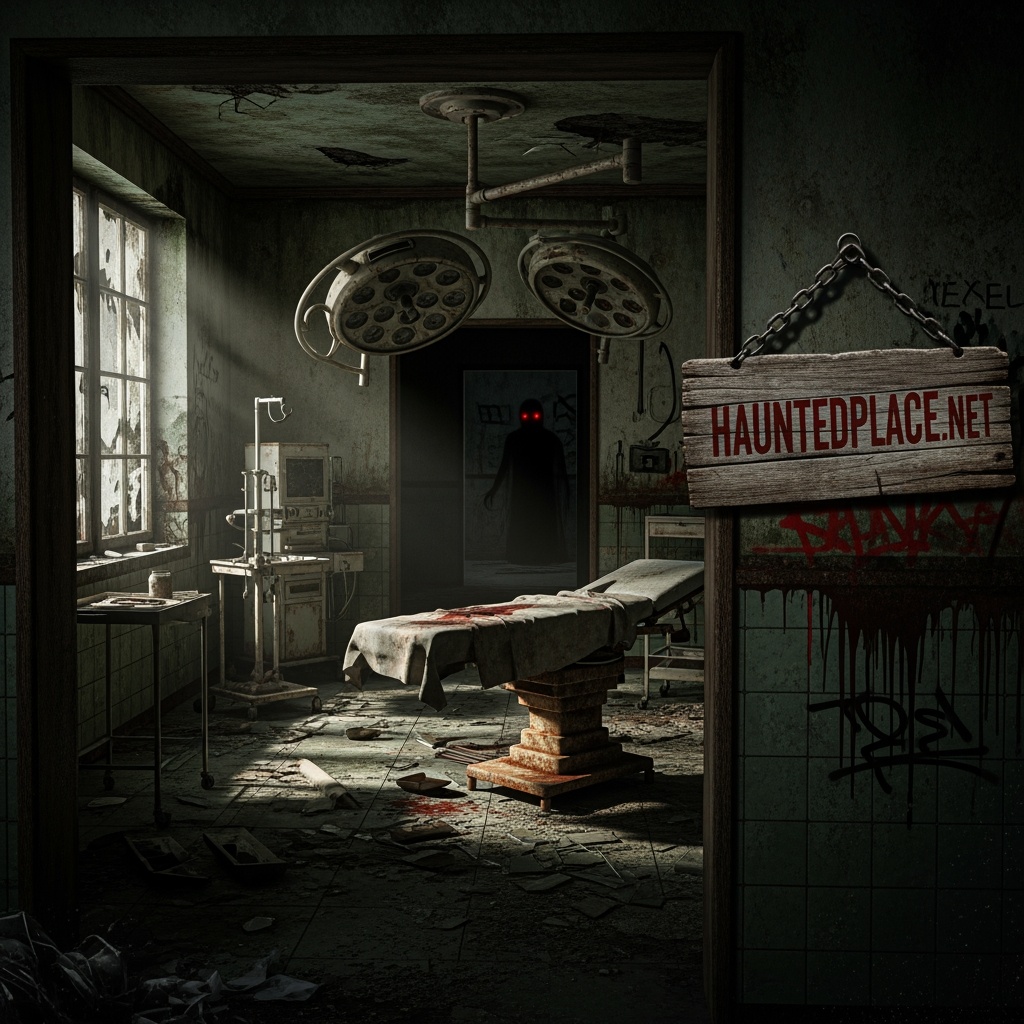
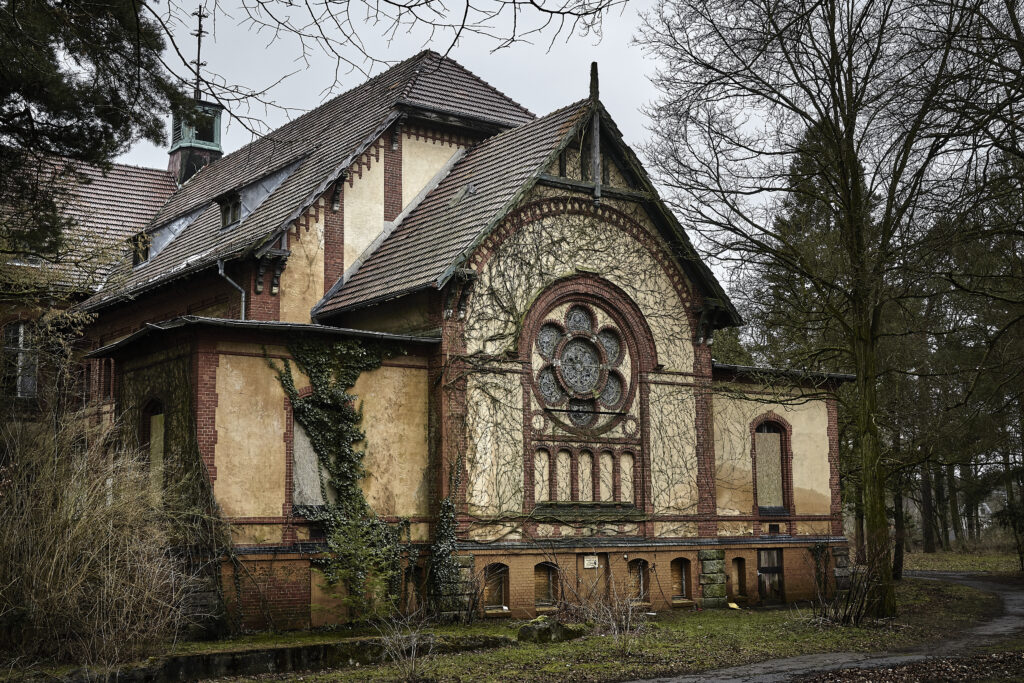
Nestled in the thick, foreboding forests of Brandenburg, the abandoned Beelitz-Heilstätten stands as a monument to time’s passage and humanity’s darkest moments. These dilapidated buildings, once grandiose structures of hope and healing, now serve as eerie reminders of the past, attracting those who dare to wander their haunted corridors.
Originally constructed in the late 19th century, Beelitz-Heilstätten served as a sanatorium for tuberculosis patients, offering respite and treatment amidst the pine-scented air. The sprawling complex featured state-of-the-art medical facilities and lush gardens, envisioned as a sanctuary for those suffering from the then-incurable disease. For a time, it succeeded in its mission, with patients finding solace in the serene surroundings.
However, the advent of two world wars transformed this place of healing into a stark reminder of humanity’s capacity for both resilience and destruction. During World War I, Beelitz-Heilstätten was converted into a military hospital, or lazarett, treating soldiers wounded in battle. Among its most infamous patients was Adolf Hitler, who recovered here after being injured during the Battle of the Somme. The already somber environment took on an even more ominous tone as tales of hauntings and spectral appearances began to surface.
As World War II raged across Europe, Beelitz-Heilstätten once again found itself repurposed as a lazarett, tending to the innumerable casualties of the conflict. The complex witnessed untold horrors and bloodshed, its walls absorbing the anguish and despair of countless souls. When the war finally ended, the Red Army occupied the site, further embedding a sense of unease within its confines.
Today, Beelitz-Heilstätten is known as one of Germany’s most famous “Lost Places.” The once-vibrant buildings now stand in a state of advanced decay, their facades cracked and crumbling, windows shattered, and vegetation reclaiming the land. This evocative scenery has become a hauntingly beautiful backdrop for urban explorers, photographers, and thrill-seekers alike, each drawn to the site’s macabre allure.
Wandering through the darkened corridors of Beelitz-Heilstätten, one cannot help but feel the oppressive weight of its history. The air is thick with an unsettling energy, and every creak of the floorboards, every whisper of the wind through broken windows, seems to carry the echoes of forgotten voices. Visitors report strange occurrences: cold spots that defy explanation, disembodied footsteps reverberating through empty halls, and fleeting shadows that vanish upon closer inspection.
Among the myriad ghost stories that envelop Beelitz-Heilstätten, a few stand out for their chilling detail. Some speak of a nurse, endlessly roaming the wards in search of her lost patients. Others tell of soldiers reliving their final moments, their apparitions flickering like old film reels caught in an endless loop of pain and confusion. The most unsettling tale, however, involves a shadowy figure said to haunt the surgical wing. Those who have encountered this malevolent presence describe an overwhelming sense of dread, as if the very essence of evil lingers just beyond sight.
The allure of Beelitz-Heilstätten lies not only in its spectral legends but also in the palpable sense of history that pervades every inch of the complex. Stepping through its doors is akin to entering another world, where time stands still, and the past refuses to remain silent. It is a place where the veil between the living and the dead is tantalizingly thin, and the boundary between reality and nightmare blurs.
Despite its eerie reputation, there is an undeniable beauty to Beelitz-Heilstätten’s decay. Nature has begun to reclaim the structures, with ivy creeping up walls and tree roots breaking through the floors. This juxtaposition of life and death, creation and destruction, adds a layer of poignancy to the site’s haunted legacy. It serves as a stark reminder of the relentless passage of time and the fragile nature of human existence.
Beelitz-Heilstätten has also found a place in popular culture, featuring in various films, music videos, and photo shoots. Its haunting ambiance makes it a perfect setting for horror movies and eerie tales, further cementing its status as a place where the boundaries between fiction and reality dissolve. Each depiction adds another layer to its mystique, perpetuating its reputation as a site of supernatural intrigue.
During guided tours, visitors learn about the site’s storied past, from its origins as a beacon of hope for tuberculosis patients to its transformation into a war hospital fraught with suffering and loss. These tours often include access to areas typically off-limits, such as the surgical wing and the underground tunnels, heightening the sense of adventure and trepidation.
In recent years, there have been efforts to preserve parts of Beelitz-Heilstätten and repurpose them for modern use. Some buildings have been renovated and converted into apartments, while others serve as event spaces. Yet, even amid these attempts at revitalization, the spirit of the past remains ever-present, a testament to the indelible mark left by history.
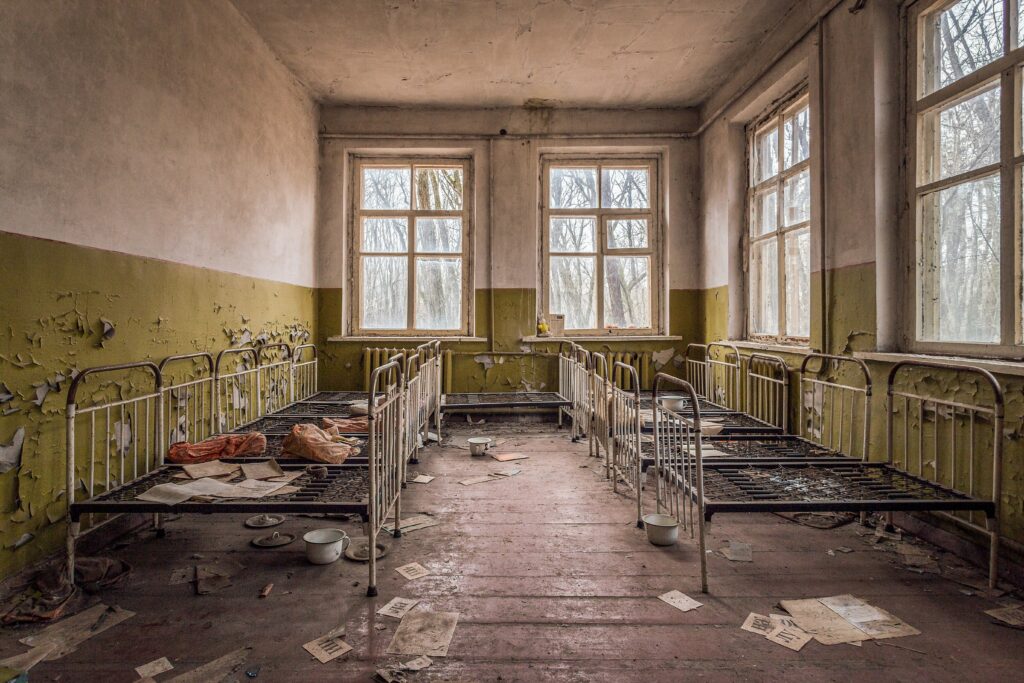
As daylight fades and darkness envelops Beelitz-Heilstätten, the atmosphere shifts from merely spooky to genuinely terrifying. The long-abandoned patient rooms, with their rusted beds and peeling paint, seem to take on a life of their own, and the silence becomes deafening. For those brave enough to visit after sundown, the experience is nothing short of otherworldly.
The haunting legacy of Beelitz-Heilstätten endures, compelling those who visit to confront the specters of history and the shadows of their own fears. It is a place where the past and present coexist in a delicate dance, and the stories whispered by the wind are as real as the ground beneath one’s feet. In this realm of ghosts and memories, one thing is certain: Beelitz-Heilstätten will forever remain a harrowing chapter in the annals of the uncanny.