 Isabella Mueller Baroness of Stainton le Vale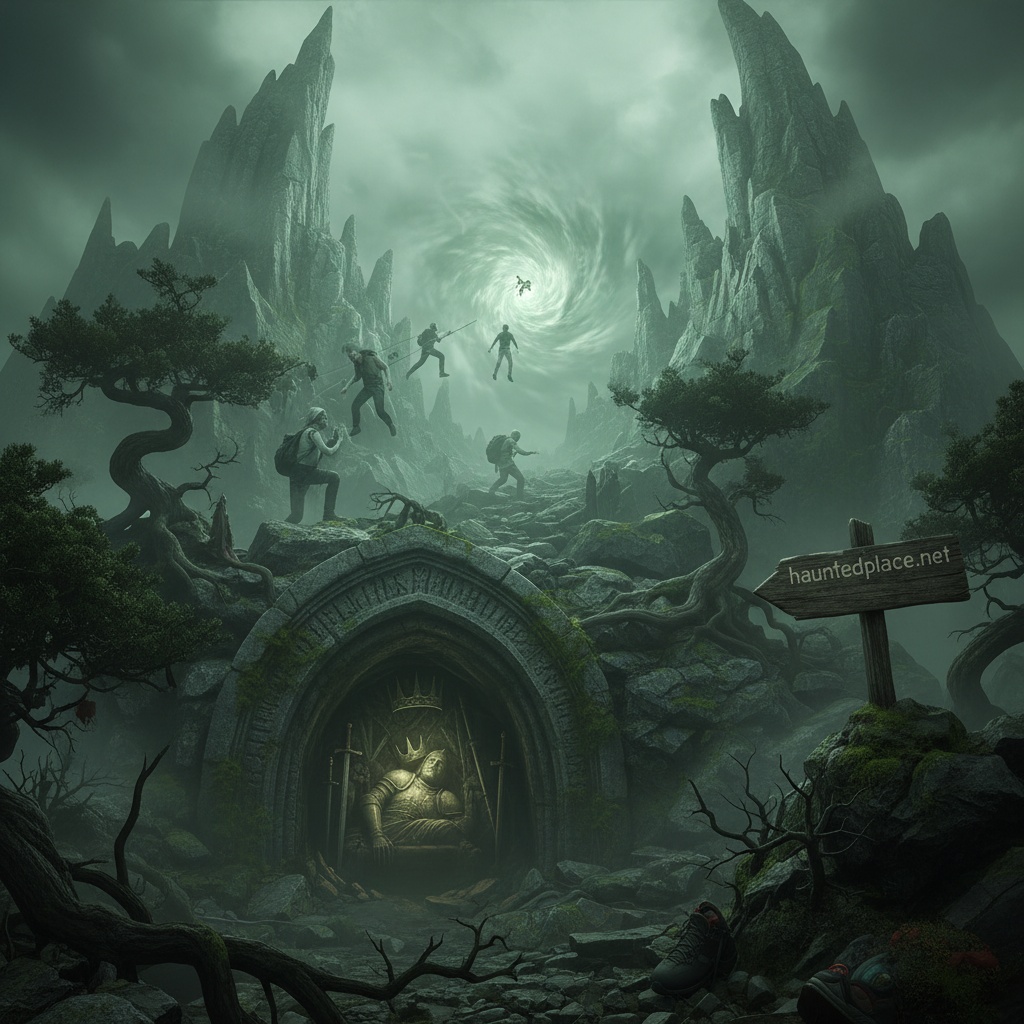
Straddling the German-Austrian border, the Untersberg is a mountain shrouded in mystery and legend. Known for its eerie and mysterious atmosphere, this natural wonder has long captured the imagination of locals and adventurers alike. At its heart is a disturbing legend that goes beyond mere folklore—a story of “time slits” in which unsuspecting hikers allegedly experience inexplicable losses of time or even sudden leaps in time. This frightening phenomenon, coupled with the mountain’s remoteness, makes the Untersberg one of the most terrifying places in Germany.
The mythical time anomalies. The “time loops” of the Untersberg are not just stories told by superstitious villagers, but for many a subject that evokes both fascination and fear. These anomalies are said to manifest themselves randomly, entangling hikers and climbers in a confusing web of temporal irregularities. People who have fallen into these “loops” report eerie sensations: a hike of a few minutes suddenly lasts for hours, or entire days fly by. Some stories tell of actual time travel, with people appearing in eras other than their own. In a frightening report from the early 20th century, a group of supposed researchers disappeared without a trace, only to reappear decades later with no memory of the intervening years. Their unchanged appearance and confused expressions suggested that they had been untouched by time – a macabre testimony to the strange power inherent in this mountain. Such incidents fuel the enduring fascination with the supernatural properties of the Untersberg, making it a notorious attraction for adventurers and paranormal investigators.
The sleeping monarch. According to legend, Emperor Charlemagne rests deep inside the Untersberg, in a mysterious chamber surrounded by stone walls. According to ancient tradition, the emperor did not die, but fell into an eternal sleep. Charlemagne, entrusted with the protection of his empire in its hour of greatest need, is said to be waiting for a heavenly signal to rise and restore order. The legend tells of an enchanted kingdom beneath the mountain, a place where time passes differently and which is guarded by mystical forces intent on preserving its secrets. This myth adds an extra layer of fascination to the already mysterious Untersberg. The idea that such an important historical figure rests within it connects history with the supernatural and adds to the mountain’s mysterious appeal. Although the story seems very fantastical, it is a powerful reminder of how thin the veil between legend and reality is, and reflects the mysterious time anomalies reported on the surface of the mountain.
Historical accounts and supernatural claims. Public sources reveal a wealth of anecdotes and documented experiences that reinforce the Untersberg’s eerie reputation. Notably, British occultist Aleister Crowley, known for his daring explorations of metaphysical realms, once performed rituals on the mountain in the early 20th century. His cryptic writings suggest that he considered the Untersberg to be a hub of powerful, otherworldly energies. Another notable figure, Adolf Hitler, was known to be fascinated by the legends of the Untersberg. His retreat, the Berghof, was built directly opposite the mountain, and there are numerous reports suggesting that he considered the mountain to be a source of esoteric powers. Hitler’s obsession with the occult and supernatural artifacts adds a dark, eerie note to the mountain’s mysterious reputation.
In addition, contemporary reports from hikers, cavers, and researchers continue to surface, further enriching the haunted tales surrounding the mountain. Strange noises, unexplained disappearances, and sudden flashes of light from the depths of the mountain contribute to a growing body of evidence of paranormal activity.
A place beyond comprehension. The Untersberg remains a fascinating enigma, its secrets as vast and impenetrable as the depths of its caves. While skeptics dismiss the phenomena as mere superstition or optical illusions, the sheer number of consistent reports gives pause for thought. Regardless of whether one believes in the supernatural or not, the mountain undeniably exudes a palpable sense of otherness, a feeling that this is a place where the normal rules of reality do not apply. As the wind howls through the rugged peaks and dense forests, carrying with it whispers of ancient legends and unsolved mysteries, one cannot escape a shuddering thrill. Standing at the precipice and gazing into the darkness of the Untersberg caves, the line between past and present, myth and reality, becomes blurred. Here, in this realm of shadows and whispers, lies the heart of the Untersberg’s terrifying allure—a place where time itself seems to bend and twist, and where the sleeping emperor waits patiently for his prophesied return.
Ultimately, the Untersberg is not just a mountain, but a guardian that holds unspoken secrets, a monument to the uncanny, and a timeless beacon for those drawn to the supernatural and the unknown. It stands as a somber reminder of the hidden depths of the world and the dark wonders that lie beyond the limits of understanding. A glance into the Untersberg is like a glance into the abyss of human fear and curiosity, a journey that not everyone is brave enough to embark on.