 Isabella Mueller Baroness of Stainton le Vale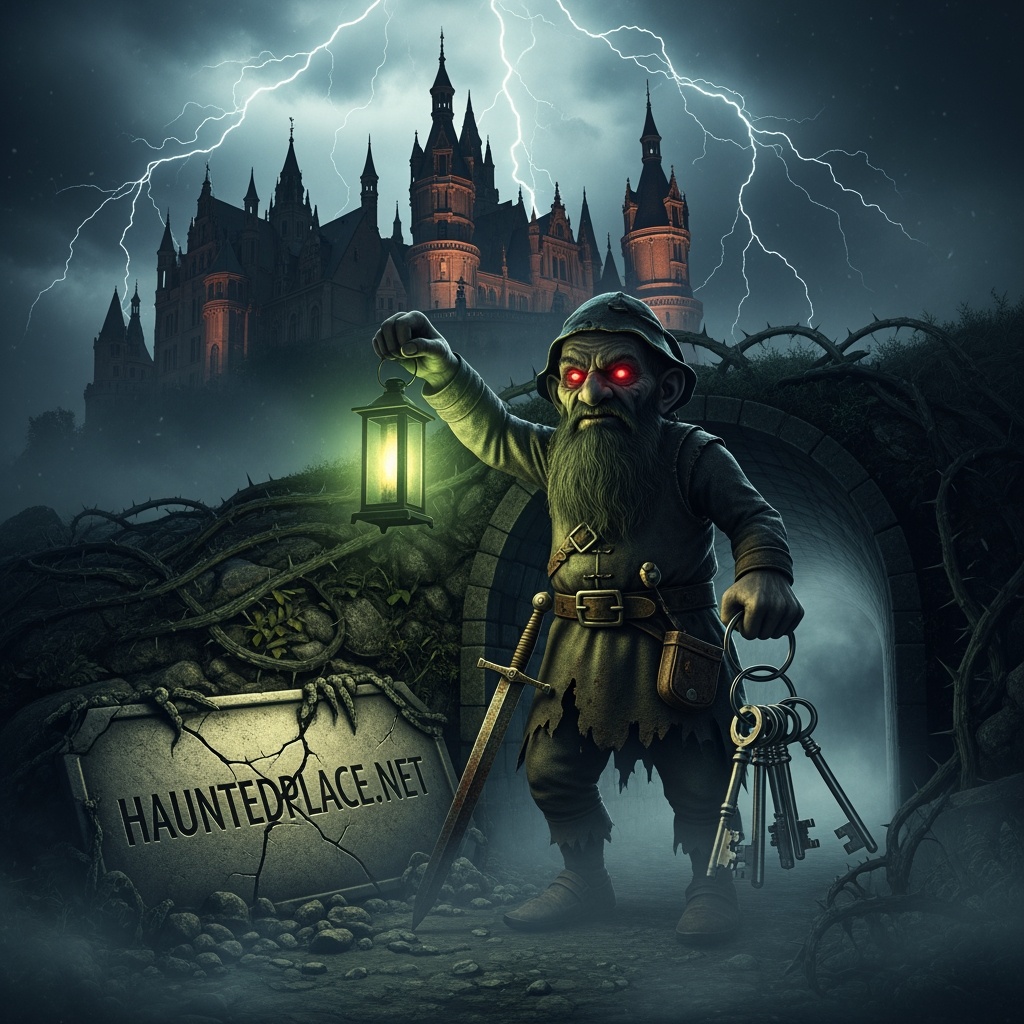
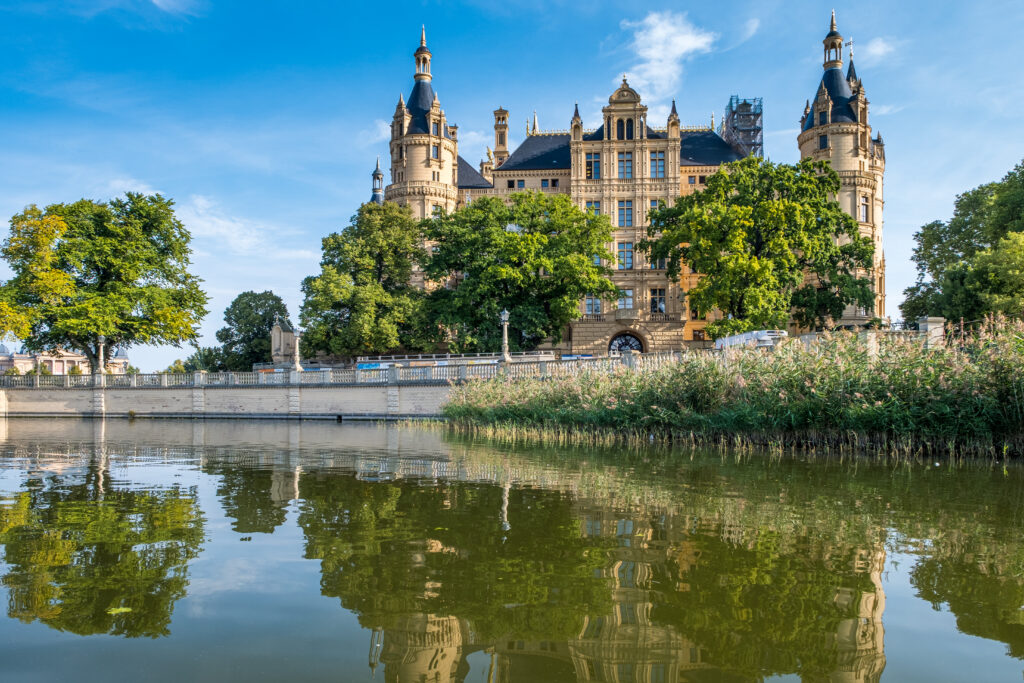
In the heart of Schwerin, a city rich in history and folklore, stands the majestic Schwerin Castle. Within its ancient walls, legends tell of an elusive ghost named Petermännchen. This ghostly figure is said to haunt the underground tunnels and cellars of the castle, guarding its secrets and exerting its influence for centuries. According to a popular legend, the vaults of Schwerin Castle were connected to Petersberg in Pinnow by underground passages. There, the good-natured but stern-looking dwarf worked as a blacksmith. In various retellings of the story, Petermännchen traveled between Pinnow and Schwerin either by water or through the air, demonstrating his supernatural abilities. His exact sleeping place remains a matter of speculation and varies from version to version of the myth.
The guardian goblin of Schwerin. The Petermännchen was described as a dwarf-like figure equipped with a lantern, a sword, and a bunch of keys, who protected the castle from thieves and intruders. He scared away evildoers with playful pranks and nocturnal disturbances, while rewarding those who were honest and just. He also had the strange habit of waking up soldiers who had fallen asleep during their night watch to ensure that the castle’s defenses were always manned.
One of the most famous stories about the Petermännchen dates back to the Thirty Years’ War. During the conflict, General Albrecht von Wallenstein, to whom Emperor Ferdinand II had transferred the Duchy of Mecklenburg, spent a night at Schwerin Castle in 1628. According to legend, Wallenstein was so harassed by the Petermännchen throughout the night that he left the castle the next morning completely exhausted and never returned. As a result, Güstrow became the capital during Wallenstein’s reign.
Mythological roots and modern echoes. The well-known folklorist Richard Wossidlo interpreted several of these stories and suggested that the Petermännchen could be a transformed version of the god Radegast. According to this interpretation, Radegast remained behind to protect the sacred treasures and the people of the Obotrites, a Slavic tribe that once dominated the region. The legacy of the Petermännchen extends into the modern era. A statue created by Heinrich Petters around 1856 adorns the inner courtyard facade of Schwerin Castle. Although not originally from Schwerin, the smallest bell in Schwerin Cathedral, dating from 1363, is named after the Petermännchen and was only installed in the cathedral tower after World War II.
From 1976, the Deutsche Reichsbahn operated a pair of express trains between Schwerin Central Station and Berlin-Lichtenberg, which bore the name Petermännchen. Even today, people in Petermännchen costumes appear at various events and serve as living mascots and an integral part of Schwerin’s tourism advertising.
A living legend. Until 2011, a dedicated Petermännchen museum on Schwerin’s market square showcased the extensive history and folklore surrounding this legendary figure. Although the museum is no longer in operation, the spirit of the Petermännchen lives on in other forms. In 2001, Pinnow (near Schwerin) honored the Petermännchen by incorporating it into its municipal coat of arms. The official coat of arms description shows the figure standing on a green hill, characterized by its red hair and red beard, dressed in blue with silver accents and two silver stilts in its hands.
The enduring presence. The story of the Petermännchen lives on, capturing the imagination of locals and visitors alike. It is not just a ghost story, but a reflection of the deep-rooted connection between the people of Schwerin and their history. The Petermännchen embodies the protective spirit of the region, a guardian whose legend has endured for centuries, adapting and evolving over time.
Whether viewed as a mischievous goblin or a divine protector, the Petermännchen remains an indelible part of Schwerin’s cultural heritage. Its legends are passed down with reverence and a touch of imagination, ensuring that the mysterious phantom of Schwerin Castle will continue to inspire and fascinate future generations.