 Isabella Mueller Baroness of Stainton le Vale
Amidst the rolling hills of the Ivano-Frankivsk Oblast in western Ukraine stands a fortress whose crumbling walls have withstood wind, rain and war for centuries. Chernelytsia Castle, known in Ukrainian as “Chernelytsia Castle”, now stands as a silent guardian over a past filled with power struggles, sieges and lost riches. Yet anyone who visits the ruins hears more than just tales of its historical significance. A tale circulates in the area that sounds far older and darker than the stones themselves: the story of a treasure that was never meant to be found. According to local legend, beneath the castle’s remains lie passageways, cellars and buried chambers. It is said that gold was hidden there during the Ottoman threat in the late 17th century – not just any gold, but the possessions of wealthy magnates from the region. The hiding place, so the story goes, was created by a count’s treasurer. He is said to have protected the wealth from looters whilst at the same time casting a curse upon it. Since then, treasure hunters and local residents claim, the gold can sometimes be glimpsed, but never possessed.
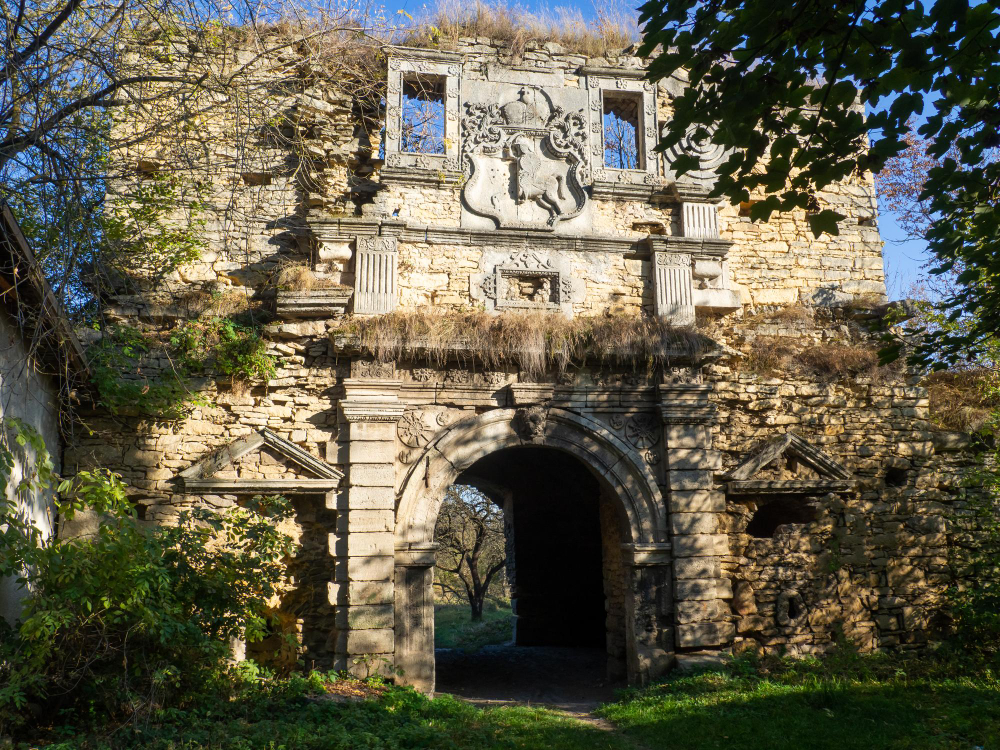
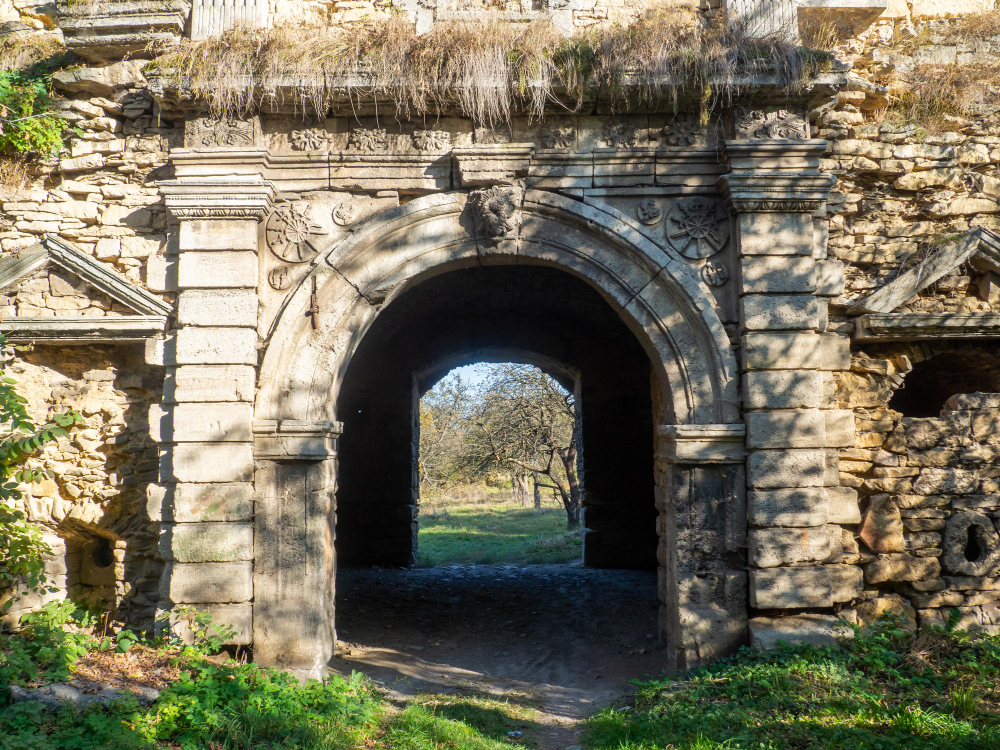
A fortress on the fringes of ancient conflicts – Tschernelyzja Castle was built in the 17th century, at a time when this region repeatedly became the scene of military conflicts. The complex was built as the fortified seat of an influential noble family and was designed for defence: massive walls, bastions and a mighty entrance gate were intended to repel attacks. Parts of the outer fortifications and the distinctive gate tower have survived to this day. The building is often associated with the Jazłowiecki family. In the 17th century, the region lay on the border between competing powers. Attacks, the march-through of armies and the constant fear of raids were part of everyday life for the local population. The castle was therefore not merely a stately residence; it served as a refuge, a military base and a storehouse all at once. King Jan III Sobieski, the famous Polish-Lithuanian ruler and later victor of the Battle of Kahlenberg near Vienna, is also associated with the site. Sources on the castle’s history report that it was used as a storehouse for provisions in the late 17th century. In a world where military campaigns determined success or defeat, a storehouse could be just as valuable as a treasury. Grain, weapons, salt, textiles and coins were vital – and always coveted spoils. It was apparently against this historical backdrop that the legend of the hidden riches arose.
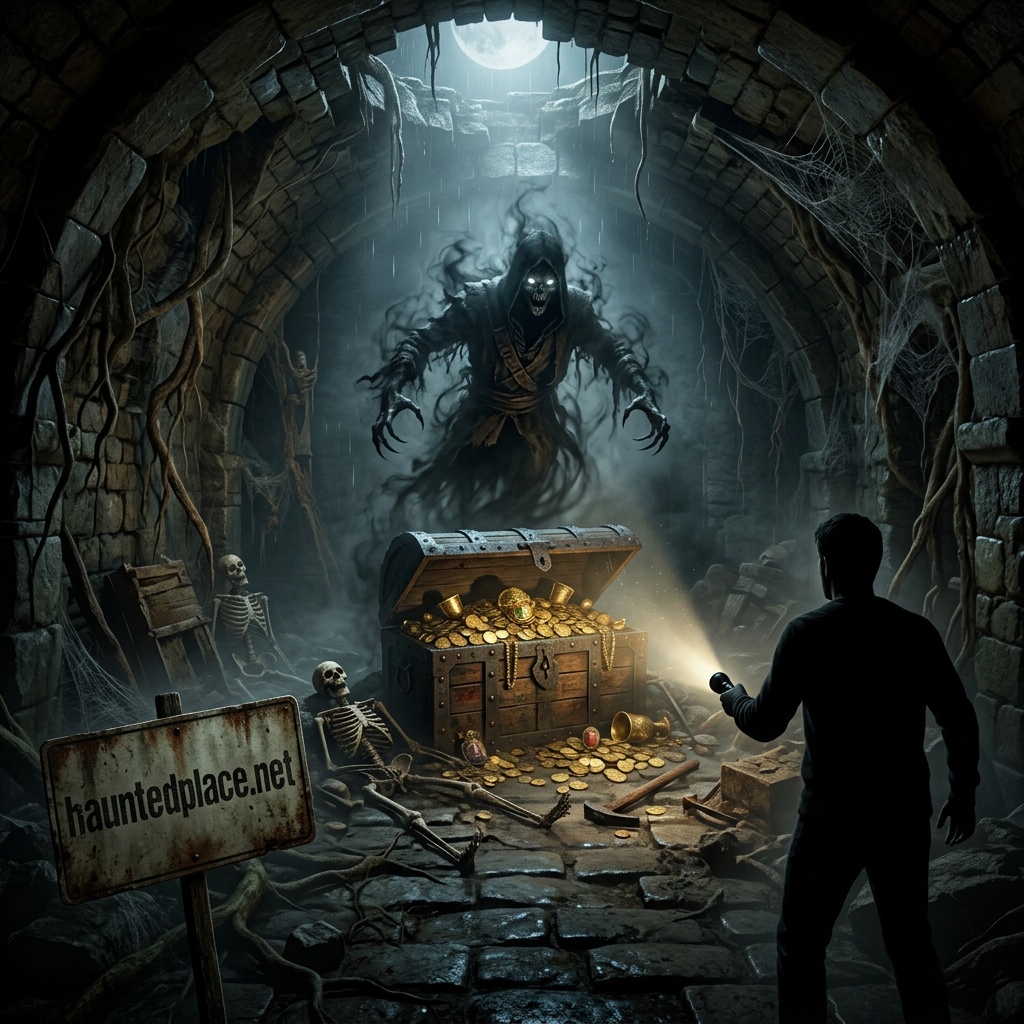
When the gold was carried underground – The story begins in the days of a looming siege. Rumours are said to have spread across the land: horsemen were approaching, villages were burning, and everyone knew that an attack on the fortress was a possibility. The gates were closed. There was commotion in the castle courtyards. Carts rumbled over the cobblestones, servants hauled chests, and sacks, trunks and metal-bound caskets were carried out of the houses of the local nobility. According to tradition, the treasurer was tasked with saving the magnates’ valuables. Jewellery, silverware and, above all, gold coins were not to fall into the hands of the attackers. Under strict guard, the chests were said to have been taken to the castle’s underground chambers. The passageways – many of which are likely to be buried or inaccessible today – were considered a safe haven. Thick walls separated them from the noise of the world above. There, deep beneath the castle, the treasurer is said to have hidden the riches. Yet apparently, he feared not only the enemies outside the walls; he also feared betrayal from within. A hidden treasure could tempt those who knew of it. Soldiers, servants or even members of the noble families might have been tempted to take some of the gold during the night. That is why the man is said to have sworn an oath over the chests. In some versions of the tale, this becomes a curse: no one who reaches for the gold out of greed shall be able to carry the treasure out of the passageways. Other versions recount that the treasure itself is visible only to those who do not seek it. Whether the treasurer’s words were ever actually spoken remains unproven. The only certainty is that the legend lives on in the region – fuelled by the dark cellars of the ruins and the eventful history of the place.
Coins that vanish before one’s eyes – The most eerie aspect of the tale is not the idea that gold lies buried somewhere. Hidden treasures are a feature of many of Europe’s ancient castles. In Tschernelyzja, however, it is about something else: gold that eludes capture. Treasure hunters are said to have reported seeing individual coins amongst the rubble of the tunnels. Sometimes something would glint in the light of a lamp or torch, right where dust, stones and broken bricks had accumulated. A round, yellowish shape. A metallic sheen. For a moment, it would seem as though a coin lay exposed on the ground. But as soon as a hand reaches for it, so the legend goes, the find vanishes. The coin dissolves before one’s eyes, as if it were made of mist, light or fine dust. Others say the floor gives way at that spot, or that a cold draught extinguishes the lamp. Still others report hearing footsteps in the dark corridors, even though no one else was there but themselves. Such stories cannot be confirmed as historical facts. They form part of the folklore surrounding the ruins. Yet it is precisely for this reason that they have such an impact. For in an abandoned castle, whose cellars have been sealed off by earth and rubble for centuries, a mere glimmer of light may be enough to reawaken ancient fears. Anyone who descends there is not entering an ordinary space. They stand amidst walls that have witnessed sieges, changes of rule and devastation. Every dark passageway seems to pose a question: what was hidden here? And who wanted to prevent it ever seeing the light of day again?
The Price of Greed – The legend of the treasure carries a clear warning. The curse does not befall the poor seeking refuge, nor the traveller admiring the ruins. It is directed against those who come solely for the gold. In the stories, it is not the treasure itself that plunges people into misfortune, but their greed. Some accounts speak of treasure-seekers who fell ill or were plagued by anxiety after a fruitless attempt. Others are said to have lost their way in the underground passages, even though the complex does not appear large enough to allow a person to vanish permanently. Still others are said to have returned empty-handed, but vowed never again to speak of what they had heard or seen beneath the ruins. Such reports cannot be verified. They have, however, shaped the atmosphere of the place. Tschernelyzja Castle is not merely a historic fortress, but also a canvas for memories and fears. The surviving walls rise visibly above ground. Beneath them, however, lies the realm of conjecture: locked cellars, filled-in vaults and stories passed down from generation to generation. It is precisely this boundary between documented history and grim folklore that makes the ruins so haunting. Historical records document its construction in the 17th century, the castle’s military significance and its connection to the era of Jan III Sobieski. The cursed treasure, on the other hand, belongs to the realm of legend. Yet every legend needs a place where it can seem credible. Tschernelyzja provides this place with its shattered defensive walls, its ancient gate and the dark depths beneath the ruins.
The ruins still remain silent – Today, the castle lies in ruins. No guards stand on the bastions any more, no carts bring supplies through the gate, and no royal messengers cross the courtyard. The walls are weathered, and the sky lies open above the once-protected chambers. Grass and shrubs grow where soldiers and servants once walked. Yet the legend has weathered the centuries better than many stones. It tells of a time when wealth could determine life and death, when fortresses promised protection yet were never entirely safe. It tells of a treasurer who sought to hide gold from enemies – and perhaps created something that no one could control any longer. Whether coins and chests actually lie beneath the castle remains a mystery. There are no known archaeologically confirmed finds of such a magnate’s treasure. But perhaps that is precisely what makes the story so compelling. The treasure has never been definitively discovered. No one has been able to produce it. No one has been able to prove that the curse has been broken. When shadows fall over the walls of Tschernelyzja in the evening, the ruins seem like a place that guards its secret. Perhaps there is nothing down there but earth, rubble and the remains of old vaults. Or perhaps a single coin glitters somewhere in the darkness – just long enough to lure the next seeker into the depths.