 Isabella Mueller Baroness of Stainton le Vale
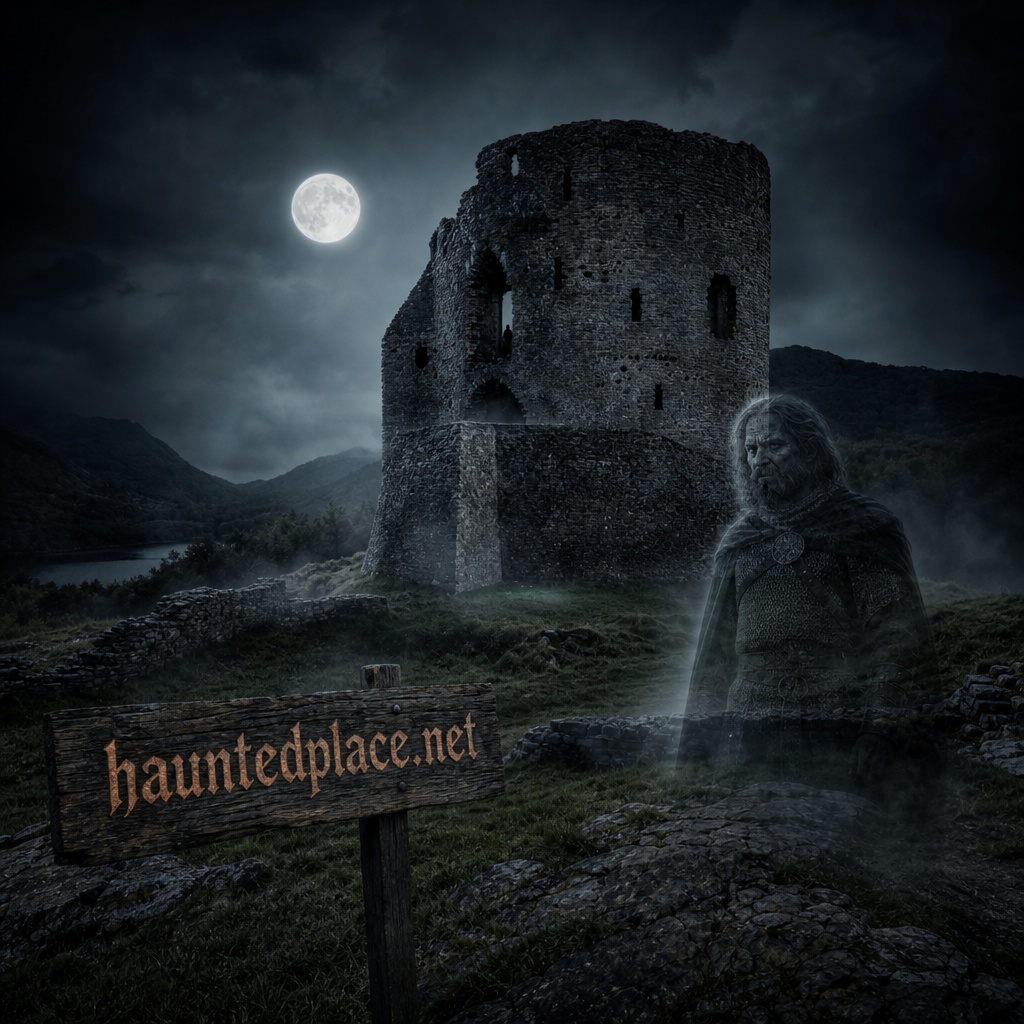
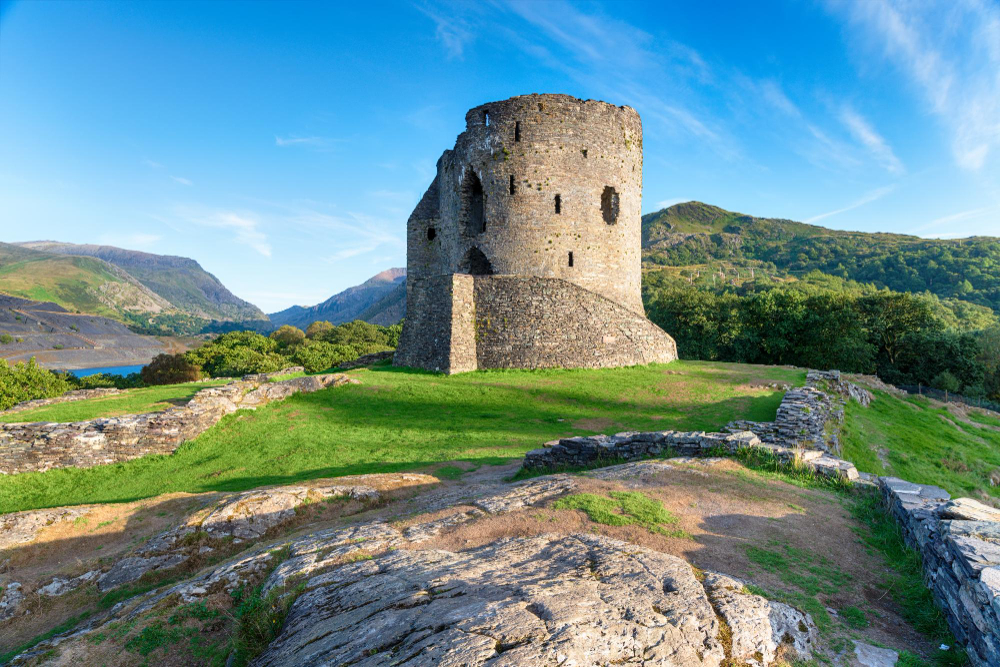
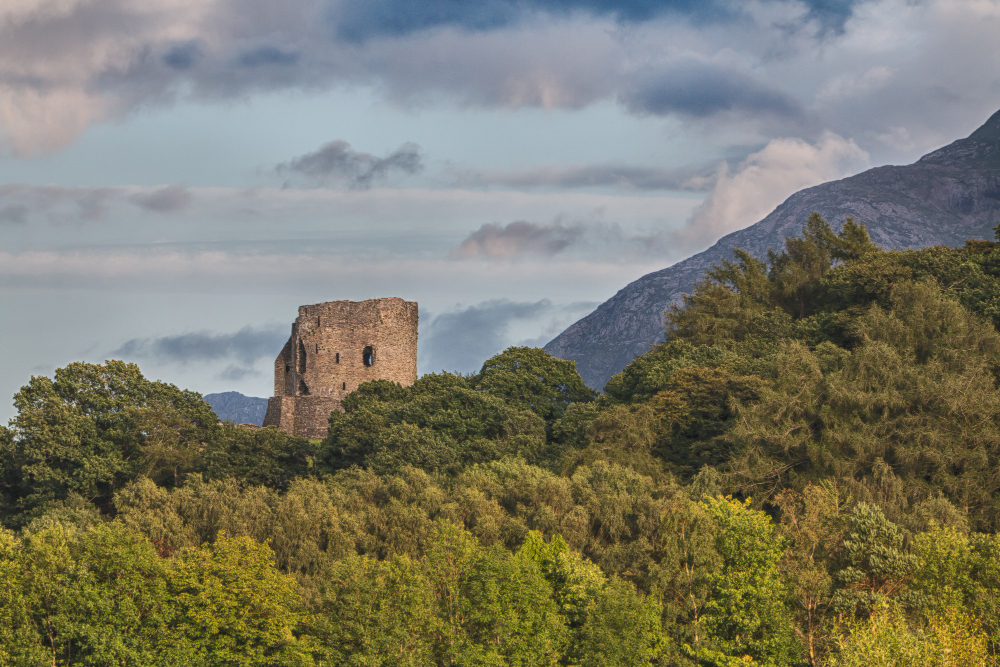
Dolbadarn Castle rises above the Llanberis valley, a solitary, massive round tower of grey slate and stone. Nestled amongst the mountains of Eryri – the Welsh Snowdonia – the ruins stand on the shores of Llyn Padarn. By day, it appears as a silent remnant of a bygone era of rule. Yet when mist rises from the lake and the wind whistles through the cracks in the walls, a different story is told: that of a prince who is said to have been imprisoned behind these walls for almost two decades. His name was Owain Goch ap Gruffudd. ‘Goch’ means ‘the Red’ in Welsh and presumably refers to the colour of his hair or his beard. He was a son of Gruffudd ap Llywelyn Fawr, a member of the ruling house of Gwynedd. In the 13th century, Gwynedd was the most powerful Welsh principality. Yet the family that ruled the land was marked by rivalries, claims to the throne and bloody power struggles. Owain was the elder half-brother of Llywelyn ap Gruffudd, who later became known as Llywelyn the Last. Both came from the same dynasty, yet their positions were not the same. Following the death of their father Gruffudd in 1244, the land was initially divided amongst several brothers. This arrangement did not last long. Llywelyn began to expand his power, annex territories and oust his brothers from political rule.
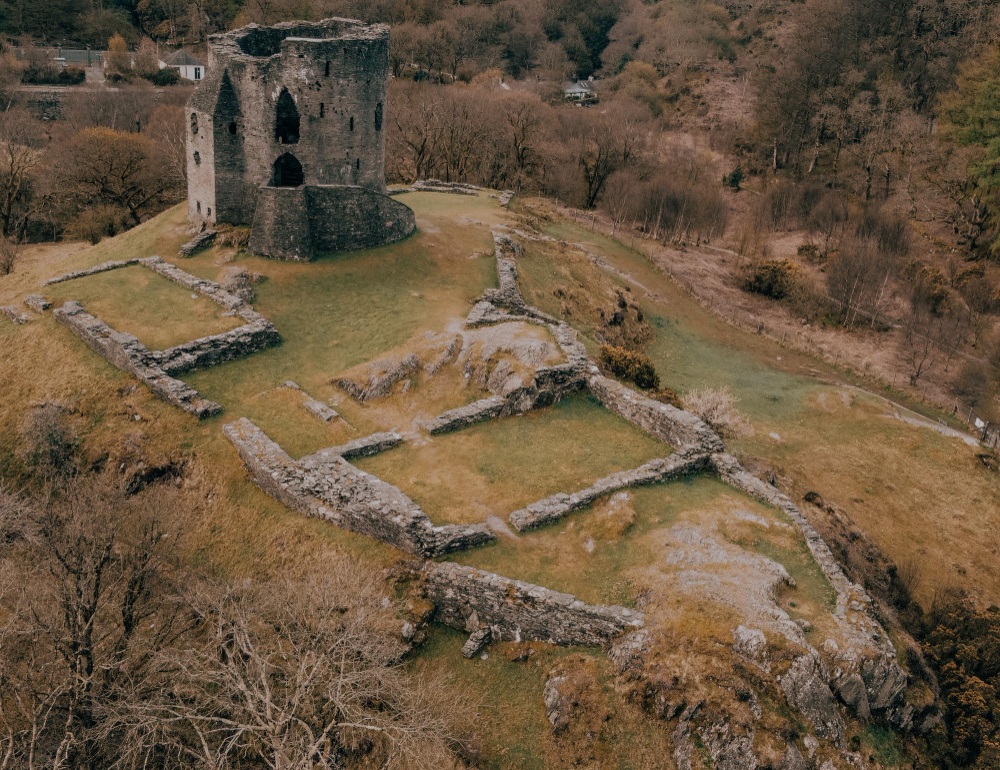
Owain Goch was not, at first, merely a nameless relative on the fringes of events. He had his own claims to parts of Gwynedd. Tensions between the brothers grew until they erupted openly. In 1255, the Battle of Bryn Derwin took place. There, Llywelyn defeated Owain and their brother Dafydd. Following the victory, he had both of them taken prisoner. Dafydd was later to be released and fight against Llywelyn once more. For Owain, however, a period of captivity began that dragged on for many years. Tradition links this imprisonment to Dolbadarn Castle near Llanberis. The tower, which still stands today, was at that time an important stronghold of the princes of Gwynedd. Its location was strategically chosen: it controlled routes through the mountains and stood in a landscape surrounded by lakes, steep slopes and narrow passes. The tower at Dolbadarn was probably built in the early 13th century, possibly under Llywelyn the Great, the grandfather of Owain Goch and Llywelyn ap Gruffudd. It is unusually tall and solidly built. Its walls are thick and the window openings narrow. Anyone standing inside was surrounded by stone. Light entered only sparingly. Access to the upper levels could be controlled; escape was virtually impossible.
For a political prisoner, Dolbadarn was no ordinary place of detention. Owain was not a foreign enemy, but a member of the ruling dynasty. That is precisely why his very existence was dangerous. As long as he lived, he could become a symbol for Llywelyn’s opponents. Nobles, local rulers or political rivals might have invoked his claim to the throne. Killing him, however, would have triggered a scandal within the dynasty. Imprisoning him was another form of neutralisation: silent, permanent and without public bloodshed. The image of Owain’s long years in the tower has become deeply associated with the place. The view from the narrow openings must have fallen upon the mountains, the clouds, the rain and the lake. Outside, the seasons changed, rulers forged alliances, wars were prepared and lost. Inside, the prisoner remained behind. Historical accounts suggest that Owain’s imprisonment lasted for nearly twenty years. He was imprisoned following his defeat in the mid-1250s and was not released until around 1277. This long period of isolation later became the core of the sombre tales surrounding Dolbadarn. The legend describes a man who was slowly cut off from the world within a cold tower. A prince, whose name was once associated with power and heritage, became a prisoner in the mountains.
No detailed personal accounts of his daily life in captivity have survived. There are no surviving letters from Owain written from the tower, no description of his thoughts at night, no reliable record of his final years behind the walls. It is precisely these gaps that have opened the place up to later ghost stories. The ruin became a space into which visitors could project their own notions of solitude, fear and lost time. Dolbadarn Castle is known today primarily for its large round tower. The structure looms over the valley like a dark finger. Especially when it rains, the stone surfaces appear almost black. Moisture collects in the joints and cracks, whilst the wind blows through the openings. The ruins are exposed to the elements, yet the walls retain a sense of confinement that remains palpable even without a roof or doors. Reports of a shadowy figure are linked to Owain Goch’s imprisonment. Visitors speak of a dark silhouette in or near the tower, of an apparition that cannot be clearly made out and vanishes quickly. Some descriptions speak of a male figure standing motionless in one of the darker areas. Others tell of a movement at the edge of one’s field of vision, as if someone were walking across the uneven ground or disappearing behind a wall.
In the tales, this figure has no fixed appearance. It wears no clearly described cloak, no crown and no visible signs of a prince. It is precisely this vagueness that links it to Owain Goch. It is the shadow of a man whose life vanished from the world’s sight for a long time. The figure does not appear as a victorious ruler, but as someone who cannot find a way out. Sounds also feature in the stories of Dolbadarn. Footsteps are said to be heard near the tower, even though no one is inside. Some visitors report a muffled sound that seems to emanate from the stone itself. Others speak of a soft murmur or a sudden noise that cannot be identified amidst the silence of the ruin. The wind in the mountains, birds, water and distant voices can create a deceptive effect in this place. Yet the legends give these sounds a name: Owain. Particularly at twilight, one’s perception of the tower changes. The lake loses its colour, the contours of the mountains blur, and the window openings become black patches in the wall. From the outside, it is almost impossible to tell how deep the shadows extend inside. Anyone standing in front of the tower looks upon a structure that has been exposed to wind and rain for centuries. At the same time, it is a place whose most famous story centres on a man who was not allowed to leave.
Owain Goch’s release in 1277 came at a time of political tension. Llywelyn ap Gruffudd was under pressure from the English King Edward I and faced new conflicts. After his release, Owain no longer emerged as a serious rival to his brother. The sources leave his later life largely shrouded in mystery. He presumably died in the late 13th century, yet his name has endured, chiefly because of his long imprisonment at Dolbadarn. Llywelyn himself lost his struggle against England shortly afterwards. He was killed in 1282. His death marked the end of the independent rule of the Welsh princes of Gwynedd. Dolbadarn Castle gradually lost its military significance. The English Crown built new, larger castles in North Wales, including Caernarfon Castle, which lies just a few kilometres away. The old tower at Dolbadarn remained. Centuries later, the ruin became a source of inspiration for travellers, artists and storytellers. The romanticised image of the abandoned Welsh castle became intertwined with the fate of Owain Goch. The tower was not only a monument to medieval power, but also a symbol of imprisonment. Anyone who saw the walls could imagine how long the years must have dragged on in a single room.
The ghost story of Dolbadarn thrives on this connection between documented history and oral legend. What is certain is that Owain Goch was taken prisoner following a power struggle with his brother and remained in captivity for a long time. Dolbadarn Castle is traditionally cited as the site of this imprisonment. The tales of shadows, footsteps and an oppressive presence, however, form part of the site’s later folklore. When the mist rises over Llyn Padarn, the tower is often visible only as a dark column. Its windows are empty. Its walls offer no answer as to what Owain Goch saw, heard or thought during the long years of his imprisonment. Yet in the stories of Llanberis, he remains there: not as a prince with a retinue and a claim to a principality, but as a figure set in stone who has never quite left the tower.