 Isabella Mueller Baroness of Stainton le Vale
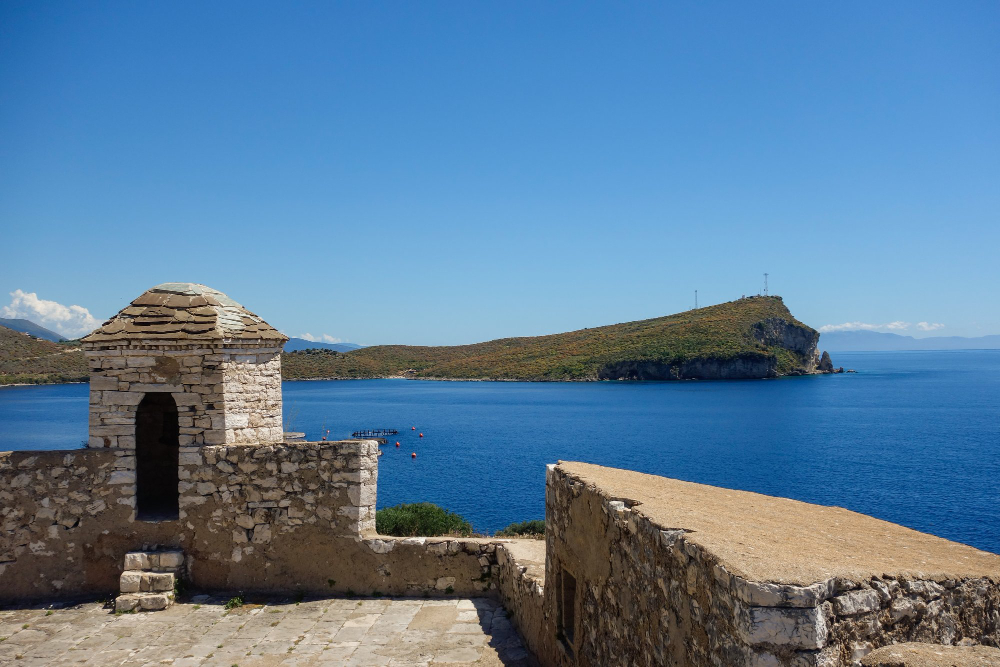
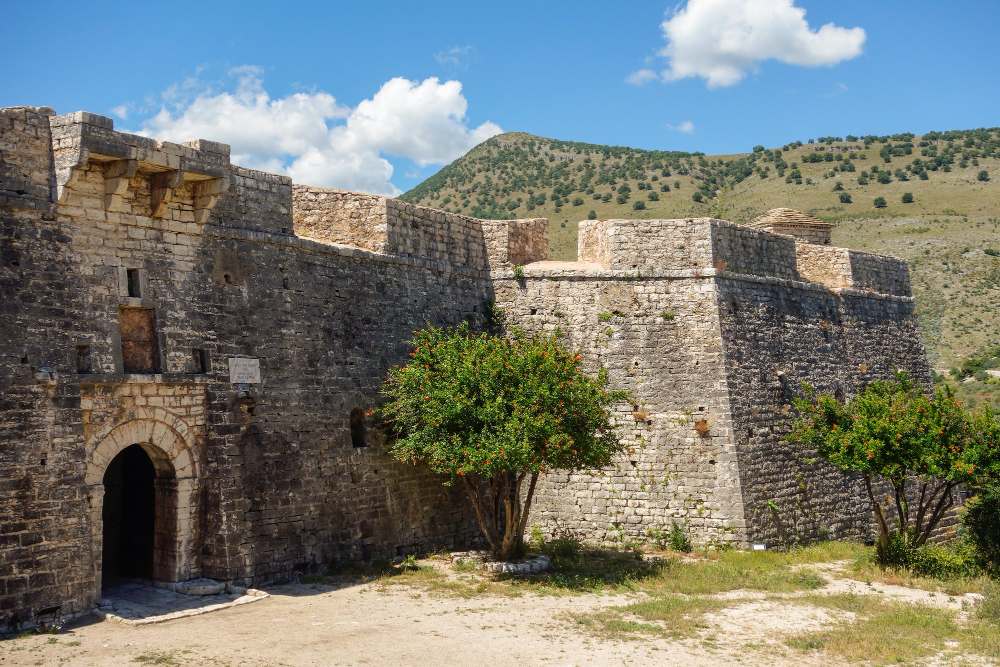
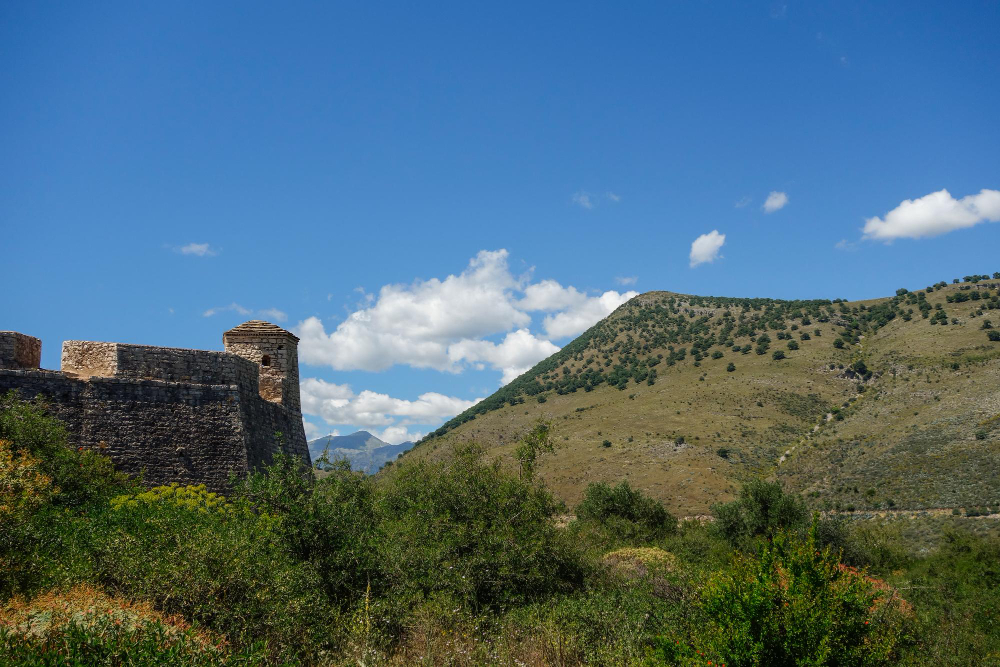
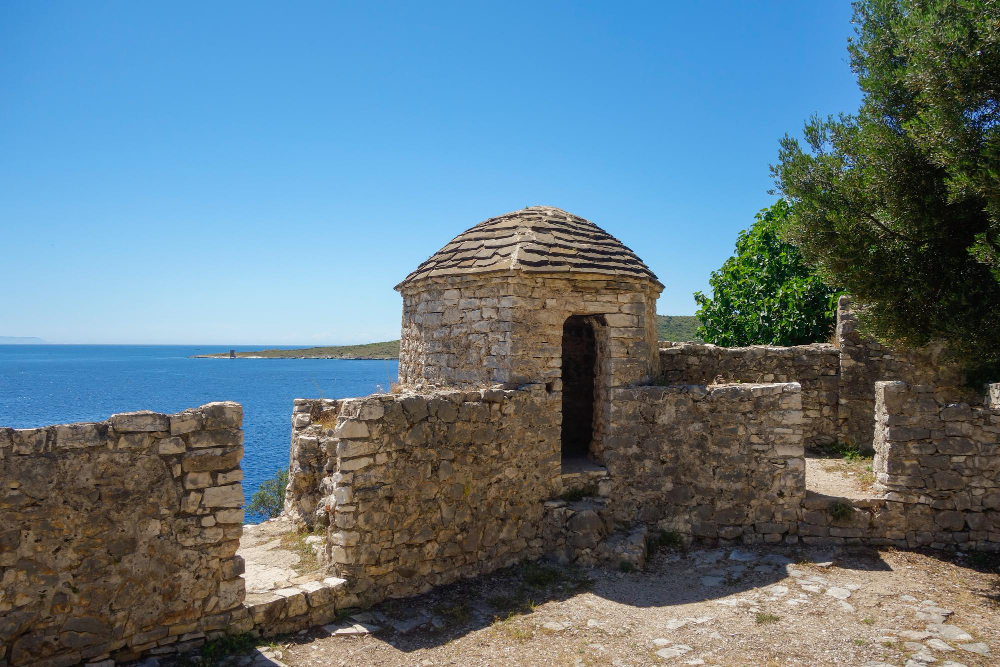
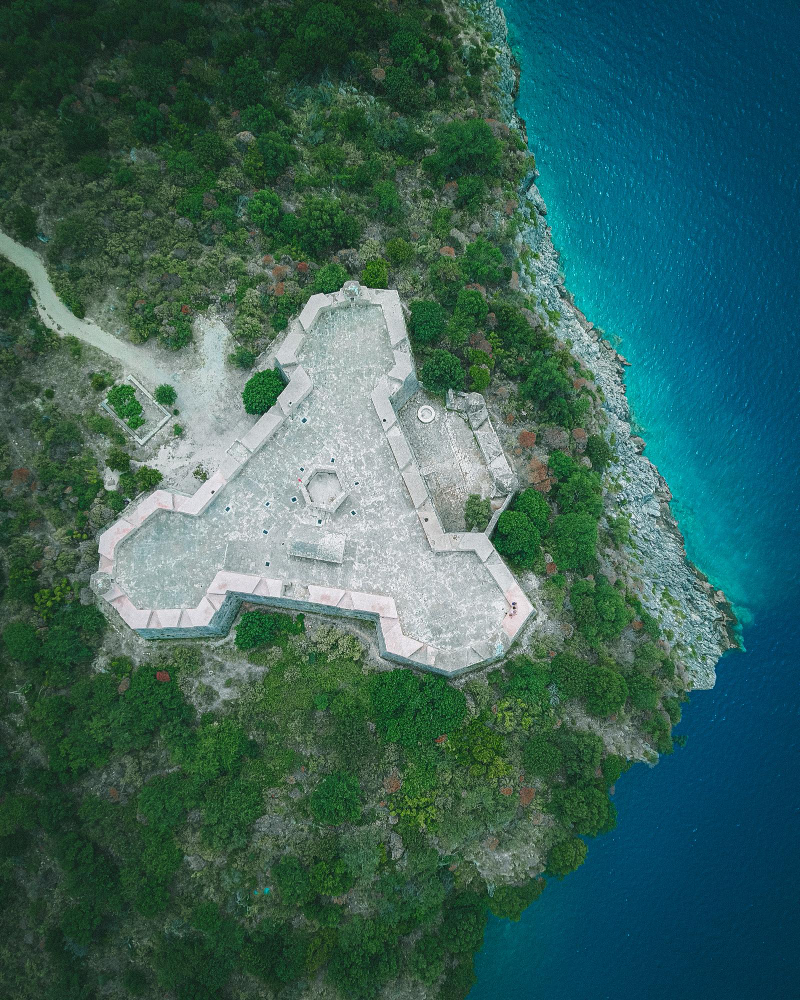
On the sunny Albanian Riviera stands a fortress that could have come straight out of a travel brochure: Porto Palermo Castle is situated on a small peninsula in the clear waters of the Ionian Sea, surrounded by steep slopes and a sheltered bay. Yet behind its massive walls lies more than just military history from the Ottoman era. The site also symbolises a country that suffered for decades under one of Europe’s most isolated and repressive dictatorships. From the outside, Porto Palermo Castle appears almost picturesque. The triangular complex, with its thick stone ramparts, bastions and narrow openings, was built in the late 18th or early 19th century within the sphere of influence of the Albanian-Ottoman ruler Ali Pasha Tepelena. Its location was strategically chosen: from here, the bay could be controlled, and potential attacks from the sea could be detected at an early stage. Today, holidaymakers drive past the structure on the coastal road between Himarë and Sarandë. Many stop to take photographs of the panoramic view. Yet the contrast between the bright coastal landscape and the interior of the fortress could scarcely be greater.
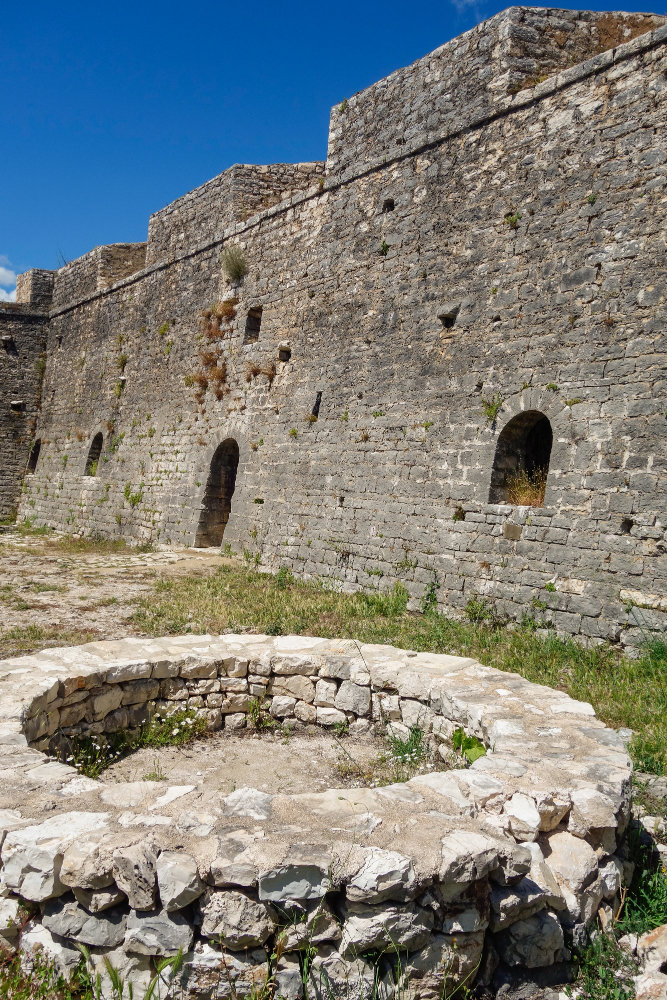
A structure of stone, confinement and shadow – Anyone entering Porto Palermo Castle quickly leaves the glaring light of the Albanian Riviera behind. Inside, narrow passageways lead into a system of vaulted rooms, staircases, corridors and chambers. The architecture does not resemble that of an open palace, but rather follows the logic of a fortification: protection, control and defence were the primary concerns. Massive walls shield the interior; daylight penetrates only sparingly through small openings or loopholes. It is precisely this atmosphere that has earned Porto Palermo a gloomy reputation. Damp, cool stone walls and the restricted visibility create a sense of oppression. Some areas appear almost black, even in daylight. Visitors move through rooms whose original functions are not always clearly documented. The complex has been used and altered in various ways over the centuries. Caution is therefore advised when dramatic stories are told about individual cells, secret torture chambers or precisely identifiable places of detention: not every local legend is supported by archival evidence. What is undisputed, however, is the historical context in which such narratives arose. After the Second World War, Albania experienced decades of communist dictatorship, during which political opponents, religious people, intellectuals and supposedly disloyal citizens were persecuted. In travelogues and local accounts, the coastal fortress is frequently linked to the history of repression during that period. Even if the specific use of every room in the castle is not fully documented, the site bears witness to an era in which imprisonment, internment and political violence were integral to the system.
Enver Hoxha’s State: Isolation as a Means of Rule – When Enver Hoxha rose to power in communist-led Albania in 1944, a reign began that lasted until his death in 1985. The system he established subsequently remained in place until the collapse of the regime around 1990–91. Hoxha initially governed with close alignment to Yugoslavia and later to the Soviet Union and China. Yet with every break with a former ally, the country’s political and economic isolation deepened. Following the rift with the Soviet Union in the early 1960s and the subsequent break with China in the late 1970s, the leadership portrayed Albania as a besieged socialist stronghold. Fear of external enemies became official state doctrine. Bunkers sprang up all over the country – numbering, according to widespread estimates, in the hundreds of thousands – designed to repel an expected attack. At the same time, the image of a threatened nation served to justify internal isolation and surveillance. Leaving the country was virtually impossible. Contacts with foreign countries were regarded as suspicious. Criticism of the party and the state could have serious consequences. The secret police, the Sigurimi, monitored large sections of society, gathered information on citizens and relied on a network of informants. Mistrust became a central feature of everyday life. Anyone who spoke out of turn, had an undesirable background or was regarded as politically unreliable risked interrogation, dismissal, exile, imprisonment or forced labour.
Prisons, camps and the reality of political persecution – Repression in communist Albania was not a marginal phenomenon, but an integral part of the regime. International human rights reports, research and remembrance initiatives document that thousands of people were imprisoned or interned for political reasons. Those affected included, amongst others, former civil servants, members of pre-revolutionary elites, clergy of various religions, writers, teachers, farmers, alleged spies and people who were merely regarded as members of ‘hostile’ families. Other detention centres in the country became particularly notorious: the Spaç prison in northern Albania, where prisoners were forced to work in copper mines under harsh conditions, and the Tepelenë camp, which in the memories of many Albanians symbolises internment, hunger, disease and the death of children. The former Burrel prison is also regarded as a symbol of the treatment of political prisoners. These sites are better documented historically than many smaller or regionally documented places of detention. Within this nationwide system of intimidation, every remote, hard-to-reach or militarily secured location took on special significance. Porto Palermo Castle is not situated in a densely built-up town, but on a coastline that could be easily controlled. Its thick-walled interior, sparse lighting and isolation continue to reinforce the image of a place where people could be cut off from the outside world. The image of prisoners forced to endure damp and dark rooms corresponds to the conditions documented from many prisons and camps of the Hoxha era: overcrowding, poor hygiene, inadequate nutrition, physical labour, violence and psychological pressure. Nevertheless, a clear distinction must be made: generally documented patterns of the dictatorship do not automatically constitute evidence for every single story about Porto Palermo. Historical accuracy also means openly acknowledging uncertainties.
Darkness as part of the architecture – and of memory – Porto Palermo Castle feels so oppressive because the physical nature of the building overlaps with Albania’s political history. The darkness inside is not merely a backdrop. Narrow corridors restrict the view, low vaults compress the space, and cold stone retains damp. Even without dramatising embellishments, the complex conveys just how little protection and privacy such rooms could offer. For visitors today, the fortress is a historical monument. At the same time, it can be read as a reminder of the dictatorship. The violence of the Hoxha regime was not only evident in spectacular show trials or notorious camps. It was also evident in the constant possibility of being watched, denounced or cut off from society. The system created not only physical imprisonment, but a society of fear. After the end of communism, Albania gradually opened up. Archives were partially made accessible, former prisoners and their family members spoke out about their experiences, and memorial sites were established. In Tirana, the ‘House of Leaves’ museum now commemorates the surveillance methods of the Sigurimi. Bunk’Art, a museum housed in a former civil defence bunker, also documents political persecution and the atmosphere of isolation. Such institutions help to bring to light a past that was long kept silent.
Between tourism and responsibility – Porto Palermo has since become a destination for cultural travellers, photographers and beach holidaymakers. It is precisely this development that raises a question: how should we deal with places that are at once beautiful, historically significant and associated with potential suffering? The answer cannot lie in turning the castle into a mere backdrop for horror. Exaggerations and fabricated details would do a disservice to the real victims of the dictatorship. It would be equally problematic to reduce the site to its photogenic setting and ignore its political background. Responsible remembrance demands both: a fascination with the fortress’s history and respect for the experiences of those who suffered under a totalitarian state. The castle of Porto Palermo therefore tells more than just the story of an Ottoman military structure. It bears witness to the long history of power and control along the Albanian coast – from earlier rulers right through to the communist dictatorship of the 20th century. Anyone walking through its dark corridors does not encounter definitive proof of every legend, but a place where Albania’s past feels tangibly close. Outside, the sea glistens. Inside, stone, silence and shadows reign. It is precisely this contrast that makes Porto Palermo one of the most evocative places on the Albanian Riviera.