 Isabella Mueller Baroness of Stainton le Vale
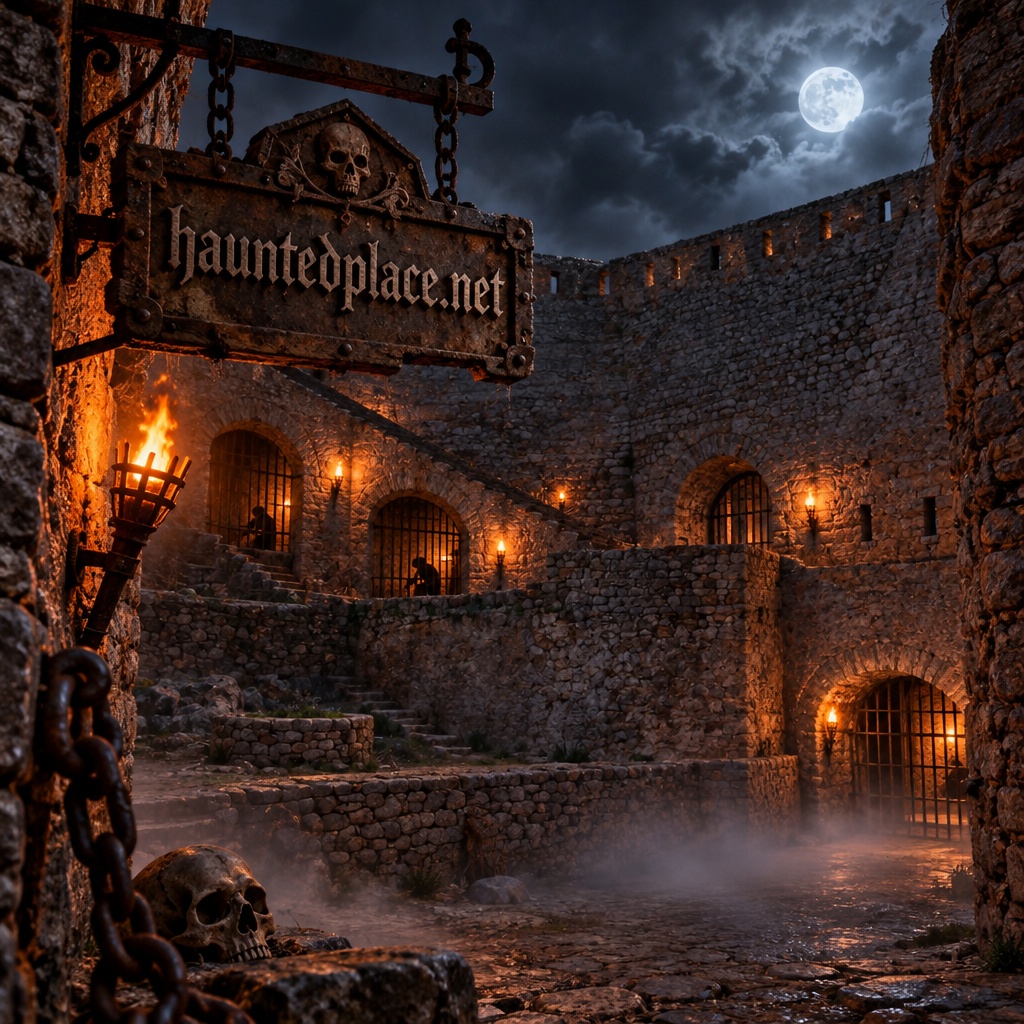
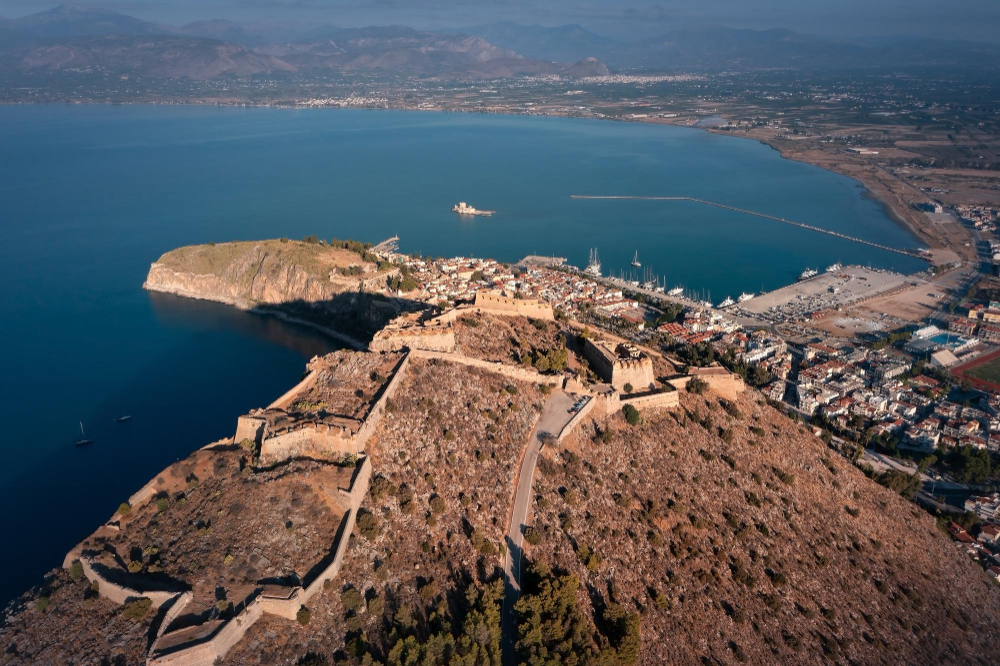
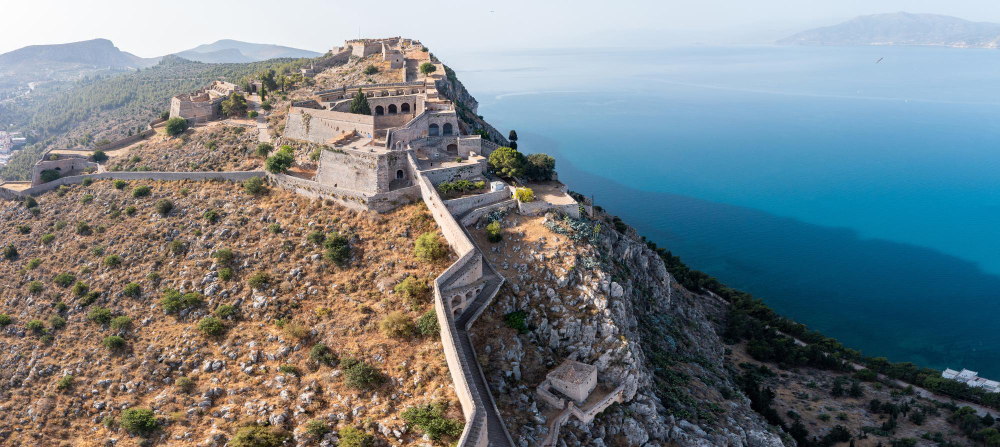
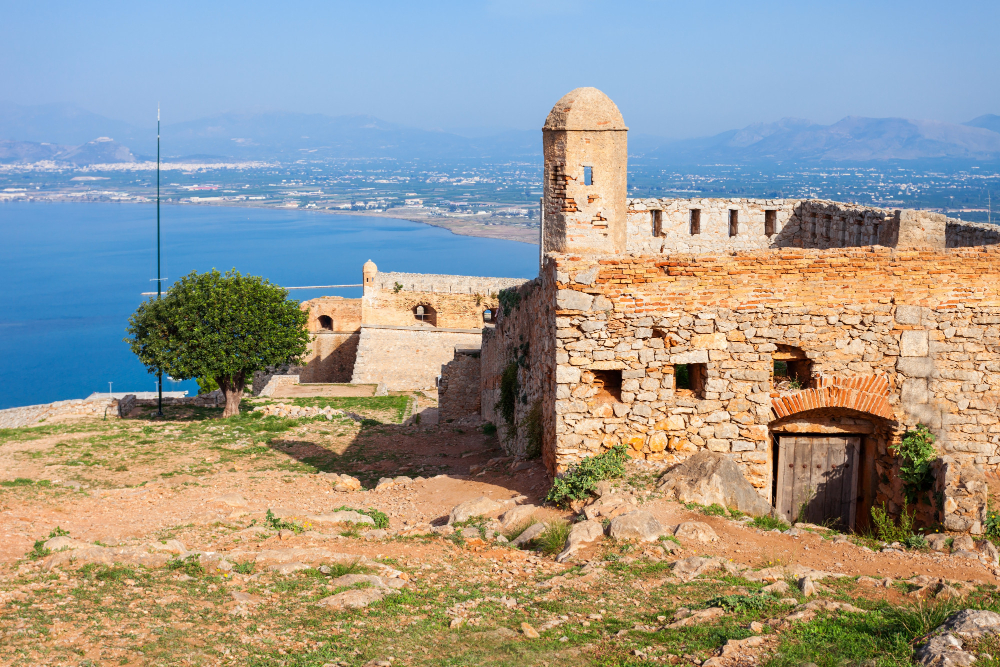
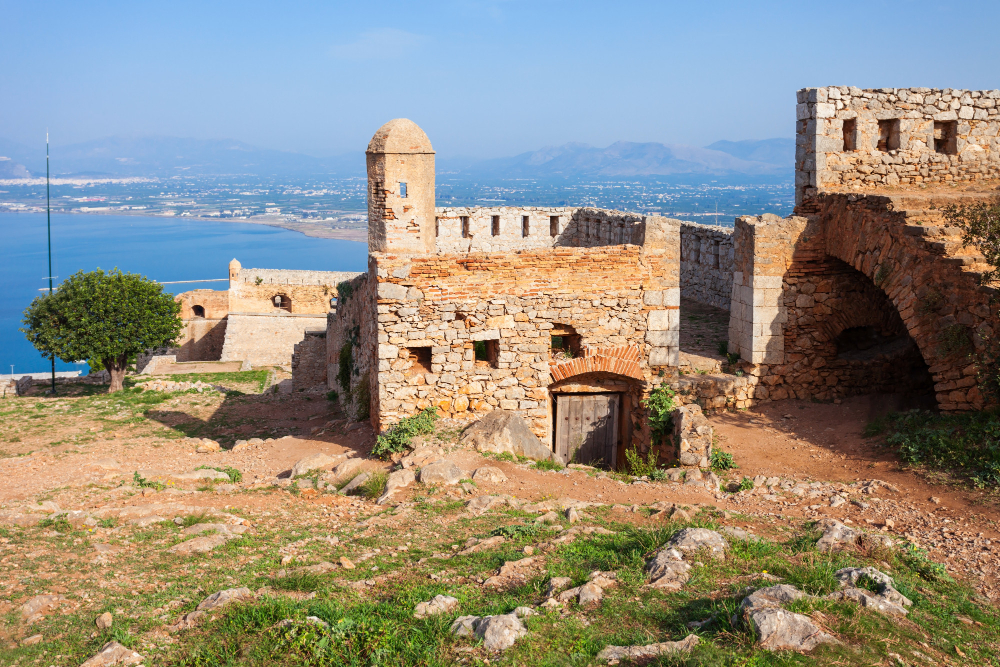
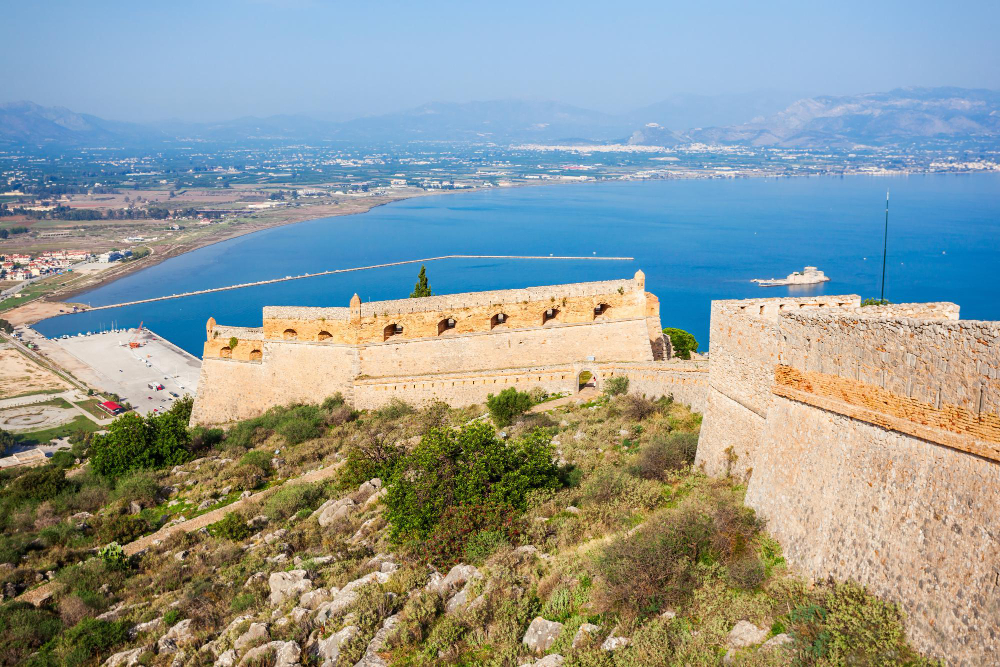
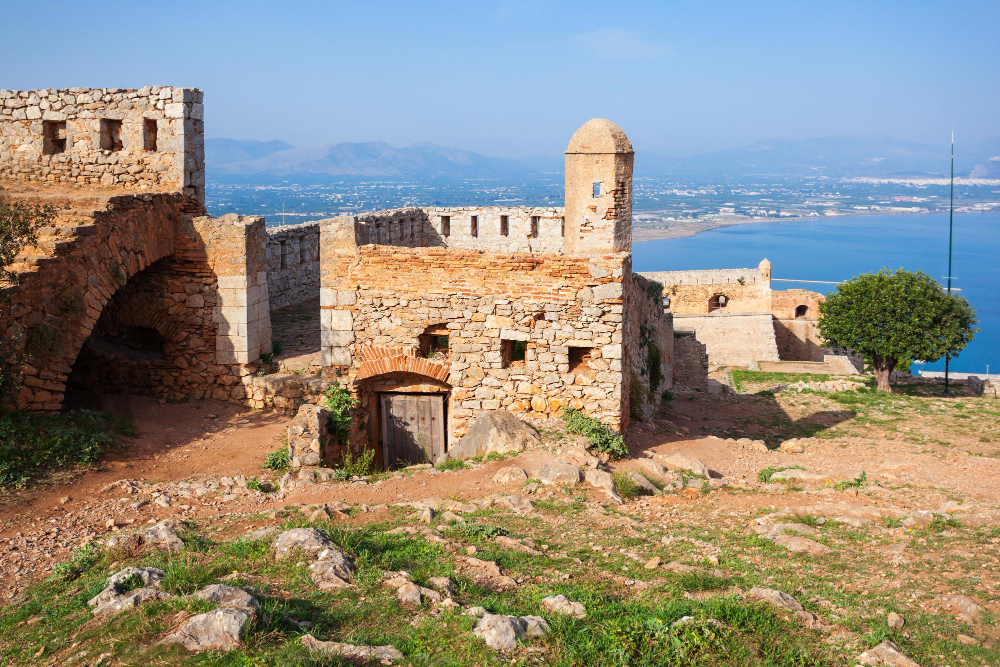
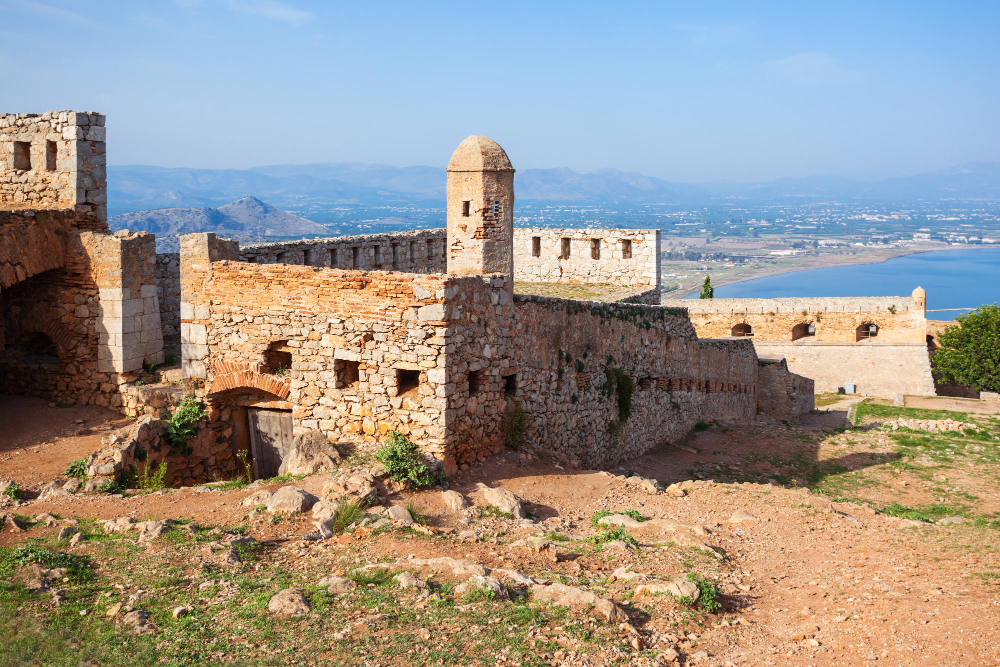
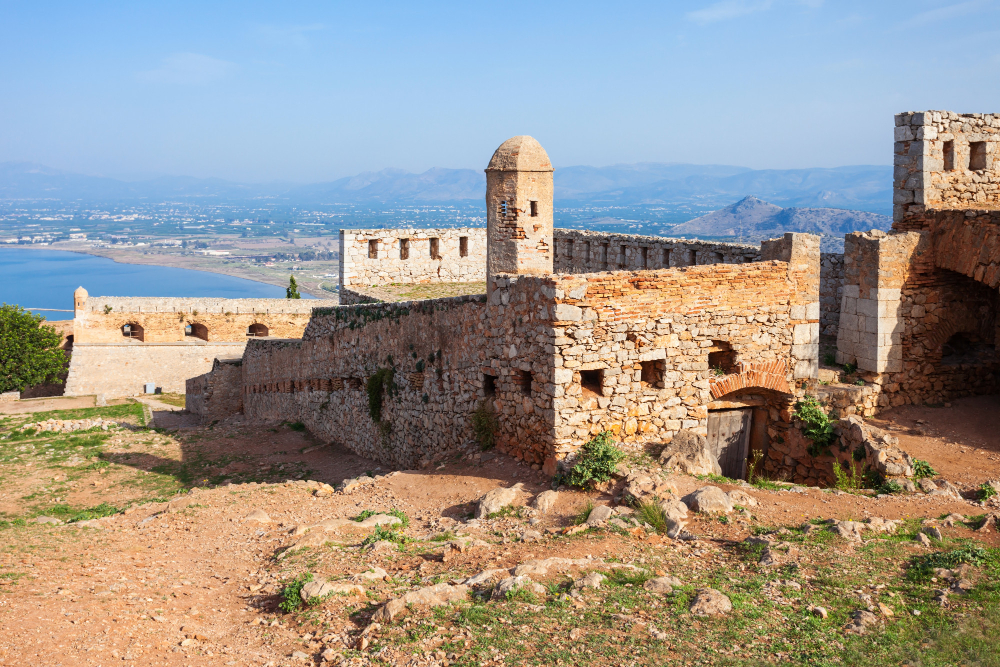
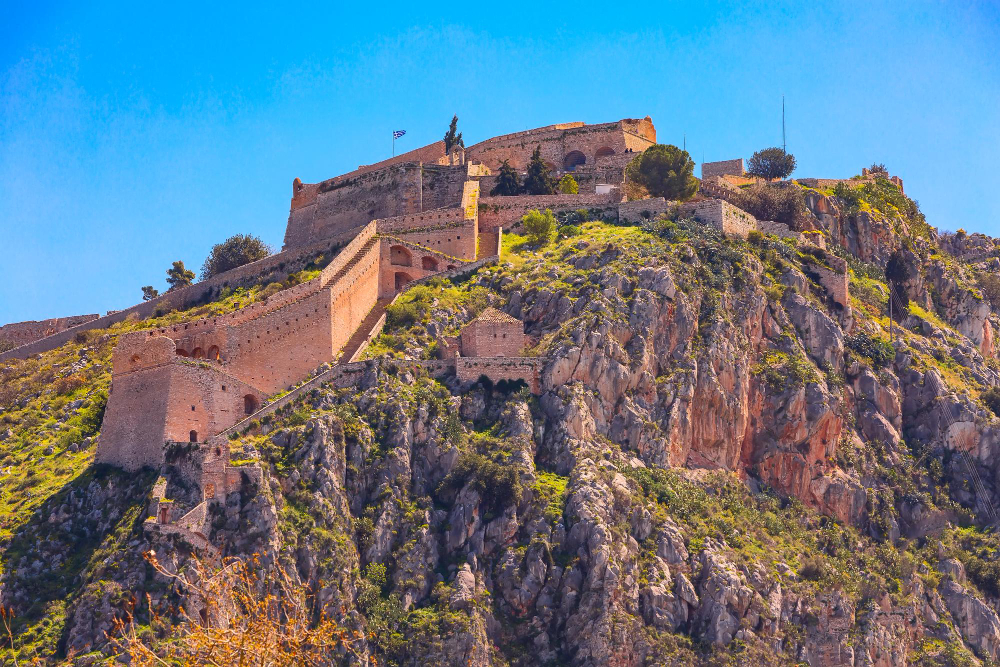
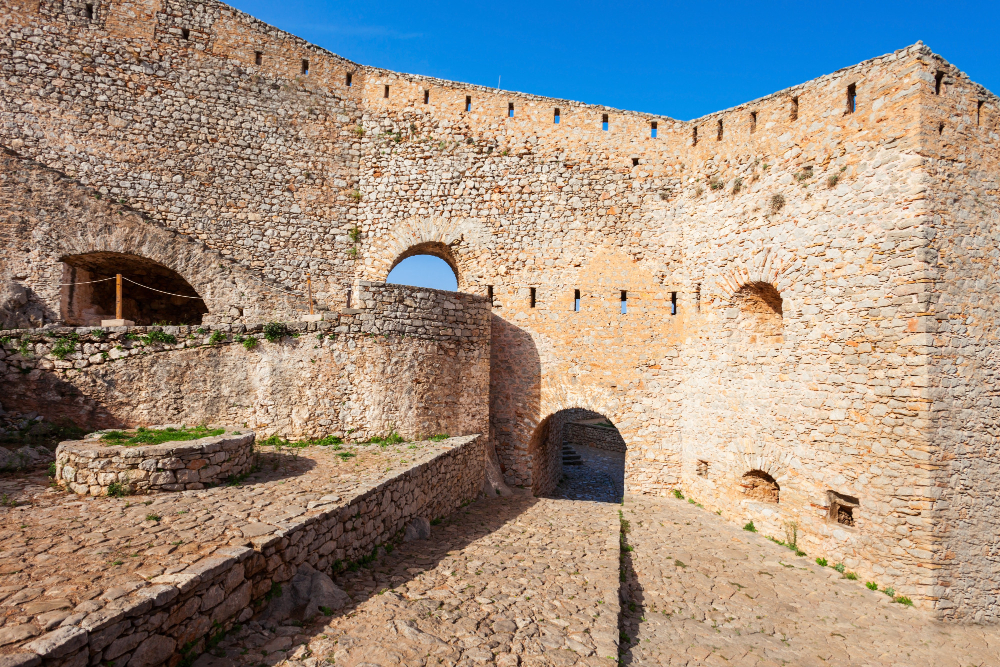
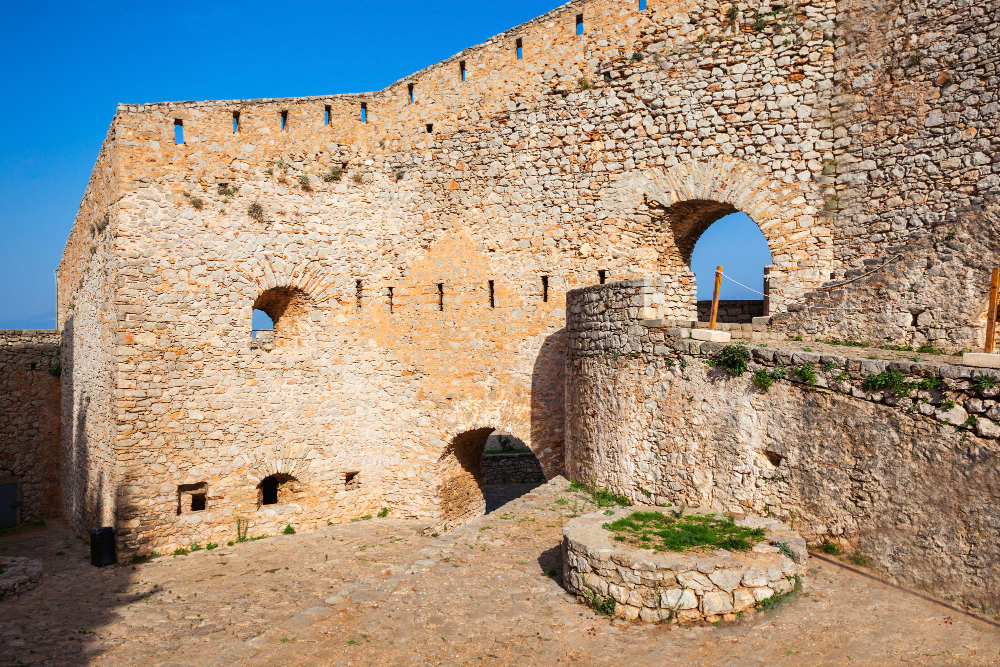
High above the historic Greek town of Nafplio, Palamidi Fortress is perched on a steep hill, almost 216 metres above the Argolic Gulf, dominating the skyline. By day, it is one of the Peloponnese’s most impressive monuments: a massive Venetian fortress of stone walls, terraces, gates and bastions. By night, however, according to local lore, its most feared corner transforms into something entirely different. The Miltiades Bastion, one of Palamidi’s fortified sections, is associated with tales of imprisoned men, darkness, suffering and death. Visitors and locals have long recounted that, in stormy weather, faint moans and the metallic clanking of chains can be heard emanating from the old prison cells. These accounts belong more to folklore than to documented evidence of supernatural phenomena. Yet the historical reality behind them is grim enough to explain why the legends have endured to this day. Palamidi was built as a fortress. Over time, however, parts of it became a place of imprisonment. The ghosts of the Miltiades Bastion that have lived on in people’s memories are inextricably linked to this transformation: in the local imagination and historical memory, a military monument became a prison overlooking the town.
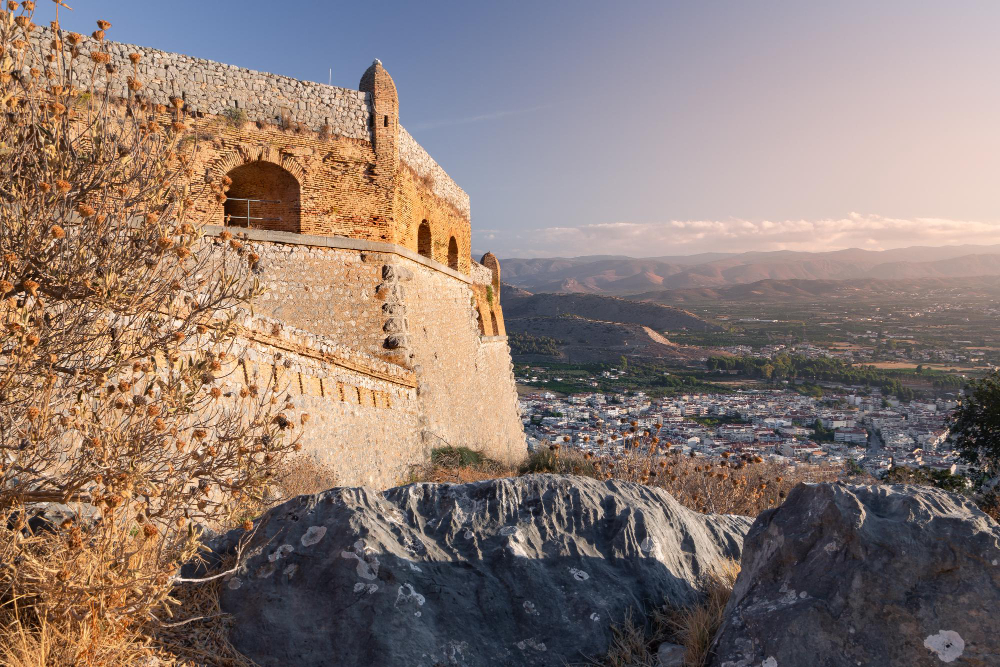
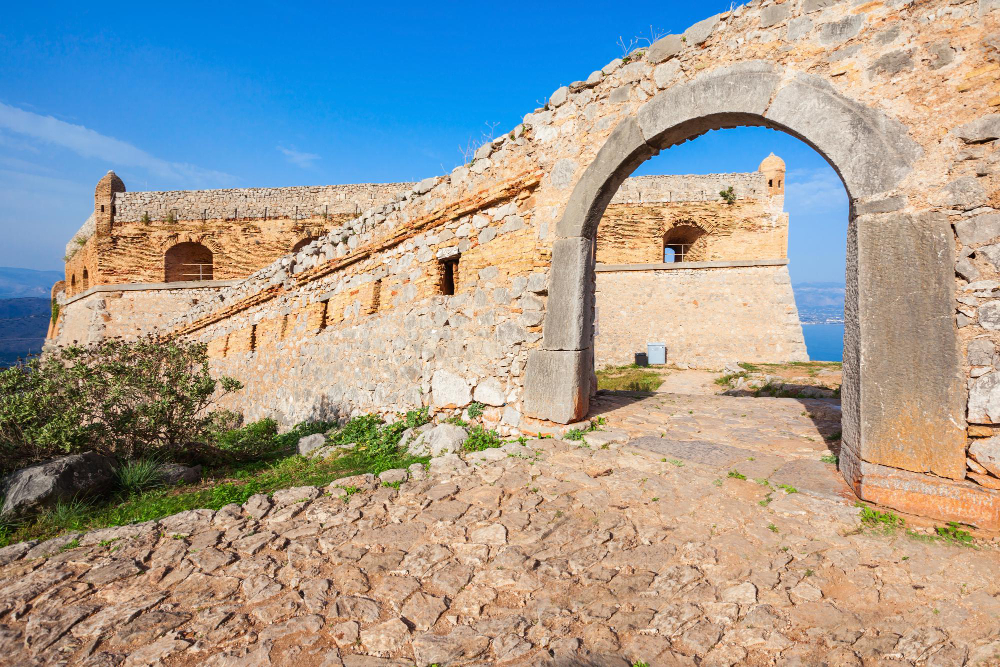
A fortress built for war – Palamidi was built by the Venetians during their second period of rule over the region between 1686 and 1715. The complex was completed in a remarkably short time, generally dated to the years 1711–1714. Its purpose was strategic in nature. From the hill above Nafplio, the fortress commanded a view over the surrounding plain, the sea and the access routes to the town. The fortress was designed according to the military principles of its time. Rather than relying solely on medieval-style towers, it utilised a network of separate bastions, sloping walls and defensive positions designed to withstand artillery fire. The fortress comprises several bastions, traditionally named after Venetian figures and saints, including Miltiades, Robert, Leonidas, Epameinondas, Fokion, Themistocles and Achilles. Despite its imposing appearance, Palamidi did not remain in Venetian hands for long. In 1715, the Ottoman Empire captured Nafplio and the fortress. Later, during the Greek War of Independence, Greek troops captured Palamidi in 1822. This conquest became a significant symbolic victory in the struggle for Greek independence and helped to secure Nafplio, which would soon serve as the first capital of the modern Greek state. Yet whilst Palamidi was associated with national liberation, it also developed another, darker identity. Its secluded, elevated position and mighty walls made it a suitable place for imprisonment.
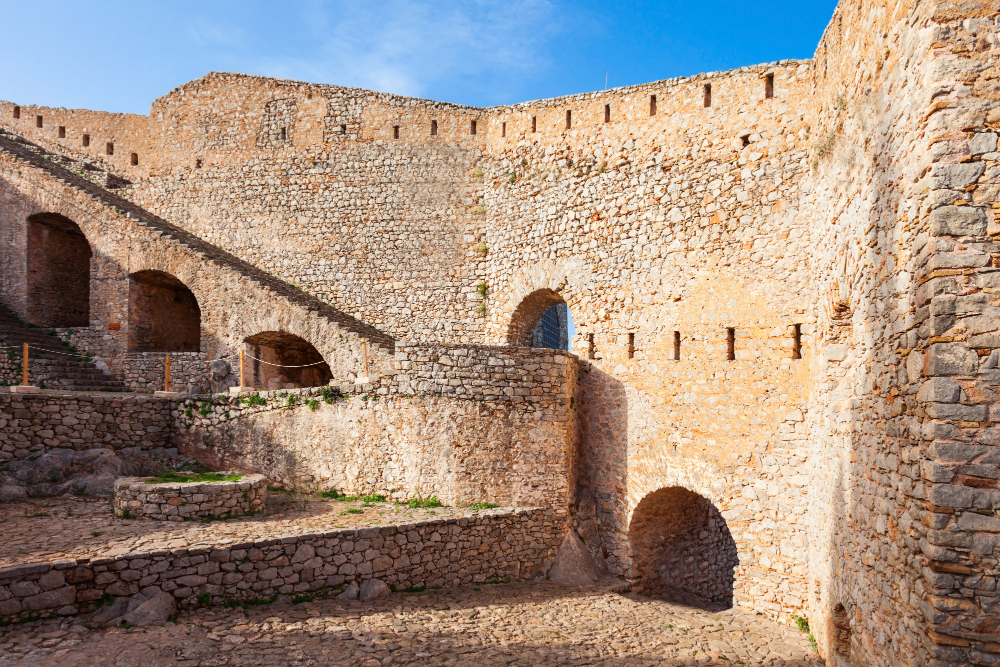
Miltiades Bastion: A prison overlooking the town – The Miltiades Bastion is remembered above all for its use as a prison. Historical accounts generally identify it as a place of detention from around 1840 to around 1926. During this period, prisoners described in local and historical sources as serious criminals and political prisoners were held there. The surroundings themselves exacerbated the misery of imprisonment. A prison within a mountain fortress was physically cut off from normal life. The walls were thick, the rooms spartan, and the prisoners were held high above the city below. Whilst the mountain location offered the guards a sweeping view, for the inmates it meant isolation. Freedom was visible in the distance – streets, the sea, rooftops and the open sky – yet it remained out of reach behind stone and iron. Descriptions of the prison environment emphasise its harshness. The cells and waiting areas were not designed for comfort. They formed part of a fortress built for military control, not for humane detention. In the collective memory surrounding the Miltiades Bastion, the prison is remembered as cramped, cold and oppressive: a place where the stone itself seemed to close in on the inmates. It is important to distinguish between documented history and later folklore. Sources confirm Palamidi’s role as a prison and the Miltiades Bastion’s association with prisoners. However, claims regarding specific deaths of individual people, ghostly apparitions or unexplained noises belong primarily to oral tradition and beliefs in hauntings. There is no verified historical evidence that ghosts haunt the fortress. Nevertheless, the physical remains of the prison lend the stories a powerful emotional foundation.
The Shadow of Theodoros Kolokotronis – The history of Palamidi Prison is also linked to one of the most significant figures of the Greek War of Independence: Theodoros Kolokotronis. The celebrated military commander was imprisoned in Palamidi in the 1830s after being accused of conspiring against the government of King Otto. His imprisonment is one of the best-known episodes associated with the fortress. Kolokotronis was held in the building commonly associated with the fortress prison, and this site is often presented to visitors as part of its history. He was put on trial, sentenced to death and later pardoned. His case serves as a reminder that prison walls do not merely confine ordinary criminals; they can also become instruments of political conflict, fear and shifts in power. The connection to Kolokotronis adds a complex layer to the image of Palamidi. The fortress, which had been conquered in the name of Greek freedom, later imprisoned a hero of that very revolution. This contradiction is part of the monument’s enduring power. Palamidi is not merely a symbol of victory; it is also a testament to how quickly political triumph can be followed by oppression. The legends surrounding the Miltiades Bastion draw their power from this atmosphere. A place marked by war, conquest, political imprisonment and human suffering easily becomes the setting for tales of restless spirits.
The Sounds in the Storm – The most persistent supernatural tale associated with the Miltiades Bastion revolves around sounds. According to local legends, stormy nights bring the voices of former prisoners back into the fortress. Some versions describe faint moans rising from the old prison cells. Others tell of chains scraping across stone floors, as if invisible prisoners were still moving through the darkness. Such stories are common in former prisons across Europe. Empty corridors, strong winds, creaking doors and echoes can create unsettling acoustic effects. Situated on a high hill exposed to the elements from the Gulf and the surrounding mountains, Palamidi can be particularly dramatic in wind and rain. Stone corridors amplify footsteps, whilst gusts of wind can whistle through openings, gates and narrow walls. There is no reliable evidence that the sounds described in legends are of a supernatural nature. Yet a natural explanation does not negate their effect. A sound heard in a modern building may seem ordinary; the same sound in a former prison fortress can feel like a message from the past. Here, the terror of the Miltiades Bastion is psychological rather than paranormal in nature. The visitor knows what this place was once used for. The imagination fills in what cannot be seen: prisoners waiting in the darkness, men cut off from the city below them, the weight of the doors closing behind them, and the silence after the guards have gone.
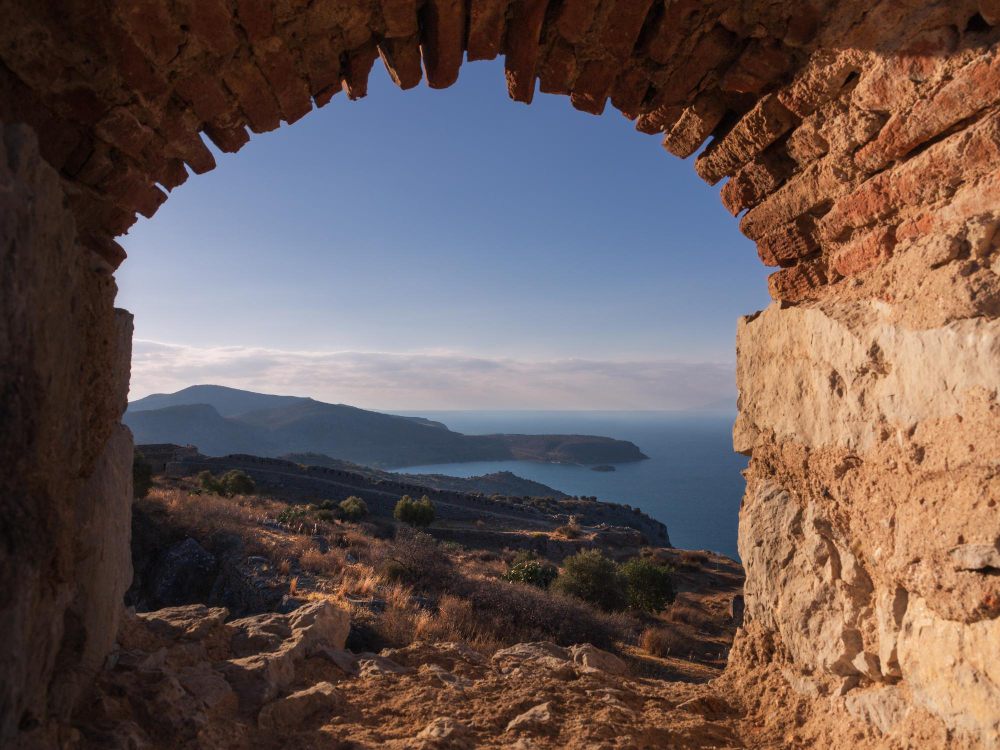
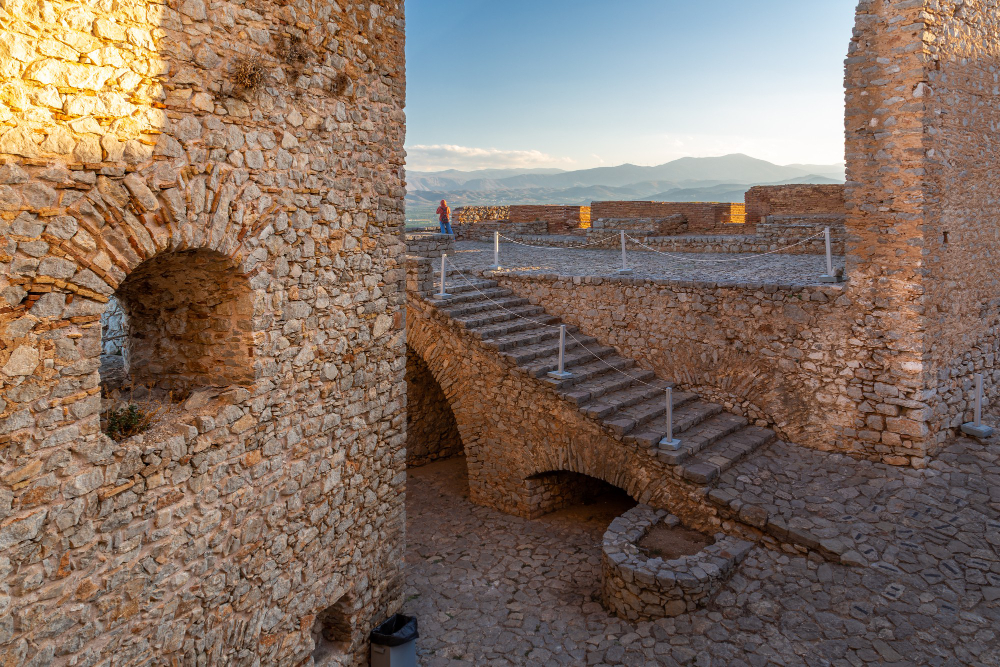
Architecture as a Source of Fear – Palamidi’s fearsome reputation is not based solely on stories. Its architecture creates an immediate sense of unease. The fortress is a labyrinth of steep approaches, thick ramparts, enclosed passageways and sudden precipices. It is a place designed to control movement. Entry and exit were never meant to be easy. The famous climb up from Nafplio is often said to comprise 999 steps, although the actual number depends on which route is counted. The ascent to the fortress can be gruelling, even in daylight. The exertion makes its height and isolation palpable. With every step, the distance from the bustling cafés, the harbour and the neoclassical streets of the town below grows. Once at the top, the view is magnificent, yet one can also feel exposed there. The dazzling view of the Mediterranean stands in stark contrast to the enclosed prison quarters. This contrast may be central to the unsettling character of the place. Palamidi offers both vast spaces and suffocating confinement. Beyond the walls lies the open sea; behind them lie spaces built to deny freedom. For prisoners, the fortress was certainly no romantic ruin. It was a functioning system of imprisonment. The horror in the Miltiades legends stems from this historical truth, and not from any need to invent monsters.
History, Folklore and Responsible Storytelling – Ghost stories often arise where official records leave gaps. Documents can tell us when a fortress was built, which power controlled it and how it was used. However, they rarely preserve every private fear, every illness, every night spent in a cell or every final thought of the people who passed through its gates. Folklore fills this gap. The alleged moans and the clanking of chains at the Miltiades Bastion should therefore be understood as cultural memory, not as confirmed fact. They express how later generations have interpreted the prison’s past. Whether one believes in ghosts or not, the stories preserve an essential truth: places of detention leave traces that are not always visible in archives. Palamidi Fortress remains a significant historical site and a protected testament to Nafplio’s Venetian, Ottoman and modern Greek past. Its bastions tell a story of military engineering and changing empires. The Miltiades Bastion adds another chapter – one marked by imprisonment, punishment and political tensions. At sunset, when the lights begin to come on down in Nafplio and the shadows lengthen across the fortress walls, the fortress feels less like a tourist attraction and more like a giant stone witness. The wind blows through the ancient walls. Doors and passageways vanish into the darkness. And in the imagination of those who know the old stories, the prisoners of the Miltiades Bastion have never quite disappeared.