 Isabella Mueller Baroness of Stainton le Vale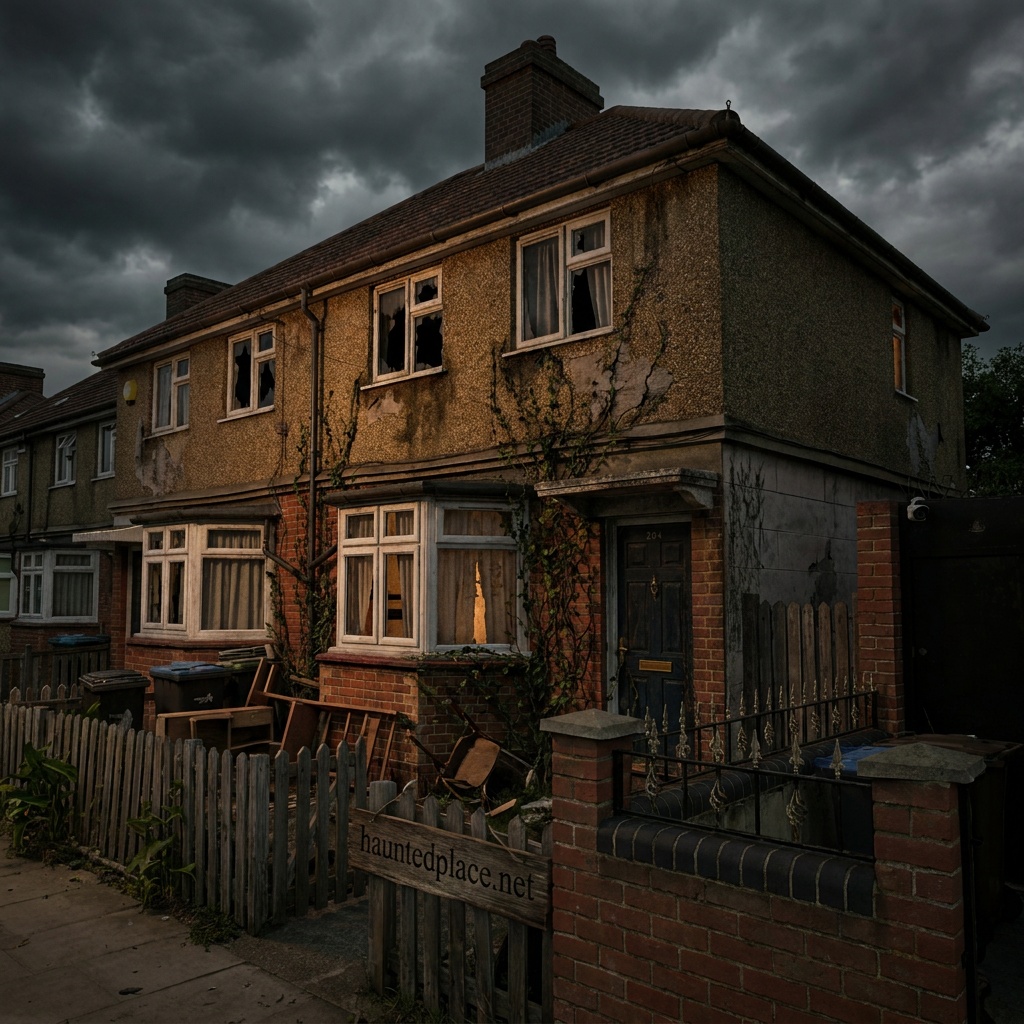
There are places in this world that have the power to shake us to our core. One such place is the seemingly unremarkable townhouse at 284 Green Street in Enfield, North London. The name may seem harmless and ordinary at first glance, but for the Hodgson family, this house became the scene of a horror that defied all reason between 1977 and 1979. The story of the Enfield Poltergeist is one of the most notorious and disturbing of all paranormal events—a chapter that still haunts many people decades later.
The events began in the summer of 1977, when Peggy Hodgson, a single mother of four, first noticed disturbing occurrences in her home. It all started with strange noises: knocking and scratching on the walls, furniture shifting for no apparent reason, and odd voices that seemed to come out of nowhere. At first, Peggy thought her children were playing a prank, but it quickly became clear that the cause of these phenomena could not be explained so easily.
The older daughters, Janet and Margaret, soon found themselves at the center of the eerie events. Janet, then only 11 years old, seemed particularly affected. According to reports, she experienced inexplicable physical phenomena: she was thrown out of her bed, felt invisible hands holding her, and her voice is said to have sometimes become distorted and grotesquely altered. The family grew increasingly fearful and sought help from friends, neighbors, and eventually the police. Yet even the officers who investigated the house could find no rational explanation for the phenomena. A police report even notes that a female officer observed an armchair moving across the room on its own—something she could neither explain nor ignore.
The media soon learned of the events and turned Green Street into a focal point of attention. Paranormal investigators, including Maurice Grosse and Guy Lyon Playfair of the renowned Society for Psychical Research, began their own investigations. The two men spent numerous nights in the house and documented hundreds of events that, in their view, could not be explained by conventional science. Audio recordings were made, photographs were taken, and witness statements were collected that were as fascinating as they were unsettling. Among the most disturbing evidence were audio recordings of a deep, raspy voice claiming to be the ghost of a man named Bill Wilkins. According to Bill, he had died of a heart attack in that very house a few years earlier. How could an eleven-year-old girl produce such a voice without damaging her vocal cords?
The house seemed to be permeated by a malevolent presence that had grown stronger over the years. Witnesses reported toys flying around, doors slamming, and a mysterious crackling in the air. A particularly frightening incident occurred when Janet allegedly levitated for a brief moment—a phenomenon witnessed by both her family and outside observers. Photos show the girl in a seemingly weightless position, floating in the air.
A miracle? A hoax? Or something we simply cannot explain yet?
While these events were viewed by many as evidence of the paranormal, there were, of course, skeptics as well. Critics claimed that the Hodgsons had staged the incidents to gain attention and possibly financial gain.
Voices were raised pointing out that Janet and Margaret had shown signs of manipulation. On one occasion, Janet was caught laughing with other children and explaining that she could move the furniture if she wanted to. Grosse and Playfair, however, remained convinced that at least a large part of the events was genuine. The Hodgson family itself repeatedly emphasized that they had not voluntarily gone through these traumatic experiences.
Apart from the scientific investigations and heated public debates, the emotional dimension of this story was always at the forefront. The Hodgson family lived in constant fear for over two years. For the children, every evening meant a new chapter in the book of horror: the eerie feeling of never being safe weighed heavily on the entire family. Eventually, they sought help from a priest to have the house blessed and drive out the evil presence. A few weeks later, the incidents did indeed subside, but the shadows of that time remained.
Today, more than four decades after the events, the Enfield Poltergeist case remains a mystery. There are still people who believe that the house on Green Street was haunted by a malevolent energy. Others are convinced that the entire story is the result of a well-orchestrated hoax. The truth will likely never be fully revealed, and perhaps therein lies the true essence of this eerie tale: our fear of the unknown, of forces that transcend our imagination.
Interestingly, the Enfield poltergeist case has found a firm place in modern pop culture. Films, books, and TV series, including the horror movie *The Conjuring 2*, have taken up and expanded upon the grim events. Yet despite these artistic interpretations, the original story remains both terrifying and captivating. What makes places like 284 Green Street so frightening? Is it the idea that evil exists—not in the form of fairy tales and myths, but right here in our reality?
Perhaps it is precisely this thought that haunts us: that there are doors that are better left locked. Places where evil could be hiding, lurking and waiting until someone turns the key. The case of the Enfield Poltergeist reminds us that sometimes not everything can be explained. And in such cases, only one thing remains: the cold shiver inherent in human fear.
Today, 284 Green Street may be an ordinary residential building, inhabited by people who have no connection to the events of that time. But for the Hodgson family, this place remains a memorial to the horror they once experienced. Their story shows us that not every secret needs to be revealed—and not every darkness should find its way into the light.