 Isabella Mueller Baroness of Stainton le Vale
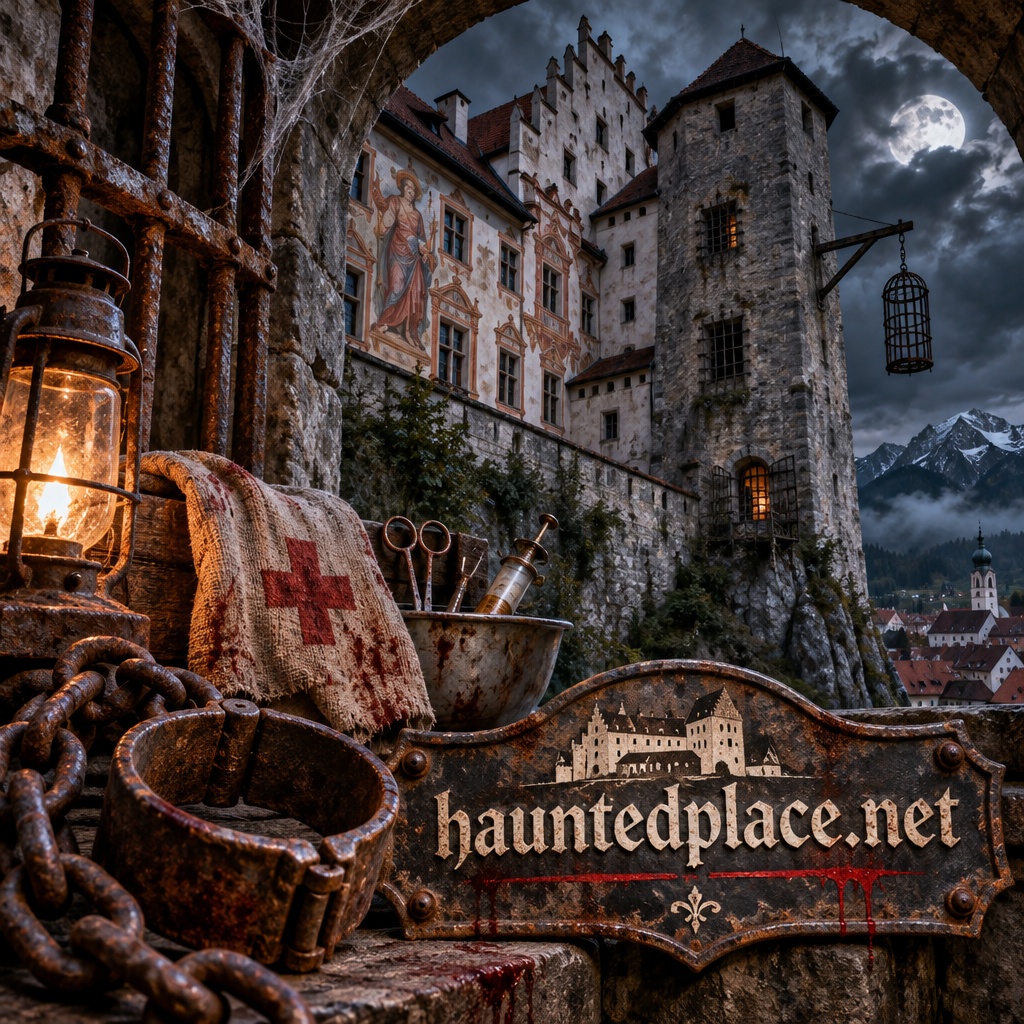
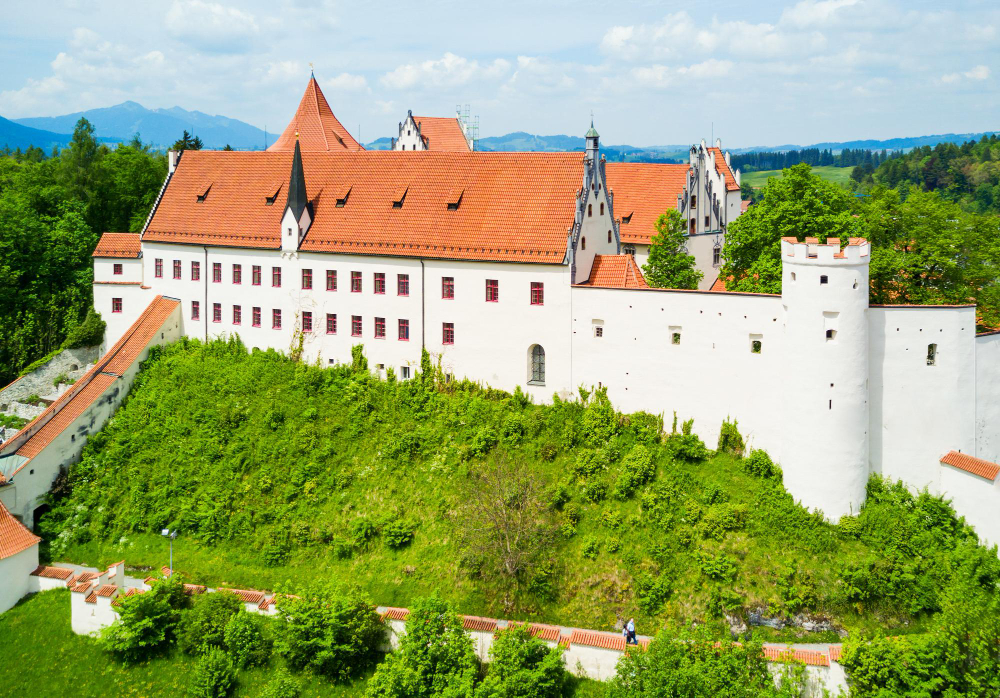
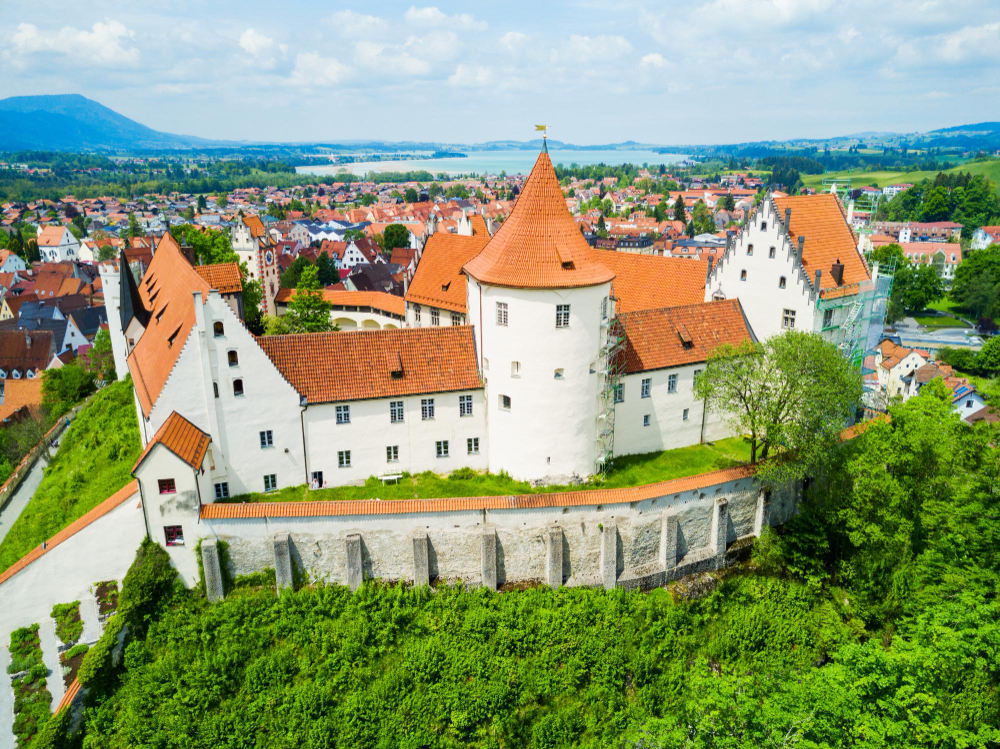
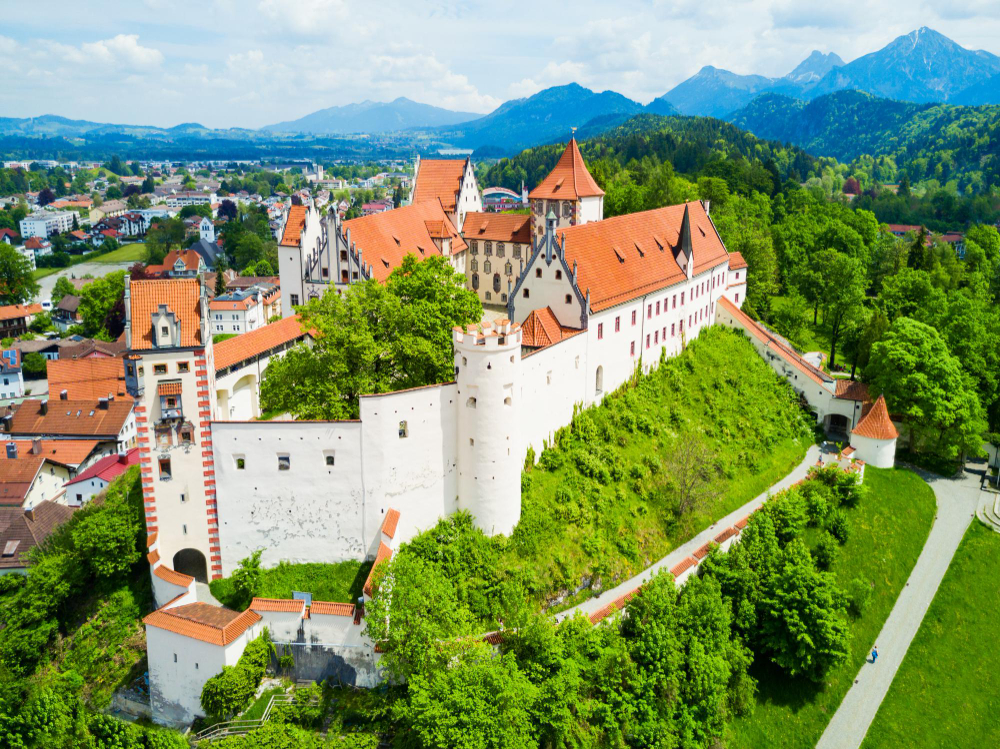
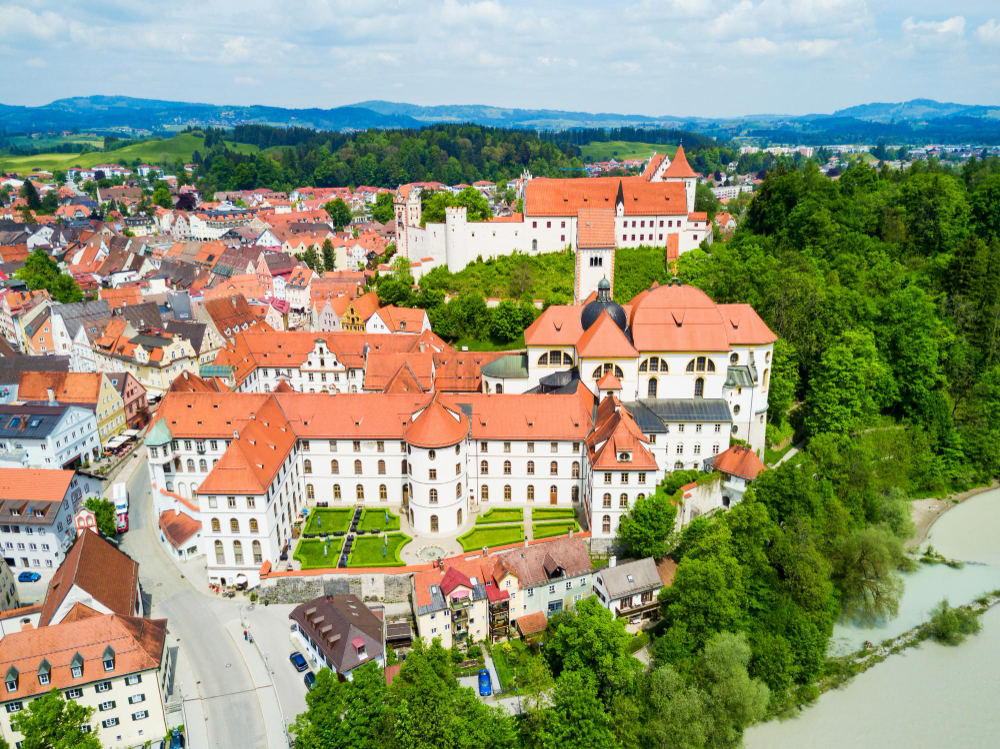
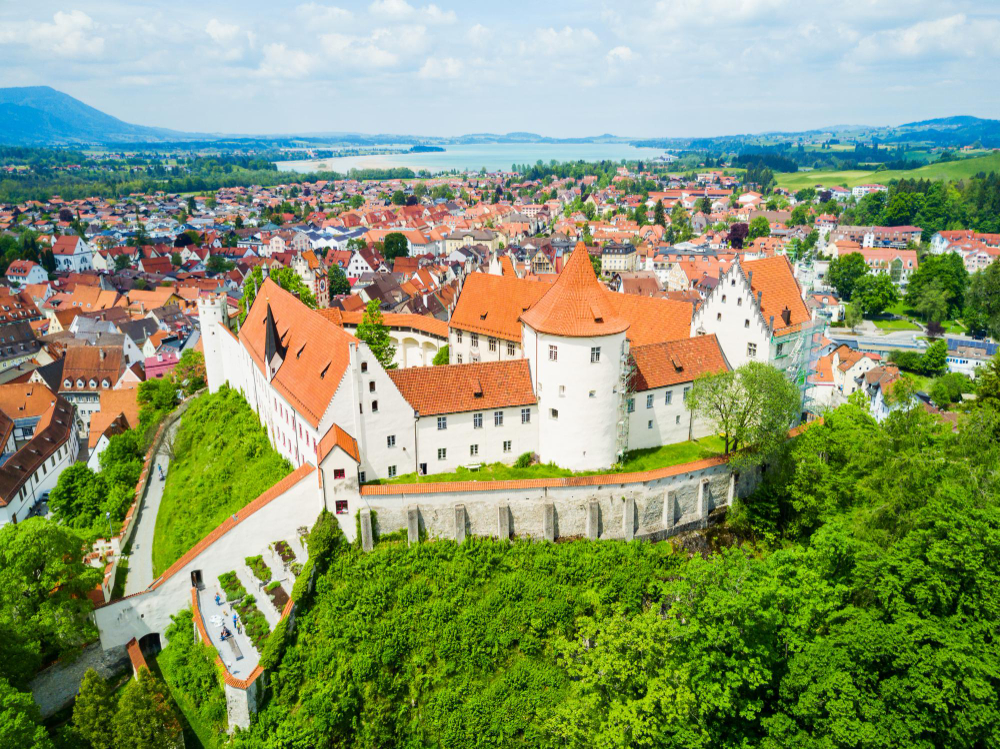
Towering high above Füssen’s old town stands the Hohe Schloss, one of Bavaria’s most famous late-Gothic castle complexes. Its light-coloured façades, elaborate trompe-l’oeil paintings and location on the edge of the Alpine landscape continue to shape the town’s skyline to this day. Yet behind this imposing architecture lies a chapter that is far less glamorous: the history of the former prison tower and the so-called ‘Fallturm’. These towers are a reminder of a time when the castle was not only a residence and administrative centre, but also a place of state control, illness and imprisonment. Following secularisation at the beginning of the 19th century, the use of the complex changed fundamentally. Parts of the High Castle served the Kingdom of Bavaria, amongst other things, as a military hospital and a prison. What today appears to be a tranquil architectural monument was, at that time, part of a harsh, often degrading daily existence.
A castle loses its former function – For centuries, the Hohe Schloss was closely linked to the Prince-Bishops of Augsburg. They used the complex as a summer residence and as a visible symbol of their secular power. As early as the Middle Ages, Füssen was of strategic importance due to its location on major transport routes and its proximity to Tyrol. The castle was therefore expanded not only as a residence but also to safeguard the town. Secularisation in 1803 brought an end to the rule of the ecclesiastical principalities. The possessions of the Prince-Bishopric of Augsburg passed to Bavaria. Consequently, the Hohe Schloss lost its original function as a bishop’s residence. The new administration was faced with the question of how the sprawling complex should be used in future. Bavaria utilised rooms and parts of the castle for various purposes. Alongside administrative tasks and military use, the accommodation of the sick and prisoners also played a role. Particularly at a time when social institutions, hospitals and prisons fell far short of today’s standards, admission to a military hospital or prison often meant a life spent in oppressive conditions.
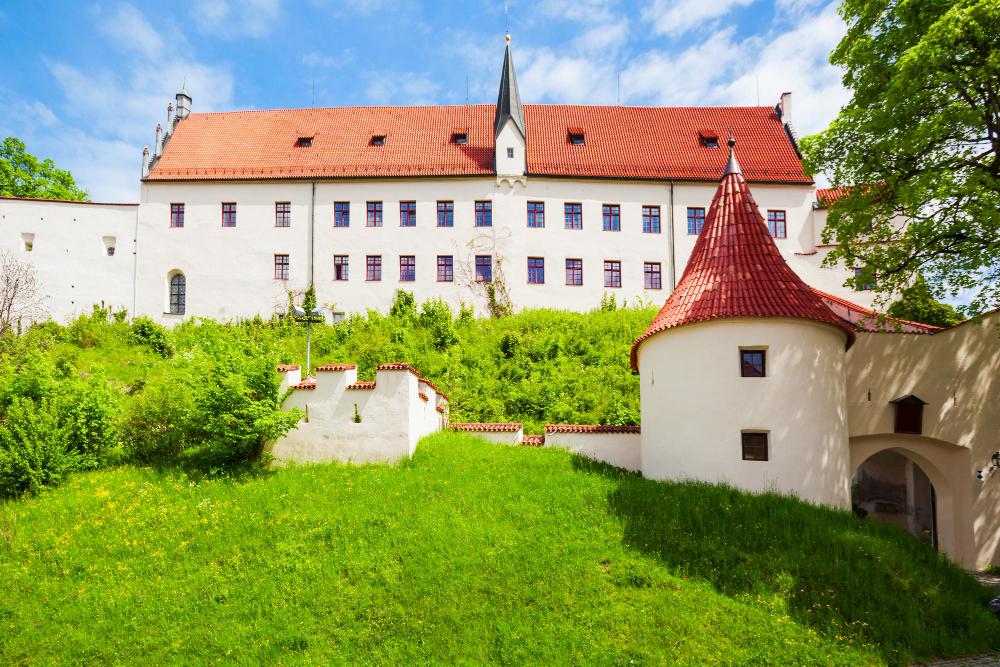
The Prison Tower as a Place of Isolation – The old prison tower is one of the clearest remnants of this past. Its name leaves no doubt as to its former purpose. Behind thick walls, cut off from normal city life, people who were in the custody of the authorities were detained. Nineteenth-century prisons were not places geared towards rehabilitation or personal development. Imprisonment served primarily as punishment, a deterrent and a means of confinement. Prisoners might have been incarcerated for serious crimes, but also for offences that would be viewed differently today. Poverty, begging, vagrancy, petty theft or breaches of strict public order regulations could bring people into conflict with the law. The very idea of a prison tower is therefore oppressive not merely because of its architecture. It is the function of the place that continues to define its impact to this day. A tower signifies height, separation and inaccessibility. Those held within it were cut off from everyday life. The cramped quarters, the heavy doors and the minimal connection to the outside world made imprisonment an experience of isolation. No comprehensive, verified accounts of individual prisoners – their names or fates – have been passed down to the public. It is precisely this silence that reinforces the sombre side of the place. The tower does not represent a single spectacular story, but rather many unknown people whose time behind its walls has been scarcely documented.
The name ‘Fallturm’ – The name ‘Fallturm’ has an even more haunting effect. The name immediately conjures up images of punishment, fear and violence. At the same time, historical context demands caution: not every grim legend surrounding old castles and palaces is automatically substantiated by sources. However, it is a proven fact that the Hohe Schloss possesses a former prison tower and a ‘Fallturm’, which serve as a reminder of the complex’s use during the Bavarian era. Today, the keep stands as an architectural testament to an era in which state authority was a more visible and immediate part of life. Punishment was not merely a process taking place behind the walls of government buildings. Towers, prison cells and military installations shaped the appearance of many towns. They made it clear that order could be enforced – if necessary, through intimidation and deprivation of liberty. The tower’s sombre atmosphere stems not from fabricated legends, but from its historical context. Behind its walls, it was not a matter of courtly life, art or prestige. It was about people who were not free. About locked doors. About surveillance. About the uncertainty of when a prison term would end and how life would change afterwards.
Military hospital and prison under one castle roof – Particularly distressing is the fact that, following secularisation, parts of the High Castle also served as a military hospital. In earlier centuries, a military hospital was often a place for soldiers, the sick or the wounded. Although medical care was available, it was not comparable to the facilities of modern hospitals. Illnesses, injuries and infections could have serious consequences. Hygiene, pain management and treatment methods reflected the standards of the time and often offered only limited relief. The coexistence of a military hospital and a prison lends the castle a particularly sombre atmosphere. On the one hand, there were people who were ill, wounded or weakened. On the other, people who had been deprived of their liberty. Both groups were at the mercy of others’ decisions: doctors, officials, guards and the state administration. For those affected, being housed in the castle did not mean enjoying the sight of a romantic castle setting. It meant dependence. The high walls, which today form part of the historic ambience for visitors, represented boundaries at that time that were not to be crossed.
The Hohe Schloss: between beauty and the past – Today, the Hohe Schloss is primarily associated with art and architecture. It houses a branch of the Bavarian State Painting Collections as well as the Municipal Gallery. The complex is regarded as a significant example of late Gothic secular architecture. Particularly well-known are the façade paintings, which at first glance give the illusion of sculptural architectural elements and lend the castle its unusual appearance. Yet the history of a building does not end with its most beautiful view. Old castles, in particular, embody different eras. They have served as residences, administrative centres, military bases, storage facilities, hospitals or prisons. The Hohe Schloss in Füssen is no exception. Its walls tell of power and culture, but also of the consequences of political upheavals and its utilitarian use by the Bavarian state after 1803. The former prison tower and the dungeon stand as silent counterpoints to the painted façades. Whilst the castle’s exterior design emphasises impact, craftsmanship and prestige, the towers symbolise confinement, control and exclusion. They reveal that the history of significant buildings encompasses more than just festive receptions, ecclesiastical dignitaries and art collections.
No place for made-up horror stories – Old prison towers quickly attract tales of ghosts, secret torture chambers or eerie noises. Such stories are often part of the later folklore surrounding historic buildings. For the Hohe Schloss in Füssen, however, it is crucial to stick to the verifiable facts. The real history is grim enough. Following secularisation, parts of the castle were used as a military hospital and a prison. The prison tower and the drop tower remain visible reminders of this period to this day. They symbolise a system in which people were sick, injured, imprisoned or at the mercy of state decisions. Precisely because no invented details are needed, the impact of these places endures. A tower that once served as a place of detention needs no embellished legend. Its walls speak of a time when freedom could be lost and when illness or imprisonment completely dictated one’s life.
The quiet side of the castle – Anyone walking through Füssen today and looking up at the High Castle will first recognise it as a landmark of the town. The complex appears bright, proud and ornate. Yet its history also harbours a quiet, sombre side. The former prison tower and the dungeon serve as a reminder that the castle was not always a place for visitors, exhibitions and cultural events. They evoke the 19th century, the consequences of secularisation and the conversion of what were once episcopal premises into state-run institutions. They serve as a reminder of prisoners, whose names are often forgotten, and of the sick who were cared for within the castle walls. Above all, however, they remind us that history consists not only of major events, but also of the fates of those people who vanished behind closed doors. The Hohe Schloss Füssen preserves both: the beauty of art and the gravity of its past. Between the magnificent façades, the towers stand as an unmistakable reminder. Not as a stage for fictional horror stories, but as a real trace of a time when, for some people, these walls did not mean protection, but imprisonment.