 Isabella Mueller Baroness of Stainton le Vale
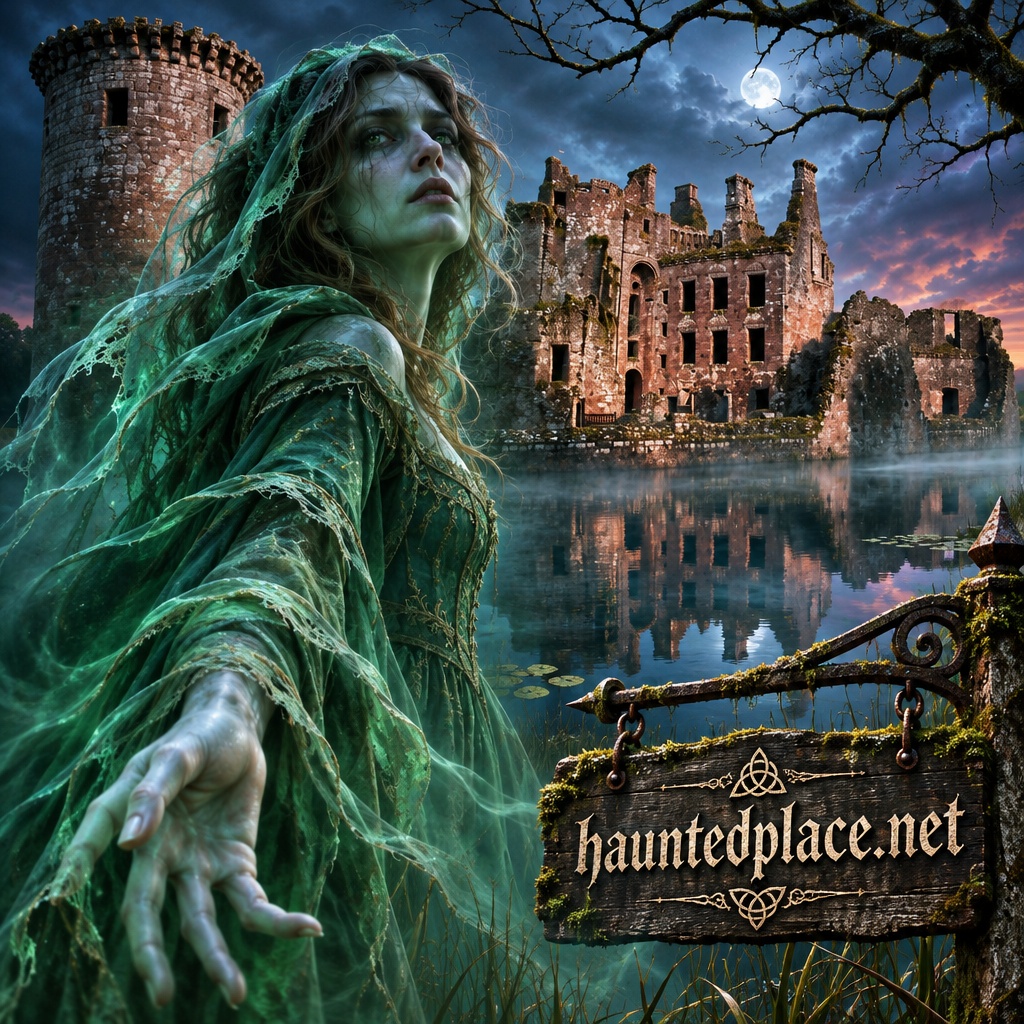
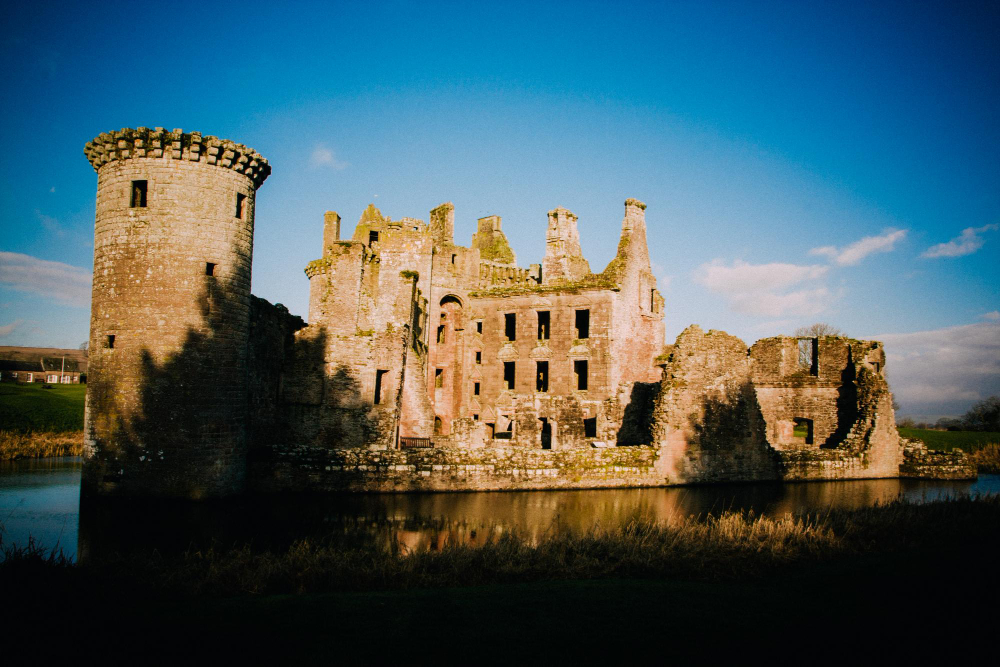
In the vast, windswept countryside of Dumfries and Galloway, near the south coast of Scotland, the ruins of Caerlaverock Castle rise up from a landscape of marshes, fields and water. The walls have crumbled, the towers stand exposed against the sky, and the moat still surrounds the unusual triangular fortress. In daylight, it is one of Scotland’s most impressive medieval castles. At twilight, however, Caerlaverock has long had a sinister reputation. Of all the stories associated with the castle, none is as deeply rooted as that of the Green Lady: a mysterious female figure who is said to appear in the ruins or near the surrounding waters. Visitors and local lore link her to the castle’s violent past – a history marked by military sieges, political conflicts and the downfall of noble families. Her story has never been definitively linked to any historical woman by name, yet the legend remains inextricably woven into the atmosphere of the place. Caerlaverock Castle was built in the late 13th century by the powerful Maxwell family. It replaced an earlier fortress nearby and was designed in a form rarely seen among British castles: as a triangle with a large round tower at each corner. The castle’s location was carefully chosen. Water and damp ground offered protection, whilst the surrounding terrain afforded the defenders a clear view of any approaching forces.
The structure was not merely a residence for a noble family. It was a fortified symbol of wealth, influence and survival in a border region that was repeatedly drawn into conflicts between Scotland and England. The Maxwells owned extensive estates in the south-west of Scotland, and their castle was soon drawn into the wars that shaped the country’s medieval history. Just a few decades after its construction, Caerlaverock became embroiled in the struggle for supremacy over Scotland. In 1300, during the Scottish Wars of Independence, King Edward I of England advanced on the castle with an army. The siege was recorded in the famous ‘Siege of Caerlaverock’, a contemporary account in verse that described the banners and coats of arms of the English knights involved. The fortress held out for a time, but the defenders were vastly outnumbered. Edward’s troops deployed siege engines against the walls, and Caerlaverock eventually surrendered. Although the castle was not completely destroyed at that time, the attack established a pattern that was to continue for centuries: Caerlaverock was repeatedly targeted due to its strategic importance.
It is this long history of fear, captivity and sudden violence that later helped to turn the ruins into a setting for ghost stories. The ‘Green Lady’ is often described as a pale or shadowy woman dressed in green, moving silently through the castle grounds. Some versions place her in the dilapidated chambers; others associate her with the moat, where still water reflects the crumbling walls and the shifting light of the Scottish sky. The legend has been passed down in various forms over the years. In many accounts, the ‘Green Lady’ is not a menacing ghost, but a sorrowful apparition. It is said that she wanders about as if searching for someone or something lost. Her appearance is often linked to a tragedy: a woman separated from a loved one, a victim of betrayal, or a figure associated with the death and suffering that took place during the castle’s turbulent history. No surviving historical record conclusively confirms the identity of the woman behind this tale. This uncertainty has allowed the story to evolve. Caerlaverock’s past offers many possible sources for a legend of mourning. The castle changed hands several times, was attacked and stood at the centre of conflicts that affected soldiers, servants, prisoners and noble families alike. Over generations, memories of real events and fictionalised details may well have blended to form the image of a woman in green wandering amongst the ruins.
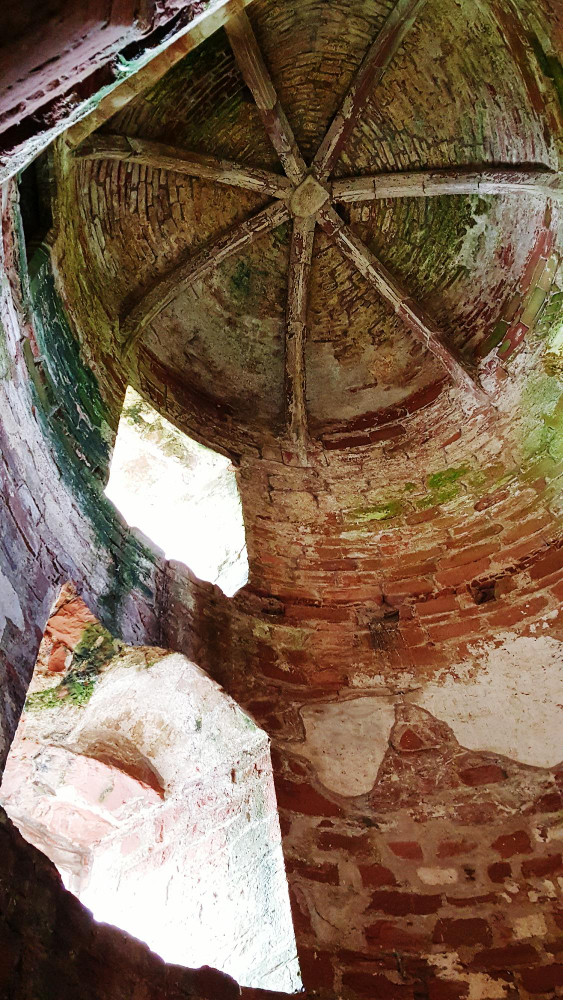
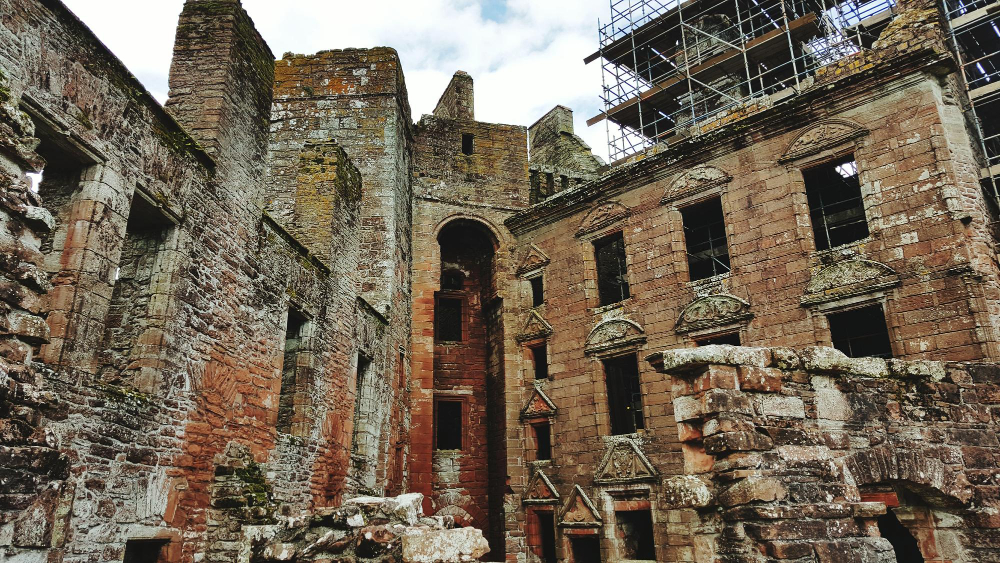
The castle’s architecture lends the story added power. In contrast to the rectangular fortresses often associated with medieval Europe, Caerlaverock’s triangular layout conveys a sense of seclusion. The main entrance was protected by a gatehouse and a drawbridge, whilst the moat formed a further barrier between the castle and the outside world. Anyone entering the grounds today still crosses the water before reaching the massive stone structure. Inside, the remains bear witness to both splendour and destruction. Parts of the later residential wings show that Caerlaverock was expanded beyond its original military function. The Maxwells transformed areas of the fortress into more comfortable accommodation and added architectural details that reflected changing tastes and status. Nevertheless, the castle never escaped the political entanglements of its location. During the 16th and 17th centuries, the Maxwell family became deeply embroiled in national conflicts. Their fate was shaped by religious tensions, struggles between rival noble houses, and the conflicts that led to the Wars of the Three Kingdoms. Caerlaverock was besieged once more in 1640, when the Scottish Covenanters attacked it during the conflict between the supporters of King Charles I and the opponents of his religious policies.
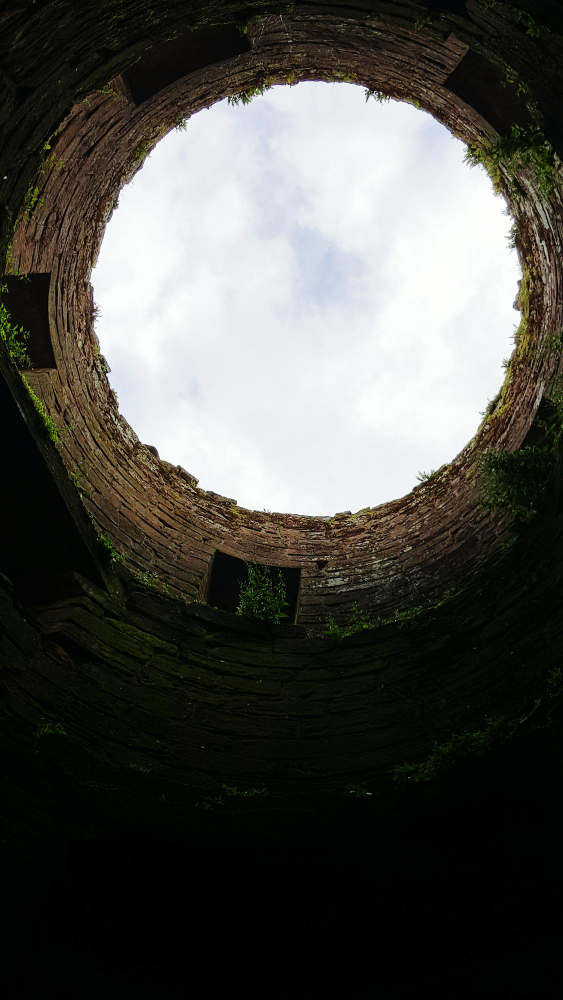
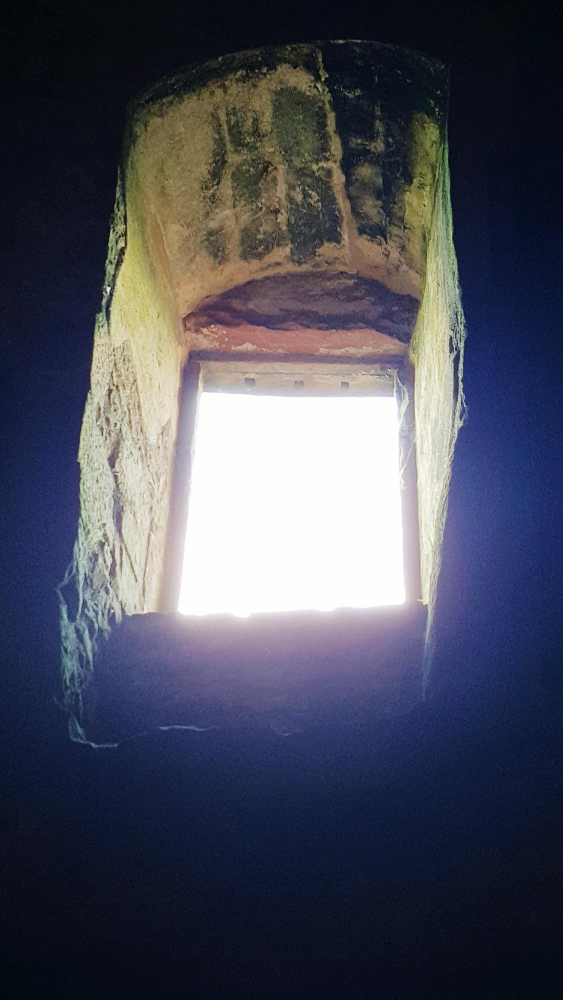
The siege of 1640 proved decisive. Once the castle had been captured, it was deliberately damaged to prevent it from ever being used as a fortress again. This measure, known as ‘slighting’, left Caerlaverock in the state of ruin that visitors see today. The destruction brought an end to its role as a functioning fortress and residence, but it also created the haunting atmosphere that later generations found so fascinating. A completely roofless ruin exudes a different kind of silence to an inhabited building. The wind blows through empty windows. Rain falls directly into rooms that were once used for banquets, gatherings and private family life. The open towers and broken walls make the past visible, yet unreachable. At Caerlaverock, this sense of loss is further heightened by the surrounding moat and the vast, flat landscape beyond. The legend of the Green Lady is part of this backdrop. Her story is not based on a single confirmed event, but reflects the castle’s entire history. It is linked to the emotional significance that people attach to places where conflict has repeatedly occurred. The castle witnessed soldiers arriving at its gates, families living under threat, and the rooms – which were never rebuilt – eventually being abandoned.
Folklore surrounding Scottish castles often gives form to such memories through figures such as the ‘White Lady’, the ‘Grey Lady’ or the ‘Green Lady’. At Caerlaverock, the colour green fits particularly well with popular imagination, as the ruins stand amidst grass, trees, reeds and dark water. In misty weather, it can seem as though the stone walls are emerging directly from the landscape itself. A figure dressed in green would appear both visible and concealed, part of the castle and part of the surrounding countryside. Stories of ghostly women are often recounted by visitors after evening walks or during guided tours of historic sites. At Caerlaverock, the legend has endured because the site already has a theatrical quality without the need for any additional embellishment. The moat, the secluded location and the unusual geometry of the fortress create a natural setting for tales of ghostly apparitions. The castle needs no artificial darkness; clouds, rain and the early Scottish sunset can transform the scene within minutes. Historic Environment Scotland, which is responsible for Caerlaverock Castle, presents the site primarily as an important medieval monument and as a testament to Scotland’s political history. The surviving structure reveals various phases of construction, damage and alteration. Through the remains, visitors can gain an insight into the life of a powerful border family, as well as the military threats that repeatedly reached the south-west of Scotland. The ghost story exists alongside this documented history, rather than replacing it. The ‘Green Lady’ cannot be corroborated by official records, as is the case with the siege of 1300 or the destruction of 1640. Yet legends often endure because they express the feelings people associate with a place. In the case of Caerlaverock, the story of a lonely woman wandering through the ruins has become part of the castle’s cultural identity.
For visitors, the strongest impression may not stem from a reported sighting, but from the contrast between beauty and violence. The castle has an elegant form, its towers reflected in the water, and its reddish-brown stone stands out against the green landscape. At the same time, every damaged wall serves as a reminder of attacks, surrender and deliberate destruction. As evening falls over Dumfries and Galloway, the castle’s empty windows grow dark. The moat falls silent, and the triangular silhouette seems separated from the modern world by water and shadow. Whether one interprets the ‘Green Lady’ as a local ghostly tradition, as a tale born of centuries of warfare, or simply as a symbol of the castle’s lost inhabitants – her presence remains inextricably linked to Caerlaverock. It is said that she wanders where noble families once lived, where armed men defended the gates, and where a great fortress was eventually silenced. In the silent corridors of the ruins and by the dark water, the ‘Green Lady’ continues to lend a human face to one of Scotland’s most dramatic medieval fortresses.