 Isabella Mueller Baroness of Stainton le Vale
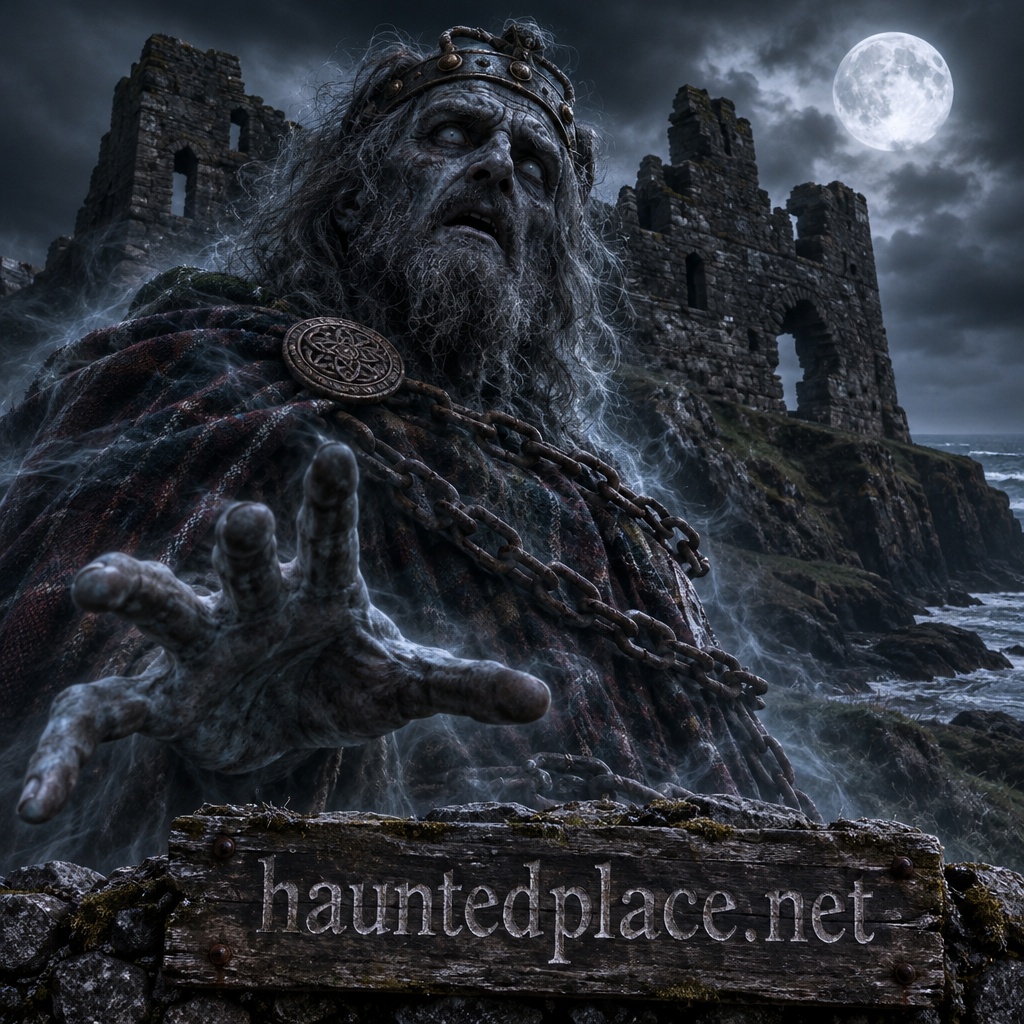
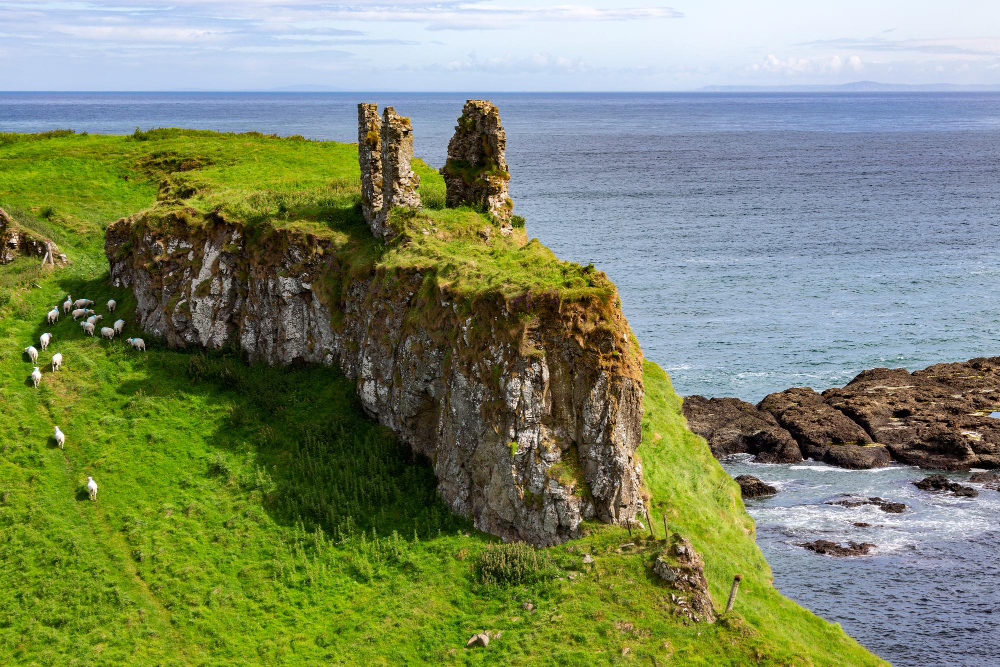
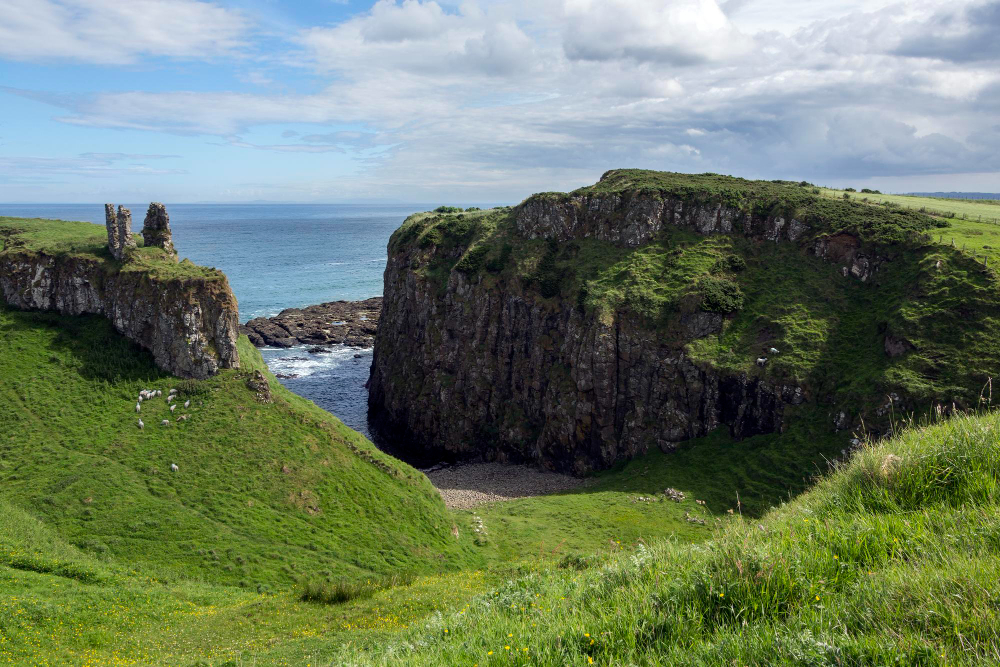
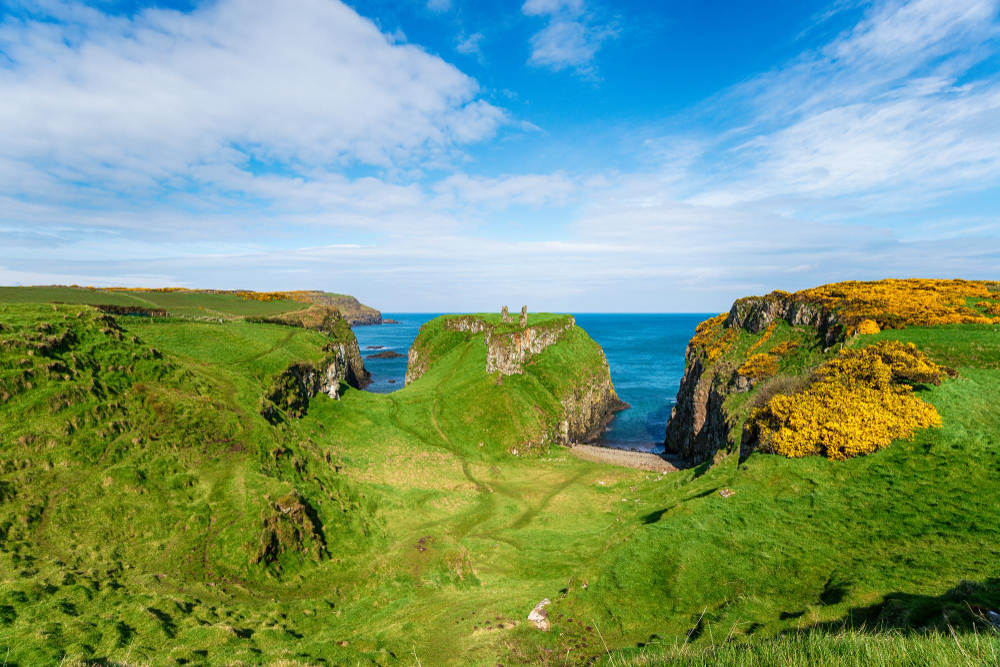
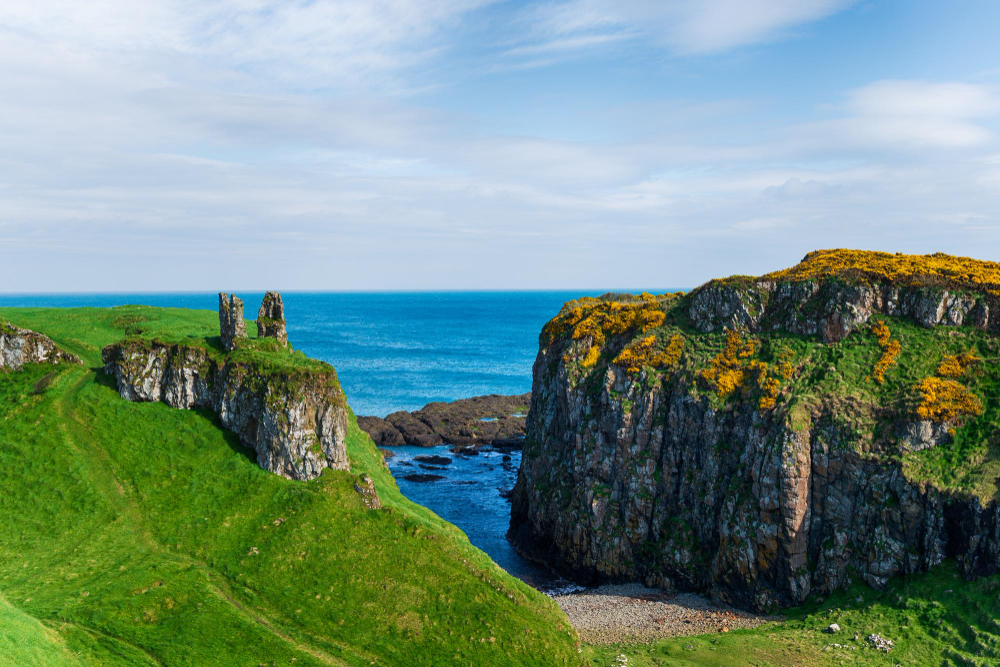
On the rugged north coast of Northern Ireland, where the Atlantic Ocean ceaselessly crashes against high basalt cliffs, lie the few visible remains of Dunseverick Castle. Visitors to the site will find no imposing castle complex with towers and halls. The complex has largely disappeared today; what remains are mainly earthworks, ditches and traces of a long, eventful past. Nevertheless, Dunseverick is one of those places around which particularly grim stories still circulate to this day. At the heart of local folklore lies the legend of a clan chieftain who is said to have been cursed for a serious crime, the nature of which has never been precisely described. After his death, so the story goes, his soul found no rest. It remained bound to Dunseverick. The legend imbues the ruined fortress with an atmosphere that is heightened by the landscape itself. Dunseverick lies on a rocky outcrop near Bushmills in County Antrim. The approach leads across green, windswept terrain, past the remains of ancient fortifications. From there, the land drops steeply down to the sea. In bad weather, clouds hang low over the cliffs, whilst mist rises from the water. The sound of the surf can often be heard from a great distance. It is precisely this secluded location that has made Dunseverick, for centuries, an ideal setting for tales of lost rulers, ancient guilt and restless spirits. Historically, Dunseverick was far more than a solitary coastal outpost. The site is regarded as one of the oldest significant fortifications on the Causeway Coast. Archaeological evidence and written records suggest that the site was in use as early as ancient times. The location was strategically advantageous: the headland offered a view across the coast, whilst natural rocks and steep slopes provided protection. The earthworks visible today bear witness to the fact that Dunseverick was fortified and altered over a long period of time.
Dunseverick is also of particular significance because of its connection to the early Christian traditions of Ireland. According to tradition, Saint Patrick is said to have visited the site in the 5th century and baptised people there. As with many early stories of saints, written records, religious tradition and local folklore are intertwined. What is certain, however, is that Dunseverick occupies a firm place in regional history and has long been regarded as an ancient, extraordinary site. The darkest tale associated with the ruins concerns the nameless chieftain. The common versions of the legend provide no clear information about his identity. Nor is his crime specifically named. It is precisely this silence that lies at the heart of the narrative. The deed is said to have been so grave that it brought a curse upon him: the chieftain was condemned to be unable to move on after his death. His soul, bound by guilt and punishment, was to remain in Dunseverick. The vagueness of this story has meant that it has been retold time and again over generations. The chieftain does not appear as a clearly defined historical figure, but as a symbol of an ancient guilt that lives on in a specific place. Visitors and local residents have reported that the ruins have an oppressive effect at dusk. The wind, the cries of seagulls and the deep roar of the sea create sounds that are difficult to make sense of at night. In such an environment, the notion of an invisible inhabitant could easily take root.
In some accounts of local folklore, the chief’s ghost is described as a restless figure linked to the former seat of his power. According to tradition, Dunseverick was not merely a place of refuge, but a seat of power. Whoever lived there controlled a strategically important stretch of coastline and enjoyed protection behind ramparts and moats. The cursed chieftain is said to have lost this position as a result of his actions. Instead of ruling over land and people, he is said to have been condemned to watch over the ruins that remain of his former power. Although the story is often told as a ghost tale, it should not be understood as a documented historical event. There is no generally accepted historical record of a specific chieftain who is said to have been cursed for a particular crime. Rather, the legend belongs to that category of tales which cling to ancient castles, remote coastlines and the barely tangible traces of the past. Its power lies not in verifiable details, but in the connection between a real place and a fear passed down through the generations. Dunseverick itself has witnessed several eras. Medieval sources mention the castle as a significant site. The place was evidently part of the political and military conflicts that shaped Ireland over the centuries. In the 17th century, the complex was damaged in the course of the conflicts of that time. The fortification subsequently lost its importance and fell into disrepair. What remains visible today gives only a faint impression of what Dunseverick might once have looked like.
It is precisely the loss of the buildings that leaves room for legend. Where walls are missing and the past is visible only as the contours of the land, scattered stones or a ditch, questions arise. Who lived here? What battles were fought? What happened behind the gates that have since disappeared? The legend of the cursed chieftain does not fill these gaps with a verifiable chronicle, but with a tale of punishment and eternal bondage. It transforms the ruins into a place where the past does not seem to have been fully laid to rest. The path to Dunseverick today leads through a landscape that appears both open and forbidding. On one side, the sea stretches to the horizon; on the other lie fields and pastures. The coast is part of a region that attracts numerous visitors due to its dramatic natural formations. Not far away are well-known destinations such as the Giant’s Causeway and the Carrick-a-Rede rope bridge. Dunseverick, by contrast, remains quieter and less spectacular in the usual tourist sense. It is precisely this that gives it its charm: The place demands attention rather than entertainment. As you approach the remains of the castle, the first thing you notice is the shape of the terrain. The complex was built on a natural rocky outcrop that was sheltered from the sea. On the landward side, people reinforced the defences with ditches and ramparts. These traces are not as impressive as the preserved stone walls, yet they speak of planning, the need for protection and control. Dunseverick was not merely a ruin that only gained significance through later tales. Its historical location and archaeological remains show that the site played a role over a long period of time.
The ghost story alters one’s perspective on these traces. In the imagination, a ditch becomes the boundary between the present and the past. A path across the grass can seem like a route that former inhabitants still use. When the light over the Atlantic changes rapidly, when clouds obscure the sun and the cliffs appear dark, the surroundings lend themselves to the ancient tale of a soul that cannot be set free. Yet Dunseverick Castle remains, above all, a place where history and legend coexist. Its history can be carefully reconstructed from sources, excavations and the preserved topography. The legend of the cursed chieftain, on the other hand, defies precise dating and clear evidence. It is a tale passed down through the generations that imbues the place with a sense of mystery. Its unknown perpetrator, his unnamed crime and his never-ending punishment make it particularly haunting. Perhaps this is precisely what leaves such a lasting impression on visitors to Dunseverick. It is not the view alone, nor the few visible ruins, but the notion that, beneath the wind and the sound of the waves, an ancient story continues to be carried forward. A story of a chieftain who wielded power, is said to have incurred a grave guilt, and who, after his death, was left behind not in a magnificent palace, of all places, but in a storm-battered, slowly crumbling coastal fortress. Dunseverick Castle thus preserves two pasts at once: the documented history of an ancient fortification on the Antrim coast and the eerie legend of a cursed figure whose name has long been lost. The ruins offer no answer as to whether anyone has ever seen his ghost. They offer only wind, rocks, the sea and the remains of a castle. Yet for the legend, that is enough. For as long as the surf rages beneath the cliffs and mist hangs over the ramparts, the story of the cursed chieftain of Dunseverick will live on.