 Isabella Mueller Baroness of Stainton le Vale
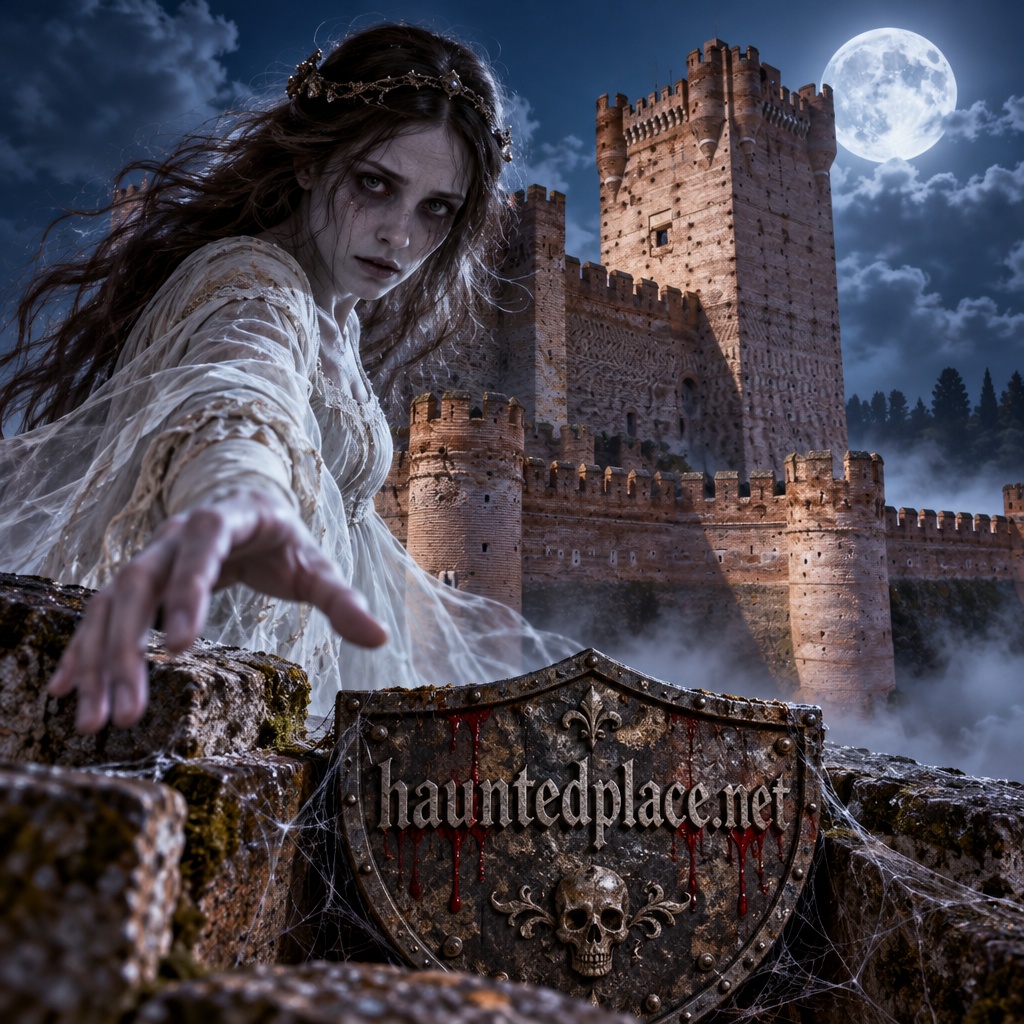
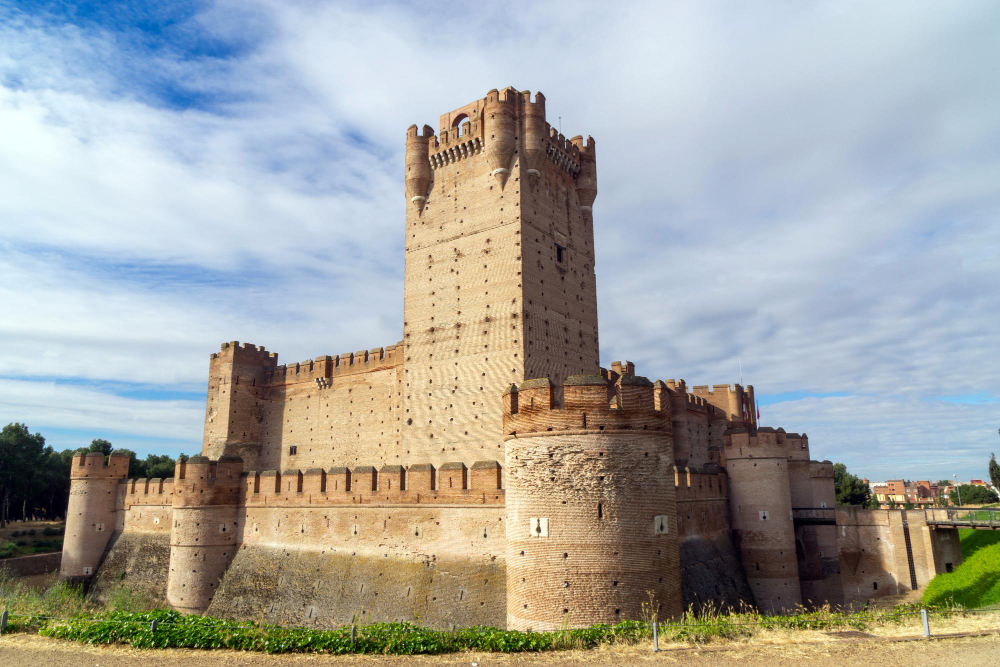
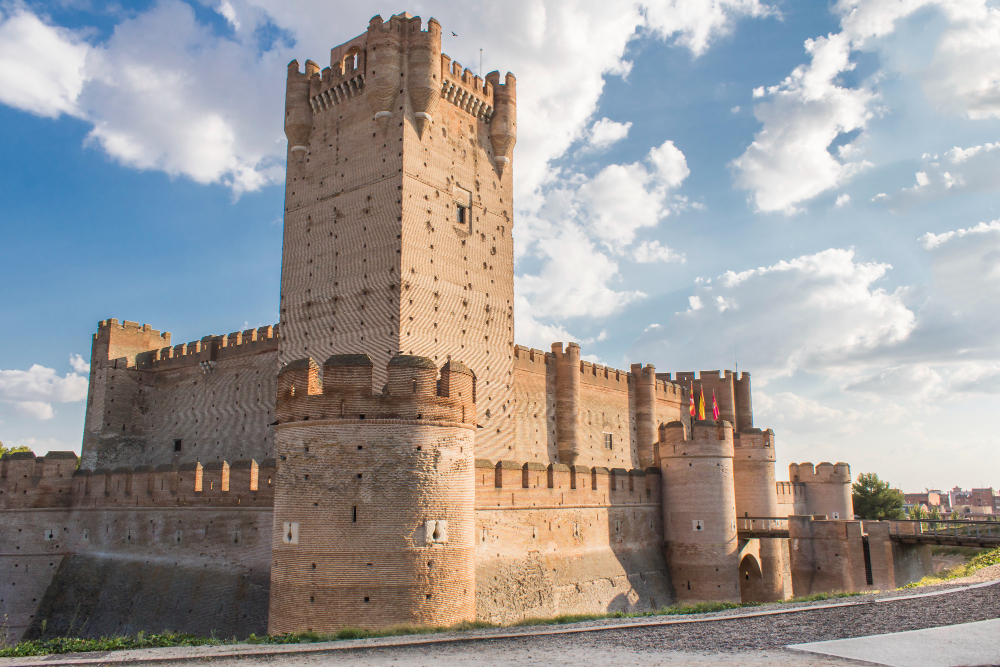
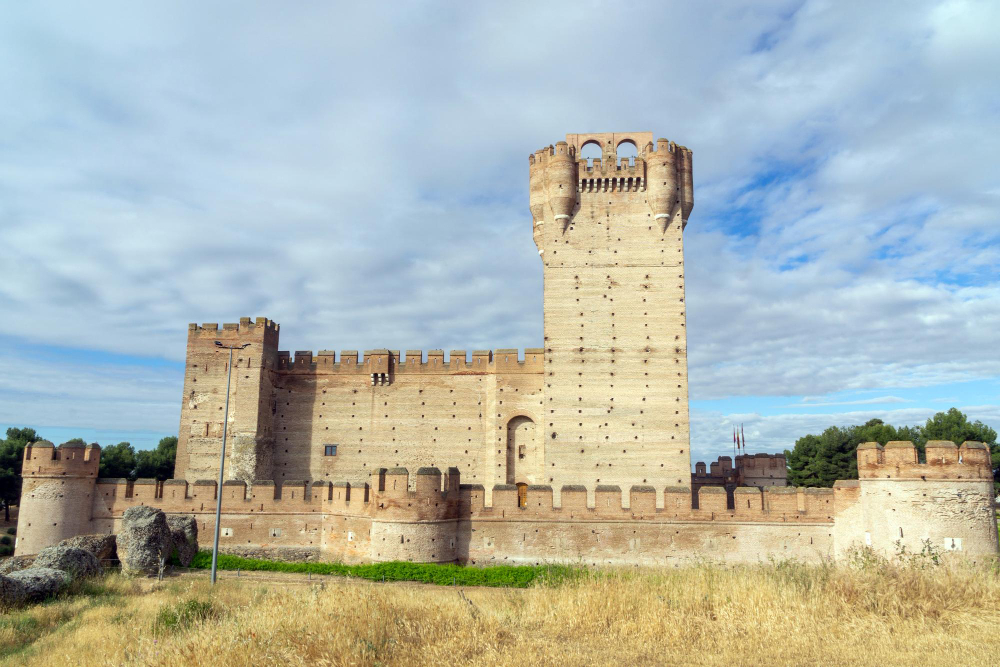
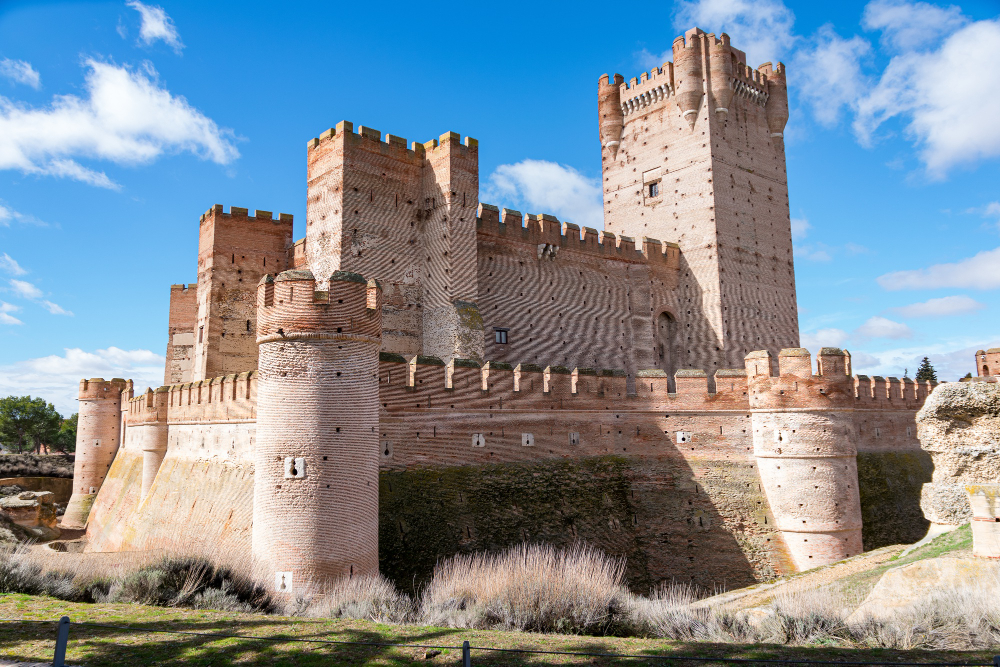
Towering high above the Castilian plain stands the Castillo de La Mota, one of Spain’s most impressive fortifications. Its mighty walls of reddish brick, the deep moat and the Torre del Homenaje, visible from afar, have shaped the landscape of Medina del Campo in the province of Valladolid for centuries. By day, the castle is a monument to history: a scene of royal power, military conflicts and political decisions. But when the sun sets and the wind sweeps across the ancient battlements, the town recalls a different story – the legend of the Lady of La Mota. According to local lore, a young noblewoman is said to have once been imprisoned in the castle because of a forbidden love. She died, so the story goes, cut off from the world and with no hope of freedom. Ever since, her spirit is said to appear on the walls of La Mota on bright full-moon nights. Some claim to have seen a slender figure dressed in white, whilst others speak only of a shadow or a distant, mournful cry. There is no definitive proof of the tale. It is precisely for this reason that it ranks among those legends that have been passed down through the generations: it links the real, sombre history of the fortress with the notion of a tragic love that even death could not end.
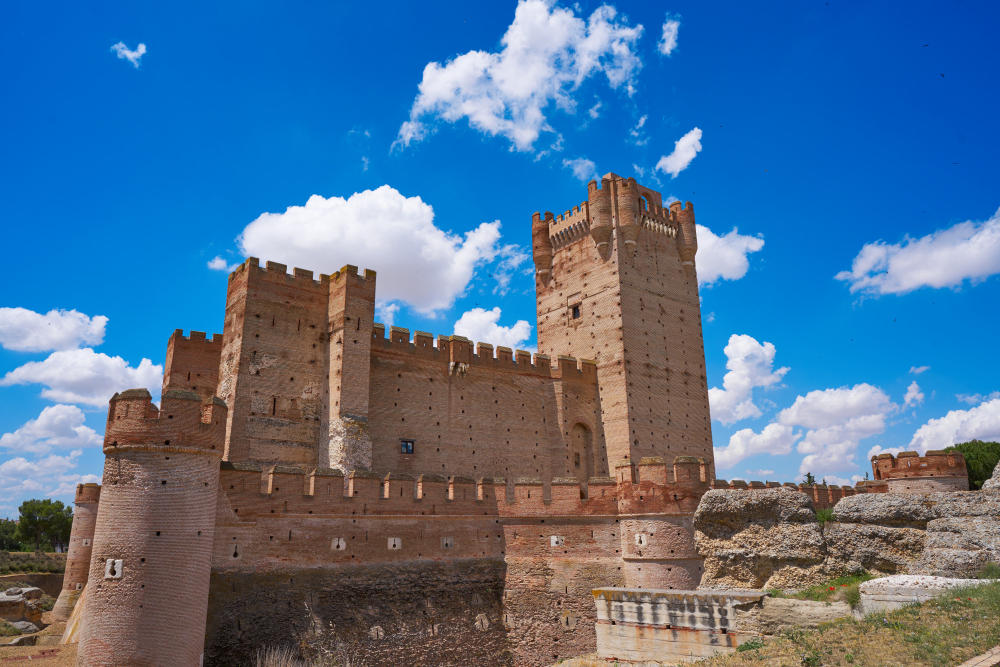
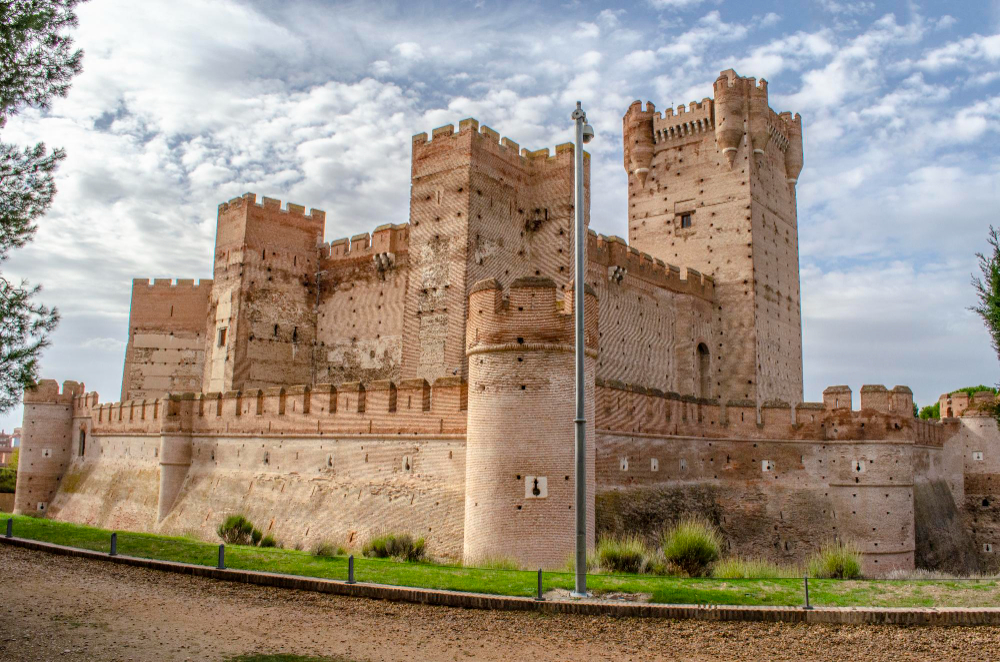
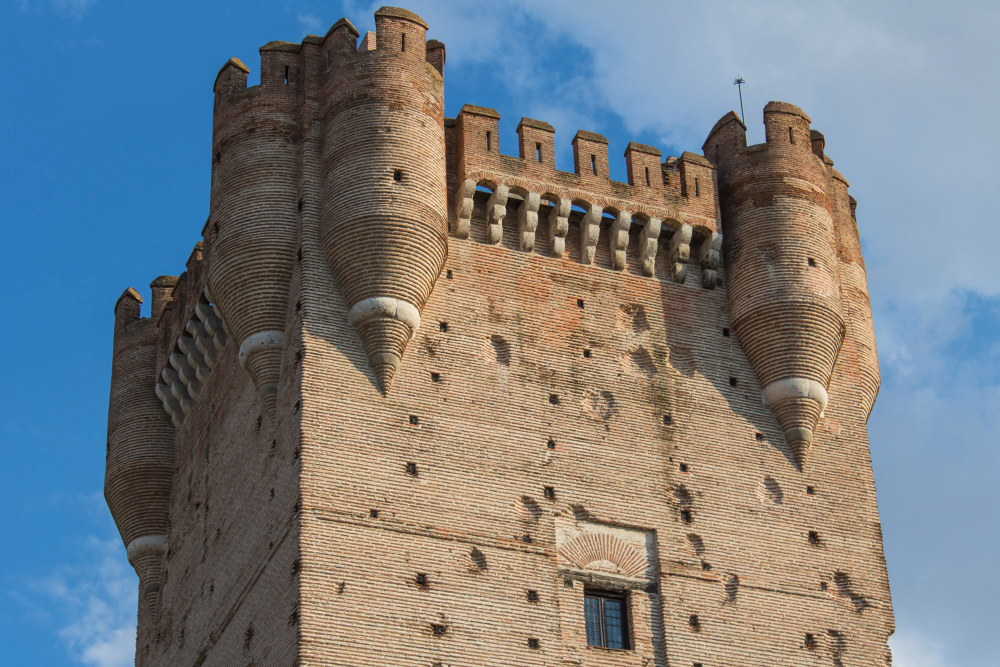
A castle overlooking the plains of Castile – The Castillo de La Mota stands on a hill on the outskirts of Medina del Campo. Its name derives from the ‘mota’, a natural or artificially raised mound upon which a fortified complex was built. From here, the surrounding countryside could be surveyed; travellers, trade routes and potential attackers could be spotted at an early stage. The castle visible today was built mainly in the 15th century, although the site’s strategic importance dates back much further. La Mota was not merely a military stronghold. The fortress also served the Castilian Crown as a royal residence, a prison and a symbol of sovereignty. Its architecture was designed to radiate strength: thick walls, bastions, loopholes, a moat and a mighty main tower made it clear that La Mota was more than just an ordinary nobleman’s residence. The Torre del Homenaje, the keep of the complex, in particular, dominates the castle’s appearance. It towers high above the surrounding countryside and, from a distance, almost appears like a sentry standing watch over the flat land. Within the castle walls lie courtyards, rooms and corridors that bear witness to the site’s long history of use. It is precisely these secluded corners, the staircases and dark passageways that provide the ideal backdrop for a ghost story.
The forbidden love of the young noblewoman – At the heart of the legend is a young woman from a noble family. Her name is usually not mentioned in the versions that have been handed down. The silence surrounding her identity heightens the story’s air of mystery: she could have been any young woman whose life was determined by her background, family and duty. According to tradition, the noblewoman fell in love with a man whom her family did not consider to be of a suitable social standing or a suitable match. At a time when marriages amongst the nobility often served to secure property, alliances and political influence, a love that defied the family’s expectations was regarded as a threat. The young woman is said to have defied her relatives’ orders. As a result, she was taken to the Castillo de La Mota and imprisoned there. Whether she was held captive in one of the towers, in a secluded chamber or in an underground section of the fortress, the legend offers no consistent account. Yet the image remains the same: a young woman, cut off from the outside world, gazes out of a small window at the endless Castilian landscape and waits in vain for a sign from her lover or for her release. The walls of La Mota had been built as a defence against enemies. In the legend, however, they become the confines of a personal prison. What outside signified security and power became, for the captive, a symbol of her hopeless situation.
Solitude behind the walls – The story of the Lady of La Mota thrives above all on its quiet tragedy. Unlike many dramatic legends about castles, it tells of no battles, bloody acts of revenge or spectacular escapes. Its core is solitude. According to tradition, the young noblewoman spent her final days alone in the fortress. No one could or would help her. Her lover was said to have been far away, and her family did not reverse her decision. Over time, hope and resistance faded. Eventually, she died in the castle without regaining her freedom. The exact account of her death varies depending on the version of the tale. Some versions leave it open as to whether illness, grief or the harshness of her imprisonment brought about her end. It is precisely this ambiguity that is part of the legend’s character. There is no document that unequivocally confirms the case, no verified biography and no name that can be linked beyond doubt to the story. The Lady of La Mota is therefore not a historical figure in the strict sense, but a figure of local memory and oral tradition. Yet the castle itself lends credibility to the tale. Anyone walking through its rooms can easily imagine what it might have been like to be cut off from the world for such a long time. The massive walls, the narrow openings and the height of the tower mean that the story does not seem like a distant fantasy, but rather like a possible fate from a bygone era.
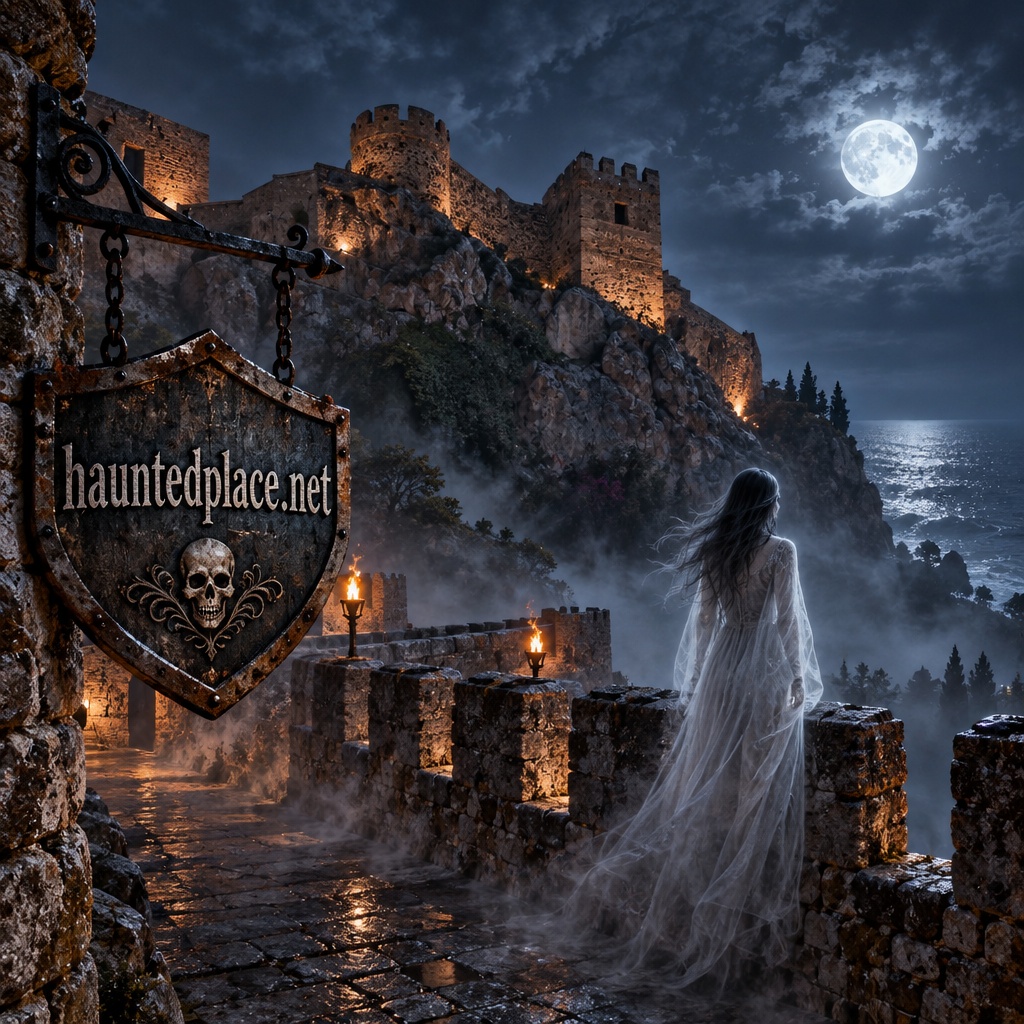
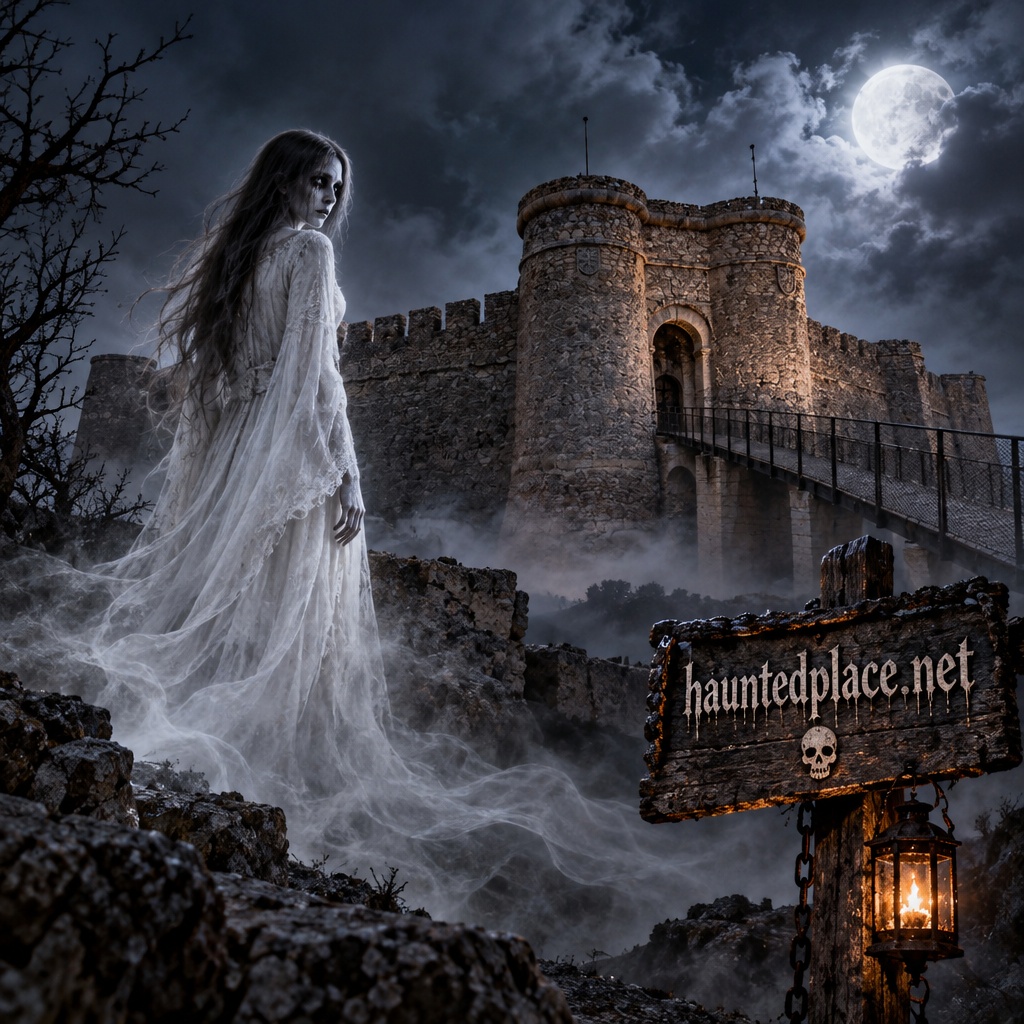
The Apparition on Full Moon Nights – According to legend, the young woman has found no rest since her death. On nights when the moon is full, she is said to wander along the ramparts of the Castillo de La Mota. The apparition is often described as a woman in light-coloured or white clothing. She moves silently along the walls, sometimes towards the tower, sometimes to gaze out over the plain. Other accounts do not mention a clearly visible figure, but rather a fleeting glimmer of light between the battlements. Still others speak of soft footsteps, even though no one can be seen on the battlements. In some accounts, it is a sigh or a sad song carried on the wind. Such details vary from one teller to another – yet the connection between the ghost and the unfulfilled love remains constant. The full moon plays a special role in this tale. Its cold light makes the fortress’s brick walls appear silvery and casts long shadows across courtyards and battlements. In the darkness, the castle appears different from how it does by day: larger, quieter and more secluded. The legend draws precisely on this atmosphere. The lady does not appear amidst the bustling life of the town, but at a time when the past seems to draw nearer. Anyone who looks at the castle at night can understand why this story has been passed down in Medina del Campo. The Castillo de La Mota is not a small, hidden building, but a dominant fortress that stands out against the sky. A white figure on its walls would be visible from a great distance – and yet so fleeting that no one could say for certain what they had actually seen.
Between History and Legend – The story of the Lady of La Mota forms part of the rich legendary heritage surrounding historic castles on the Iberian Peninsula. For centuries, fortresses were places of power and violence, but also of imprisonment, fear and personal destinies. It is part of the collective memory that tales of mysterious prisoners, lost lovers and restless spirits should arise around such places. The Castillo de La Mota provides a particularly fitting historical setting for this. The castle was closely linked to the Castilian monarchy and underwent several phases of reconstruction and use. Under the Catholic Monarchs, Isabella I of Castile and Ferdinand II of Aragon, the complex gained great significance. Isabella stayed in Medina del Campo on several occasions; in the late Middle Ages, the town was an important trading centre and famous for its fairs. The fortress was thus part of a world in which political interests, dynastic marriages and social hierarchies shaped the lives of the nobility. However, the legend does not mention any documented prisoner whose biography could be unequivocally linked to the ghostly lady. It should therefore be understood as folklore, not as a verified historical account. Its value lies not in verifiable details, but in the atmosphere it preserves: the fear of loss of freedom, the harshness of family expectations, and the notion that an unjust separation can continue to have an effect even after death.
A shadow that lingers – Today, the Castillo de La Mota is an important cultural monument and one of the best-known attractions in the Castile and León region. Visitors come for the architecture, the history and the view over Medina del Campo. Yet alongside the facts, dates and names of the rulers, the Lady of La Mota also remains part of the place. Her story gives the walls a human voice. It serves as a reminder that behind great fortresses lie not only political decisions and military events, but also the stories of people who lived in the shadow of power. The young noblewoman of the legend has no confirmed name, no known portrait and no grave that can be unequivocally attributed to her. Yet she must not be forgotten. When the full moon hangs over the Castilian plain and the castle’s battlements glow in the pale light, the people of Medina del Campo still tell tales of the white figure on the walls. Perhaps it is merely the wind sweeping through the old embrasures. Perhaps a shadow cast by the moonlight across the bricks. And perhaps, as the legend goes, the Lady of La Mota still wanders up there – in search of the freedom and love that were denied her during her lifetime.