 Isabella Mueller Baroness of Stainton le Vale
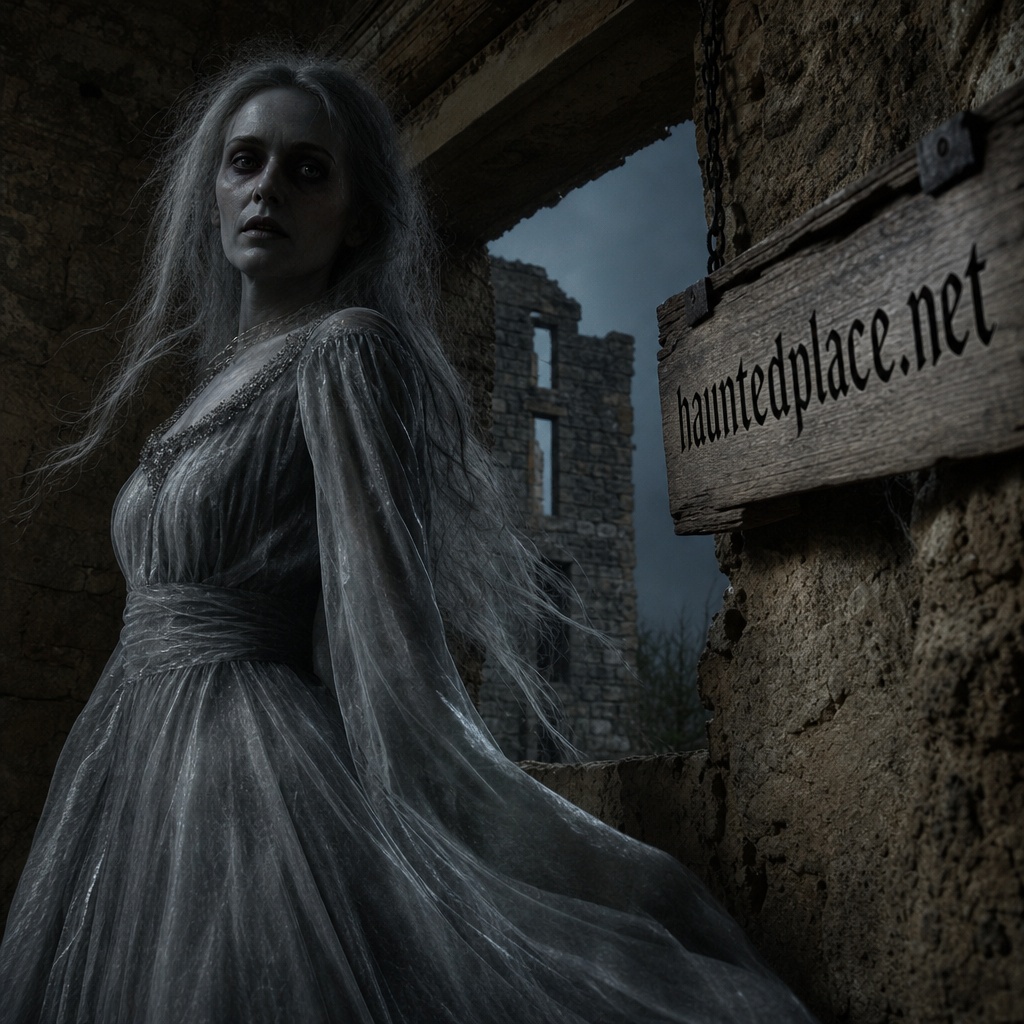
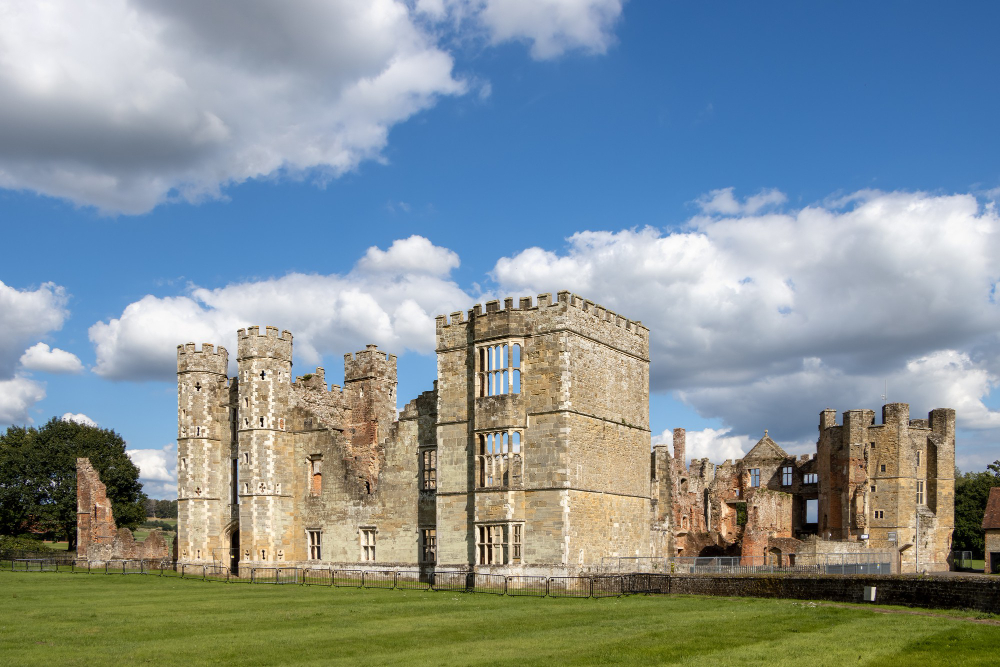
Amidst ancient trees, overgrown walls and the quiet lanes of the southern English town of Midhurst stand the ruins of Cowdray House. This once-magnificent country house in West Sussex is now best known for its impressive architecture, its links to English history and one of the region’s most famous ghost stories: the legend of the ‘Grey Lady’. For many years, visitors and local residents have spoken of a female figure said to appear in the dark openings of the ruins. She is usually described as wearing long, grey robes, moving silently across the grounds and disappearing once more amongst the old archways, windows and remains of the walls. The story is an integral part of the local folklore surrounding Cowdray House – even though there is no verifiable historical evidence for the apparition. The ruins themselves, however, provide a setting that keeps the legend alive to this day. Cowdray House was built in the 16th century and was once one of the most important aristocratic residences in the south of England. Construction began around 1520 under Sir David Owen, an uncle of the future King Henry VII. After his death, the estate passed to Sir William Fitzwilliam. Under his family’s ownership, Cowdray developed into a stately country house. Later, the house became particularly associated with the Viscounts Montagu, who left their mark on the estate for a long time.
The complex was not merely a residence. Cowdray House was a political and social hub. King Henry VIII is said to have visited the estate, as did his son Edward VI. According to historical accounts, Queen Elizabeth I also stayed there. Parts of the massive outer walls, the tall window openings and the preserved gatehouses still bear witness to the house’s former grandeur. Anyone walking through the ruins can imagine how impressive the building must have been in its heyday. Yet it is precisely this contrast between past splendour and present-day silence that makes Cowdray House a place where ghost stories persist with particular tenacity. In the tales, the Grey Lady is usually described as a slender, female figure. She is said to wear a long grey or silvery-looking dress and is often visible only for a brief moment. Some claim to have seen her near the large window recesses, whilst others report a figure gliding beneath the remaining arches or along the walls. In some versions of the story, she appears at dusk or at night, when the grounds are deserted and the outlines of the ruins blur in the shadows. There is no single, historically verified identity for this woman. This, in fact, is the very essence of the legend: the Grey Lady is less a clearly documented person than an apparition associated with the place and its atmosphere. In various ghost stories set in English country houses, female figures appear in light, grey or dark dresses. For Cowdray House, the name ‘Grey Lady’ has become particularly well established.
The legend is often linked to the tragic downfall of the house. In September 1793, a major fire destroyed large parts of Cowdray House. The estate had already been overshadowed by several tragedies by this point. The eighth Viscount Montagu had died shortly before in an accident on the Rhine. His only son, the ninth Viscount, died shortly afterwards in England in a riding accident. The family thus lost two key members within a short space of time. When the fire then broke out, all that remained of the once magnificent house was a ruin. The building was not fully rebuilt. The charred and damaged walls were left standing and, over time, became the historic landmark that can be seen in Midhurst today. Since that catastrophe, the ruins have been a place where history, loss and legends are closely intertwined. It cannot be definitively established whether the Grey Lady was mentioned before the fire of 1793 or only became part of local folklore later on. The accounts commonly found today focus primarily on the recurring description of a woman dressed in grey. The lack of clear sources regarding her origins has given rise to numerous interpretations. Yet none of these can be regarded as historical fact.
What is certain, however, is that Cowdray House has a long and eventful history. Its walls witnessed the Tudor era, religious and political conflicts, changes within the English aristocracy and, finally, the devastating fire of the late 18th century. Over the centuries, the building was altered, extended and put to various uses. The fire brought this development to an abrupt end. Where halls, private chambers and reception rooms once stood, there are now open spaces under the open sky. Traces of the former house can still be seen in many places. Large window openings offer views of the sky and trees. Stone masonry frames empty spaces where doors and rooms once stood. The remaining parts of the building bear witness to the wealth and grandeur of the original estate, even though its former form cannot be fully restored. It is at twilight, in particular, that the impression of the ruins changes: shadows fill the passageways, the wind stirs branches along the walls, and the old window recesses appear like dark frames against the landscape. It is in this setting that the story of the Grey Lady takes hold. The legend needs no spectacular embellishments. The mere notion of a single woman appearing in an abandoned manor house and vanishing just as silently is enough. The figure is not described as a menacing monster, but as an enigmatic presence. This is where the narrative’s particular unease lies: the lady does not seem to attack, speak or offer any explanation. She is simply there – for a moment, within the walls of a bygone world.
Local ghost legends such as this are often passed down through the generations. In the process, they change; individual details are added or fade away. The basic idea, however, remains the same: a place with a troubled history is not entirely abandoned. At Cowdray House, the Grey Lady has become a symbol of this notion. She links the ruins to an invisible past and lends the ancient walls an additional, mysterious voice. Even without a documented name, the figure remains closely tied to Cowdray. In accounts of the estate, she is regularly cited as the most famous ghostly apparition in the ruins. It is important, however, to distinguish between historical documentation and oral tradition. The fire, the history of the families and the architecture of the house are verifiable elements of the past. The Grey Lady, on the other hand, belongs to the realm of local folklore and personal observations.Yet it is precisely this blend that has made Cowdray House famous far beyond West Sussex. The ruins are not merely the remains of a Tudor manor house. They are also a place where historical tragedies and oral traditions converge. Anyone standing there sees more than just crumbling stones. The walls tell of wealth, courtly visits, sudden deaths and a fire that brought an entire chapter of English country aristocracy to an end.
And then there is the Grey Lady.
Perhaps she is merely a story that has been retold time and again over the years. Perhaps some sightings arose from reflections of light, mist, shadows or the expectation of experiencing something unusual at a famous haunted site. For the legend itself, this hardly matters. It thrives on the ruins, on the silent passageways and on the feeling that a place does not entirely lose its past. As evening falls over Cowdray House, the walls seem like the backdrop to a story whose ending was never written. The windows are empty, the rooms stand open, the former splendour gone. Yet in the tales of the region, a woman in grey still makes her way there – through archways, past crumbling stone and into the darkness of the ancient ruins.