 Isabella Mueller Baroness of Stainton le Vale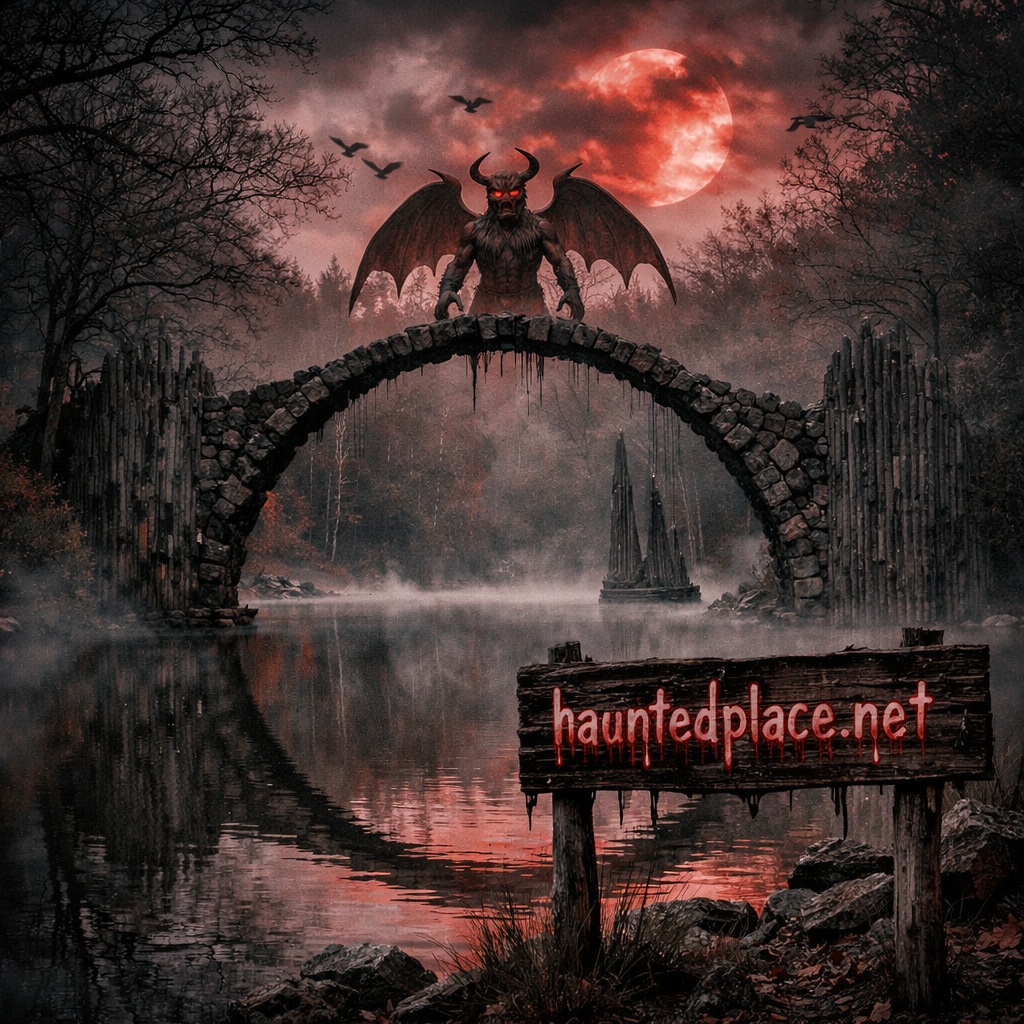
In the heart of Germany, nestled in the tranquil surroundings of Kromlau Park, lies an architectural marvel that has long captured the imagination and harbors dark secrets—the Rakotz Bridge. This devilish construction, known as the “Devil’s Bridge,” is not only a testament to human ingenuity, but also a cornerstone of thrilling legends that combine fear and fascination.
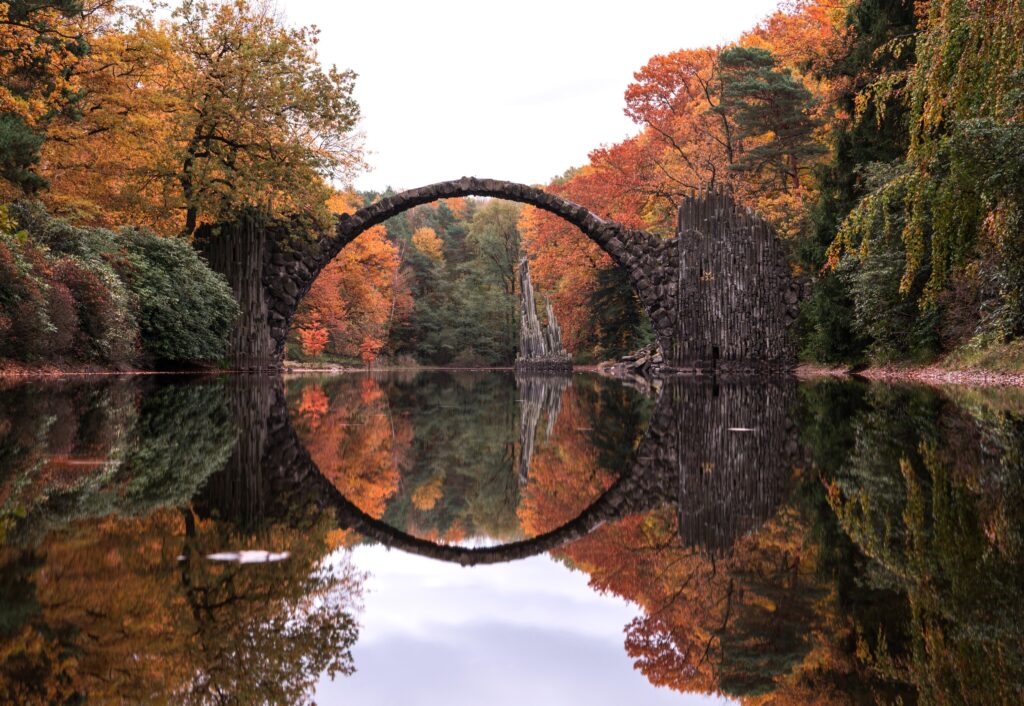
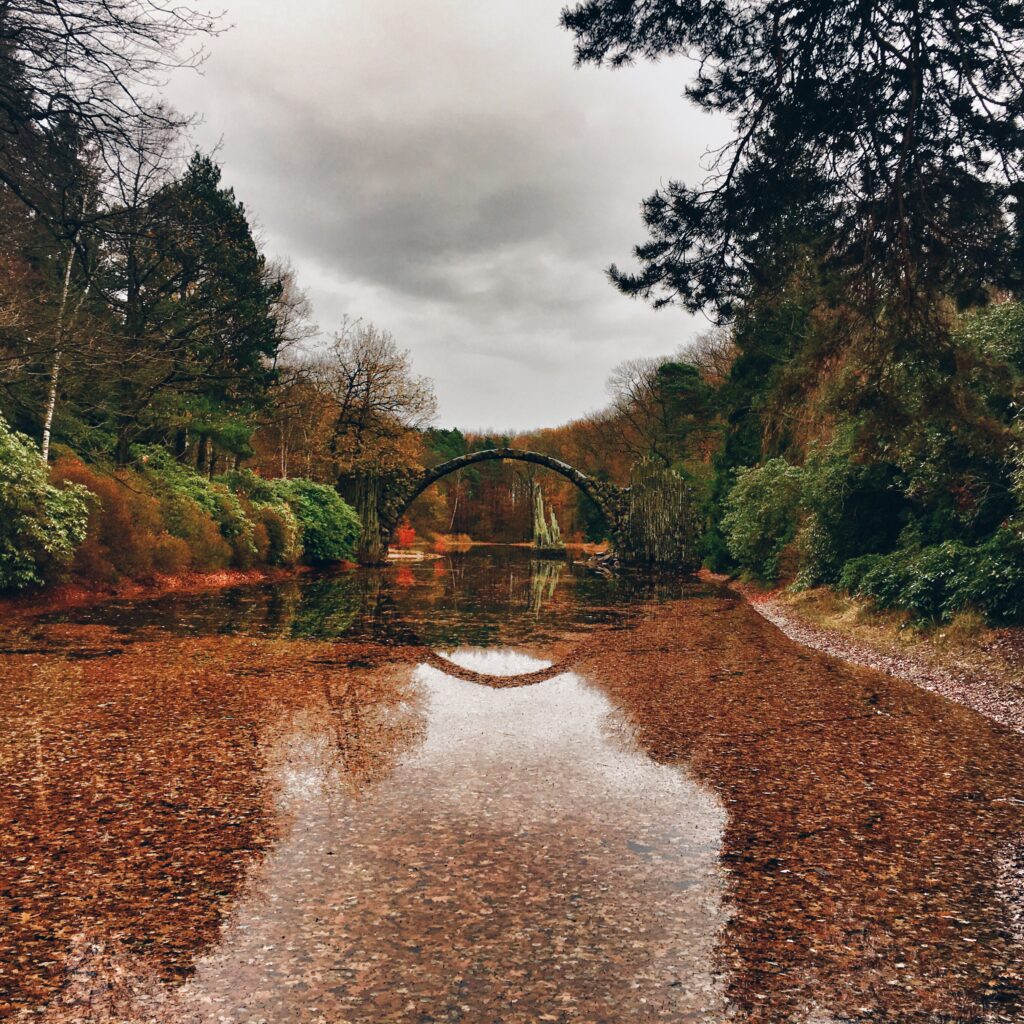
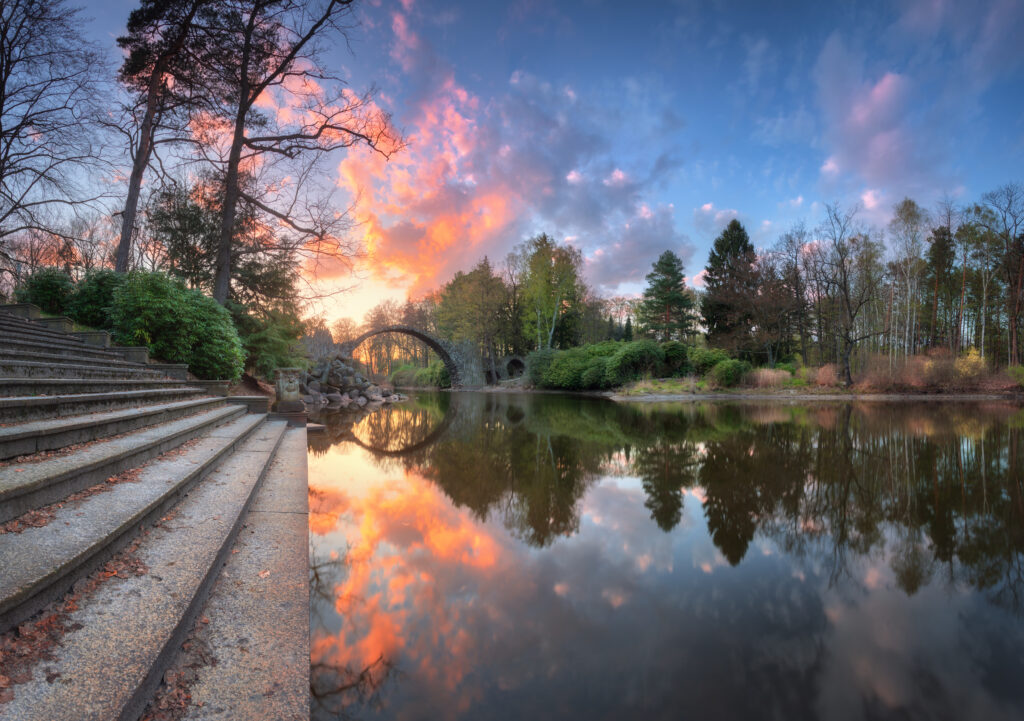
The Rakotz Bridge was built in the 19th century and deliberately designed to reflect as a perfect circle in the water below – a technical masterpiece that continues to impress to this day. But despite its impressive beauty, the bridge harbors stories that send shivers down the spines of those who dare to cross its ghostly stone arches. Local folklore tells of a nefarious pact with the devil himself, who demanded a soul in exchange for completing the bridge—a terrifying condition that surrounds the structure with an aura of evil.
As dusk falls over Kromlau, the atmosphere thickens with a palpable fear. Shadows dance ominously through the trees, and whispers seem to float on the autumn breeze, weaving tales of restless spirits bound to the ancient stones. For some, this bridge serves as a connection between worlds—a threshold where the veil between the living and the spirits is mysteriously thin.
Many visitors have reported inexplicable experiences while crossing the bridge. The most eerie stories come from those who were traveling alone and report a sudden chill of icy fingers brushing against them or the feeling of being watched by invisible eyes. Photos show strange anomalies – shadowy figures standing on the bridge or glowing balls floating in the misty air. Such eerie reports have fueled curiosity and trepidation in equal measure, attracting adventurers and paranormal investigators eager to unravel the mysteries hidden in the fog.
The Rakotz Bridge is not the only bridge with an eerie appeal. Similar legends can be found throughout Europe. One such story concerns the Pont Valentré in France, another “devil’s bridge” built in the Middle Ages. According to legend, its architect, desperate to complete the bridge, made a pact with the devil to obtain help, only to later betray the fiend by withholding payment, leading to sabotage attempts by the thwarted demon. Such stories serve as cautionary tales about the dangers of negotiating with sinister forces beyond human understanding. Despite its dark reputation, Rakotz Bridge remains a popular destination for tourists, photographers, and ghost hunters alike.
Those who visit during the day may be lulled into a false sense of security by the tranquil parkland with its lush flora and peaceful lake. But when dusk falls, the place is transformed. It is as if the bridge itself awakens, shedding its harmless facade and revealing the fear that slumbers within its stones.
The area is steeped in mysticism, and some believe it is inhabited by earthbound spirits seeking redemption. Myths tell of a bygone era when ancient rituals were performed here, summoning the elements themselves to ensure safe passage across the bridge. Some say that these rites left indelible marks on the landscape, residues of an otherworldly energy that still lingers, waiting to seduce the unwary.
Over the years, local historians have documented countless anecdotes that reinforce the bridge’s ghostly reputation. From ghostly apparitions resembling shrouded figures to disembodied voices echoing from the depths of the forest, the myths are as varied as they are fascinating. Scientists suspect that these stories reflect deep-rooted fears anchored in cultural consciousness, a shared memory of eras when humanity sought to explain the inexplicable with the supernatural.
But is there a grain of truth in this web of terror? Skeptics argue that these stories are merely products of the imagination, illusions heightened by the bridge’s eerie atmosphere. They attribute strange events to natural phenomena or psychological states heightened by fear. Yet even the most stubborn doubters cannot completely dismiss the unsettling feeling that hangs in the air and the consistent reports of frightening encounters experienced by honest eyewitnesses.
In fact, the appeal of Rakotz Bridge is undeniable, whether you approach it as a skeptic or a believer. Its haunting beauty is a mystery that invites self-reflection on the eternal struggle between light and darkness, good and evil, teaching a lesson that echoes through the centuries. As the sun sets and the shadows lengthen, the Rakotz Bridge stands like a solemn guardian over its reflection, reminding us of the fragile boundary that separates this world from the next.
Ultimately, perhaps it is not the ghosts we should fear, but the shadows they cast in our own hearts, forcing us to face the darkness that dwells within. Whether tangible or imaginary, the ghosts of Rakotz Bridge remain ever-present, inviting every visitor to ponder the mysteries and wonders that lie at the intersection of history, legend, and the unknown.