 Isabella Mueller Baroness of Stainton le Vale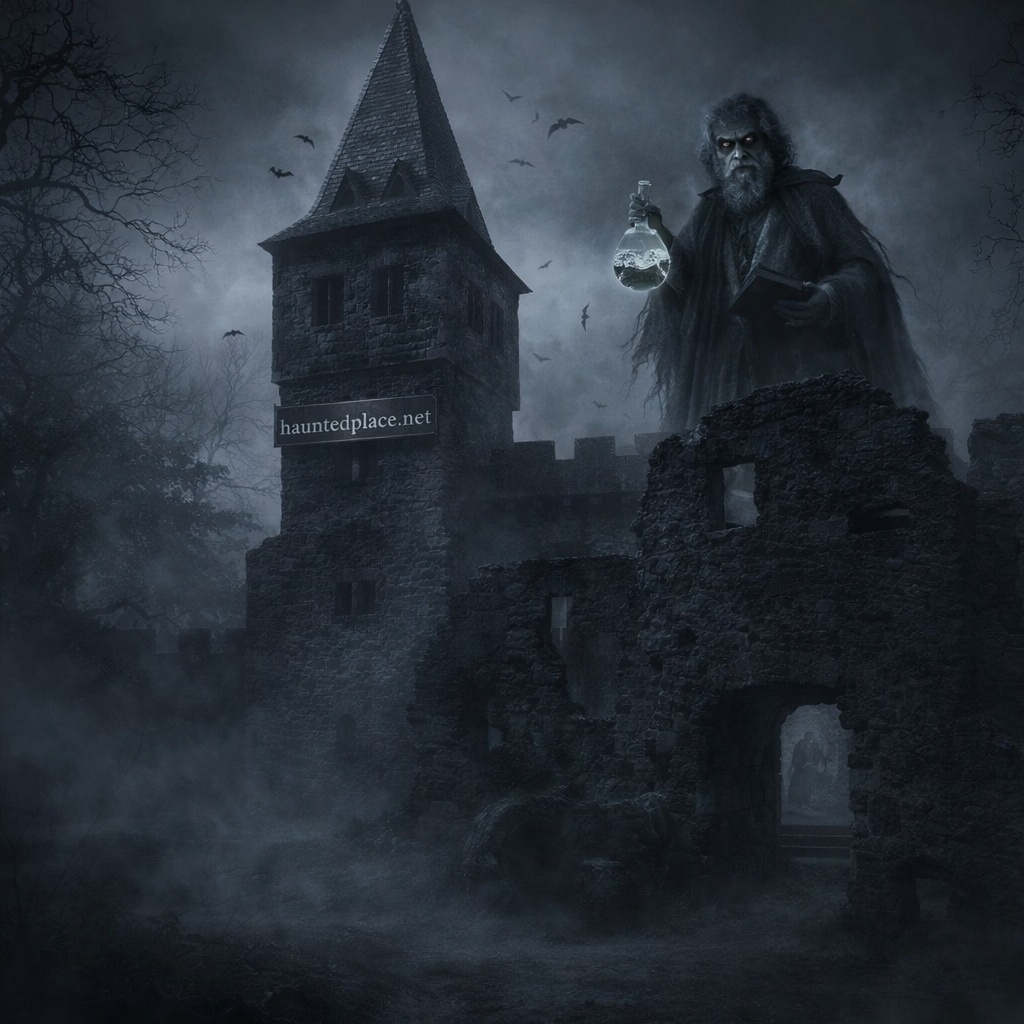
High above the valley, surrounded by the dense forests of the Odenwald, stands a ruin whose very name sends a shiver down the spine of even the bravest visitor – Frankenstein Castle. Linked to dark tales, mysterious events and an ominous aura, it is regarded as one of Germany’s most famous haunted sites. But where does its reputation stem from? A mixture of historical facts, folk traditions and pop-cultural influences has turned this site into a magnet for those interested in the paranormal and the adventurous. In particular, the legend of a man whose life and work are in an almost uncanny harmony with his famous name has captured the imagination of many for centuries: Johann Konrad Dippel – alchemist, theologian and, to this day, dubbed by some as ‘the real Frankenstein’.
Johann Konrad Dippel: Between Science and Madness – Johann Konrad Dippel was born in 1673 at Frankenstein Castle. As the son of a distinguished family, he grew up within its walls, which at that time were not yet in ruins but were characterised by a vibrant atmosphere. His fascination with science became apparent at an early age. Dippel initially studied theology, but soon turned his attention to alchemy and medicine – disciplines which, due to their proximity to the unknown and the mystical, led him ever deeper into the shadowy realm of science. Dippel’s experiments and work are historically documented, yet the line between fact and fiction quickly blurs when one considers the stories that surround him. It is said that he experimented with body parts in the castle’s laboratories in order to unravel the secret of life – or even to create an elixir of life that would grant eternal life. This sinister research is said to have earned him the reputation of being a ‘mad scientist’. The legend even goes so far as to claim that Mary Shelley, the author of the world-famous novel Frankenstein, was inspired to create her literary monster by reports about Dippel. Whether this is actually the case remains a matter of debate, but the temporal and thematic overlaps certainly provide food for speculation.
The Curse of the Castle: Ghostly Apparitions and Unexplained Phenomena – The fact that Frankenstein Castle enjoys a reputation as a haunted place is not solely down to Dippel’s sinister history. Over the centuries, numerous other legends have become interwoven with the castle’s walls. Particularly at Christmas time, the castle’s mysterious nature is said to reveal itself in the form of ghostly apparitions. Many people report sensing an eerie presence watching over the castle ruins. The roof of the old chapel, in particular, seems to be a place marked by supernatural activity. Time and again, visitors claim to have seen a ghostly figure here, striding through the night and concealing his face from prying eyes beneath a long cloak. This apparition is often associated with the restless spirit of Johann Konrad Dippel, who is said to be unable to find peace – a punishment for having once transgressed the boundaries of human morality. But Dippel is not the only spirit attributed to the castle. There are reports of strange noises, such as doors creaking even though no one is nearby, or whispers emerging from the shadows between the stones. Even animals seem to react sensitively to the castle’s atmosphere. Eyewitnesses report that dogs suddenly start barking or refuse to enter certain areas of the ruins.
From History to Pop Culture: The Rise to Legend – The spine-chilling stories surrounding Frankenstein Castle have not only been passed down orally over the years, but have also found their way into books, films and other media. They form part of the region’s collective memory and exert an unmistakably magnetic pull – particularly on fans of the supernatural and the mysterious. Interestingly, modern pop culture has helped to further inflate the castle’s legends and bring it global fame. Particularly worth noting is the connection to Mary Shelley’s novel Frankenstein. Although there is no clear evidence that Shelley ever heard of the castle or Johann Konrad Dippel, this possible influence is repeatedly discussed and speculated upon. Furthermore, every year at Halloween, a large festival is held at the castle, during which the eerie atmosphere of the place is truly celebrated. Actors in horror costumes, spooky decorations and guided tours of the castle help to keep the myths alive whilst also creating a space for entertainment.
The Question of Truth and Deception – But how much truth really lies behind the legends? Historians and academics have attempted to unravel the myths and uncover the facts behind the castle. Johann Konrad Dippel was undoubtedly a fascinating figure, whose alchemical experiments made him a controversial character. His connection to Frankenstein Castle is also historically documented. However, the idea that he worked with human remains could very well be an exaggeration or even a fabrication, stemming from a mistrust of his work as an alchemist. The alleged ghostly apparitions at the castle, on the other hand, are more difficult to verify. Whilst some visitors report inexplicable experiences, many attribute these events to the suggestive power of the place – a mixture of dark tales and the imposing atmosphere of the ruins. Others, however, firmly believe in the existence of paranormal activity and regard Frankenstein Castle as an epicentre of the supernatural.
A place that fires the imagination – Despite all efforts to uncover the truth behind its legends, Frankenstein Castle remains a mysterious and fascinating place. Its history is a complex web woven from historical facts, folk traditions and modern interpretations. Whether it be restless ghosts, sinister alchemists or the eerie influence of pop culture – Frankenstein Castle brings all these elements together to form a myth that is as fascinating as it is eerie. To this day, it attracts people who believe in the supernatural, or those who simply wish to experience the special atmosphere of this place. Perhaps its greatest strength lies in the fact that it can never be fully understood. The castle remains a place that raises questions that cannot be answered – and that is precisely what gives it its enduring terror.