 Isabella Mueller Baroness of Stainton le Vale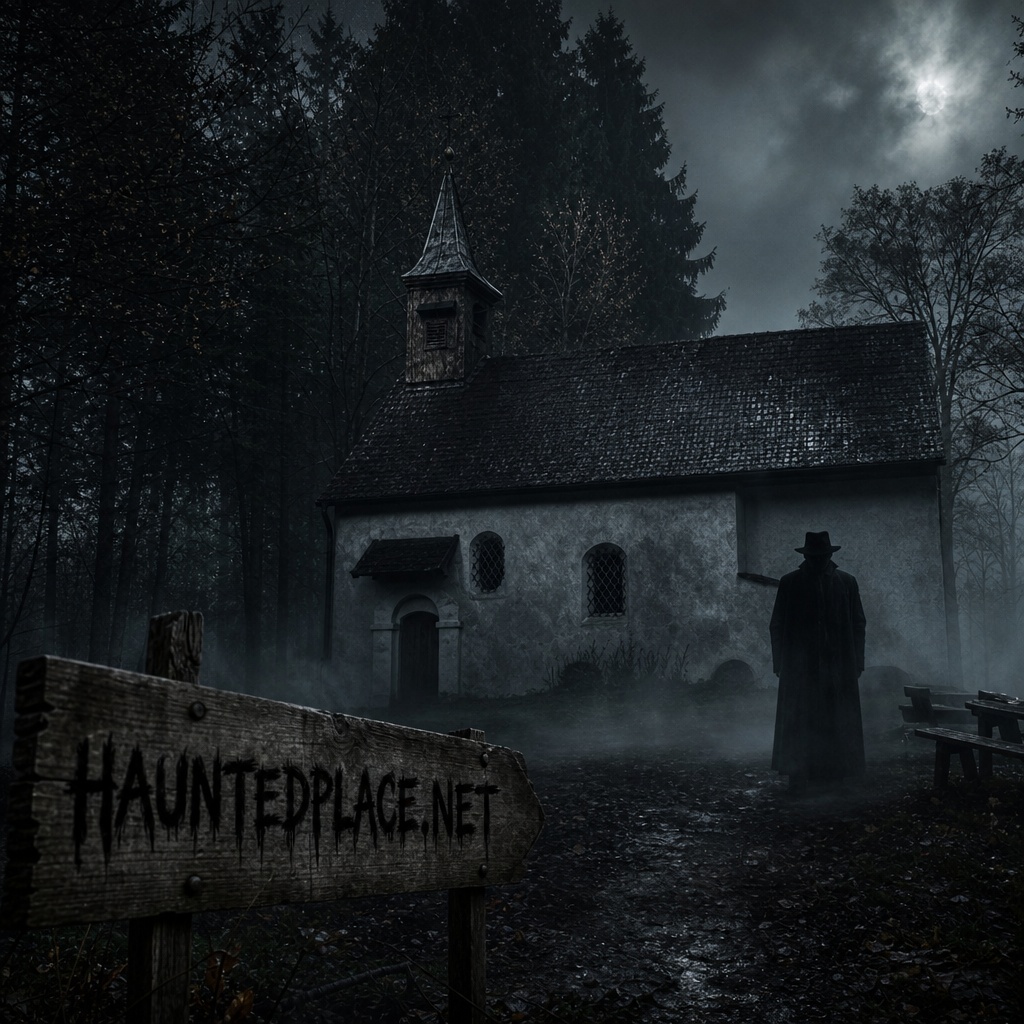
In the lonely, dark woods around Pollingsried in the Pfaffenwinkel region of Upper Bavaria stands a small, unassuming building: the Plague Chapel. At first glance, its exterior appears rather unremarkable, yet its history and the grim legends surrounding this place continue to attract numerous curious visitors and lovers of the macabre to this day. For centuries, locals have reported mysterious lights, eerie sounds and spooky apparitions that are said to haunt this enchanted place.
Historical Background – The Plague Chapel as a Memorial to Suffering – The Plague Chapel in Pollingsried is one of many small chapels in Bavaria erected to commemorate the devastating plague epidemics of the Middle Ages. During the plague, which ravaged large parts of Europe in the 17th century and depopulated entire villages, Pollingsried was hit hard. According to legend, the chapel was built on the spot where those who died of the plague were buried outside the village. As people at the time feared that the bodies might spread the disease further, they were laid to rest in mass graves far away from the settlements – without much ceremony and often under cover of night. Today, the Plague Chapel serves as a memorial to this dark chapter in history, a reminder of the transience of life and the cruelties of an era in which disease and death were ever-present. Yet some claim that the souls of those buried here have found no rest and still roam the meadows and woods.
Glowing shadows and whispering voices – Of ghostly apparitions and strange lights – The best-known and most frequently told legend surrounding the Plague Chapel concerns the strange lights that are said to appear time and again in the dense forest at night. Walkers and locals report seeing ghostly orbs of light or flickering streaks of light dancing amongst the trees, as if trying to lure onlookers closer. Some believe these to be the restless souls of the plague victims, desperately trying to convey a message to the living. A particularly eerie account dates from the early 20th century, when a shepherd made his bed for the night not far from the chapel. Suddenly, he heard whispering voices that jolted him awake. Despite his best efforts, he could not spot anyone. It was only later that he realised the whispering seemed to be coming directly from the direction of the chapel. The man fled in panic and reportedly swore never to set foot near the chapel again.
The ‘Black Shadow’ – an eerie figure that spreads fear and terror – As well as the eerie light phenomena, there are also stories of a sinister figure said to wreak havoc in the vicinity of the chapel. The apparition is described as the ‘Black Shadow’ – a tall, faceless man in a long coat who, according to eyewitness accounts, sometimes suddenly appears and then vanishes again. Some claim he stands next to the chapel, staring motionlessly at visitors. Others report having caught a brief glimpse of him in the woods before he vanished without a trace into the darkness of the night. One of the most famous incidents occurred several decades ago, when a couple from Munich decided to visit the chapel on a late summer’s evening. They later reported seeing a man dressed in black standing directly in front of the chapel, not moving a muscle. As they ventured closer, the figure had suddenly vanished – even though there was no sign whatsoever that anyone had fled through the woods.
Unexplained noises and the magic of silence – The acoustics around the Plague Chapel also seem to possess strange qualities. Many visitors report hearing inexplicable sounds reminiscent of footsteps, muffled sobbing or even quiet laughter. These sounds usually emanate from the woods or directly from the chapel itself, heightening the eerie atmosphere of the place. The magical silence is also a frequently mentioned phenomenon. Anyone approaching the chapel at night often notices that all natural sounds – such as birdsong, the rustling of leaves or the buzzing of insects – fall abruptly silent. It is as though nature were holding its breath in this place – an eerie sensation that sends a shiver down the spines of many visitors.
Reality or illusion? Scientific attempts at explanation – As with many ghost stories, there are sceptics who seek more rational explanations for the phenomena surrounding the Plague Chapel. Some scientists and historians, for example, suspect that the strange lights could be the result of phosphorescent methane gas escaping from the old graves. These gases are produced by the decomposition of organic material and can create eerie light effects, particularly at night. The acoustic phenomena, too, could be explained by natural causes, such as echo effects or the sound of the wind rustling through the dense trees and against the chapel’s stone walls. Critics also argue that many reports are likely to stem from people’s vivid imaginations, fuelled by the site’s grim history and legends passed down through the generations.
The Fascination of Horror – Why Are We Drawn to Haunted Places? – Despite all attempts at a rational explanation, the Plague Chapel in Pollingsried remains a magnet for people interested in the supernatural and the dark stories of the past. Haunted places such as this hold a very special fascination because they allow us to confront our own fears and our need to make sense of the incomprehensible. The stories surrounding the chapel speak of a connection between life and death, a world in which the boundary between reality and myth becomes blurred. For many, a visit to such places is a kind of ritual, combining a thrill with a sense of reverence for history and its victims. Whether ghosts actually haunt the area is, however, of secondary importance to most – the atmosphere and the chance to be swept away by the legends are often exciting enough in themselves.
A place of remembrance – and of terror – The Plague Chapel in Pollingsried remains a unique place where history, mythology and the human imagination converge in a fascinating way. Whether the legends about the strange lights, the Black Shadow and the eerie sounds are true or not is ultimately beside the point. The fact is that this small structure, deep in the forests of Upper Bavaria, holds special significance – as a memorial to past suffering, as the setting for eerie tales, and as a place that captivates new visitors every year. Anyone who dares to visit the Plague Chapel at night should be prepared to be swept up by its eerie atmosphere. Perhaps you might even see one of the mysterious lights or hear a voice from the darkness – or perhaps everything will remain quiet and uneventful. But whatever you experience, one thing is certain: this place leaves no one unmoved.