 Isabella Mueller Baroness of Stainton le Vale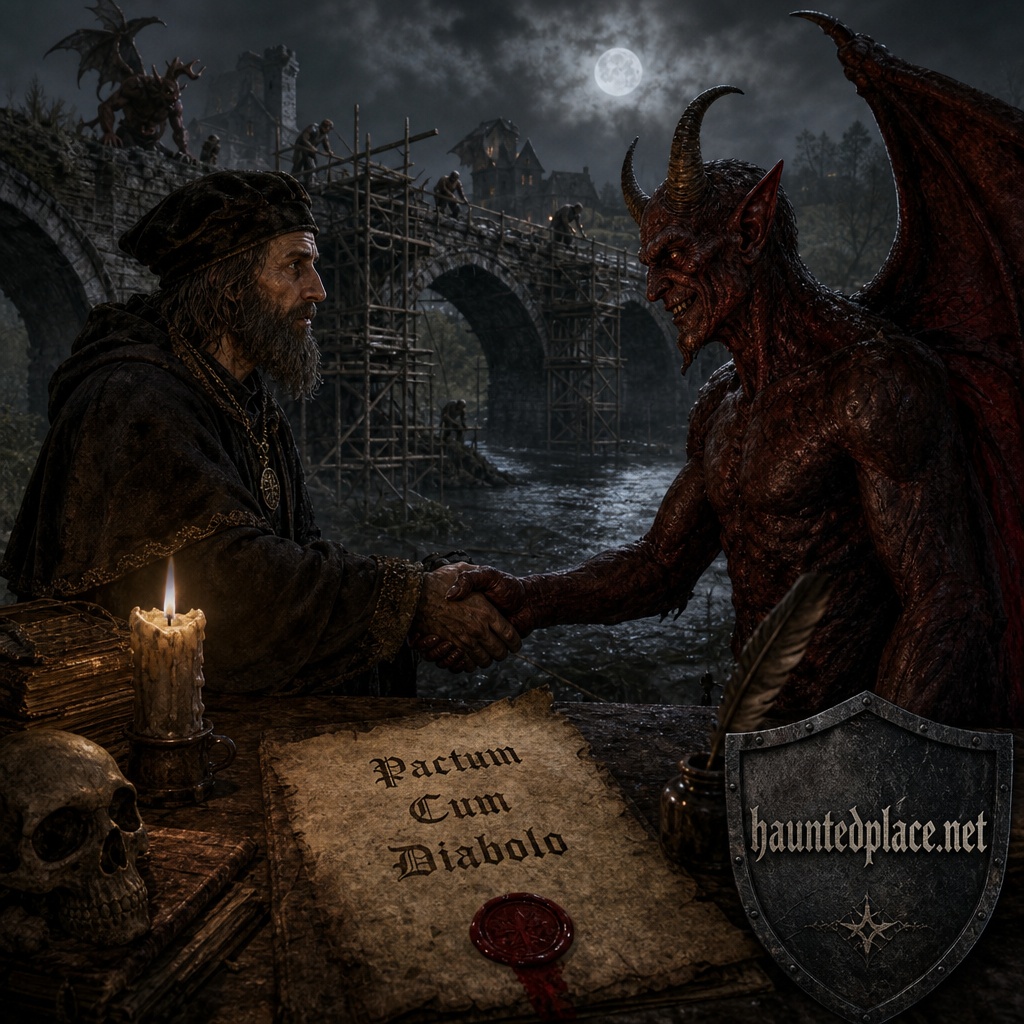
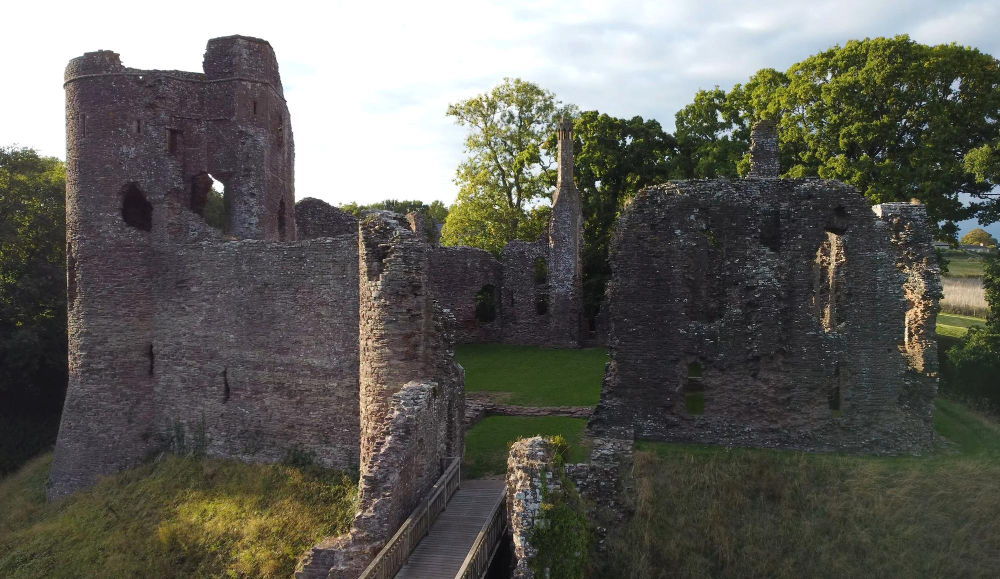
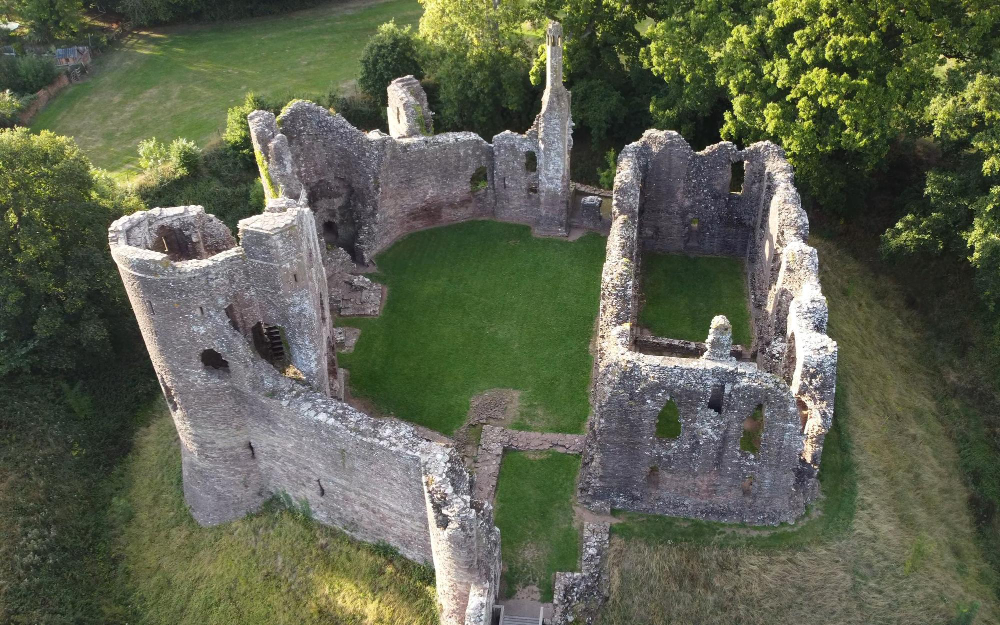
Nestled amongst the green hills of Monmouthshire, near the border between Wales and England, lies the village of Grosmont. Towering above it are the ruins of Grosmont Castle – a place whose true history is marked by war, power struggles and border disputes. Yet a more eerie tradition also lives on around the medieval castle: the legend of the learned John of Kent and his fateful pact with the Devil. Anyone visiting Grosmont today will not find a black fortress straight out of a horror novel. The castle ruins lie peacefully above the village, surrounded by pastures, trees and the gentle hills of the Welsh borderlands. It is precisely this contrast that makes the place so evocative. Behind the preserved walls, window niches and towers lies a past in which violence and insecurity were part of everyday life. Grosmont Castle was not built as a romantic ruin, but as a military stronghold in a contested border region. The legend associated with the name John of Kent does not necessarily take place within the castle walls. Rather, it is part of the landscape of the Monnow Valley and the ancient tales of the Welsh Marches, the historic border region between Wales and England. Yet Grosmont, its castle and the secluded atmosphere of the surrounding area continue to provide a particularly fitting setting for the story to this day.
A castle in a turbulent border region – Grosmont Castle was built following the Norman conquest of England in the late 11th century. The Normans extended their influence into Wales as well, but there they encountered determined resistance from Welsh rulers and local communities. To secure their territories, they erected castles, fortified manor houses and checkpoints along the border.
Grosmont, together with Skenfrith Castle and White Castle, formed part of the so-called ‘Three Castles’. This system of fortresses was situated in the valley of the River Monnow and was intended to protect the border. Initially, the structures were mainly made of wood and earth; later, they were rebuilt in stone. In the 13th century, Grosmont developed into a significant castle complex with a great hall, residential buildings, a chapel, massive walls and towers. Its location was strategically crucial. From here, an important access route into the Welsh hinterland could be monitored. The castle served simultaneously as an administrative centre, a military base and a visible symbol of Anglo-Norman rule. For the people of the region, it meant protection – but also control, levies and a constant reminder that the border did not exist merely on maps. The significance of Grosmont became particularly clear in 1405. During the rebellion led by the Welsh prince Owain Glyndŵr, his followers attacked the castle. The complex was besieged, but an English relief force apparently prevented its capture. These events show that Grosmont was no quiet corner on the margins of history. Its walls reflect real conflicts, fear of attack and centuries of tension between rival claims to power. As the military importance of the border castles later waned, Grosmont Castle also lost its significance. The site gradually fell into disrepair. Today it is managed by Cadw, the Welsh heritage authority. The ruins are thus a historically verified site – and at the same time an ideal breeding ground for tales in which the boundary between history and legend becomes blurred.
John of Kent: Scholar, clergyman or sorcerer? – The devil legend of Grosmont is linked to John of Kent, an enigmatic figure from the medieval borderlands. In traditional accounts, he usually appears as an exceptionally learned man, sometimes as a clergyman, sometimes as a magician or sorcerer. It is precisely this ambiguity that is part of the legend’s character: John of Kent is less a clearly documented historical figure than a character from popular memory. Such tales were widespread in the Middle Ages and the early modern period. Scholars who could read, write, understand Latin or possessed knowledge of astronomy and medicine seemed mysterious to many people. Knowledge that was not generally accessible could appear supernatural. Anyone who was well-versed in books, the stars, herbs or foreign languages quickly became a sorcerer in legends. According to tradition, John of Kent is said to have faced a difficult task: a bridge had to be built across the Monnow. The river, which today flows peacefully through the countryside, could pose a serious obstacle in earlier centuries. Heavy rainfall and flooding made crossings dangerous; a missing or destroyed footbridge could disrupt trade, travel and supplies. Bridges were therefore not merely structures, but links between villages, markets and territories. When human strength was reportedly insufficient for the task, John of Kent is said to have turned to the Devil.
The Pact by the River – The legend follows a familiar yet powerful pattern. A person asks a dark force for help. The Devil promises to accomplish a seemingly impossible task in a short space of time. In return, he demands a price – often a person’s soul or the first living creature to cross the bridge once it is completed. According to the Grosmont tradition, the Devil is said to have undertaken the construction of the bridge. One can imagine the scene as it is likely to have been embellished in oral tales passed down through the generations: night over the Monnow Valley, mist over the water, the sound of stones being fitted together without human hands. Where during the day only riverbanks and dark trees were to be seen, a crossing was to be created by dawn. The horror of the story lies not solely in the notion of the Devil. It lies in the dependence. John of Kent, according to the moral of the legend, had invoked something that cannot be controlled. Those who make a deal with evil usually pay a price. It is precisely at this point, however, that the legend takes a different turn. John of Kent is said to have outwitted the devil. Instead of sending himself or a human across the new bridge, he had an animal cross first, according to various versions of the tale. In similar British bridge legends, this animal is often a dog. The devil, who had been hoping for a human soul, is said to have been deprived of his payment by this trick. The story does not simply end happily, however. The deceived Devil does not politely vanish into the darkness. He becomes furious. In local folklore, his wrath is said to have left its mark on the landscape or to have continued to haunt the area. It is precisely this open threat that makes the legend so potent: although the pact was thwarted, the evil did not pass without consequences.
Traces of evil in the landscape – Many legends link striking rocks, deep hollows, unusual rock formations or ancient paths to the devil’s work. Such explanations often arose long before geological knowledge was widespread. A strange depression might become the imprint of a hoof, a large stone a projectile hurled by an enraged demon, a dark stream the scene of a curse. In the Grosmont area and the Monnow Valley, too, there are tales of ‘mystical traces’ associated with the devil’s visit. From a modern perspective, such interpretations are, of course, not historical evidence. There is no reliable proof that a pact was ever made or that supernatural beings built a bridge. The significance of the legend lies elsewhere: it shows how people interpreted their landscape and how nature, fear and memory became intertwined. For centuries, the border region was a place of uncertainty. Castles stood on hilltops, paths wound through woods and valleys, and political allegiances could shift. In such an environment, stories of magical helpers, devils and cursed places were more than mere entertainment. They gave dangers a face. They explained the unknown. And they warned against crossing the boundaries of what was permissible. The devil in these stories is often more than just a religious symbol. He also embodies the fear of losing control: of the forces of nature, floods, war, disease or the consequences of human greed. A bridge over a dangerous river symbolises progress and safety. Yet if it is said to have been built with the devil’s help, even a useful structure becomes a moral risk.
Grosmont Castle as a stage for remembrance – The connection between the legend and Grosmont is so compelling because the castle itself exudes an atmosphere of past menace. Walls and towers still tower over the village. In the preserved rooms, one can imagine how people once lived, worked, kept watch and defended themselves there. The view from the windows sweeps across the same hills and valleys that were once perceived as borderlands. After sunset, the impression of the ruins changes. The walls cast long shadows, the wind sweeps through the openings of former windows, and every step on uneven ground echoes differently than one might expect. This is not evidence of paranormal phenomena. It is the effect of an authentic historical site, whose ruins leave enough room for the imagination. It is precisely for this reason that the devil’s legend should not be taken as a factual account. It forms part of the region’s folklore heritage. Historical sources document Grosmont Castle, its Norman foundation, its role within the Three Castles and its significance during the conflicts surrounding Owain Glyndŵr. The story of John of Kent, on the other hand, belongs to the realm of legend – a tradition that may have changed over time and whose individual motifs also feature in other British tales of the devil and bridges. This does not render it worthless. On the contrary: legends often reveal a great deal about the societies that pass them on. They preserve notions of guilt, cunning, faith and danger. In this sense, John of Kent is a figure straddling two worlds: a learned man who wields power through knowledge, yet nevertheless binds himself to a dark force; a cunning deceiver of the devil, whose victory brings no complete peace.
A ruin, a river and a myth that has never quite fallen silent – Grosmont Castle is a stone monument whose history is well documented. The legend of the Devil and John of Kent, on the other hand, cannot be substantiated by historical records. Yet both aspects form part of Monmouthshire’s cultural landscape. The castle tells of conquest, defence and political power. The legend speaks of fear, imagination and the need to imbue dangerous places with a story. Perhaps this is precisely why the tale still resonates so powerfully today. The River Monnow continues to flow through the borderlands, bridges connect its banks, and the walls of Grosmont still tower over the village. By day, they stand as testaments to medieval architecture. But in fog, rain or as dusk falls, the landscape can suddenly seem older, quieter and more alien. Then it is natural to ask the age-old question that resonates in many versions of this legend: What remains when a person outwits the Devil? In Grosmont, the answer is not to be found in a document or on a stone tablet. It lives on in a story – in the notion that somewhere between the castle ruins, the riverbank and the dark paths of the Monnow Valley, the memory of a bargain that should never have been struck still lingers.