
 Isabella Mueller Baroness of Stainton le Vale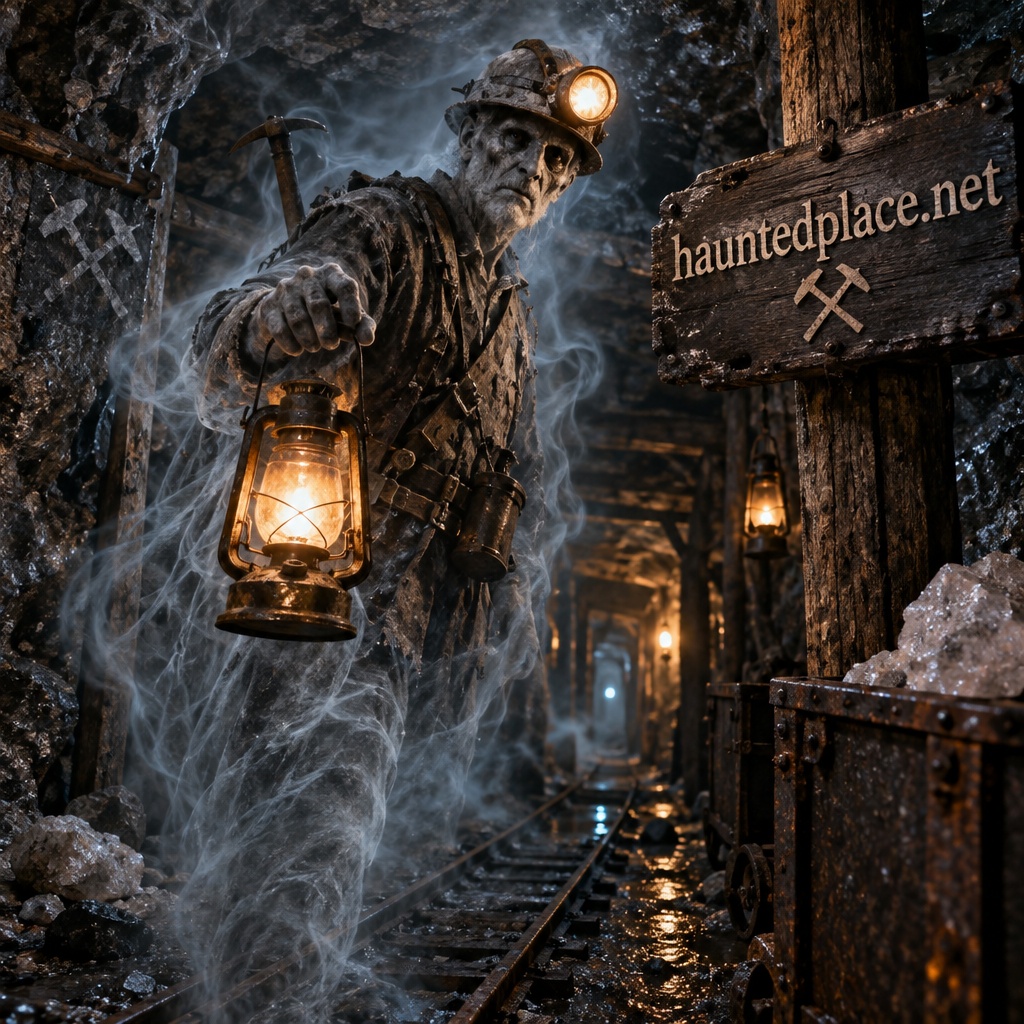
The Hallstatt Salt Mines – a place where millennia become almost tangible within the stone walls and dark tunnels. Salt has been mined here for over 7,000 years, and with it comes one of Austria’s oldest and most fascinating legends: the story of the ‘Restless Miner’. In the shadowy depths of the salt mines, the spirit of a miner who once met with an accident is said to continue to roam – not as a malevolent demon, but as a protective guardian who warns his living descendants of impending doom.
Historical Background: Salt and its Dangers – The Hallstatt salt mine is more than just a tourist attraction or a source of ‘white treasure’ – it is one of the oldest accessible salt mines in the world and served as a focal point of human life as far back as the Neolithic period. However, the extraction of ‘white gold’ has always been dangerous. Collapses, toxic gases, darkness and confined spaces claimed many lives amongst the miners. Many stories and legends have grown up around these deadly perils, with one figure in particular still making his presence felt to this day: the restless miner. In 1734, an extraordinary discovery was made during excavations in the salt mine: a perfectly preserved bog body, deeply encased in salt. This mummified figure – later known as the ‘Man in the Salt’ – astonished archaeologists and researchers worldwide. His clothing, tools and the condition of his body provided deep insights into the lives of the people who worked here some 3,500 years ago. Preservation by the salt prevented decomposition, which is what makes this find so unique. This fact forms the basis for the haunting legend of the restless miner, whose spirit is said to still wander the tunnels.
The Myth of the Restless Miner – The legend tells that this miner lost his life in a tragic cave-in. Whilst his body was preserved in the salt, his spirit remained trapped between the world of the living and the dead. Unlike typical ghost stories, this is a guardian spirit – a sort of protector for all the miners who venture into the dangerous tunnels every day. It is said that his spirit warns of impending cave-ins or gas build-ups and sometimes even guides exhausted or injured comrades safely back to the surface. Traditions passed down by miners tell of inexplicable phenomena: flickering lanterns, cold draughts in absolute silence, shadows moving between the rock faces, accompanied by a soft, almost melancholic murmur. Some claim that the spirit communicates through a dull hammering – an old miners’ greeting or a warning of danger. Those who respect the spirit are protected; those who ignore it risk their lives. Thus, this story teaches respect for nature and the difficult working conditions underground.
From archaeology to folklore: the fusion of facts and superstition – The discovery of the ‘Man in the Salt’ is undoubtedly historically verifiable. Archaeological investigations confirm his existence and the working conditions of the time. Yet the way in which a mystical legend emerged from sober science is a fascinating process. People sought to make sense of the terror associated with death underground and to draw hope from it. A friendly spirit that protects and warns offers comfort in an otherwise life-threatening environment.
Chills in the present day: The miner’s ghost in modern Hallstatt – Today, the Hallstatt Salt Mines are a tourist attraction that draws thousands of visitors year after year. Whilst modern technology and safety measures minimise many dangers, guides are happy to tell stories of the restless miner during the tour. They lead guests to those spots where apparitions have allegedly been reported. A shudder runs through the crowd when tales are told of cold breath in the darkness or of faint hammering in the silent tunnels. Even amongst the staff, there are reports of unexplained phenomena: tools being moved for no apparent reason, mine lamps suddenly lighting up, or the feeling of not being alone. Scientific explanations range from natural air circulation to psychological effects. Yet quite a few people cling to the legend, seeing it as part of the cultural heritage and a guardian spirit that watches over the site to this day.
Between myth and reality – the miner lives on – The story of the restless miner in the Hallstatt salt mines is a masterfully woven tale blending archaeological facts with folk imagination. It serves as a reminder of the countless people who have lost their lives underground throughout history and honours their tireless dedication. At the same time, it fulfils an important psychological purpose: it offers comfort and courage in a world full of uncertainties and terrors. Whether one believes in ghosts or not – it remains undeniable that the ‘Man in the Salt’ is a symbol of the connection between humanity and nature, risk and protection, past and present. The restless miner continues to wander through the dark tunnels, carrying his story into the future – as a warning, a source of protection and a fascinating mystery all at once.