 Isabella Mueller Baroness of Stainton le Vale
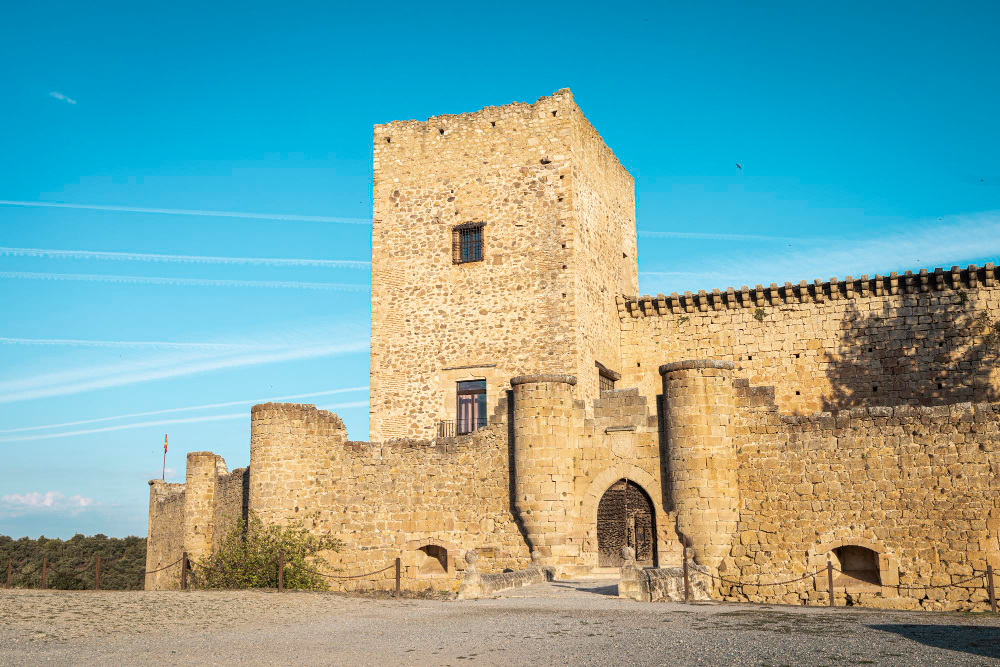
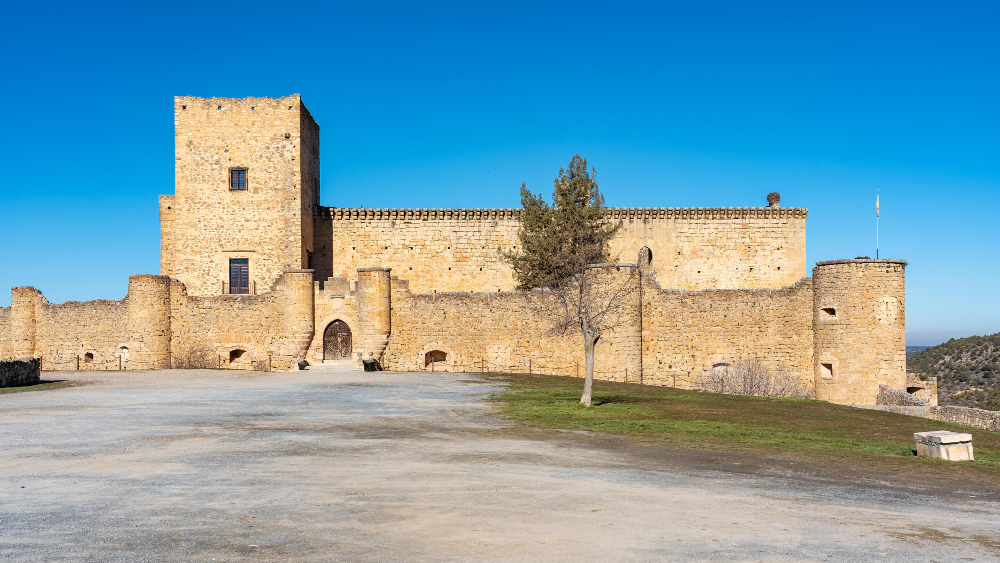
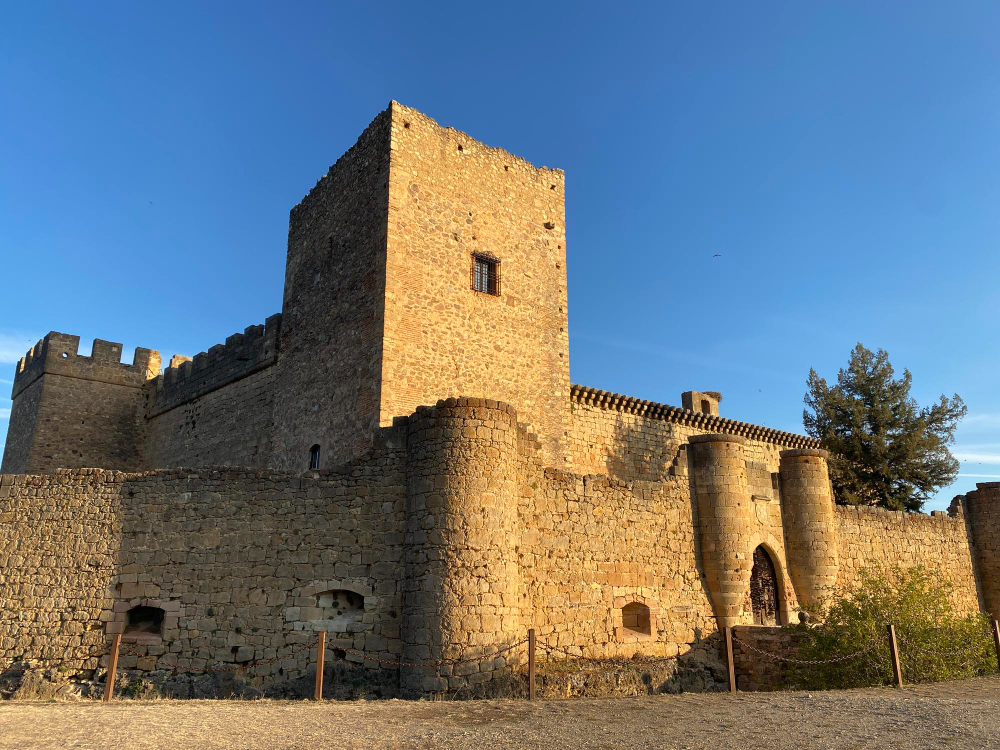
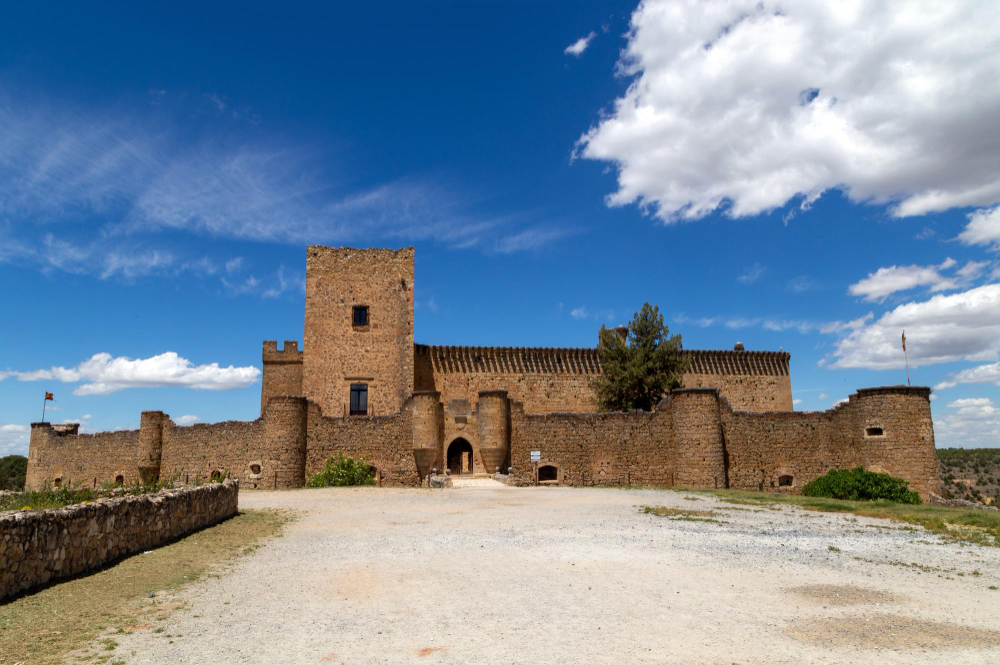
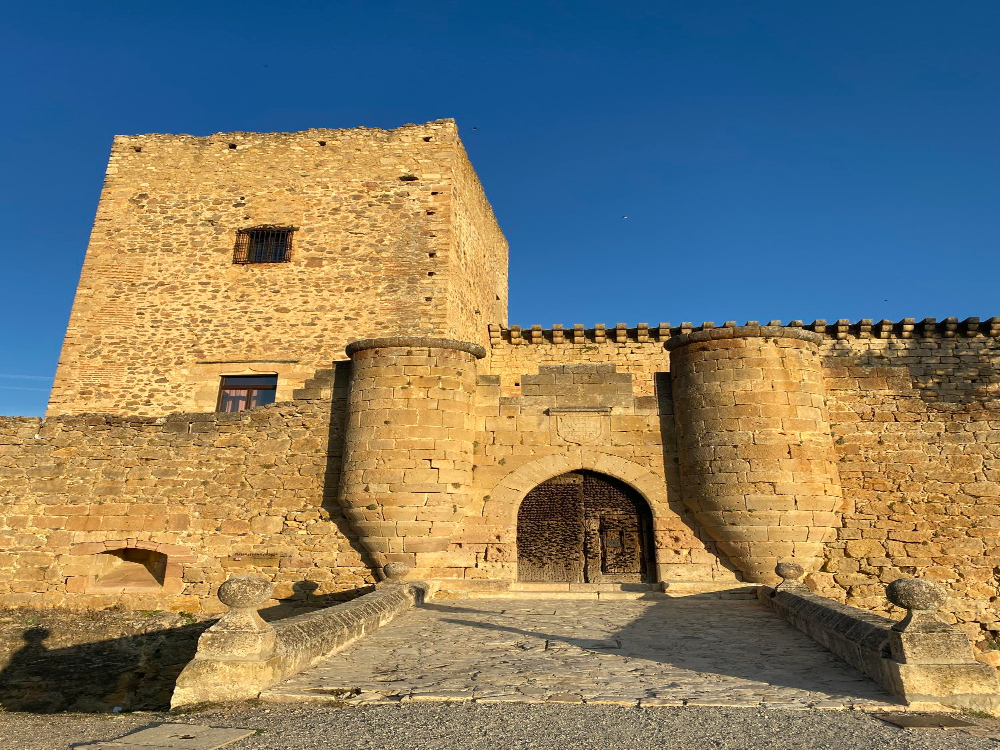
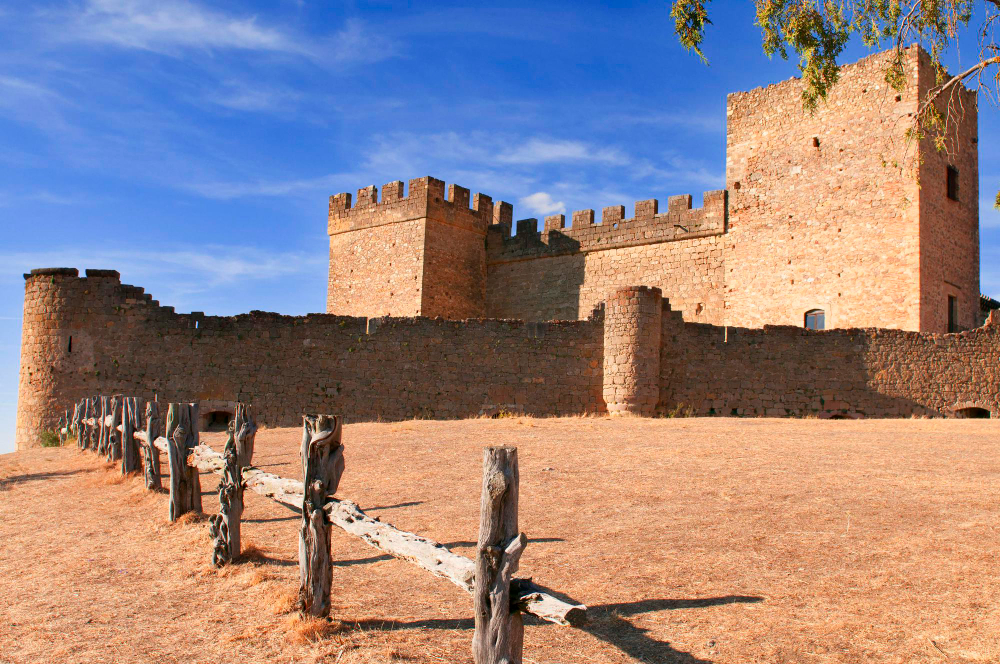
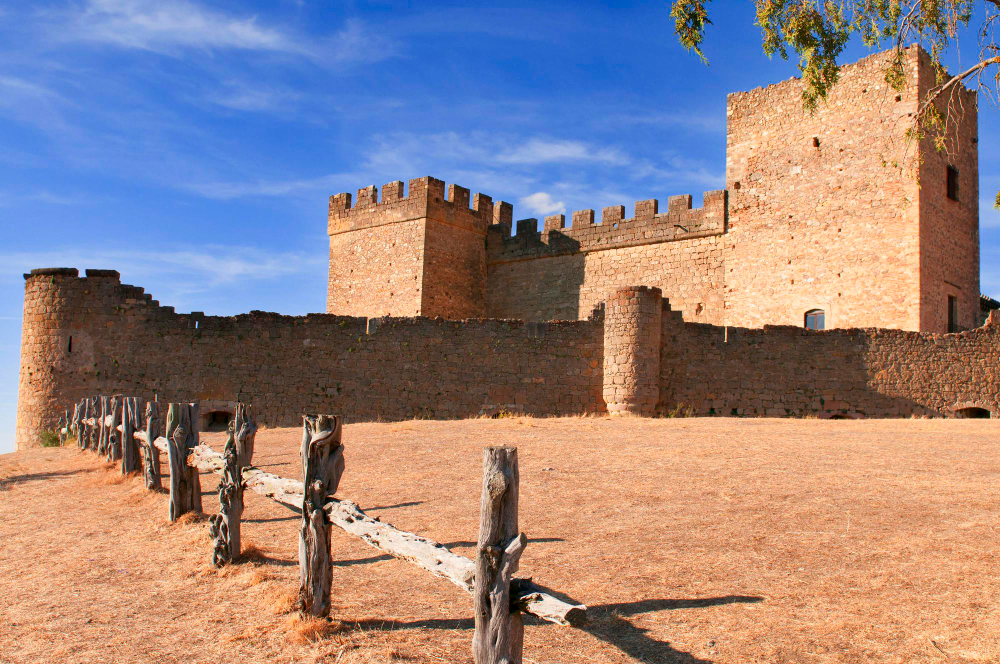
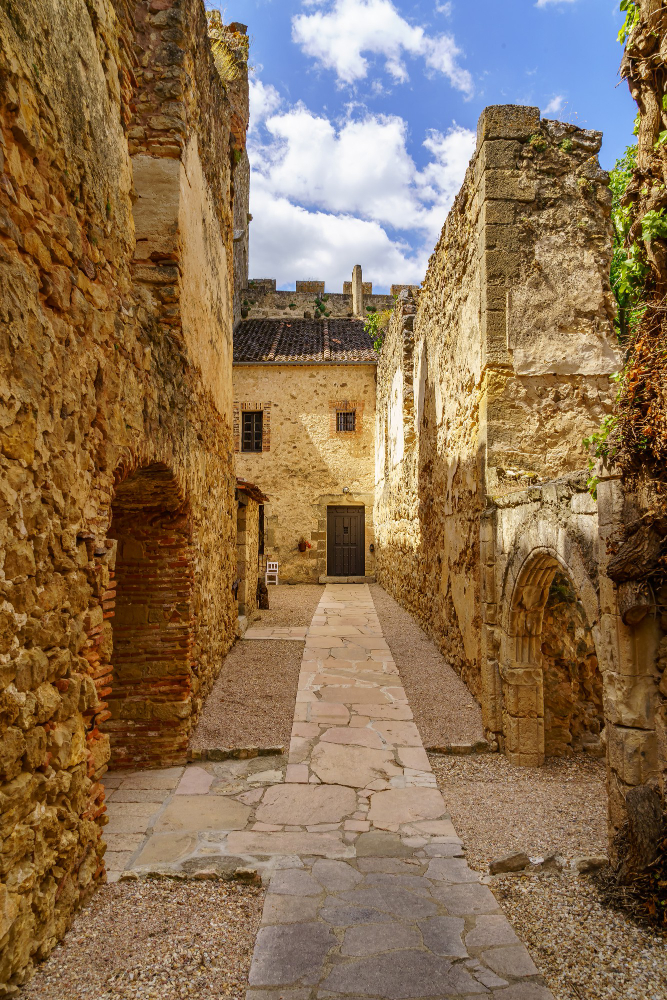
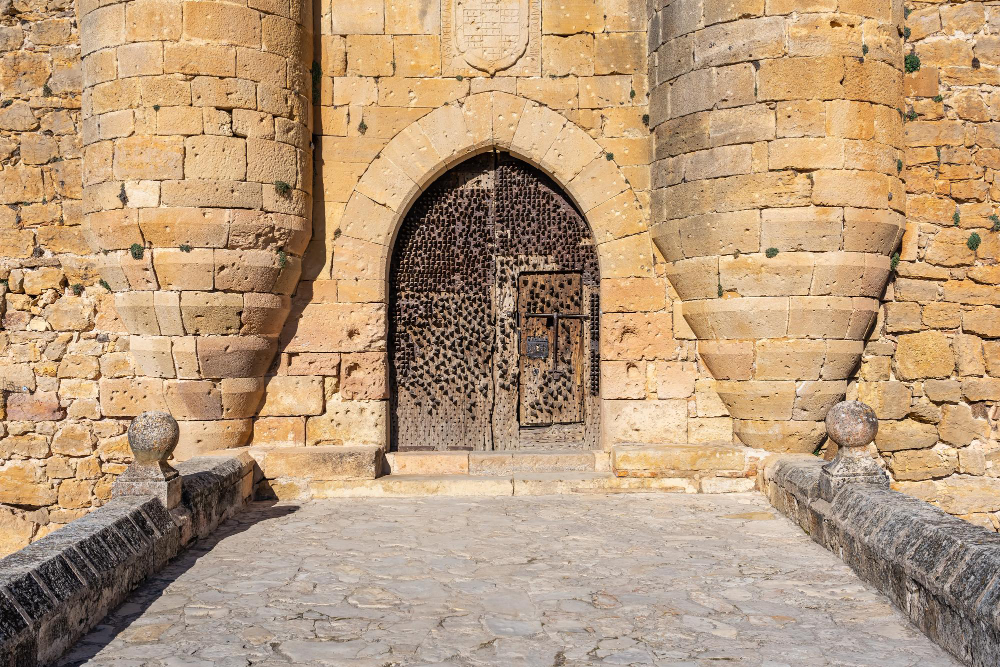
Amidst medieval walls, narrow alleyways and the memory of violence, the Castillo de Pedraza in the Spanish province of Segovia tells the story of a love that, according to tradition, ended in tragedy. The story of Elvira, Roberto and Don Sancho de Ribaura is one of the castle’s best-known legends – yet it is, above all, a folk tale in which a historical setting and dramatic imagination intertwine. High above the village of Pedraza stands a castle complex whose massive walls have shaped the landscape of the Castilian plateau for centuries. The Castillo de Pedraza, also known as Pedraza Castle, is situated in the autonomous community of Castile and León, around 40 kilometres north-east of Segovia. As you approach this medieval-looking village, you pass through narrow streets, past stone houses and the remains of fortifications that hint at a past marked by power struggles, feudal rule and insecurity. Among the darkest tales associated with this castle is the legend of Elvira and Roberto. It tells of a young woman who is said to have been betrothed against her will to the lord of the castle, Don Sancho de Ribaura, and of her lover Roberto, whose return to the castle is said to have triggered a cruel act of revenge. At the heart of the narrative lies an image that leaves a deep impression on the minds of its listeners: a monk having a red-hot iron crown placed upon his head. Although the plot is often set in the 13th century, the story cannot be regarded as a reliable historical account. There are no reliable contemporary sources for the characters involved or the events described. The legend should therefore be understood as part of local folklore – a dramatic narrative that encapsulates medieval power structures, religious symbolism and the fear of tyrannical violence.
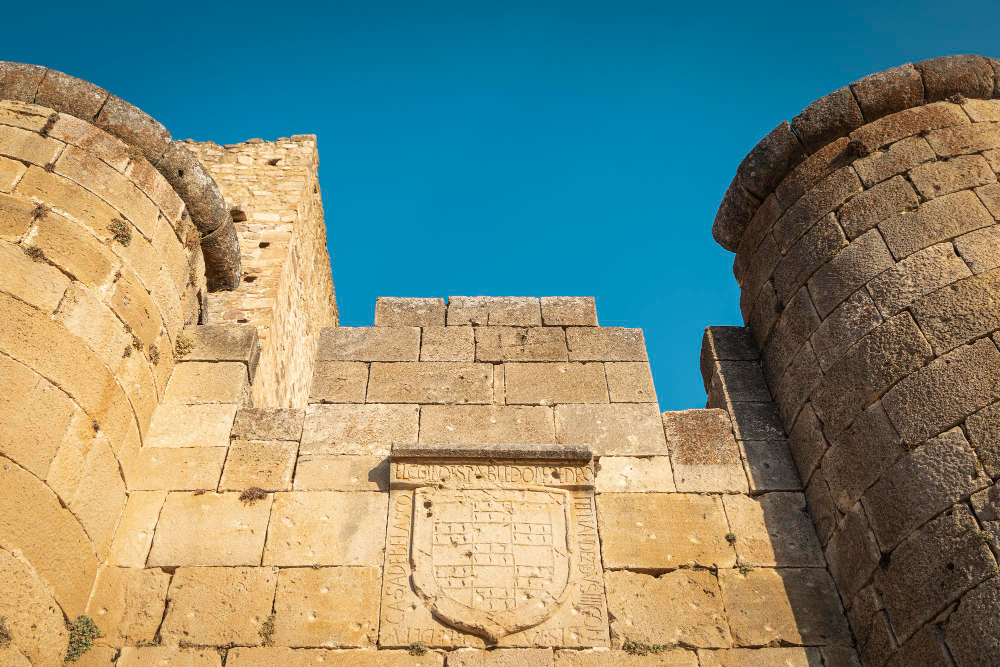
A castle between history and folklore – Pedraza Castle has a long and eventful architectural history. According to the prevailing view, its origins date back to the early Middle Ages; the complex visible today has been altered, extended and adapted to new requirements over the centuries. Like many fortresses in Castile, Pedraza was not only a residence but also a military stronghold, a place of refuge and a visible symbol of the rulers’ control. The castle stands in a strategically favourable location. Pedraza itself is situated on a rocky ridge and was protected for a long time by both its location and its fortifications. In a region characterised in the Middle Ages by territorial conflicts and shifting power dynamics, such structures were of enormous importance. Whoever controlled a castle enjoyed protection, economic influence and political power. It is precisely this atmosphere that provides the breeding ground for stories such as that of Elvira and Roberto. High walls, secluded rooms and the authority of a lord of the castle create a setting in which private feelings can scarcely withstand social expectations. The legend portrays Don Sancho as a man whose rank seems to grant him the right to decide the fate of others. Elvira and Roberto, on the other hand, represent a love that cannot openly defy power and is therefore forced into secrecy.
Elvira, the lord’s bride – According to tradition, Elvira was living at Pedraza Castle when Don Sancho de Ribaura decided to marry her. Whether she came from a distinguished family or what position she held at court is not clearly explained in the various retellings. What is decisive, rather, is her role: Elvira is portrayed as a young woman whose future is determined by the will of a powerful man. Yet Elvira already loves another – the young Roberto. The engagement to Don Sancho means a forced separation for both of them. Roberto, it is said, leaves the castle deeply hurt and retreats to a monastery. This gives the story a theme that recurs in many European myths and legends: the disappointed lover seeks refuge in religious life from a world in which social status and political interests carry more weight than personal bonds. However, entering the monastery does not truly sever the bond between Elvira and Roberto. In the logic of the legend, the love endures, though it becomes unattainable. From then on, Roberto is a monk – and thus separated from Elvira not only physically but also by his religious vows. This makes his later return all the more fateful.
The Monk’s Return – The turning point of the narrative begins with the death of the castle’s elderly chaplain. Of all people, Roberto is appointed as his successor. The traditions usually do not explain in detail why the choice fell on him. For the dramatic structure, however, this twist of fate is crucial: the very man who had left Pedraza now returns, in a clerical capacity, to the place of his lost love. Roberto sees Elvira again. What at first seems like a second chance also becomes a danger. The two are said to have secretly rediscovered their feelings for one another. Their encounters take place in the shadow of the castle, under the pressure of a husband who is portrayed as the lord over walls, servants and inhabitants. The legend draws its tension from this contrast. On the one hand are the cold chambers of a fortress, ecclesiastical duties and the rules of feudal society. On the other are two people whose bond lives on, of all places, precisely where it can least be tolerated. The forbidden does not remain hidden: when Don Sancho returns from a journey, the legend recounts that he begins to harbour suspicions.
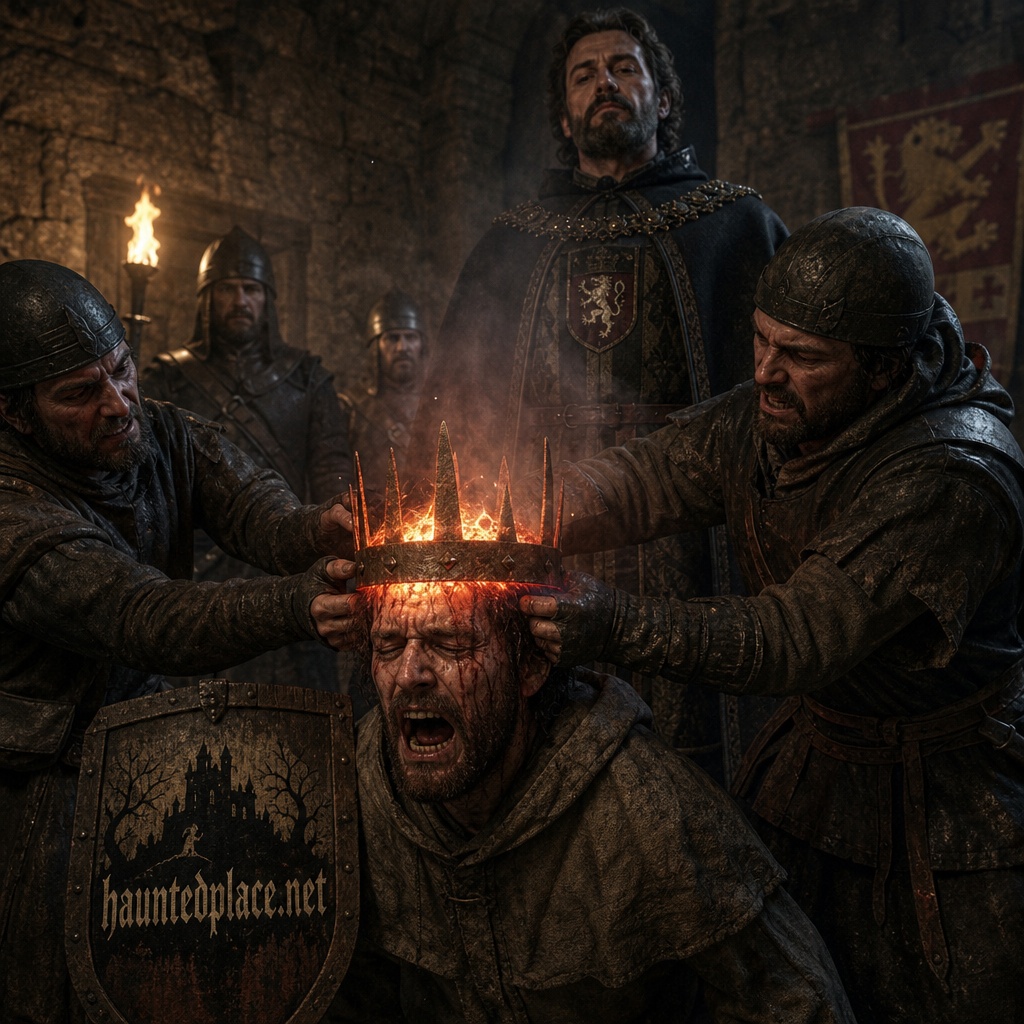
The crown of red-hot iron – The most gruesome part of the legend is also its best-known. Don Sancho is said not to have punished Roberto with a swift death. Instead, he is said to have had a red-hot iron crown placed upon his head. The metal, heated to the point of becoming a weapon of torture, is said to have burned into the monk’s head. According to tradition, Roberto died in excruciating pain. The scene carries a strong symbolic meaning. A crown usually stands for dignity, authority and dominion. In the legend, it is turned on its head: the symbol of power becomes an instrument of humiliation and destruction. In this way, the lord of the castle demonstrates not only his jealousy, but also his unrestricted power over his supposed rival. From a historical perspective, this account should be read with caution. Torture and cruel punishments were commonplace in the European Middle Ages, but Roberto’s specific execution is not substantiated by verifiable historical documents. The episode’s impact lies primarily in its role as part of a moral narrative: arbitrary power is portrayed not as a strength, but as a destructive force that ultimately drags everything around it into misfortune.
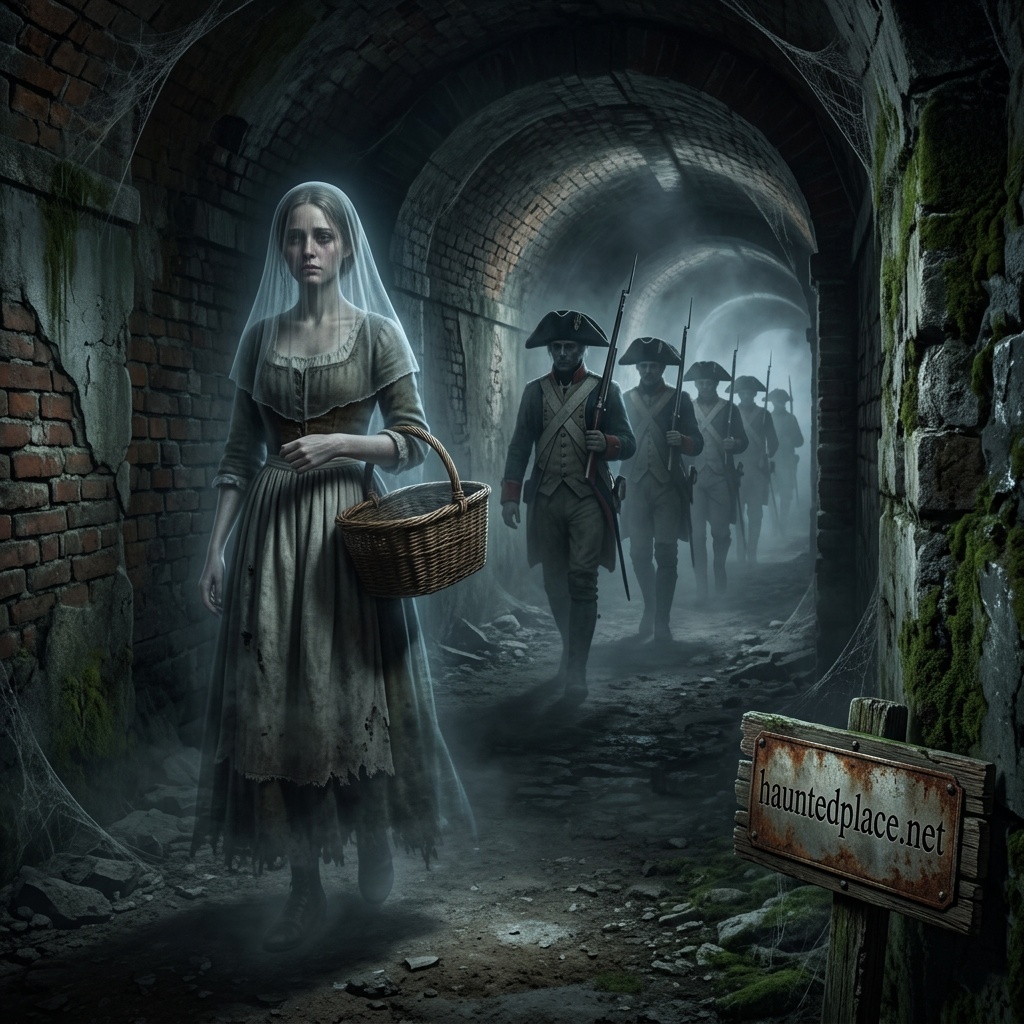
Elvira’s Death and the Castle Fire – According to the legend, when Elvira learns of Roberto’s death, she is overcome by grief and despair. She is said to have stabbed herself in the chest with a dagger. With her death, the love story does not end on a conciliatory note, but in utter hopelessness. Some versions of the legend add yet another ominous event: Shortly after the tragedy, a fire is said to have broken out at the castle. Flames are said to have engulfed parts of the complex, as if the crime itself had condemned the walls. Such motifs are typical of legends: forces of nature or disasters become the moral response to human cruelty. The fire is not recounted as an event documented in the archives, but as the dramatic consequence of Don Sancho’s deed. The fire marks the beginning of the story’s supernatural afterlife. According to popular belief, Elvira and Roberto find no rest. Their souls are said to wander through the dark recesses of the castle at night. Visitors and locals speak of footsteps in empty corridors, of voices that seem to emanate from the ancient walls, or of an oppressive atmosphere when darkness falls over Pedraza. Such ghost stories cannot be verified. They belong to folklore, not to historiography. Nevertheless, they explain why the legend has survived to this day: a tragedy is kept alive by the notion of restless souls. The past remains unresolved; rather, it seems to continue to breathe within the walls.
What is historical about the legend – and what is not – A careful examination must distinguish between the castle’s actual history and the narrative shaped by literature. The Castillo de Pedraza is an authentic historical building with medieval roots. Its architecture and location make it a significant part of the cultural heritage of the Segovia region. The history of Castile was, in fact, shaped by noble families, ecclesiastical institutions, feudal dependencies and violent conflicts. However, for Elvira, Roberto and Don Sancho de Ribaura – the protagonists of the tragedy described – there is no generally accepted historical evidence to corroborate the details of the legend. The narrative must therefore not be treated as a documented chronicle. It is a local legend that may have been passed down through generations and embellished in various ways. This does not render it worthless – quite the contrary. Legends often reveal less about a specific day in the past than about the beliefs of the people who preserved them. The story of Elvira and Roberto reflects themes that extend far beyond Pedraza: powerlessness in the face of social authority, control over women’s life choices, the tension between love and religious duty, and the fear of a lord whose wrath knows no bounds.
A place where history and shadows converge – Today, Pedraza is best known for its exceptionally well-preserved historic centre. The castle, the town walls and the Plaza Mayor attract visitors who wish to experience the Castilian Middle Ages in a particularly impressive setting. The Castillo was restored in the 20th century and is closely linked to the Spanish painter Ignacio Zuloaga, who acquired the complex and established a museum there. Yet behind the tourist postcards, the sombre legend lives on. When the streets empty and the massive walls are bathed in the night-time glow, the story of Elvira and Roberto takes on a particularly haunting quality. Not because it has been proven to be true, but because it imbues the castle with a human tragedy: love, betrayal, religious guilt, jealousy and violence. The Glowing Crown of Pedraza thus belongs to the realm of legend – but a legend that continues to haunt this historic site to this day. Anyone visiting the castle encounters not just stones from centuries past. They also encounter a story that asks what happens when power takes precedence over compassion – and why some shadows do not fade, even after centuries.