 Isabella Mueller Baroness of Stainton le Vale
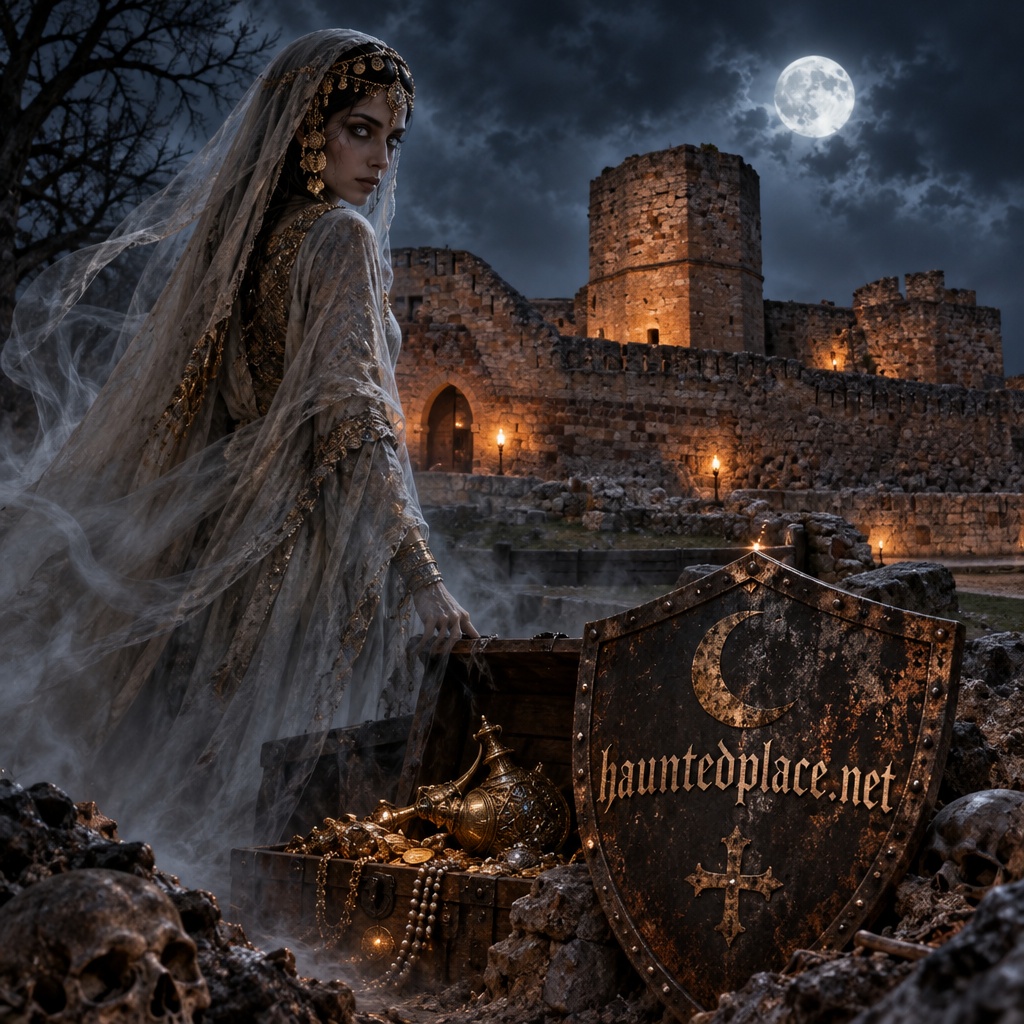
High above the Spanish city of Zamora, on a rocky hill overlooking the River Duero, stands one of the most famous medieval monuments in Castile and León: Zamora Castle. Its massive walls, the moat and the striking pentagonal keep are a reminder of centuries of warfare on the border between Christian kingdoms and Muslim-ruled territories. Yet beyond the documented history of sieges, monarchs and stone fortifications, the castle has also inspired a more unsettling tradition. Local folklore tells of Zargutia Mora, sometimes spelled Zaragutia Mora, a ghostly Moorish woman who is said to guard a hidden treasure near the ancient fortress. In various versions of the story, she appears as a mysterious female figure linked to the final days of Muslim rule in the region. She is associated with buried riches, secrets and a curse that punishes those who attempt to lay claim to what lies hidden. The legend has become part of Zamora’s collective imagination, blending medieval memory, romantic ghost story motifs and the long historical shadow of al-Andalus. However, this narrative must be approached with caution. There is no reliable medieval document to prove that a woman named Zargutia Mora lived at Zamora Castle or that a treasure is in fact hidden beneath its grounds. What has survived is folklore: a story that has been preserved and reshaped through oral tradition, local retellings and later literary interest. Its power lies not in archaeological certainty, but in what it reveals about how communities remember the past.
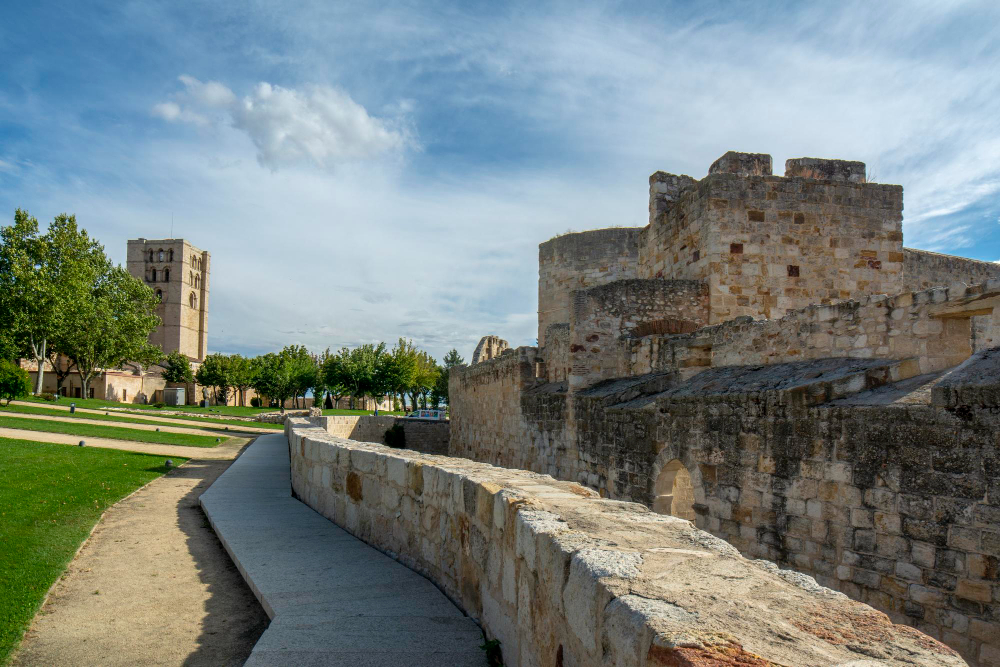
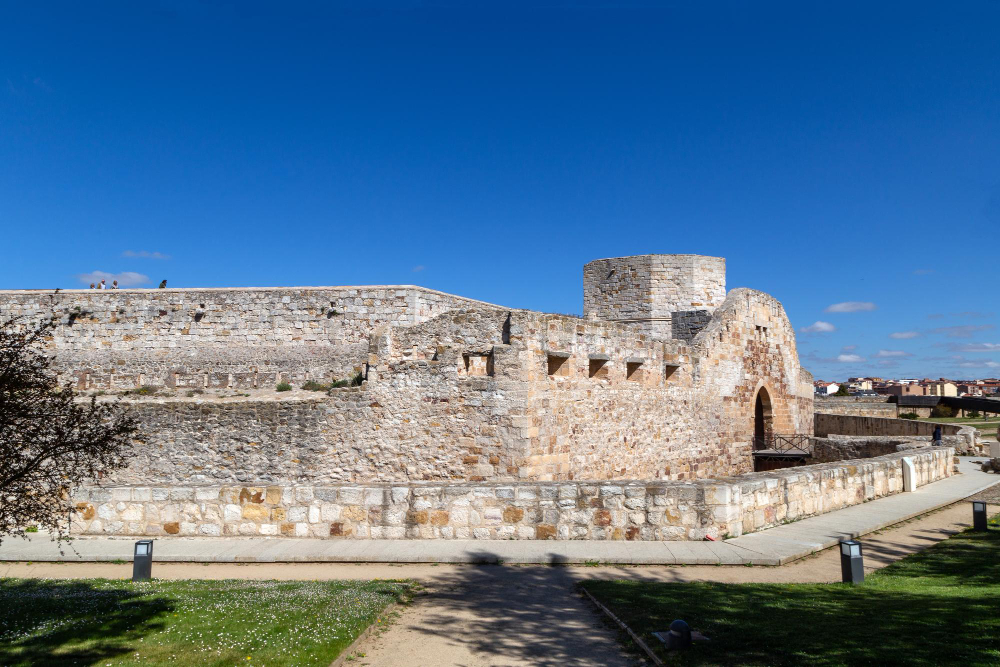
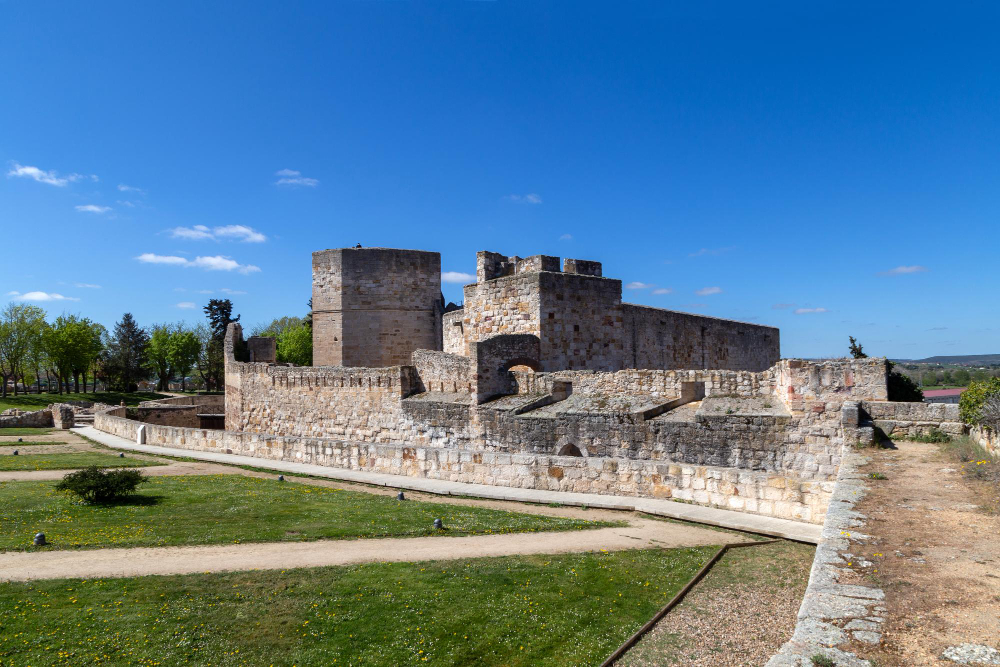
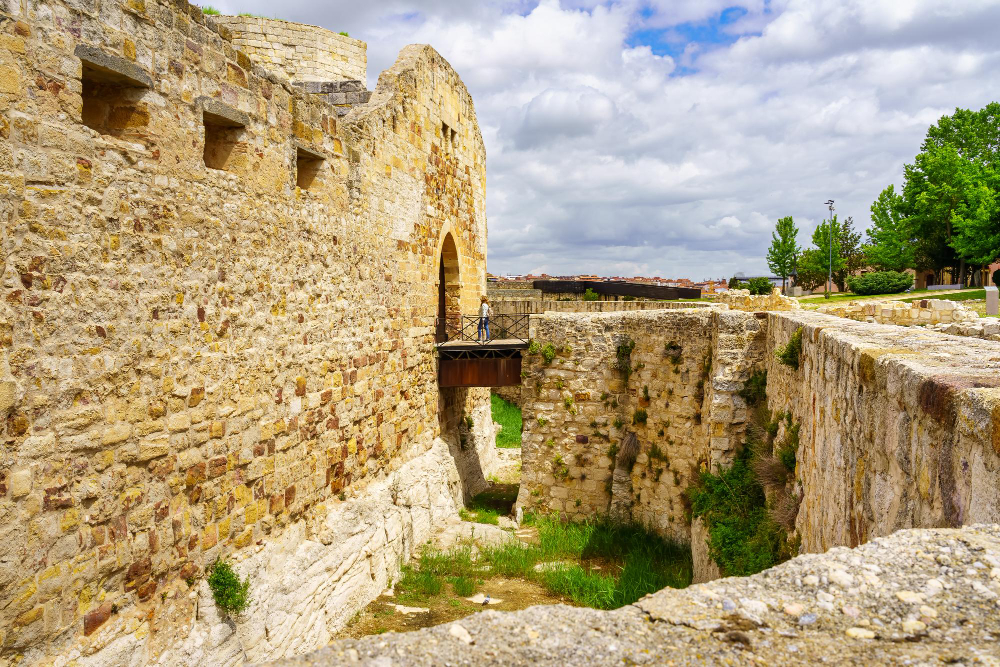
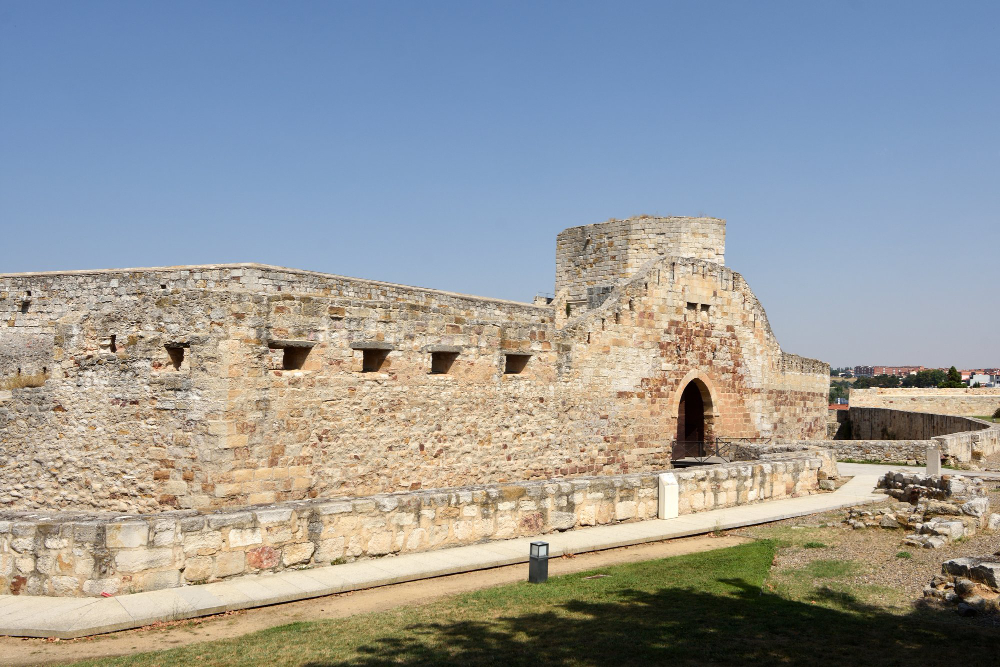
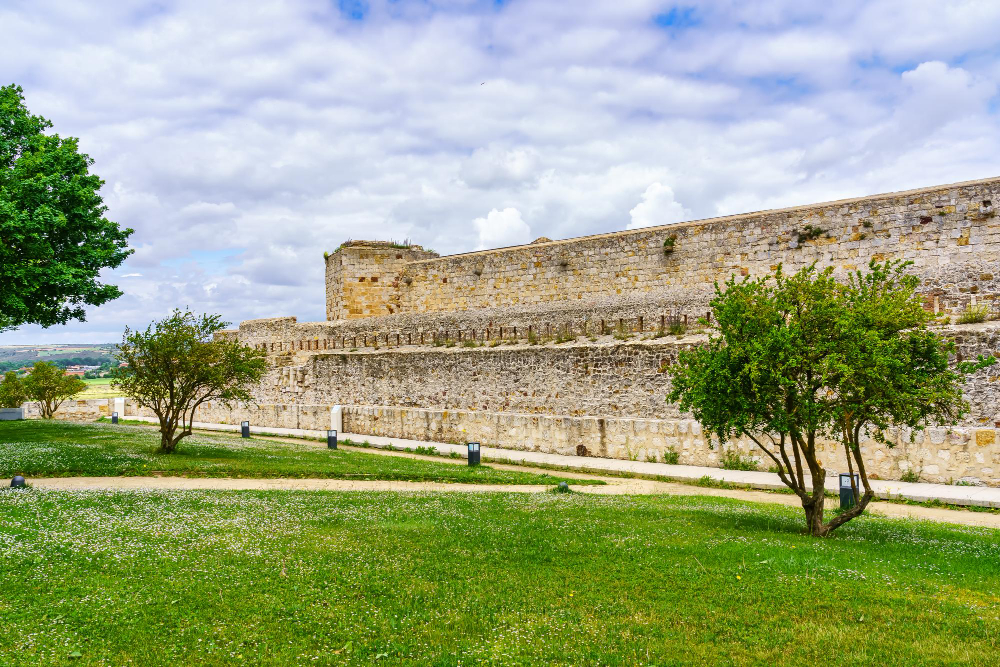
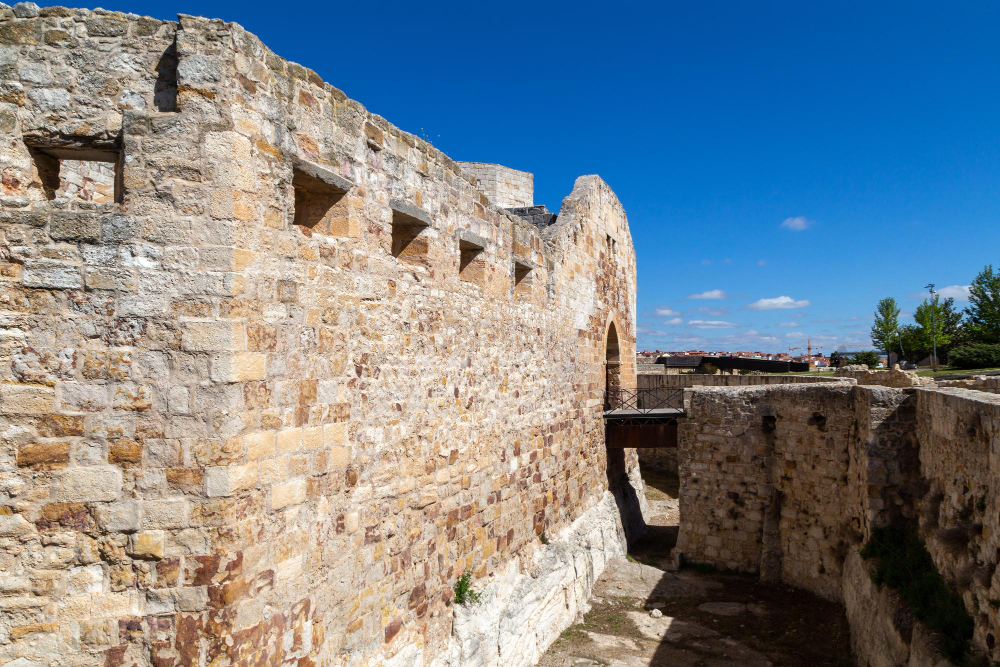
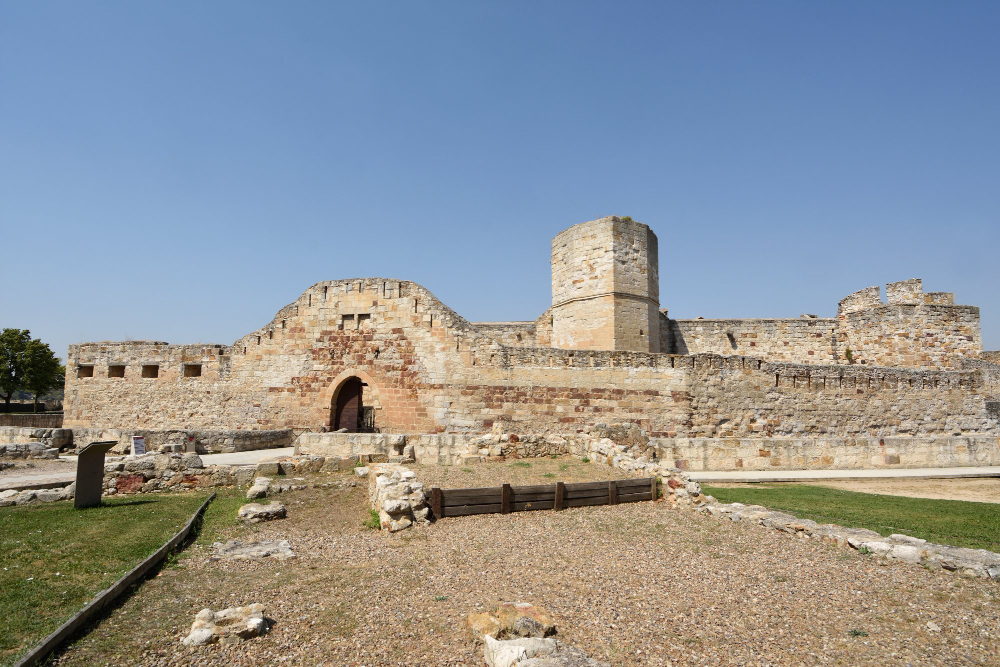
A fortress on a strategic frontier – Zamora’s location has lent the town strategic importance since ancient times. The town overlooks the Duero, a river that for long periods served as a contested corridor between the Christian territories to the north and the Islamic south. In the early Middle Ages, the region changed hands repeatedly. Its fortifications were reinforced and rebuilt as rulers fought for control of the border. The present-day castle is generally dated to the 11th century, although it stands on a site that had already been of defensive importance in earlier times. Its current form reflects medieval Christian military architecture, particularly the period when Zamora became an important stronghold of the Kingdom of León. The castle’s layout comprises a deep moat, enclosure walls, towers and a striking central keep. Its unusual keep, whose ground plan is often described as polygonal or rhombic, contributes to the building’s distinctive silhouette. The fortress is also closely linked to the turbulent political history of the 11th century. Zamora rose to prominence in connection with the succession disputes following the death of King Ferdinand I of León and Castile. According to medieval chronicles and later epic traditions, Ferdinand divided his lands amongst his children. His daughter Urraca received Zamora, whilst her brother Sancho II of Castile attempted to capture the city by force. The siege of Zamora and the death of Sancho II in 1072 became central episodes in Iberian historical memory and literature. This historical context – military conflicts, rival rulers, contested borders and lost kingdoms – provided fertile ground for supernatural tales. A castle with such a past is the perfect setting for legends of hidden chambers, curses and restless spirits.
Who is Zargutia Mora? – The figure of Zargutia Mora belongs to the broad family of Iberian legends about the ‘Moorish maiden’ or mora encantada. Throughout Spain and Portugal, stories are told of beautiful or tragic women associated with ancient Muslim settlements, caves, springs, castles and buried treasures. These women may appear at night, near bodies of water, on certain feast days, or at moments when it is believed that a hidden spell is waning. In many versions, the woman is not simply portrayed as a ghost. She is an enchanted guardian: someone trapped between worlds, bound to a place and to an object of great value. She may test visitors, demand a difficult act of courage or moral integrity, or vanish when approached. Treasure hunters are often warned that greed leads to misfortune. Zargutia Mora fits this pattern. The legend situates her near Zamora Castle and links her to riches hidden during the period of Muslim presence on the Iberian Peninsula. Some accounts suggest that, when a fortress or settlement was abandoned in the face of an advancing enemy, valuables were hidden rather than left behind. The woman became the guardian of these treasures, unable – or unwilling – to leave them behind. The name itself is difficult to trace with any certainty. Folkloric names are often altered through generations of oral tradition, regional pronunciation and subsequent written adaptations. ‘Mora’ is the most unambiguous element: in Spanish folklore, it generally refers to a woman who is portrayed as a Muslim or associated with the medieval Islamic past. However, it should not be regarded as precise historical evidence of a person’s identity. Rather, it signals the legend’s connection to the cultural memory of al-Andalus and the Reconquista.
Treasure, Fear and the Logic of Folklore – Stories of buried treasure are widespread in places marked by conquest and social upheaval. When communities experience war, forced displacement or sudden changes in power, narratives often emerge about valuables that were hidden before the flight. On the Iberian Peninsula, legends of hidden Moorish gold became particularly widespread following the medieval Christian expansion southwards. Such tales are not necessarily accounts of actual treasure finds. They often express a deeper idea: that the land harbours layers of history that are not visible on the surface. A ruined tower, a blocked passageway or an unexplored hill can become a symbolic gateway to a bygone world. In the legend of Zargutia Mora, the treasure is never merely money. It is guarded because it belongs to the past, to a vanished community and to a secret that must not be violated. The figure of the guardian transforms ordinary greed into danger. Anyone seeking the treasure must contend with more than just the darkness beneath a castle; they face the moral consequences of disturbing what has been left behind. That is why the story has such a strong element of horror. The fear does not necessarily stem from violent attacks or monstrous imagery. It arises from the tension: the silent fortress by night, the possibility that a woman might appear where no one ought to be, the belief that something valuable lies just beyond reach, and the feeling that the seeker is being watched.
The ‘Moorish Maiden’ in Spanish tradition – Folklorists have long identified the mora encantada as one of the most enduring figures in Iberian folklore. Similar legends appear in many regions, particularly near ancient castles, caves, wells and prehistoric sites. These tales often link landscape features with imagined memories of Muslim rule. The recurring details are striking. The enchanted woman is often beautiful and sad. She may be wearing sumptuous clothes, carry a comb, be spinning yarn, washing clothes or holding a key in her hand. Her appearance is often associated with dawn, midnight, midsummer’s eve or other times of transition. A treasure, a spell or an underground refuge is usually nearby. The man who encounters her may be offered wealth, but only if he follows the instructions to the letter. Failure, hesitation or selfishness cause the apparition to vanish. Zargutia Mora can be understood within the context of this tradition, yet Zamora gives the motif a specific local setting. The castle’s commanding position and its long military history make it an ideal setting for a legend of a guardian spirit. The story transforms the stone architecture into a living presence. Walls become boundaries between historical eras; underground chambers become potential hiding places; the fortress becomes both a monument and a threshold haunted by spirits.
What history can confirm – and what it cannot – Zamora Castle is real, medieval and historically significant. The city’s role in the political and military conflicts of the Kingdom of León is well documented. Equally indisputable is the broader history of Muslim-Christian conflict and interaction in the Duero Valley. Yet the treasure and the ghost remain unconfirmed. No verified archaeological find points to a ‘treasure of Zargutia Mora’, and no authoritative historical source confirms that the apparition is a real person. This distinction is important, particularly when folklore is presented in tourism or in online narratives. A legend becomes all the more captivating – not any less so – when readers understand where history ends and imagination begins. The lack of evidence does not render the narrative meaningless. Folklore is a different kind of evidence: evidence of collective memory. It shows how later generations interpreted the material remains of the past. In the case of Zamora, the legend preserves an imaginary link between the fortress and the Islamic world, even though the castle visible today is mainly associated with the Christian medieval Kingdom of León. It also reflects the tendency of communities to explain hidden or inaccessible places through storytelling. A sealed-off entrance, a dark moat or a forgotten section of wall can spark speculation. Over time, speculation becomes a story; a story is given a name; and a name becomes a local legend.
A castle that still invites ghost stories – Today, Zamora Castle is an important cultural site and a striking feature of the historic townscape. Visitors can explore its restored defences and look out over the old town towards the River Duero. In daylight, it is a reminder of medieval engineering and royal conflicts. At night, however, the same setting naturally evokes darker associations. The legend of Zargutia Mora lives on because the castle still possesses the very qualities that gave rise to it: seclusion, height, age and silence. Its massive masonry suggests hidden depths. Situated on the edge of the old town, it seems cut off from everyday life. The past is visible there, but incomplete. Much is known about the fortress; much else must be imagined. This tension lies at the heart of the story. Zargutia Mora is not merely a fearsome ghost guarding gold. She is a symbol of the stories buried beneath later tales – Muslim and Christian, documented and invented, remembered and forgotten. Her treasure may never be found, because it was never meant to be found. It exists in the space between archaeology and legend. For those who visit Zamora Castle, the most unsettling question is therefore not whether the ghost is real. Rather, it is whether an ancient fortress can ever truly be silent. Beneath the stones, in the shadows of the walls and in the stories passed down from generation to generation, the past continues to speak.