 Isabella Mueller Baroness of Stainton le Vale
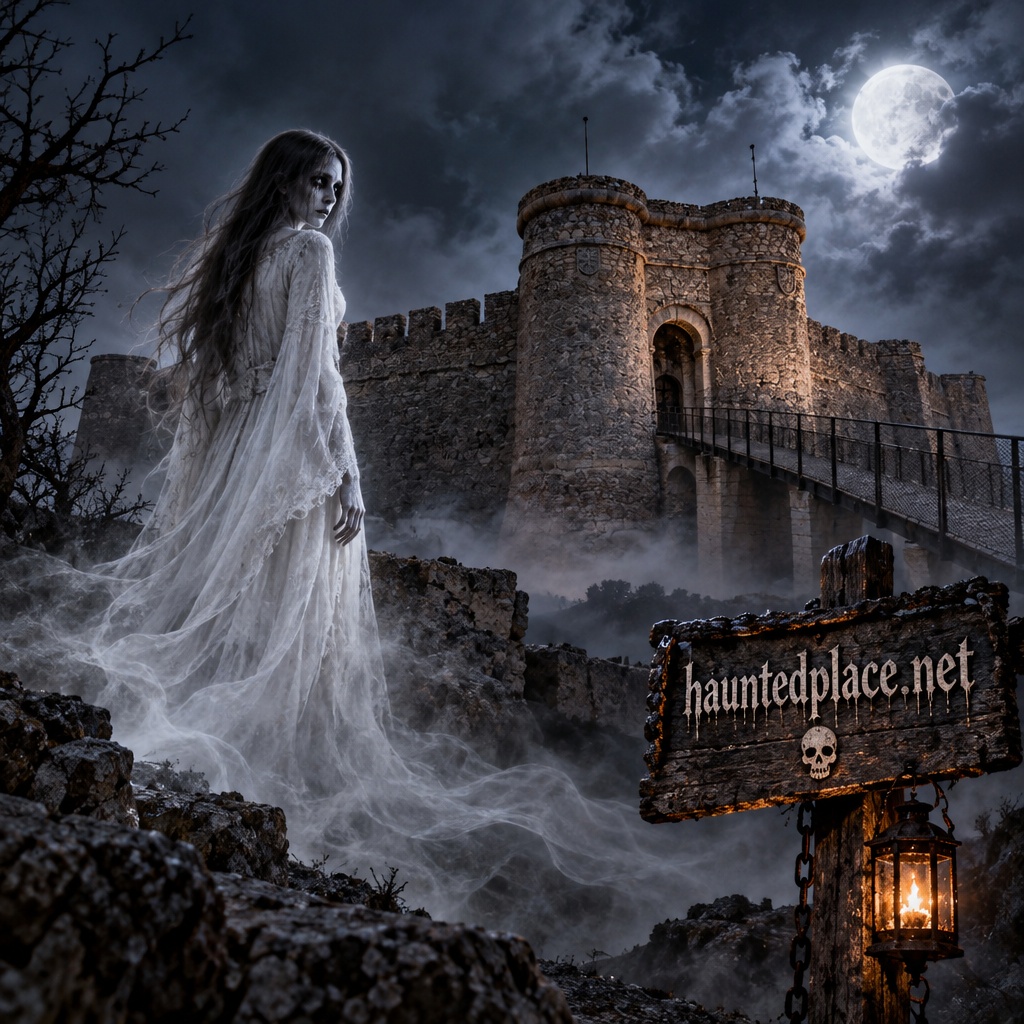
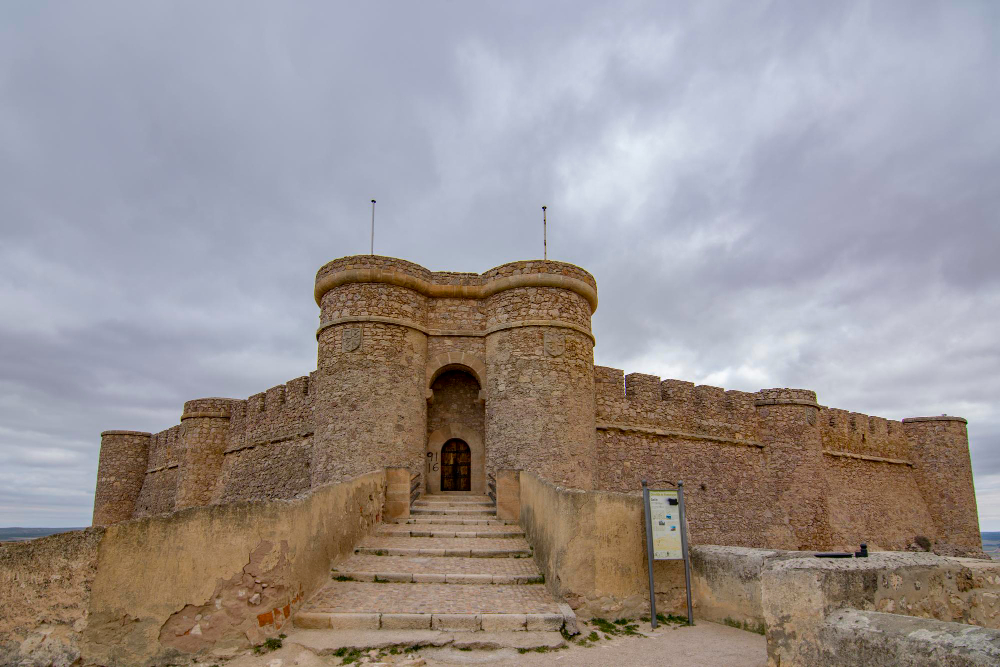
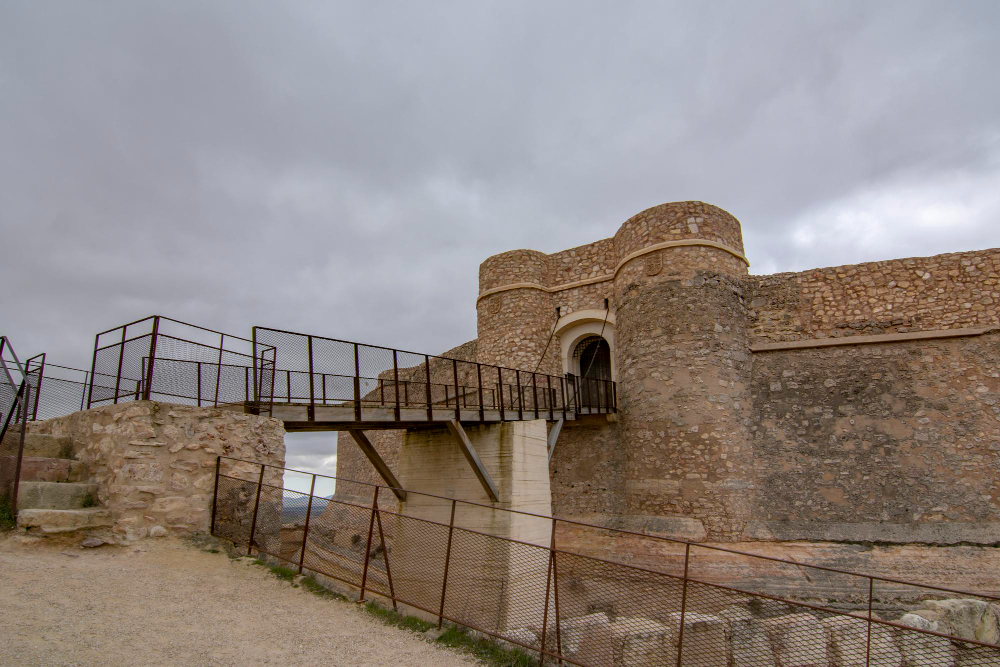
High above the small town of Chinchilla de Montearagón in the Spanish province of Albacete stands a fortress whose walls have overlooked the plains of La Mancha for centuries. The Castillo de Chinchilla de Montearagón is now an important historical monument and one of the most striking landmarks in the region of Castile-La Mancha. Yet alongside its military past, its stone bastions and its deep moat, one story in particular lives on, captivating visitors to this day: the legend of the “Dama de Blanco”, the White Lady. The tale is one of love, betrayal, death and a ghost said never to have found peace. Particularly on St John’s Eve, the “Noche de San Juan”, a woman in a white gown is said to appear on the ramparts or near the castle. Some describe her as a warning figure, others as a restless shadow seeking revenge. There is no documented evidence of this apparition. Yet the legend is an integral part of the oral tradition surrounding the fortress and lends the place an eerie, mysterious atmosphere.
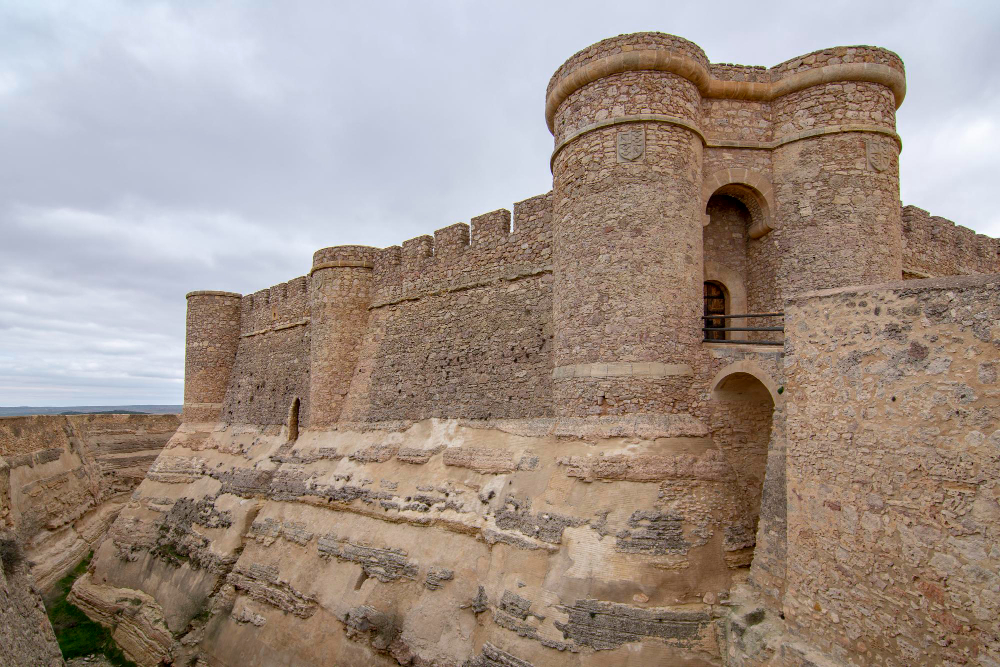
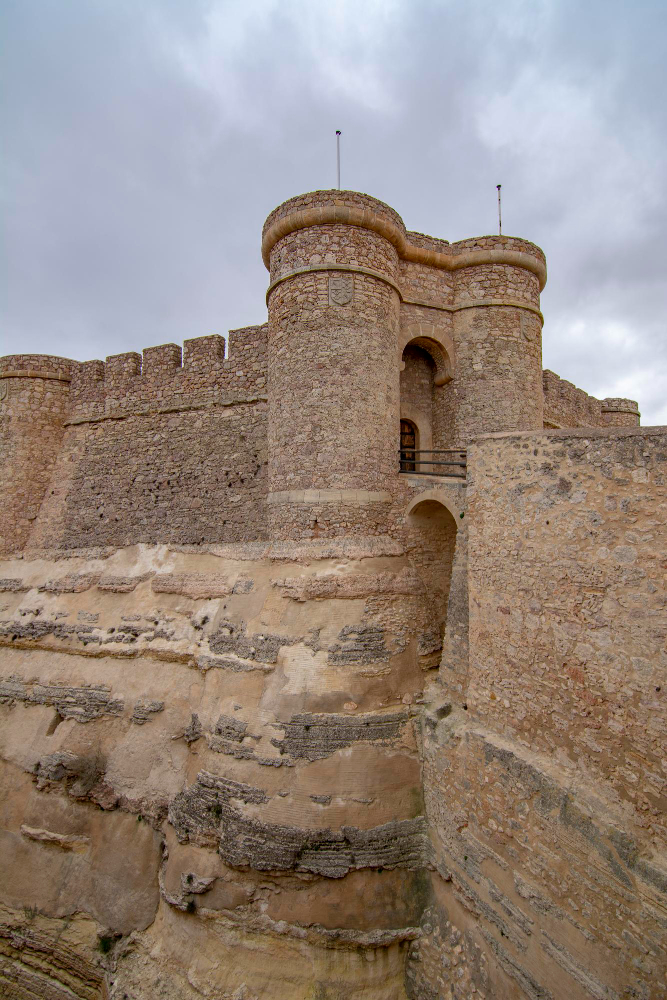
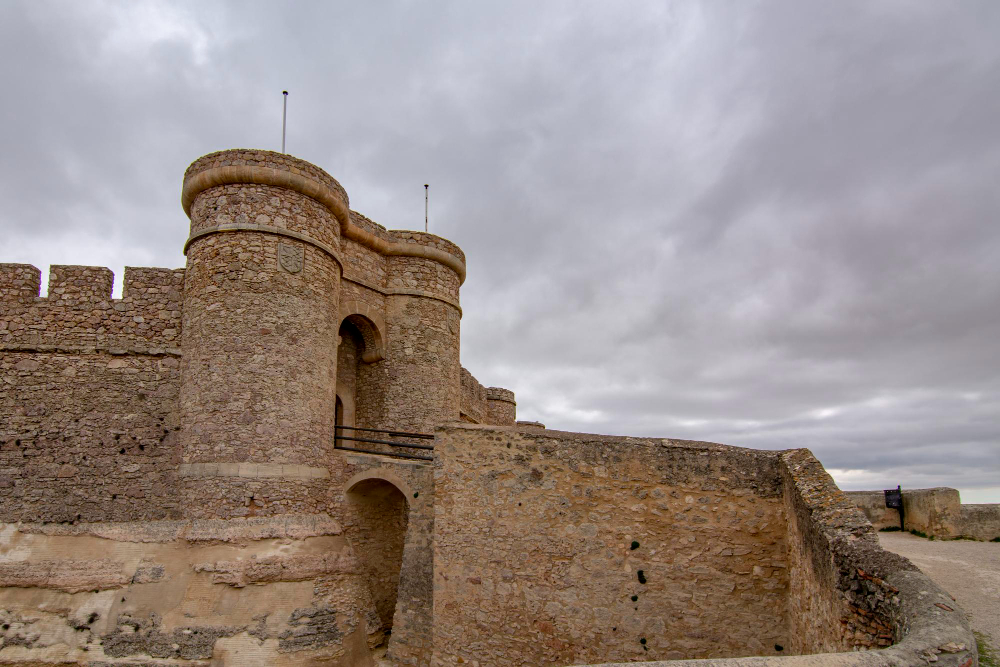
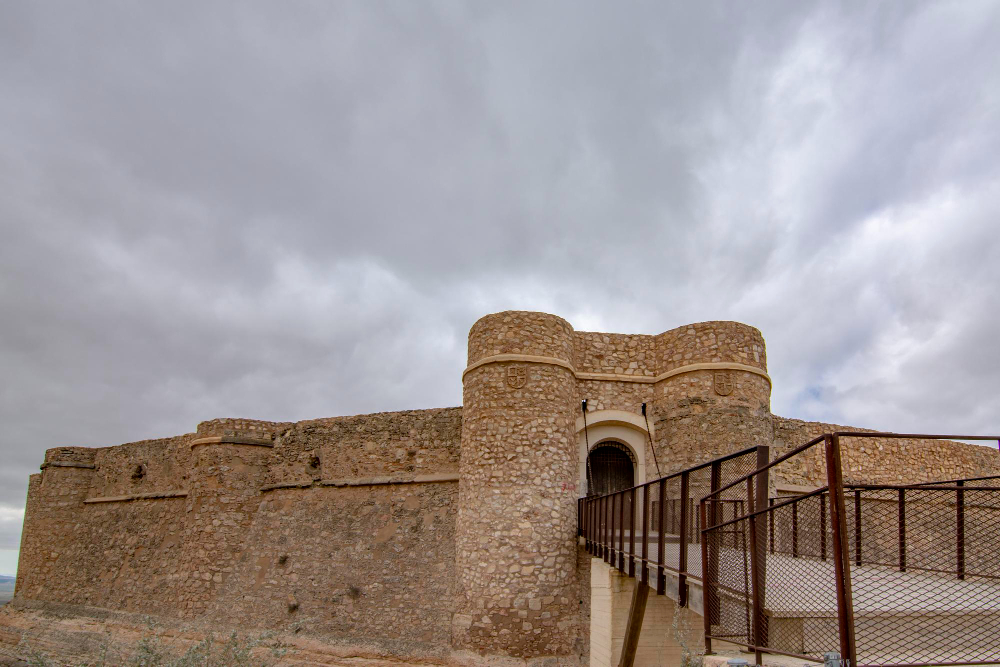
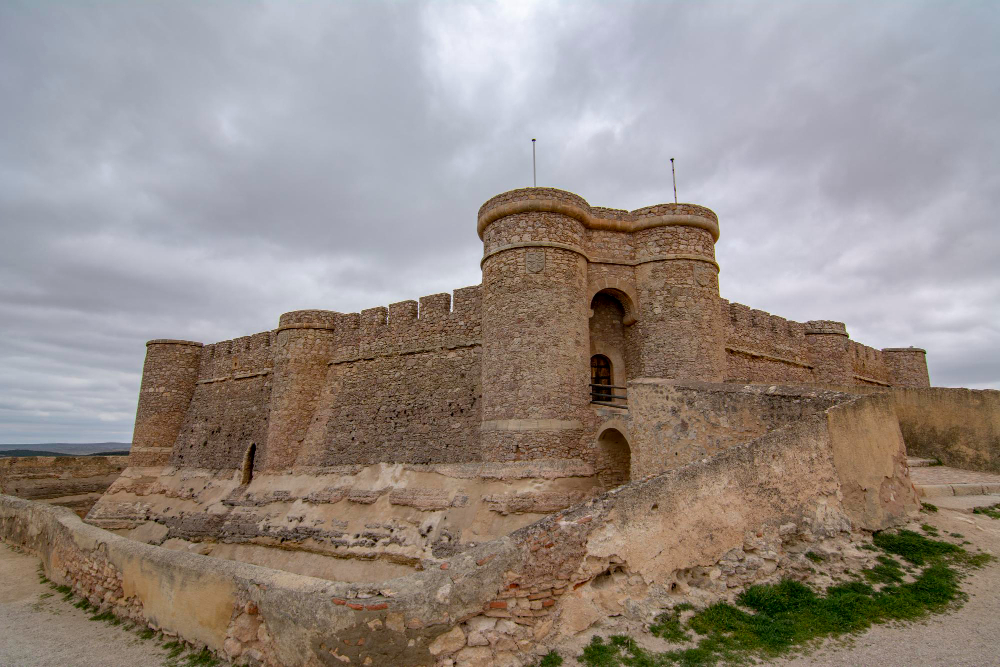
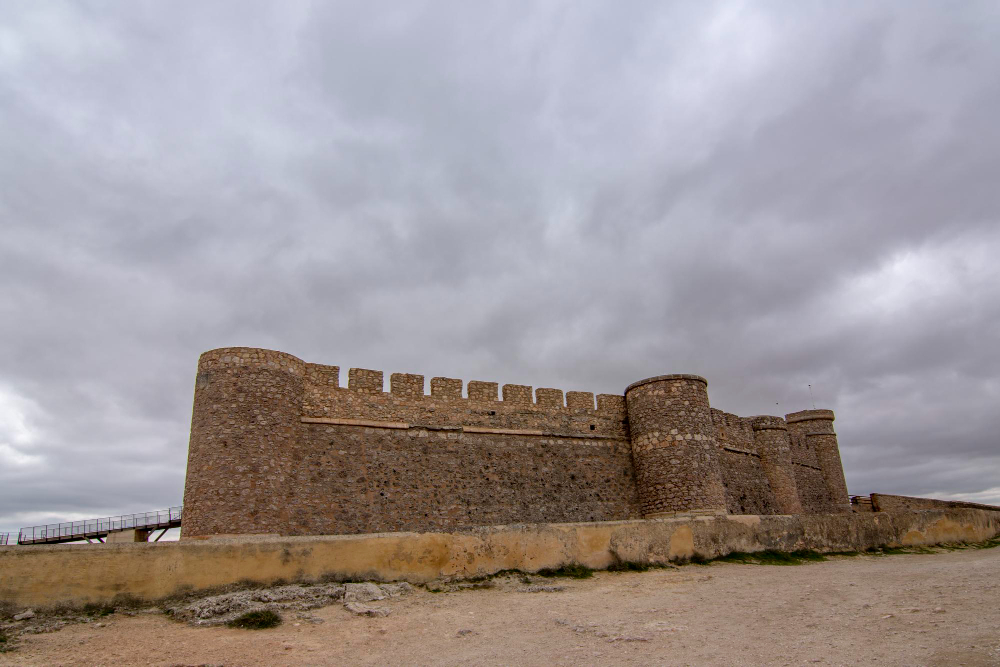
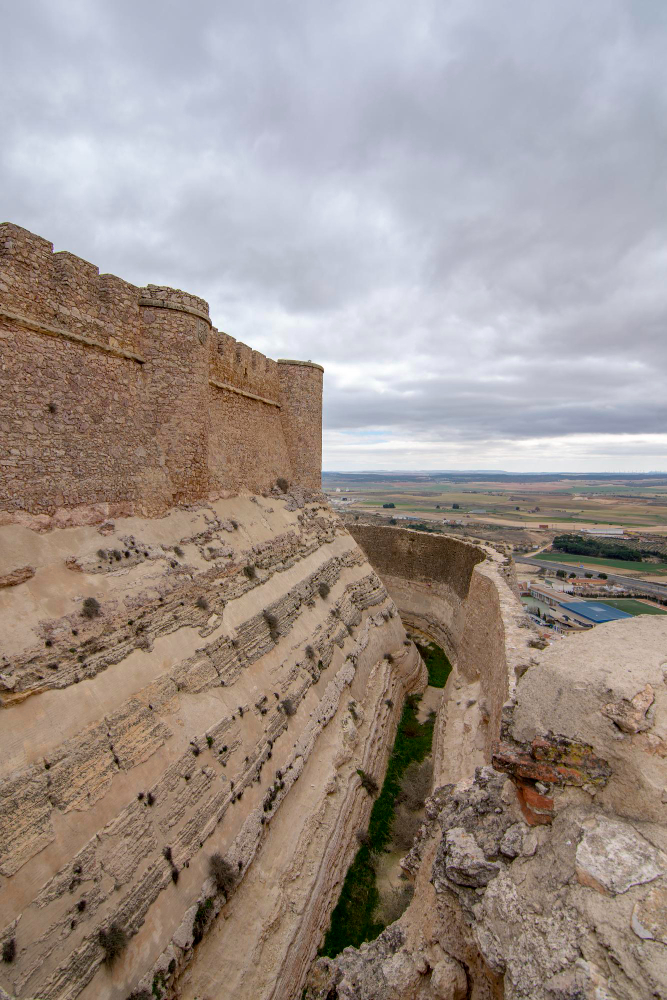
A castle overlooking the La Mancha plain – The Castillo de Chinchilla de Montearagón stands on a hill above the historic town centre. From there, the surrounding area could be surveyed over great distances – a decisive advantage in a landscape that was the scene of political and military conflicts for many centuries. This location made Chinchilla a strategically important site between various spheres of influence on the Iberian Peninsula. Today’s fortress bears traces of several eras. A fortification already stood on the hill during the Islamic period. Following the Christian conquest, the complex was altered and expanded. Its present appearance is characterised primarily by alterations made in the late Middle Ages. Particularly striking is the wide moat, hewn into the rock, which partially surrounds the castle. It once made access considerably more difficult for attackers. The massive walls, towers and defensive features also bear witness to the fact that the complex was not intended solely as a stately residence, but as a key military stronghold. With its austere geometry and stone surfaces, the Castillo appears forbidding even in daylight. When the sun disappears behind the hills, the angles, passageways and edges of the walls become dark silhouettes. It is precisely against this backdrop that the legend of the White Lady has endured for generations.
The Tragedy of a Murder – At the heart of the legend lies a nobleman who is said to have been murdered within the castle in the 15th century. Different versions of the tale do not always mention the same name, nor are the exact circumstances of his death consistently recorded. Sometimes there is talk of a political conspiracy, at other times of betrayal by someone close to him. The murder cannot be conclusively proven in this form. However, what is crucial to the legend is the consequence of the crime. The wife of the murdered man is said to have been pregnant at the time. When she learnt of her husband’s death, she is said to have fallen into deep despair. The pain of her loss, the fear of the future and the violence that had suddenly shattered her life are said to have ultimately driven her to take her own life. The location of her death is described differently in the various accounts. Some versions place the tragedy directly within the castle, others on the steep slopes of the fortress or at the edge of the moat. It is precisely this vagueness that heightens the impact of the story: The entire complex seems touched by her fate. Not a single room, but the walls, the paths and the dark recesses of the fortress become the possible scene of a past catastrophe. With her death, however, according to legend, the story did not come to an end.
The Woman in White – According to tradition, the unfortunate widow returns as the Dama de Blanco. She appears in a bright white gown and moves silently around the castle grounds. Some accounts describe her as a slender figure with long hair, whilst others speak merely of a white light or a pale shadow silhouetted against the walls. Her white dress is the most distinctive feature of the apparition. In folk ghost stories, the colour often symbolises mourning, innocence and a death that could not be come to terms with. In Chinchilla, this image is linked to the story of a woman who lost her husband and, even in her hour of greatest need, saw no way out. The Dama de Blanco is not regarded as a malevolent spirit in every version of the tale. Rather, her appearance is interpreted in various ways. Some say she is searching for those responsible for her husband’s murder. Others say she warns people of danger, particularly those who recklessly approach the castle at night. Still others interpret her as an expression of eternal grief: the woman returns not to cause harm, but because she cannot leave her story behind. It is precisely this ambiguity that makes the figure so eerie. Anyone who encounters her does not know whether they have witnessed a warning, a plea for redemption or an unfinished act of vengeance.
St John’s Night as the hour of her appearance – The legend is particularly closely linked to the night of 23 to 24 June: the “Noche de San Juan”, St John’s Night. In Spain, this night is associated with numerous customs. Fires, purification rituals and wishes for the future play a part in many regions. In popular belief, the night has long been regarded as a time when the ordinary and the extraordinary lie closer together. According to the tradition of Chinchilla, the White Lady is said to appear above all when darkness falls over the fortress. Whilst celebrations are taking place down in the village or people are wandering through the old alleyways, she is said to appear up at the castle: on a ledge in the wall, on a narrow path or near the deep moat. It is said that she is not always clearly visible. Sometimes, only a white glimmer is initially perceived. Others claim to have seen a motionless figure that vanished the very next moment. In some accounts, her appearance is followed by a sudden chill or a strange feeling of foreboding. Such reports form part of the local folklore; they are not historically verified facts. Nevertheless, they explain why, particularly on St John’s Night, the castle exerts a special attraction on people interested in the mysterious side of old places.
Prison, Fear and Memory – The legend of the Dama de Blanco stands alone. The Castillo de Chinchilla is also associated with a grim past as a prison. Throughout its history, the complex served not only military purposes. Like many castles and fortresses, it was also used at times to hold prisoners. People are likely to have lived under harsh conditions in the cramped, cold rooms behind the thick walls. It is precisely this connection between fortress and prison that reinforces the place’s sinister aura. Prison stories are often characterised by loneliness, fear, violence and lost hope. In Chinchilla, these notions are intertwined with the castle’s dark rooms and the memory of past conflicts. Today, visitors stand before mighty walls, yet behind them lie centuries of sieges, changes of rule and human destinies. The White Lady fits perfectly into this atmosphere. Her story is not a chronicle with clearly documented dates. She is a legend attached to a real, historically significant place. The castle provides the backdrop, its past the gravity, and the tragedy the emotional core.
Between History and Tradition – The long-standing significance of the Castillo de Chinchilla de Montearagón as a fortress is historically established. The complex underwent alterations at various times and was closely linked to the history of the region. Its role as a defensive structure and, later, as a place of imprisonment is also part of its well-known past. The tale of the pregnant woman, the murdered nobleman and the nocturnal apparition, on the other hand, belongs to the realm of local folklore. There is no known definitive historical source that confirms the entire sequence of events in the legend. This does not render the story worthless – but it does require a clear distinction to be drawn between verifiable history and folk tale. Legends often arise where historical sites raise profound questions. Who lived behind these walls? Who was imprisoned here? What crimes were committed, what secrets were never spoken? The Dama de Blanco gives a face to such questions. She transforms the silent fortress into a place with a voice – a sad, whispering voice from the past.
A place that holds onto its shadows – Today, the Castillo de Chinchilla de Montearagón is, above all, a monument, a tourist attraction and an impressive symbol of the town. Its walls tell of centuries of Iberian history. Yet as soon as dusk falls, another dimension emerges alongside the visible past: the world of stories, fears and memories. The White Lady of Chinchilla remains a figure straddling the line between myth and local tradition. Whether anyone has ever actually seen a woman dressed in white by the castle walls cannot be proven. What is certain, however, is that the story lives on. It is retold as St John’s Eve draws nearer, when mist settles over the plain, or when visitors stand at the edge of the old moat and gaze into the depths. Then the castle seems to be more than just a structure of stone. It seems like a place that has not forgotten its shadows.