 Isabella Mueller Baroness of Stainton le Vale
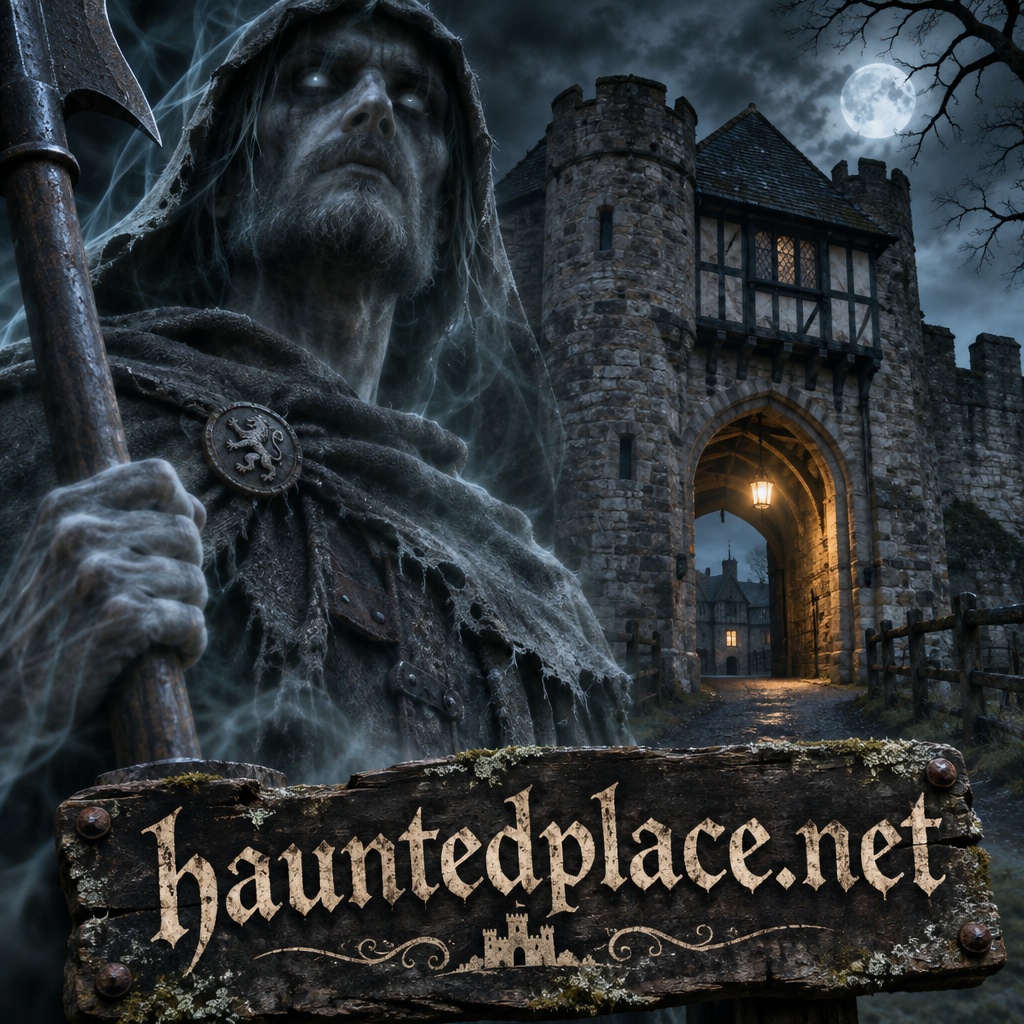
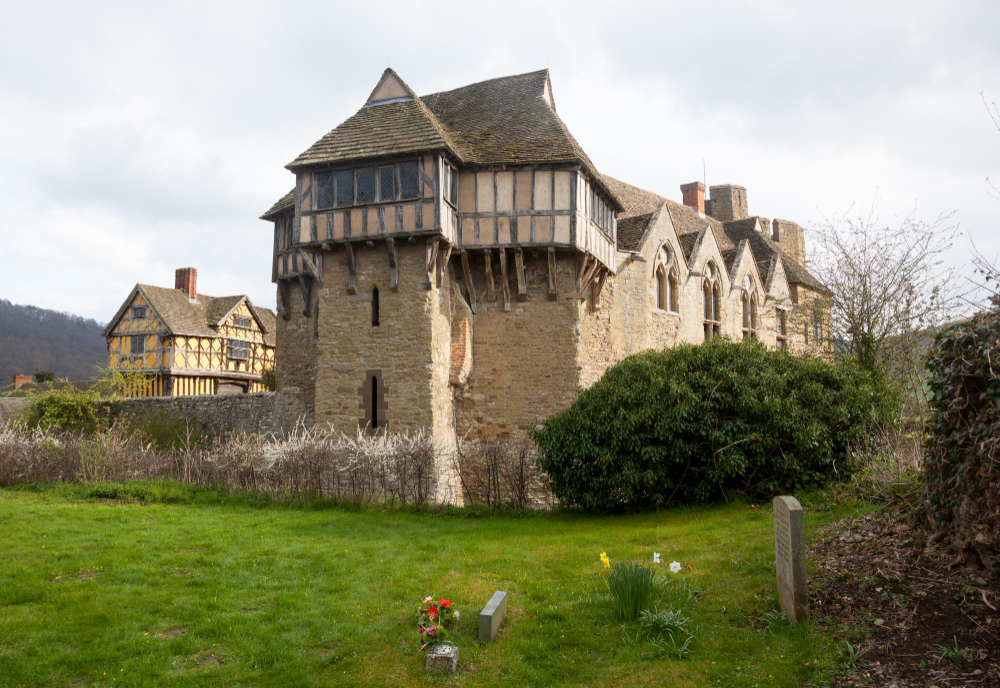
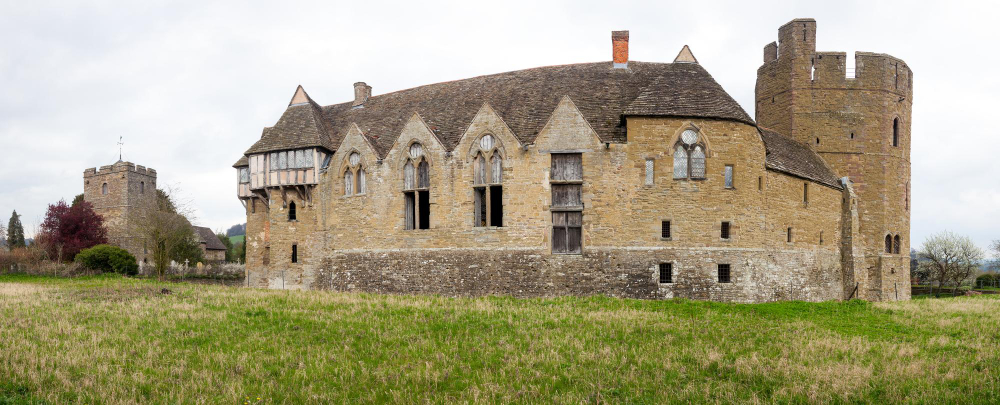
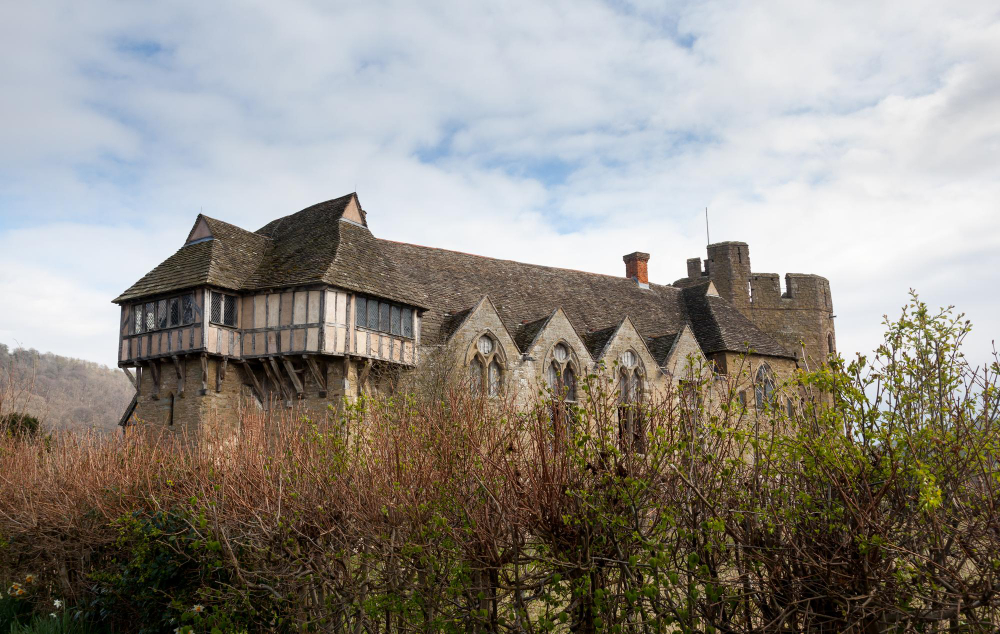
Stokesay Castle lies secluded amongst the rolling hills of the English county of Shropshire. At first glance, the estate near the small village of Craven Arms looks less like a gloomy fortress and more like an exceptionally well-preserved medieval manor house. Its half-timbered buildings, the great hall, the mighty towers and the imposing gatehouse attract numerous visitors every year. Yet, alongside its architecture and long history, Stokesay Castle also has another reputation: for a long time, people have been telling tales of mysterious apparitions on the grounds. A figure at the gatehouse is mentioned particularly often – the ghost of a former gatekeeper. This legend is one of the best-known ghost stories associated with Stokesay Castle. Visitors and staff are said to have repeatedly seen a dark, human-like figure in or near the gatehouse. In accounts, the figure is usually described as a man who appears to be watching over the area by the entrance. According to local legend, he is a former guard who has not left his post even after death. Stokesay Castle was built towards the end of the 13th century. The wealthy wool merchant Laurence of Ludlow commissioned its construction from around 1280. His aim was not to create a classic defensive castle for a warlike nobleman, but rather a stately yet secure residence. The great hall, the living quarters and the towers were intended to showcase the owner’s wealth. The complex was surrounded by a wall and featured a moat; however, this was intended more as a protective measure and a symbol of high social standing than as part of an impregnable fortress.
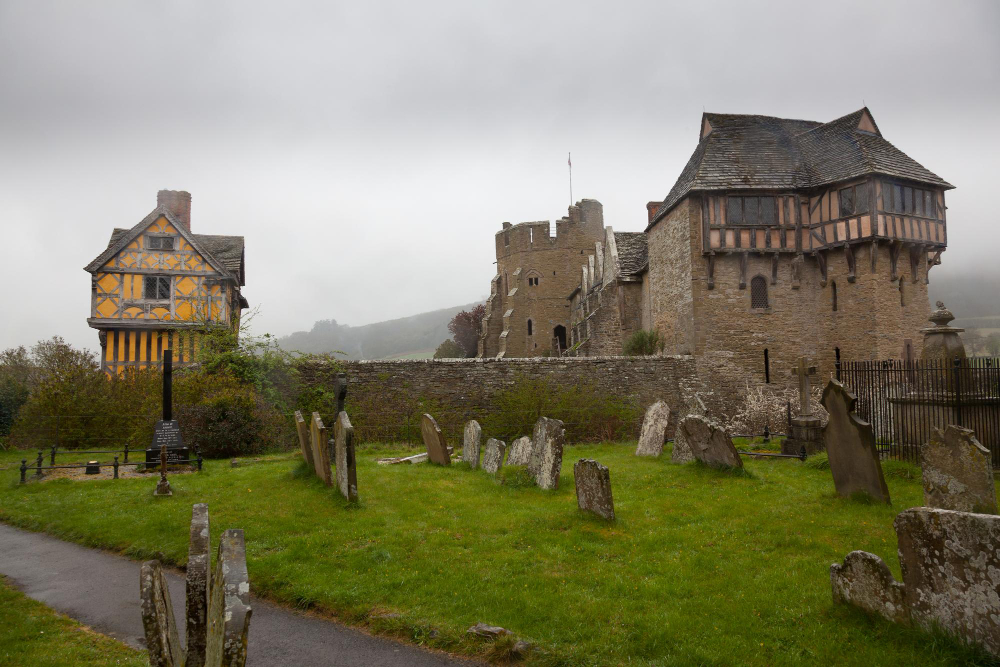
The gatehouse played a special role within this complex. Anyone entering Stokesay Castle had to pass through this area. It was here that access to the estate was controlled. In medieval houses of this size, gates were not merely entrances. They marked the boundary between the outside world and the private, protected realm of the inhabitants. Guards or servants could receive guests there, check merchants, direct messengers or turn away unwanted individuals. It is precisely this function that lies at the heart of the ghost story. The alleged guardian of Stokesay Castle is said to still appear at the gatehouse, as if fulfilling a duty that did not end with his death. In the accounts, he is not a boisterous or aggressive apparition. Instead, he is described as a silent observer who suddenly becomes visible and disappears just as quickly. Some claim to have seen him standing at the entrance, whilst others report a feeling of not being alone at the gatehouse. There is no single, historically verified identity for the supposed gatekeeper. Neither the name nor the life story of any specific gatekeeper is reliably mentioned in the known accounts of the legend. This distinguishes the story from some other British ghost tales, in which ghosts are linked to specific deaths, family names or dated events. In the case of the ghost of Stokesay Castle, the focus is rather on the place itself: the gatehouse as a threshold, a checkpoint and the setting for an atmosphere that is still perceived as eerie to this day.
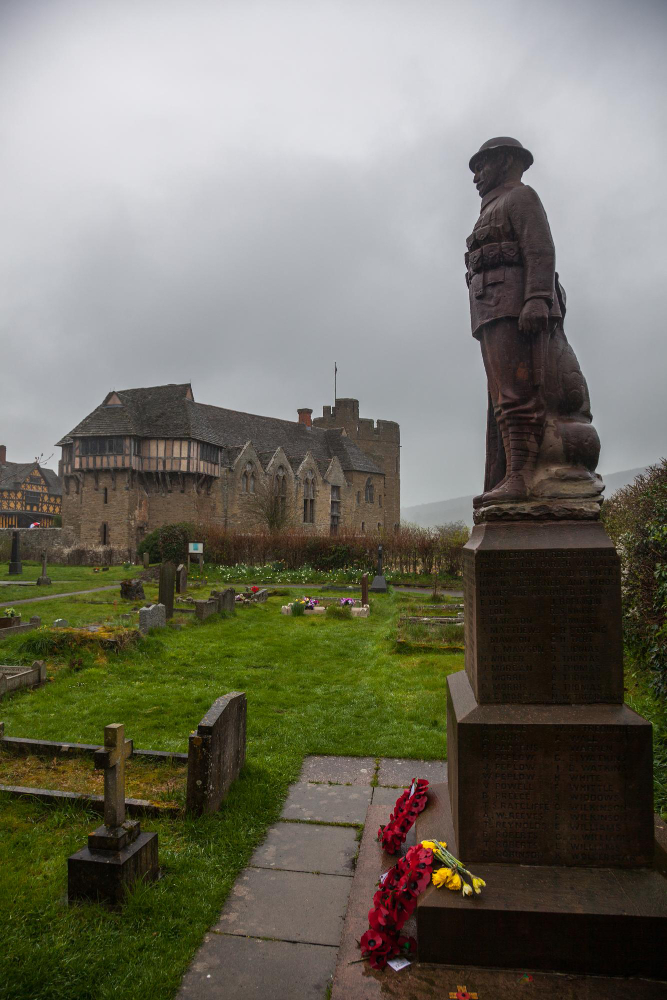
The gatehouse visible today dates from the 17th century. It was built after the end of the English Civil War, by which time Stokesay Castle already looked back on an eventful past. During the conflict between Royalists and Parliamentarians, the estate was captured by Parliamentarian troops in 1645. Unlike many castles of that era, however, Stokesay was not completely destroyed. The complex remained largely intact and continued to be used thereafter. The gatehouse’s half-timbered structure, its projecting storeys and the darker areas inside create a setting that lends itself to the idea of a ghostly encounter. By day, the building, with its carved wooden features and historic character, looks picturesque. However, in shifting light, at twilight or in bad weather, the same architecture can create a completely different impression. Narrow passageways, old wooden beams and the view through window openings easily make visitors pause for a moment. Reports of apparitions at historic sites can rarely be conclusively verified. At Stokesay Castle, the story of the ghost at the gatehouse is passed down primarily as local folklore and part of the estate’s reputation for being haunted. It thus forms part of a tradition of British ghost stories in which old houses, castles and manor houses are regarded as places where the past remains particularly palpable. A building’s age, its connection to former inhabitants and its everyday history – often only partially recorded – offer plenty of scope for speculation.
Nevertheless, the legend has a special impact because it is linked to a plausible historical location. In the past, a gatehouse did indeed require people to carry out duties there. Guards, servants and stewards were part of everyday life on larger estates. The idea that such a man still stands at the entrance ties in directly with the building’s function. It transforms an anonymous figure into a character whose story visitors immediately understand: a guard is still standing watch at the gate. Stokesay Castle was inhabited and altered over the centuries. Following Laurence of Ludlow, ownership passed between various families. In the 16th century, the estate passed to the Craven family, who had a significant influence on its subsequent design. In particular, the magnificent gatehouse and the decorative elements of the complex are reminiscent of this later era. Its long history of use has meant that medieval and early modern structural elements still stand side by side today. This complexity plays an important role in the ghost stories. Stokesay Castle is not a place whose history can be reduced to a single period or a single family. Several centuries lie between its construction in the 13th century, the political unrest of the 17th century and the later restorations. Many people lived, worked and died in or around the estate. Even though not every personal story can be reconstructed, it is precisely this gap between documented history and the unknown details of everyday life that heightens the fascination of the tales.
The ghost at the gatehouse is often not portrayed as the dramatic protagonist of a bloody tragedy. There is no reliable account to suggest that a particular guard was murdered at this spot or died in extraordinary circumstances. Rather, the story thrives on its restraint. The figure is said to appear without explaining itself. It stands at the threshold between outside and inside, between the present and the past. Its silence is a central part of its terror. For visitors, it is precisely this thought that can be unsettling. Anyone who steps through the gatehouse is following a path that countless others have taken over the centuries: residents, servants, guests, traders and travellers. The original layout of the entrance is still discernible. Unlike castles that have been completely destroyed, the spatial layout at Stokesay Castle is well preserved. The approach to the estate, the great hall and the private quarters reveal how life was organised there. The historic site is now managed by English Heritage and is open to the public. The organisation describes Stokesay Castle primarily as one of the best-preserved fortified manor houses in England. For visitors, the focus is on the architecture, medieval domestic life and the history of the building. Official historical accounts generally draw a clear distinction between verifiable facts and local legends. The story of the ghostly watchman therefore remains a tale that forms part of the cultural fabric of the place, but is not regarded as a proven historical event.
It is precisely this ambiguity that gives the story its appeal. Stokesay Castle needs no fabricated sensation to make an impression. The fact that the estate has stood for more than seven centuries, that it has weathered political conflicts, and that its buildings can still be entered today lends a special sense of intrigue to any tale of a ghost at the entrance. The gatehouse is not merely a decorative façade. It stands at a point where the paths of all visitors cross. Whether a former guard actually appears there remains open to question. The reports cannot be independently verified, and the figure’s identity is unknown. Yet the legend has endured. It is passed on by people interested in the darker sides of old buildings, and by those who see more in historic walls than mere stone, timber and architecture. As evening falls over the Shropshire countryside and the light on the half-timbered facades of the gatehouse fades, Stokesay Castle seems like a place outside of time. Then the entrance lies still, suspended between the past and the present. And right there, so the story goes, the guardian is said to still stand – motionless, silent and watchful, as if his shift had never ended.