 Isabella Mueller Baroness of Stainton le Vale
The grim tale of Sidonia von Borcke, a 17th-century Pomeranian noblewoman, is one of the region’s best-known and most chilling legends. Her name is inextricably linked with witch trials, ominous curses and a restless spirit that is said to haunt the castle of the Pomeranian dukes to this day. But who was Sidonia von Borcke really, and how did her fate become one of the most gruesome tales in Pomeranian history?
A woman caught between power and ruin – Sidonia von Borcke was born in 1548 into one of Pomerania’s most influential noble families. Thanks to her background, she initially enjoyed a privileged life, yet her story was not to follow the typical path of a successful noblewoman. Sidonia was regarded as a proud and strong-willed woman – qualities that would later prove to be her undoing. At a time when women were valued above all for obedience and humility, she stood out for her independent personality and political acumen. Yet instead of being admired, she incurred the wrath of those around her. Her life took a dramatic turn when she fell into financial difficulties following the death of her parents. She lost her claim to a secure inheritance and was forced to earn her own living. Sidonia eventually became a lady-in-waiting at the Pomeranian ducal court, a position that granted her access to the region’s most powerful circles. Yet despite her efforts, she never managed to establish herself permanently in society. Intrigues and rumours dogged her until her name was eventually closely associated with sinister accusations.
The Accusation: Witchcraft and a Curse – As Sidonia grew older, fate eventually turned against her. In 1619, she was accused of the worst of all crimes: witchcraft. At a time when religious and social tensions were at their height, accusations of witchcraft were often seen as an expression of hostility towards women who defied the norm. Sidonia was suspected of possessing magical powers and of having used them against the ducal House of the Griffins. According to legend, she is said to have cast an evil curse that brought about the family’s downfall. This curse, it is said, led to the death of the family’s male heirs. Indeed, there are historical records attesting to the sudden decline in the number of male members of the ducal house during this period. For the people of that time, this was proof of Sidonia’s guilt. Whether this connection was a coincidence or actually the work of a curse remains a mystery to this day.
The Horrific Trial – Sidonia was eventually brought to trial, where she had to defend herself against the charges. As with many witch trials of that era, the proceedings were characterised by torture, forced confessions and massive bias. The courts were determined to find a guilty party, and Sidonia’s influential past made her the perfect target for both open and covert hostility. Under this cruel treatment, she eventually confessed to being a witch – a confession that was most likely extracted under torture. In 1620, her life ended at the stake. The burning of a supposed witch was a clear signal at the time: any woman who rebelled against the social order had to face the most severe consequences. Yet the execution of Sidonia von Borcke did not mark the end of her story – rather, it was the beginning of a legend that lives on to this day.
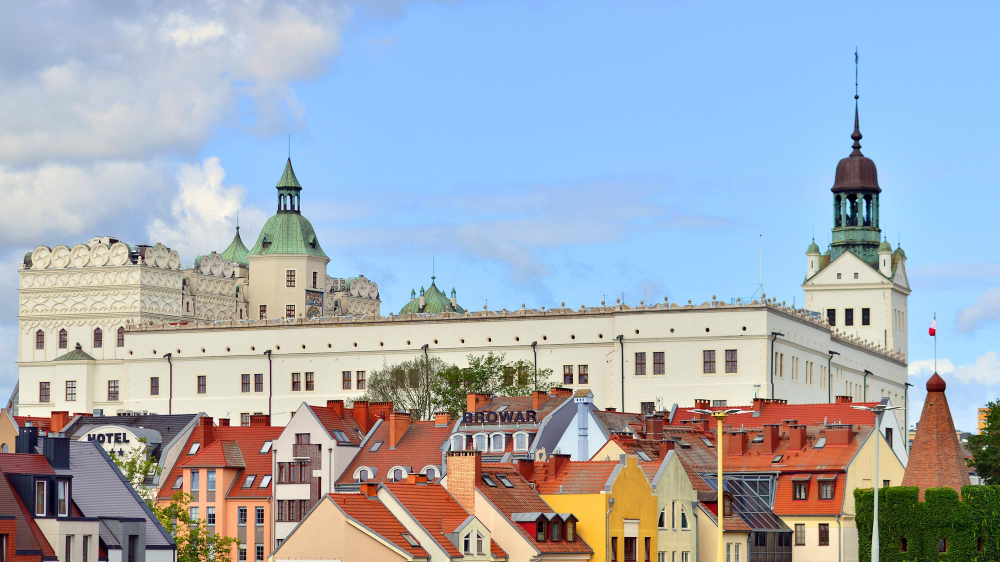
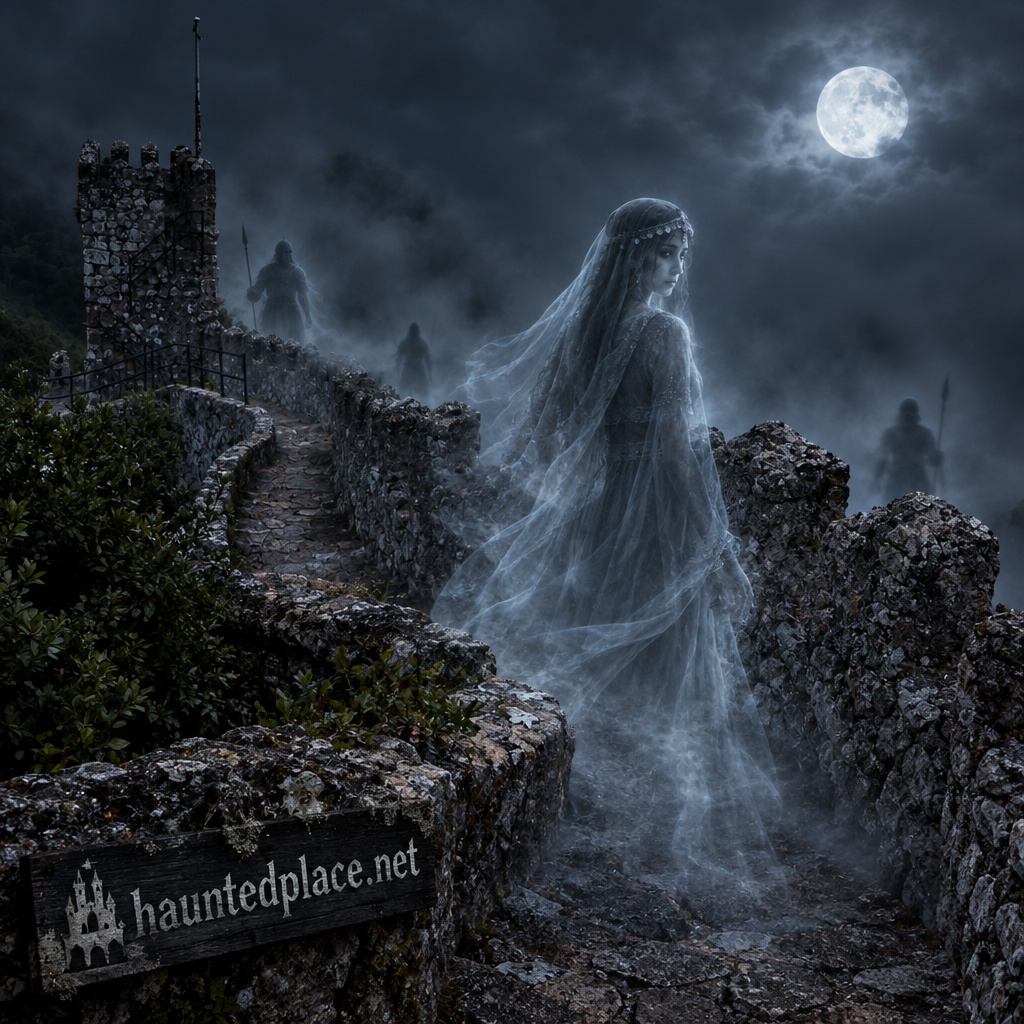
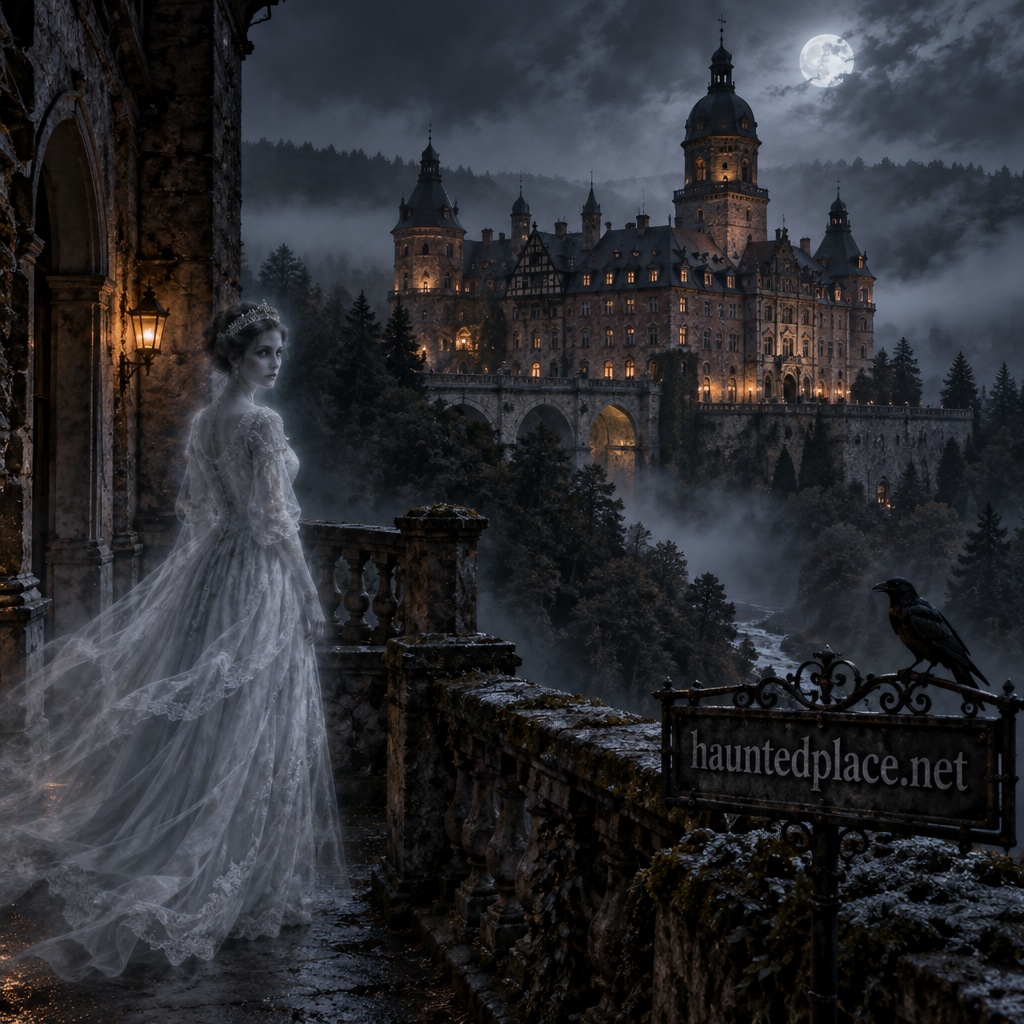
A spirit trapped forever? – According to legend, Sidonia von Borcke found no peace after her cruel death. Her spirit is said to haunt the castle of the Dukes of Pomerania – a restless being regarded as a symbol of the injustices of her fate. Numerous reports tell of strange phenomena in the castle. Doors and windows are said to open and close of their own accord, a chilly draught is said to blow through the corridors, and occasionally visitors are said to have seen the apparition of a woman dressed in white, her face etched with pain and anger. It is said that Sidonia’s ghost is particularly active when conflicts or tragedies threaten the von Greifen family. Some believe she is the guardian of a curse that has never been broken, whilst others suspect she is simply a tormented spirit seeking justice and recognition.
Historical truth or dark fantasy? – As with many legends, the boundaries between fact and fiction are blurred in the story of Sidonia von Borcke. Historical documents confirm her existence and the fact that she was indeed executed. The turbulent era of the witch hunts and the social tensions in Pomerania are also well documented. Yet whether the charges against Sidonia were justified or whether she was merely a victim of her time remains unclear. As for the alleged curse, there is no scientific evidence to suggest that Sidonia actually possessed magical powers or that her spirit continues to haunt the family to this day. Nevertheless, her name remains a symbol of the injustices suffered by women in the Middle Ages and the early modern period, as well as of the enduring power of stories passed down through the generations.
The enduring fascination – Why does the story of Sidonia von Borcke still fascinate us? Perhaps it is the blend of horror and tragedy that defines her story. She was a woman who lived in a world full of prejudice and violence, and her legend reminds us of the dark chapters of our own history. At the same time, it fires our imagination: what if her ghost really does exist? What if she had actually cast a curse that still affects us today? Sidonia von Borcke may be a historical figure, but her legend is timeless. Whilst we live in a modern age shaped by science and logic, her story offers a glimpse into the world of the supernatural and the unknown. It teaches us that the shadows of the past never fade completely – and that some ghosts may indeed remain among us forever. So the question remains: does Sidonia von Borcke still wander the halls of the Dukes of Pomerania’s castle? Or is her story merely a reminder of the cruelties of the past? There are no answers, but one thing is certain: the legend lives on.