 Isabella Mueller Baroness of Stainton le Vale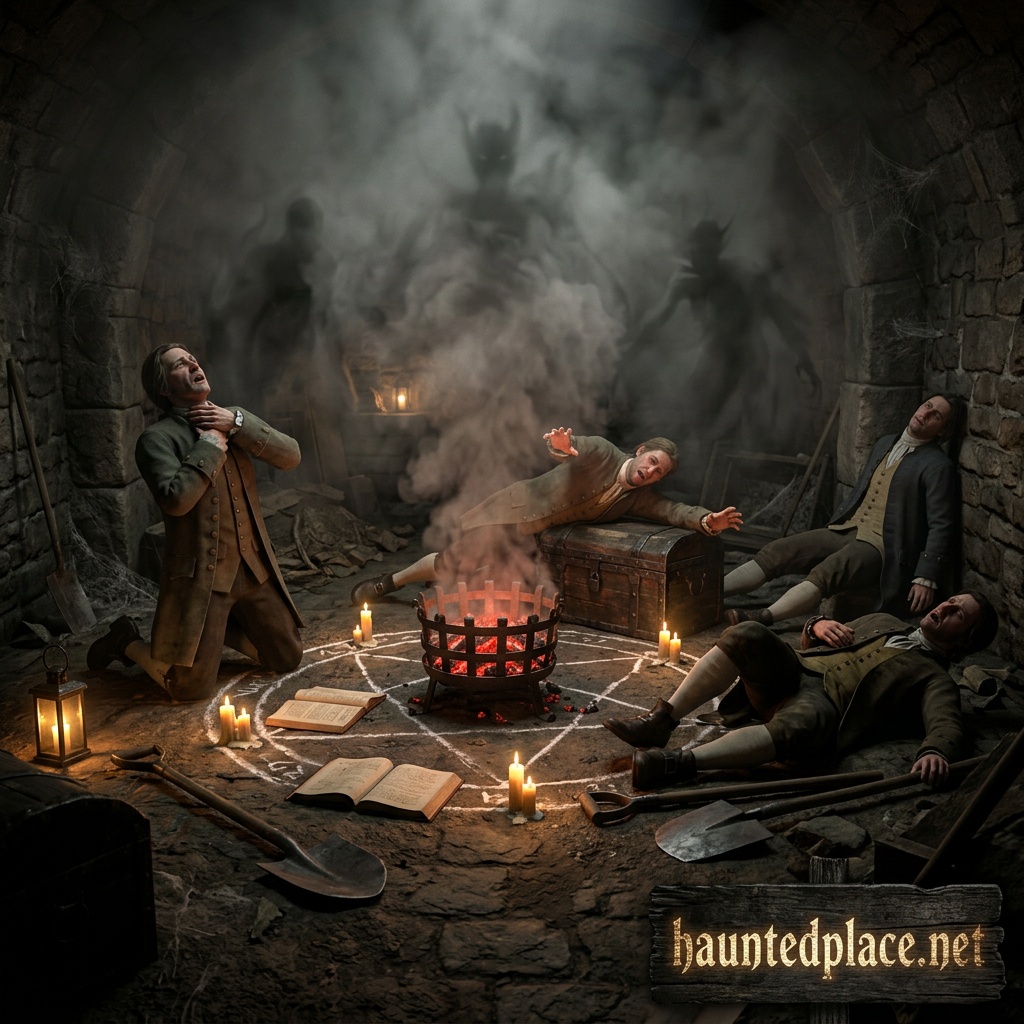
On Christmas Eve in 1715, a grim and harrowing event took place in the tranquil university town of Jena—an event that has gone down in history as the “Jena Christmas Eve Tragedy.” That night, four men met a gruesome death while attempting to uncover hidden treasures through spirit summoning. This tragedy is not only a fascinating example of the blurred line between superstition and science during the early Enlightenment, but also a lesson in human curiosity, fear, and the dark secrets of a Christian winter night.
An Ominous Christmas Eve in Jena – Jena, a vibrant city with a renowned university in the early 18th century, was a place where science, religion, and folk beliefs were often closely intertwined. On the evening of December 24, 1715, two treasure hunters and two gravediggers gathered in a secluded room within the city walls. Their goal: to uncover hidden riches—the subject of numerous legends—through a séance. Stories of hidden treasures from times of past wars and noble benefactions circulated among both common folk and academic circles. The custom of séances was deeply rooted in folk spirituality. Especially on the dark night of Christmas, when the boundaries to the spirit world were believed to be thin, people sought signs and miracles. But on this night, the ritual turned into a catastrophe. The four men arranged charcoal braziers in a closed room to create a mystical atmosphere. This led to a buildup of toxic fumes in the air.
From Faith to Horror: The Grueling Death – The four participants soon began suffering from severe symptoms: shortness of breath, nausea, and loss of consciousness. In the midst of their spiritual quest for treasure, they were suffocated by an invisible enemy—carbon monoxide from the smoldering charcoal braziers. The lack of oxygen led to agonizing poisoning, from which all four died that night. Their hometown of Jena was in shock. News of the deaths spread quickly. Neighbors spoke of eerie noises and thick plumes of smoke emanating from the locked room. Soon, more stories began to circulate about the tragedy: there was talk of cursed treasures, evil demons, and divine punishment. The atmosphere was marked by fear and bewilderment.
The Scholars’ Debate: Demons or Medical Diagnosis? – In 1716, the case sparked a heated dispute among the scholars at the University of Jena. Theologians saw the tragedy as a clear warning about the demonic world. In their view, the men had dabbled in black magic and forbidden spirits and were punished by Satan as a result. Sermons warned against the temptation of the occult and the influence of dark forces, which were said to be particularly active on Christmas Eve. Physicians and natural scientists, however, rejected this interpretation. They examined the circumstances of the deaths closely and determined that there was no evidence of supernatural influences. The men’s symptoms matched exactly those of carbon monoxide poisoning, caused by burning in an enclosed space without adequate ventilation. This explanation not only reassured the academic community but also marked a significant step toward enlightenment and rational research. The natural sciences began to question and replace supernatural explanations.
Background of the Spirit-Summoning Tradition – The practice of spirit summoning had a long tradition in the region. In times of great hardship or uncertainty, people often turned to the supernatural. Especially during the cold and dark season, around Christmas, it was believed that the veils to the other world were thinner. The boundaries between the living and the dead were said to open, making spirits and demons easier to see or summon. In addition to ancient beliefs, socioeconomic motives also played a role: treasure hunters hoped for quick riches, while gravediggers, as guardians of the threshold between life and death, were particularly susceptible to superstition. The desire for controlled power over life, death, and wealth often led to risky experiments and dangerous rituals.
The Scientific Significance of the Tragedy – The Jena Christmas Eve Tragedy exemplifies the transition from medieval thinking to the Enlightenment. While many still believed in witches, demons, and magical powers, scientific insights were gaining ground. The tragedy demonstrated how belief in the supernatural could cost human lives and shifted attention toward scientific explanations. The debate at the University of Jena reflected this shift. Theologians fought to maintain their influence on the worldview, while physicians provided evidence using empirical methods. This struggle between faith and reason had a lasting impact on the intellectual landscape of the 18th century.
A Lasting Memorial to Horror and Reason – The Jena Christmas Eve tragedy remains a harrowing yet instructive chapter in the city’s history. Four people met their deaths on a mysterious winter night, caught between the urge to seek hidden treasures and the fatal power of coal alcohol. Yet the tragedy also paved the way for a new way of thinking: away from fear and superstition, toward scientific enlightenment and rationality. It serves as a reminder that the darkest nights need not be populated solely by ghostly shadows, but also by the clarity of reason.
The story of the “Jena Christmas Eve Tragedy” is more than just a horror tale from centuries past. It speaks to the human need to explore the unknown while underestimating the dangers involved. At the same time, it highlights the important role of science in dispelling fears and bringing truths to light. In a world where superstition and rationality are often at odds, the tragedy remains a powerful reminder: Only those who understand the darkness can overcome its terrors.