 Isabella Mueller Baroness of Stainton le Vale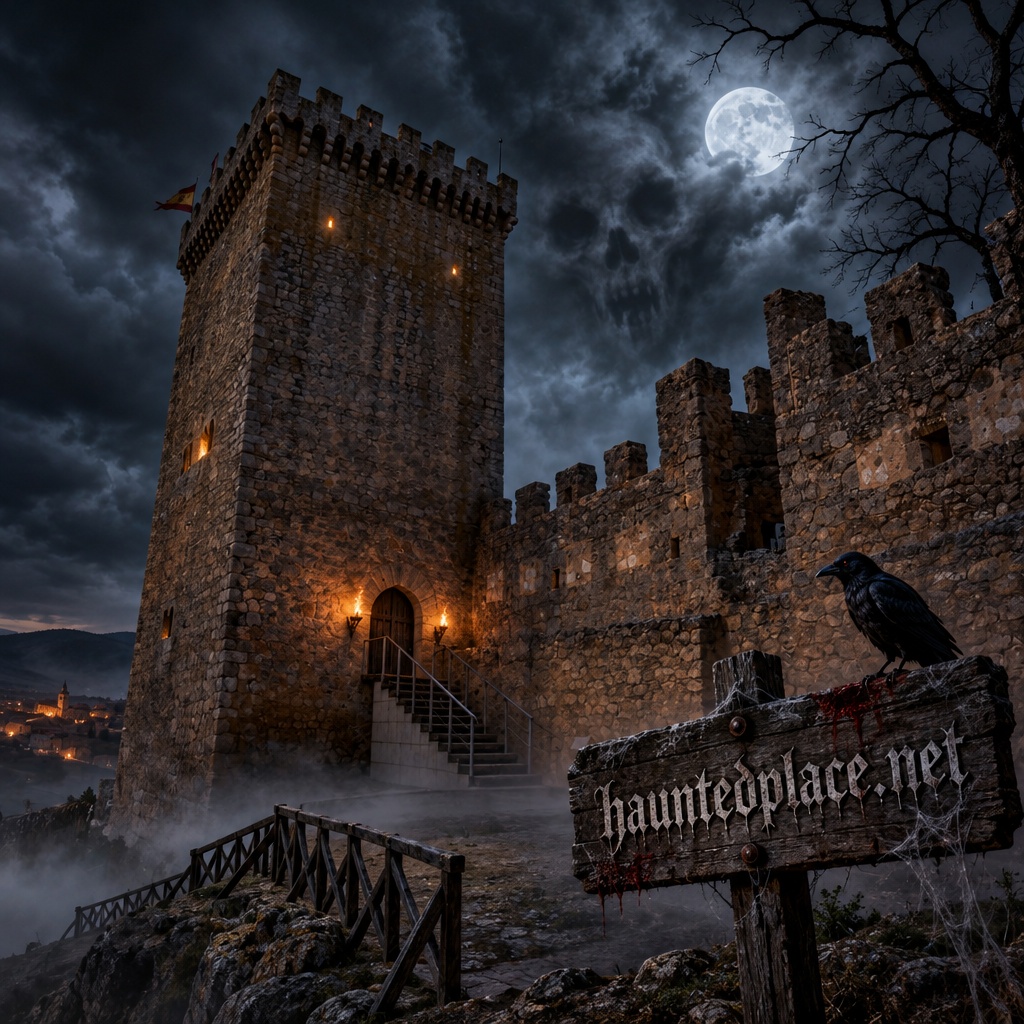
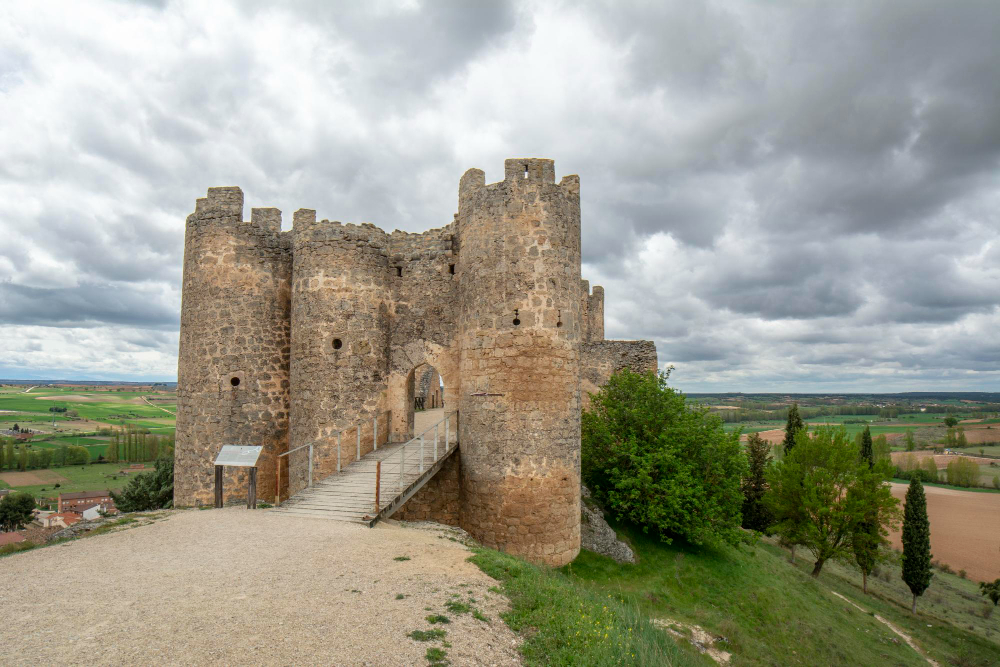
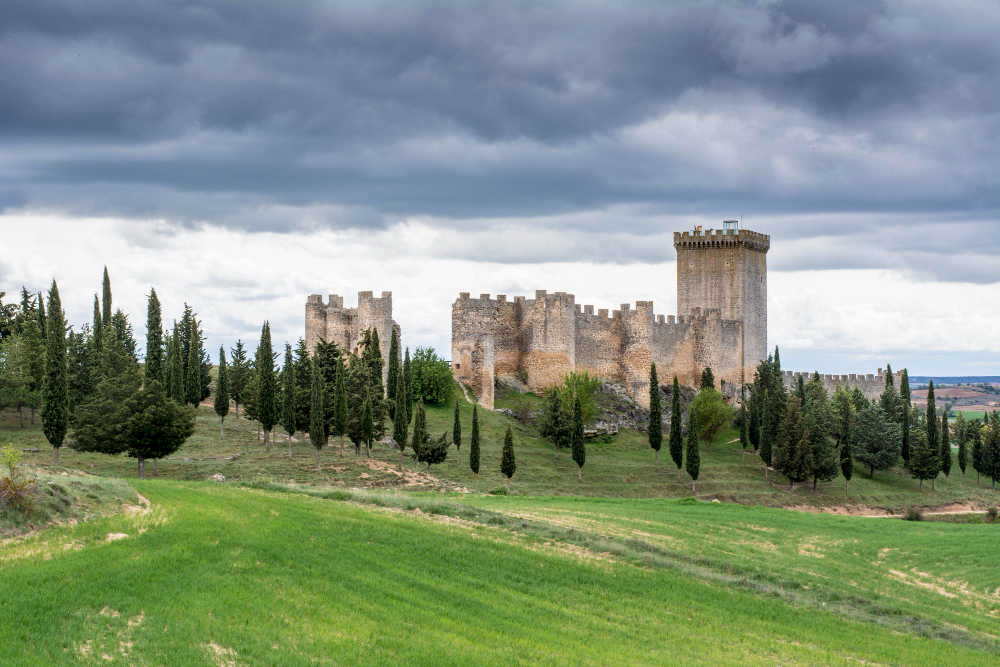
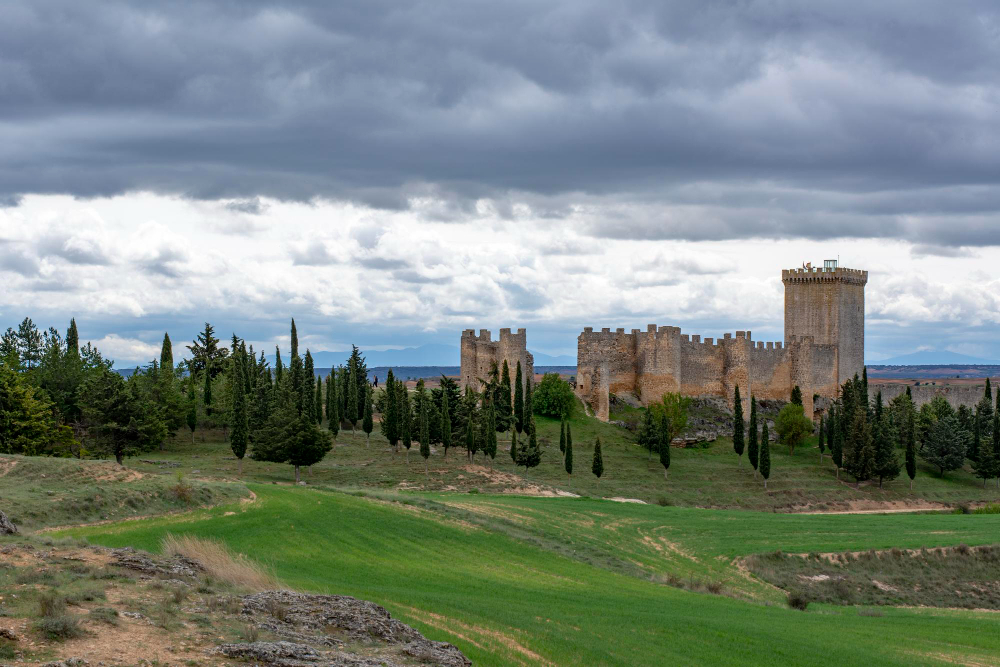
High above the Castilian village of Peñaranda de Duero stands a fortress whose mighty walls have watched over the arid landscape of the province of Burgos for centuries. Even from a distance, the Castillo de Peñaranda de Duero looks like a relic from a time when war, faith and superstition were closely intertwined. Yet it is not only its military past that has made the structure famous. The bare rock upon which the castle was built is linked to one of the darkest local legends: it is said that the Devil himself left a footprint there. The legend lends the place an eerie aura. It transports us to a world in which bizarre rock formations are not merely geological traces, but clues to supernatural encounters. At the same time, it shows how medieval and early modern notions of fear, sin and evil live on to this day in the collective memory of a landscape.
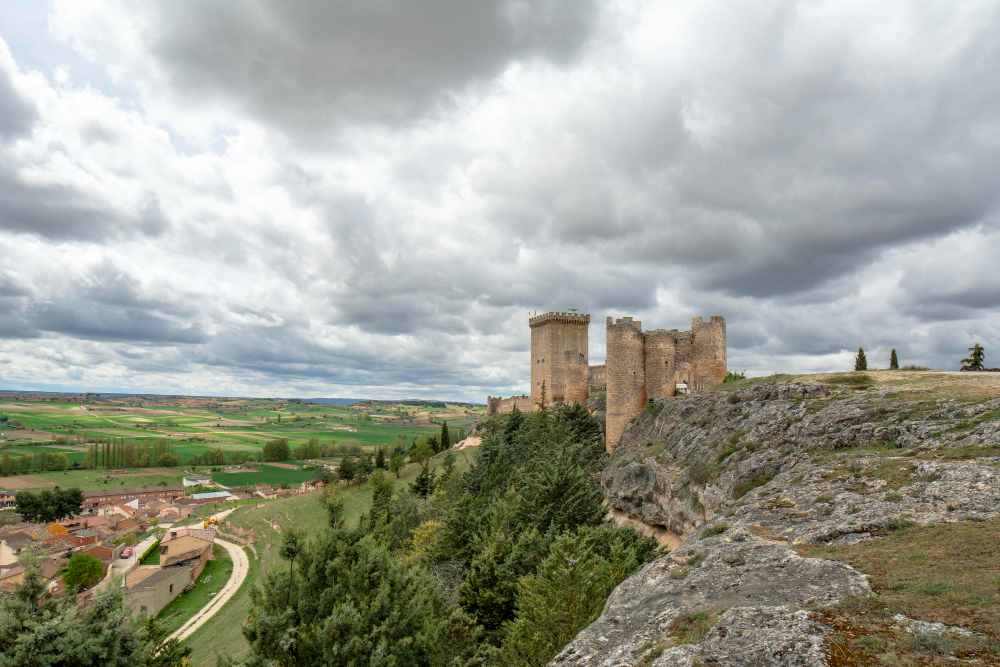
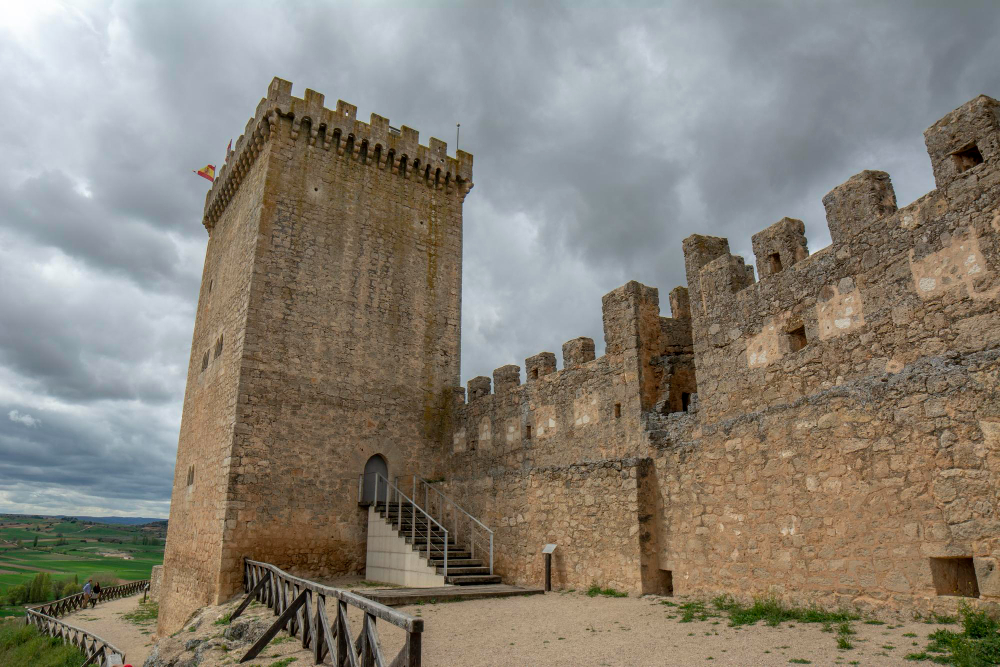
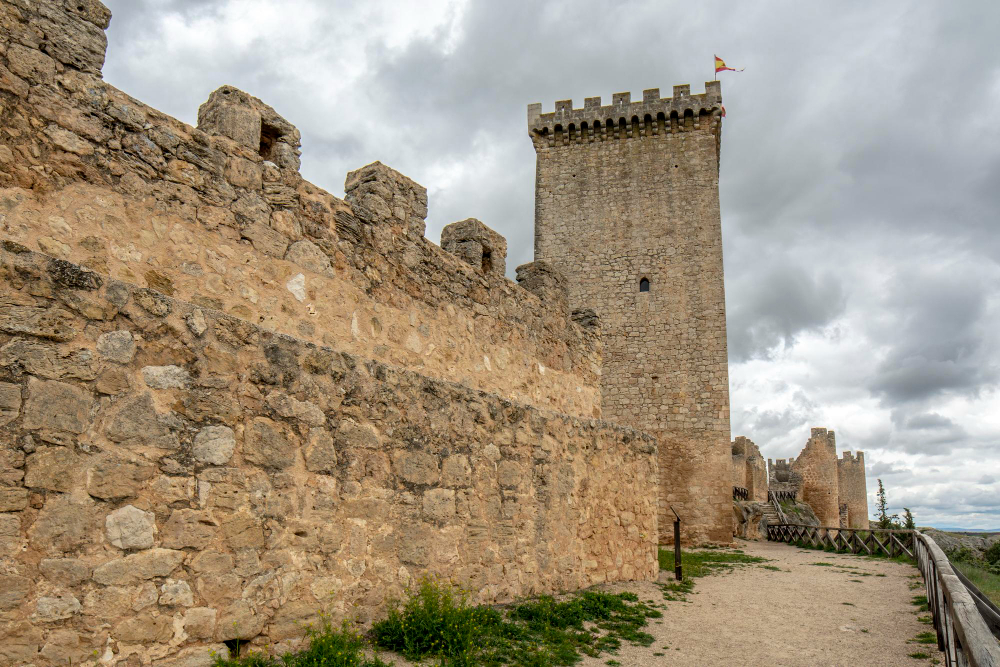
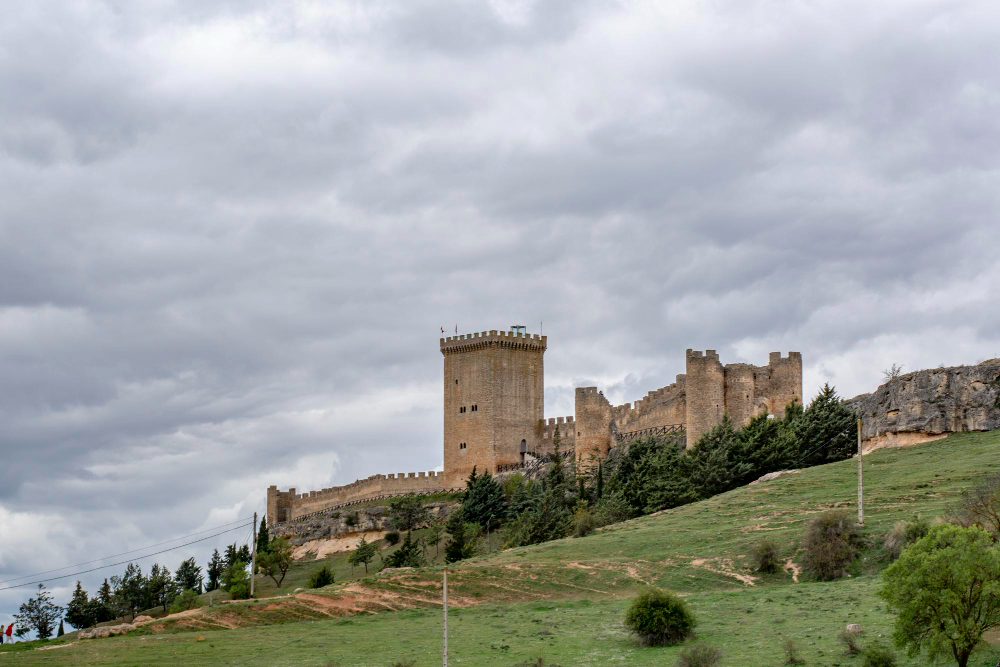
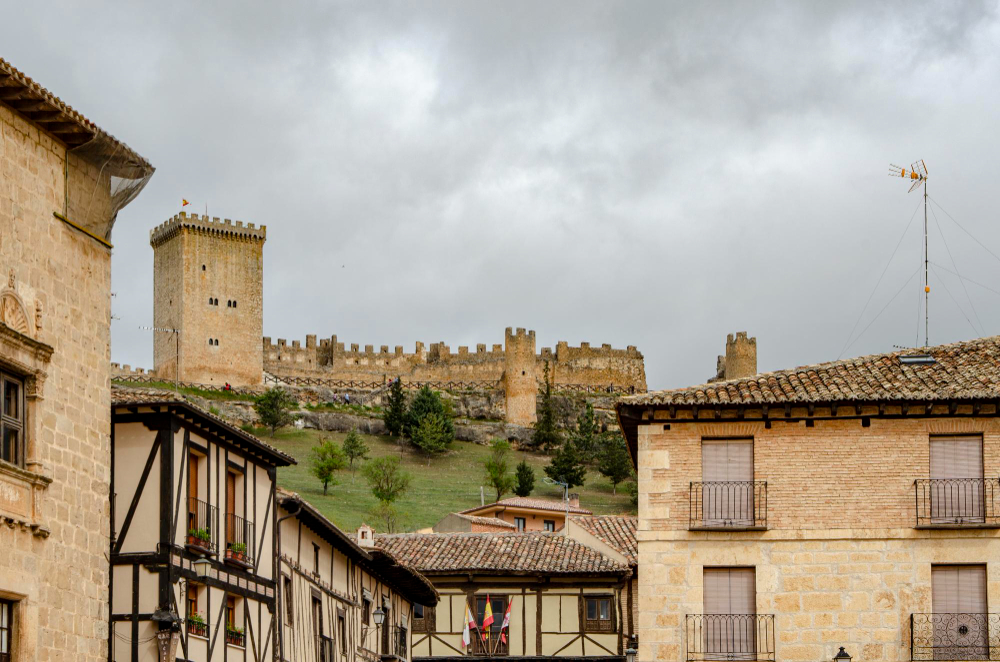
A castle overlooking the Duero Valley – Peñaranda de Duero lies in the south of the province of Burgos, on the edge of the Ribera del Duero, a region now best known for its wine-growing. The castle stands on a rocky ridge above the historic town centre. Its location was strategically crucial: from here, the surrounding area could be surveyed from afar, and potential attackers could be spotted at an early stage. Much of today’s Castillo de Peñaranda de Duero dates back to the 15th century. The complex was built during an era when numerous castles across the Iberian Peninsula were being rebuilt, reinforced or erected from scratch. This was not merely for defensive purposes; a mighty fortress was also a visible symbol of noble rule. Particularly striking is the tall keep, known as the Torre del Homenaje. It dominates the structure and continues to define the town’s skyline to this day. The castle is protected by a surrounding wall; its architecture still conveys the impression of a secluded, hard-to-access centre of power. Anyone looking at the rock beneath the complex will quickly understand why it could become the setting for a legend: the dark rock, the steep slopes and the towering walls create an atmosphere that practically cries out for tales of curses and sinister visitors.
The footprint in the rock – Local lore tells that the Devil left his footprint on the bare rock upon which the castle stands. The story is one of the best-known legends surrounding the Castillo de Peñaranda de Duero. Its core is as simple as it is striking: an unusual indentation or rock formation is not understood as a random natural phenomenon, but as a physical sign of evil. Such tales were, and still are, widespread in many parts of Europe. Strange rocks, deep notches, bowl-shaped hollows or unusual marks in the stone were frequently associated with saints, giants, mythical beasts or the Devil. In regions shaped by Christianity, the Devil played a particular role in this context: he became the explanatory model for everything eerie, disorderly and threatening. In Peñaranda de Duero, this notion is particularly striking because the supposed imprint is linked to a castle. In popular belief, castles were not neutral structures. They symbolised power, violence and sieges, as well as dungeons, secrets and the arbitrariness of the ruling classes. When a story about the Devil’s footprint takes root in such a place, it takes on an extra dimension. The rock becomes not only the foundation of the fortress, but also the scene of a supernatural intervention. There is, of course, no scientifically proven link between the rock and any actual historical event. The legend is not an archaeological finding, but part of oral tradition. Yet this is precisely where its value lies: it tells us less about what actually happened at this rock than about how people have perceived the place over generations.
Why the Devil Leaves Traces – In European folklore, the Devil is surprisingly often physically present. He appears not only as a tempter or an invisible force, but also leaves behind scratch marks, hoofprints, scorched patches and imprints in the stone. These motifs make the invisible tangible. A footprint is evidence that one can supposedly see – and therefore it seems more convincing than a mere narrative. The mark in the rock at Peñaranda de Duero follows precisely this pattern. It transforms a natural surface into evidence of an encounter with evil. Anyone standing before the rock is not merely meant to hear a story, but to imagine that the Devil might have stood there. The horror arises from proximity: his presence is said to have become visible not somewhere in a distant underworld, but right there beneath the castle walls. Such legends used to fulfil several functions. They explained landforms for which there was no scientific explanation. They warned of dangerous places and instilled a sense of respect for rough terrain. At the same time, they reinforced religious beliefs: if the Devil could leave his mark on the world, protection through faith, prayer and the Church seemed all the more necessary. In the case of Peñaranda de Duero, this religious interpretation is linked to a specific historical landscape. For centuries, the castle was a symbol of the feudal order. The legend of the Devil’s Foot sets a menacing counterforce against this order. Beneath the walls of the stronghold, it seems, lies a sign of chaos.
Between history and Gothic romanticism – The Castillo de Peñaranda de Duero is one of the region’s most significant landmarks. Its impact stems not only from the structure itself, but from the interplay of architecture, the surrounding landscape and local history. Below the castle lies the historic centre of Peñaranda de Duero with its old streets, striking square and notable buildings such as the former collegiate church of Santa Ana and the Palacio de los Condes de Miranda. This historical richness lends plausibility to the legend of the devil – at least in a narrative sense. Where buildings from the Middle Ages and the early modern period have been preserved, the past seems closer and less consigned to history. Visitors gaze upon walls that have outlasted political conflicts, social hierarchies and religious worldviews. In this setting, a footprint in the stone does not seem like just any curiosity, but rather like a fragment of an older, darker reality. Yet it is precisely here that caution is vital. The legend must not be confused with verified history. It is a fact that the castle stands on a rock. It is historically documented that the complex took on its present form, particularly in the 15th century. The tale of the Devil’s footprint, on the other hand, belongs to the realm of local folklore. Its power is based not on evidence, but on repetition, atmosphere and the ability to imbue a place with fear. From a modern perspective, this does not make the story any less interesting. On the contrary: it shows how places of remembrance come into being. It is only through the narrative that a rock becomes the Devil’s Rock. It is only through the legend that a castle becomes a place where the boundary between history and myth seems to blur.
The dark side of a historic landmark – In daylight, Peñaranda de Duero is a place of great scenic and architectural beauty. Yet when the sun disappears behind the hills and the castle’s outline stands out against the sky, one’s perception changes. The keep then appears like a silent sentinel. The rocks below lie in shadow, their irregularities disappearing into the darkness. It is precisely in this transition between the visible and the hidden that the legend unfolds its allure. The so-called Devil’s footprint is, ultimately, a symbol. It stands for the fear of the unknown, for the power of nature, and for the stories that people attach to places which strike them as awe-inspiring. It is no coincidence that this tale has become associated with a castle of all places. Fortresses embody protection – but also intimidation. They promise safety, yet cast long shadows. The legend of Peñaranda de Duero serves as a reminder that historic buildings are not made of stone alone. They are also made up of memories, rumours and tales. Some are verifiable through historical documents; others live on simply because they are passed down through the generations. The Devil’s footprint belongs to the latter category. It is not a historical fact, but an integral part of the cultural imagination surrounding the castle. And perhaps that is where its greatest terror lies: not in the fact that the devil might actually have been there, but in the fact that a single imprint in the rock is enough to keep the question open for centuries as to who – or what – is said to have once stood on this lonely ridge.