 Isabella Mueller Baroness of Stainton le Vale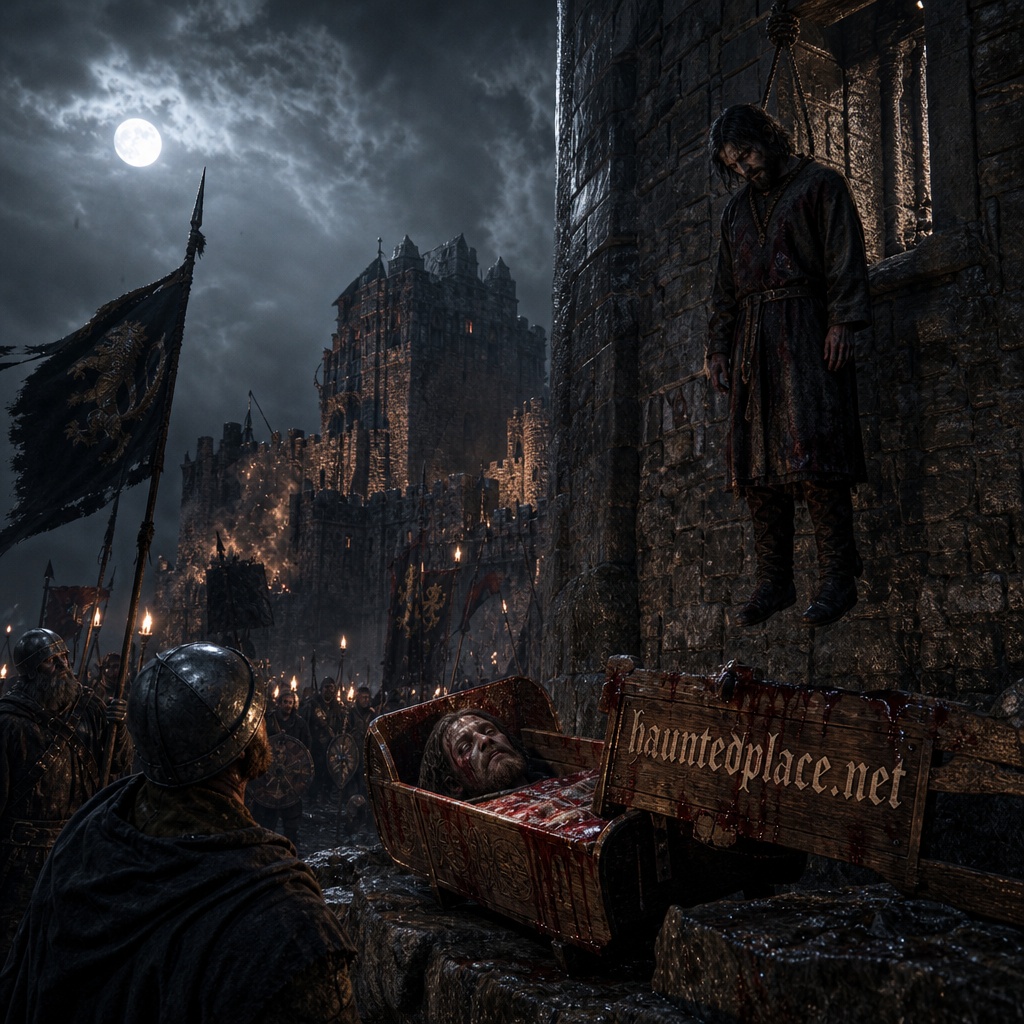
Ireland, the land of green hills and ancient tales, is famous for its numerous myths and legends, which are deeply interwoven with the history of its historic sites. One such ghost story, which has captured the imagination of many over the centuries, is the chilling legend of Morgan Dubh O’Connell. His tragic story is inextricably linked to Ballycarbery Castle, an abandoned, ivy-covered castle near Cahersiveen in County Kerry, situated directly on the famous Ring of Kerry. It is said that a bloody feud took place here, the echoes of which can still be felt today in the form of a restless spirit.
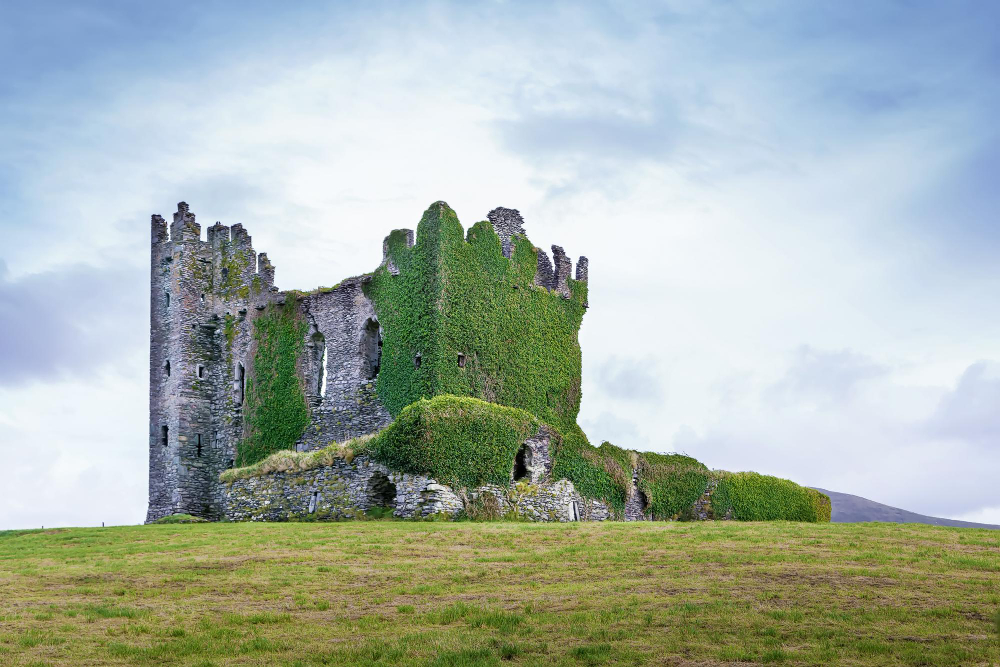
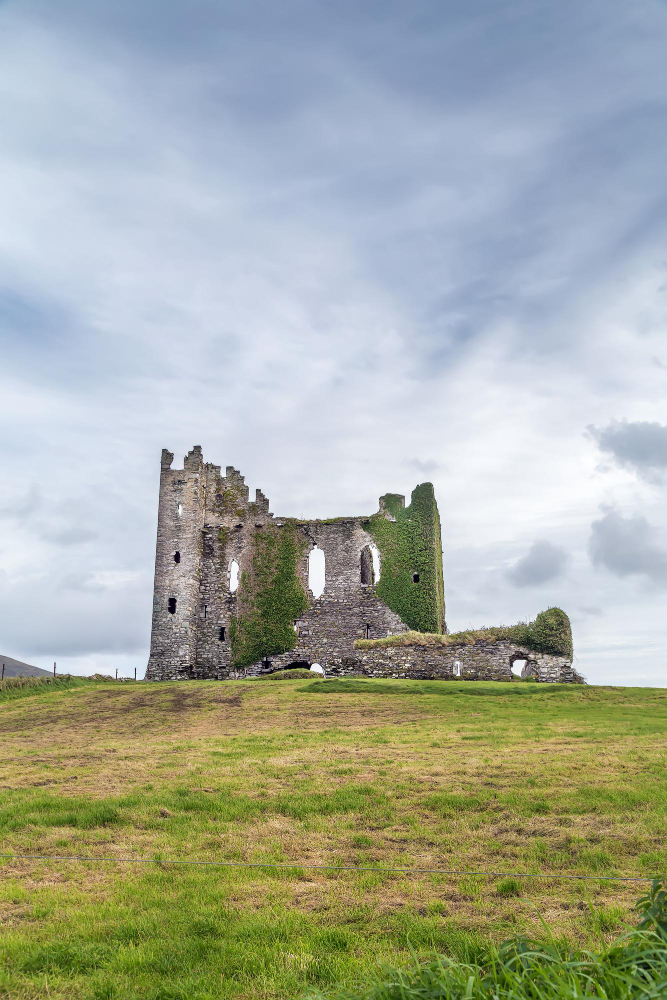
The picturesque setting of Ballycarbery Castle – Ballycarbery Castle stands like a relic of bygone times amidst green meadows and Ireland’s rugged coastal landscape. Its crumbling walls and overgrown towers tell of an eventful history dating back to the Middle Ages. Once, the castle was a proud symbol of the O’Connell family’s claim to power and defence. Today, however, its crumbling beauty attracts countless visitors, drawn by the mysterious aura of the place and the eerie legends that surround these ruins. Yet it is not only the historic architecture that captures the imagination, but also the stories that entwine around the castle – in particular, the grim legend of Morgan Dubh. For some, it is nothing more than an old ghost story; for others, however, it is a dark chapter in Irish history that reveals, in a terrifying way, the cruelty and unforgiving nature of the Middle Ages.
The Bloody Feud of Ballycarbery Castle: The Origin of the Legend – At the heart of this ghost story lies Morgan Dubh O’Connell, a steward and member of the powerful O’Connell clan who resided at the castle during the late Middle Ages. Morgan Dubh was regarded as headstrong and proud, a man who did not readily bow to the dictates of others – traits that ultimately led to his tragic end. The legend begins when the powerful clan chief, McCarthy Mór, sent a cradle to Morgan Dubh. This symbolic gesture was intended as a request to take in a child from the McCarthy Mór clan as a foster child – a common practice at the time to strengthen ties between clans and maintain peace. However, Morgan Dubh did not regard this demand as a diplomatic request, but as an insult to his authority. His pride led him to resort to a cruel response: he beheaded the messenger who had brought him the cradle, placed the head inside it, and sent the macabre package back to McCarthy Mór. This bloody provocation sent the clan chief into a rage. He mobilised an army and resolved to capture Ballycarbery Castle to exact revenge on Morgan Dubh. After a bitter siege, McCarthy Mór succeeded in taking the castle. Morgan Dubh’s punishment was as cruel as his own crime: he was hanged from the castle’s highest tower window – a spectacular and brutal end which, according to legend, is said to have bound his spirit to this place forever.
The Haunting of Morgan Dubh – Ever since that fateful day, Morgan Dubh’s spirit is said to haunt the ruins of Ballycarbery Castle. It is said that, in stormy weather, the air is filled with his death cries – a wailing sound that echoes through the crumbling walls and fills visitors with fear and dread. Some even claim that, at night, a shadowy figure can be glimpsed in the castle’s tall towers, or that one feels as though one is being touched by cold, invisible hands. It is fascinating to see how this legend has evolved over the centuries. For many locals, the ghost of Morgan Dubh is more than just a spooky tale; he is a symbol of the O’Connell legacy and the violence that prevailed during the turbulent times of the Middle Ages. Some firmly believe that, due to his tragic end, the soul of this once-proud man has yet to find peace.
Historical Sources and the Credibility of the Legend – Like many Irish ghost stories, the legend of Morgan Dubh is difficult to substantiate with historical facts. Ballycarbery Castle itself dates back to the 15th century and was indeed an important centre for the O’Connell family. Tradition speaks of several conflicts that took place around the castle, yet the details of the bloody feud between Morgan Dubh and McCarthy Mór seem almost too dramatic to be true. Some historians suspect that the story of Morgan Dubh is more of an oral tradition that has been embellished over the centuries, with new elements added by each narrator. Nevertheless, there are reports from travellers and locals who have heard eerie sounds and witnessed apparitions near the castle – particularly on stormy nights, when the wind whistles through the ruins and the thought of a restless spirit fires the imagination. In addition to local traditions, the story of Morgan Dubh is mentioned in several Irish books of legends, including Ghost Stories of Ireland by Steve Lally, which documents similar haunting tales from the region. This shows that the legend is known far beyond the borders of County Kerry and continues to play a central role in Ireland’s folkloric landscape to this day.
Ballycarbery Castle: a destination for ghost hunters and tourists – The eerie atmosphere of Ballycarbery Castle attracts not only history enthusiasts but also numerous ghost hunters and paranormal investigators seeking to track down the supposed ghost of Morgan Dubh. At night in particular, the castle takes on a truly eerie character: the moon shining through the broken windows, the shadows cast by the ivy-covered walls – all this creates a mystical and ghostly atmosphere that fits the legend perfectly. For tourists travelling the Ring of Kerry, a stop at Ballycarbery Castle is often part of the itinerary. Locals are happy to tell visitors about the famous ghost story surrounding the place, and it is not uncommon for curious travellers to arrive in the hope of seeing the ghost themselves or at least experiencing an eerie encounter.
A legend that captures the spirit of Ireland – The legend of Morgan Dubh O’Connell and Ballycarbery Castle may be the product of centuries of oral tradition, yet it strikingly reflects the fascination that ghost stories evoke in Ireland. It is a testament to how deeply rooted such stories are in the country’s culture and history, and how much they contribute to imbuing the places where they are said to have taken place with a special magic. Whether a ghost really does haunt the ruins of Ballycarbery Castle or whether the wind and our own imagination are playing tricks on us – one thing is certain: the cries of Morgan Dubh are likely to remain part of Irish ghost stories for a long time to come, preserving the Emerald Isle’s reputation as a land of the mystical and the supernatural.