 Isabella Mueller Baroness of Stainton le Vale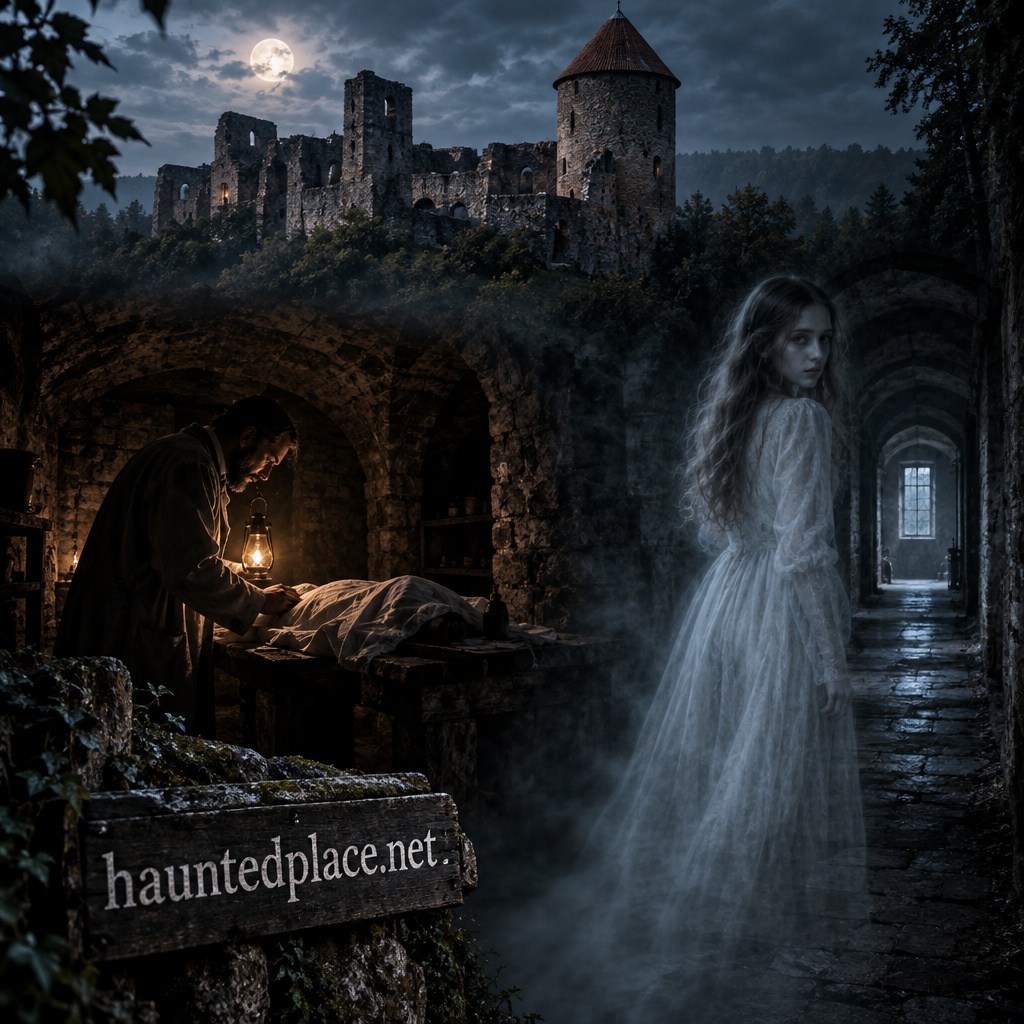
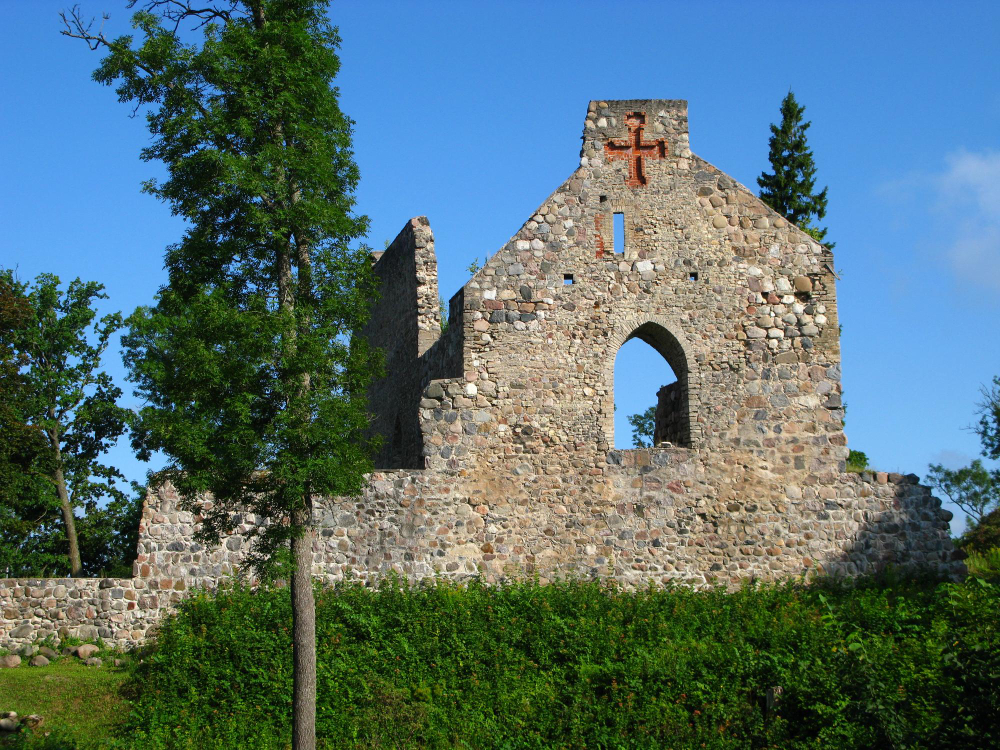
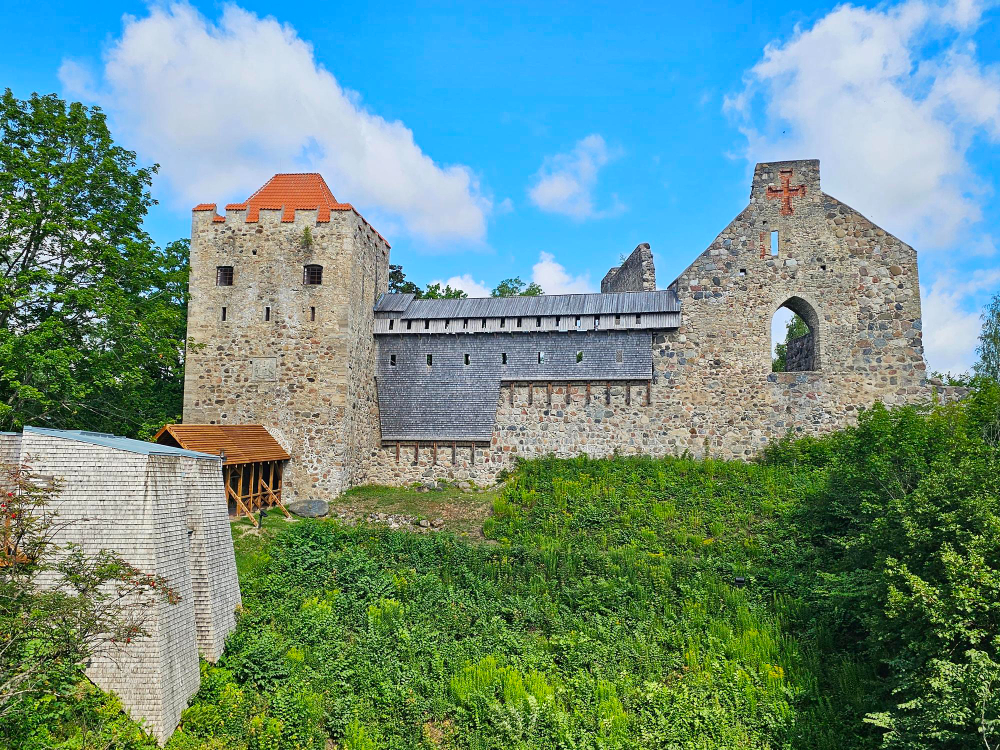
Within the walls of a medieval castle ruin in Latvia’s Gauja National Park, stories have been told for generations of a figure dressed in white. The ‘White Lady of Sigulda’ is one of the region’s best-known ghostly figures – yet her story straddles the line between local lore, romantic castle folklore and accounts for which there is no historical evidence. When mist settles over the Gauja Valley and the outlines of Sigulda’s ancient castle walls become blurred, the site resembles a backdrop from a dark fairy tale. The ruins of the medieval Teutonic Order castle rise on the edge of a steep valley in the Latvian region of Vidzeme. By day, it is a popular cultural monument and a starting point for walks through the Gauja National Park. After dark, however, many visitors’ perceptions change: the wind whistles through the openings in the walls, shadows lie in the vaults – and old stories suddenly seem to draw closer. The best-known of these tales is that of the White Lady. According to local legend, a female figure dressed in light-coloured clothing is said to appear near the castle or within the castle complex, particularly on misty evenings. Reports of ghost sightings are not, however, documented as historical facts. Rather, they form part of the world of legends passed down orally, which has developed over a long period of time around the castles and palaces of the Gauja Valley. It is precisely this blend of real history and eerie fantasy that continues to give the legend its appeal to this day.
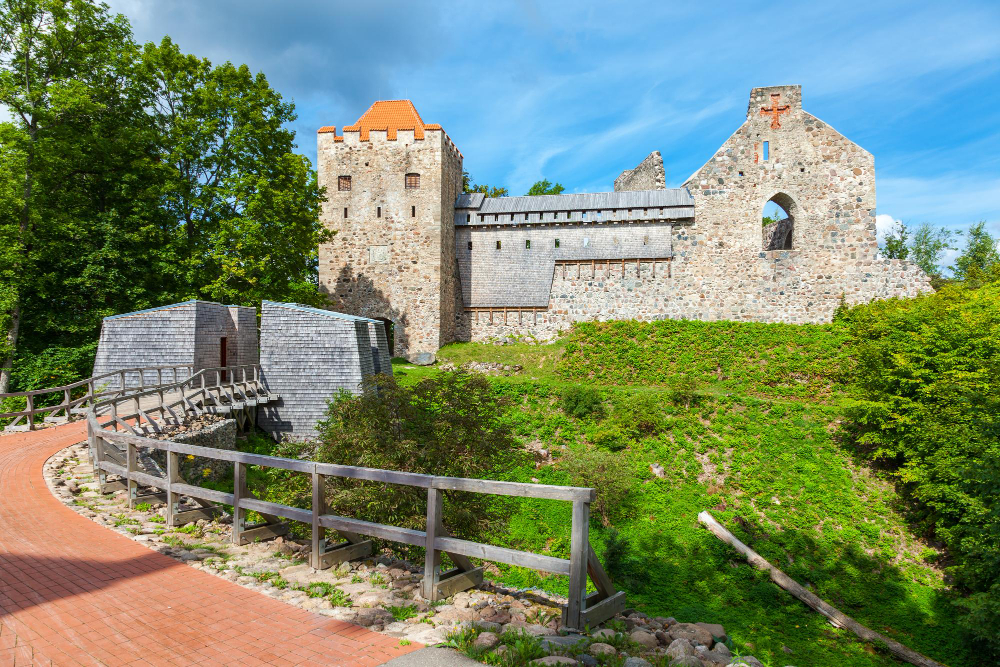
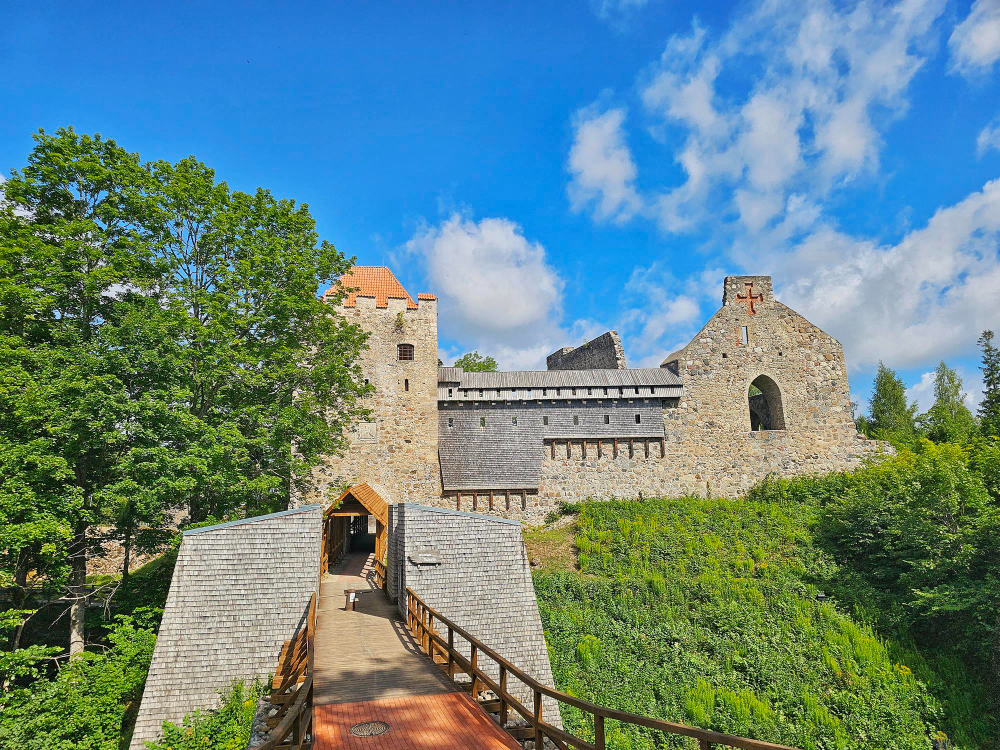
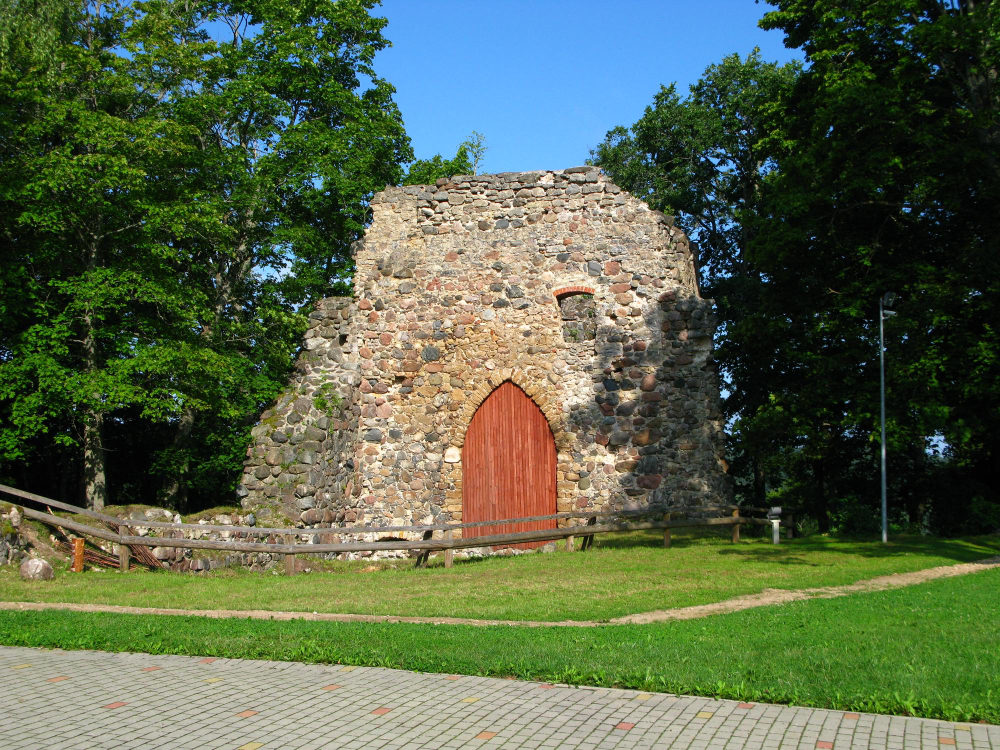
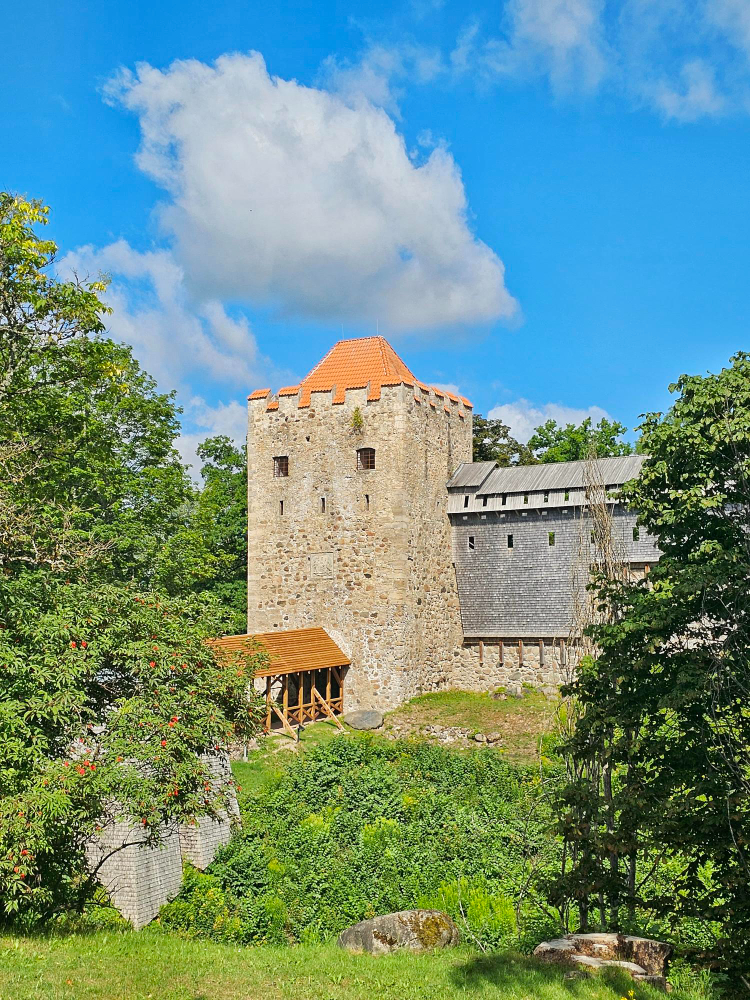
A castle with a war-torn past – To understand the atmosphere of the legend, it is worth taking a look at the site itself. Sigulda Castle was built in the early 13th century. It was constructed at a time when the Order of the Sword Brothers and, later, the Livonian Order exercised military and political control over the territory of present-day Latvia. The complex was initially intended as a defensive and administrative stronghold and was strategically situated overlooking the Gauja Valley. Over the centuries, the castle was damaged, rebuilt and scarred by conflict on several occasions. Wars, power struggles and changing rulers shaped its history. Today, large parts of it survive only as ruins. Nevertheless, massive stone walls, remains of gates, vaults and fragments of earlier buildings give an impression of just how well-fortified the complex once was. In the immediate vicinity is also the so-called New Castle of Sigulda, a manor house complex of much more recent origin. The combination of medieval ruins, later buildings and the wooded landscape of the national park provides an ideal breeding ground for legends. In many parts of Europe, such places are associated with ghost stories – not necessarily because supernatural events can be proven, but because the architecture, age and historical upheavals conjure up powerful imagery. The White Lady of Sigulda is therefore not just a single figure. She is part of a larger cultural pattern: the ‘White Woman’ or ‘White Lady’, who appears in European folklore at castles, palaces and old manor houses.
The figure in the white robe – The accounts of her apparitions are not consistent. In some versions, the White Lady remains nameless. She is described as a pale woman who appears in a light-coloured, long robe within the walls or on paths near the castle. Fog is often a key element of the narrative. It obscures the landscape, muffles sounds and makes it difficult to judge distances. What would be clearly recognisable by day as a tree, a section of wall or a stone may seem to take on a human form when visibility is poor. This is precisely where the power of the story lies. The figure of the White Lady is usually not portrayed as loud or aggressive. She does not chase anyone with weapons or a monstrous appearance. Her terror stems from her silence. She appears briefly, moves silently and vanishes before anyone can speak to her. In some versions, she is said to wander through ancient passageways; in others, she stands motionless near the walls. Such descriptions are typical of European folklore. The white clothing may symbolise purity, mourning or death. In many legends, a White Lady represents a tragic life story, an unresolved loss or a secret from the past. Often, it remains unclear who she really was. This uncertainty makes the figure particularly potent: each generation can fill in the gaps with its own fears and imaginings. In the case of Sigulda, however, there is no reliable historical source that unequivocally identifies a specific woman as the origin of the White Lady. The story belongs to the realm of folklore, not to the established history of the castle.
The grim tale of the doctor’s daughter – Alongside the general story of a female figure in white, there is a far more gruesome variant. It relates to a castle complex and tells of a doctor’s daughter. According to this version, the girl died unexpectedly. Her father was unable to come to terms with the loss and kept his daughter’s death hidden from the outside world. In the tale, the distraught doctor is said to have secretly examined the body in the cellar vaults. The very thought of a grieving father retreating into dark rooms, searching in vain for an explanation or even a way back to life, lends the story its oppressive atmosphere. Grief turns to obsession, loss becomes a secret – and from that secret, a ghost is born. According to this legend, the daughter still wanders through the corridors. Her apparition is associated with the cellar areas, old walls and secluded rooms. Unlike historical events, however, this story cannot be corroborated by reliable archival sources. It should therefore be treated as a local ghost story rather than a documented case. It is precisely this lack of evidence that illustrates how legends work. They draw on real emotions – grief, fear of death, helplessness in the face of sudden loss – and condense them into a dramatic narrative. The figure of the doctor heightens the tension: a person who normally represents healing and reason fails in the face of the death of a loved one. Within the logic of the legend, this failure is not without consequences. It binds the deceased to the place.
Why stories of White Ladies are so widespread – The White Lady of Sigulda is not alone. Similar motifs can be found in numerous European countries, including German-speaking regions. Castles and palaces are frequently associated with female ghostly figures who appear dressed in white. Sometimes they are said to warn of misfortune; at other times, they are regarded as victims of a romantic tragedy, a crime or family conflicts. From a folkloristic perspective, such legends fulfil several functions. They explain the eerie atmosphere of old buildings, preserve memories of places and make history emotionally tangible. A ruin is not merely a remnant of stone walls: through stories, it is imbued with voices, destinies and secrets. In the process, different eras and events can become intertwined. A real history of warfare, local rumours and literary motifs merge into a narrative that is more compelling than a mere chronicle. Added to this is the romantic notion of castle ruins, which gained great significance in Europe, particularly from the 18th and 19th centuries onwards. Dilapidated walls were no longer seen merely as signs of destruction, but also as places of melancholy and mystery. Mist, moonlight and lonely ruins became recurring images in literature, painting and, later, film. With its deep valley, forests and medieval remains, Sigulda offers precisely the kind of landscape that evokes such associations.
Between tourism, history and goosebumps – Today, Sigulda is one of Latvia’s best-known tourist destinations. The town is situated a relatively short distance from Riga and is regarded as the gateway to Gauja National Park. Visitors come for the castles, hiking trails, viewpoints and natural surroundings. The legend of the White Lady adds another dimension to the place: it transforms a historical destination into a stage for storytelling. It is important, however, to handle such stories responsibly. Sigulda Castle is a monument to Livonian history, not a site that can be proven to be ‘cursed’. The ghost story should therefore not be presented as a factual account. Its value lies rather in the fact that it shows how people have imbued places with meaning over the centuries. Visitors to the site can allow the historical facts and the world of legends to coexist. During the day, information boards and guided tours tell of orders, architecture and political upheavals. Towards evening, when the flow of visitors subsides and the forest grows quieter, the old legend takes on a life of its own. The question then is not necessarily whether someone dressed in white actually walks through the ruins. Perhaps what is more intriguing is why so many people are willing to look more closely in the mist.
A legend without a definitive answer – The White Lady of Sigulda remains a mystery, precisely because her story has no clear resolution. There is no confirmed identity, no dated event and no scientific evidence of an apparition. The tale of the doctor’s daughter is just as much a part of the regional ghost story as the image of the silent woman in the white dress. Yet the legend endures because it fits its setting perfectly. The ancient walls are a reminder of a turbulent past. The cellars and vaults conjure up images of hidden goings-on. And when mist rises from the Gauja Valley, the boundaries between landscape, ruins and imagination become blurred. Perhaps this is the true secret of the White Lady: not in a verifiable ghost, but in the power of a place that so closely intertwines history and imagination that even level-headed visitors may, for a moment, feel as though they are not alone.