 Isabella Mueller Baroness of Stainton le Vale
The old streets of Braunschweig harbour many secrets, but one legend surpasses them all in its grim intensity: the story of Anna Roleffes, better known as ‘Tempel Anneke’. She was no ordinary woman, and that made her the target of suspicion and fear. Her story is not merely a chapter in a history book, but a chilling mystery that continues to cast its shadow to this day. The legend of ‘Tempel Anneke’ reminds us of the horrors of the witch hunts, yet it goes even further: her ghost, so the tale goes, wanders restlessly through the dark nights of Braunschweig – in search of justice or revenge.
The Accusation: Between Superstition and Paranoia – Around the year 1663, Anna Roleffes’s fate took a terrible turn. She was a widow who worked as an innkeeper and healer – a profession which, at that time, often led to women being suspected of witchcraft. As a woman well-versed in medicine, she knew how to use medicinal plants and treat illnesses. Yet in a society steeped in superstition, any form of knowledge and independence was quickly regarded as the work of the devil. The trial records, which now run to more than 200 pages, paint a picture of mistrust, fear and pure fantasy. Anna was accused of being in league with the devil, of poisoning her guests and of casting spells on her neighbours. Some of the accusations were absurd, such as the claim that she had summoned demons and transformed herself into a black dog. Nevertheless, there was no escape from such accusations at that time. Once caught in the witch-hunters’ net, one could scarcely avoid execution. In the case of ‘Tempel Anneke’, the path led straight from the dungeon to the scaffold.
The fateful confession: extracted under torture – The court records clearly show just how cruel these trials were. Anna Roleffes was interrogated under torture, and although she initially steadfastly refused to confirm the allegations made against her, she eventually broke down under the relentless torment. She confessed to a series of absurd acts, including pacts with the devil and magical rituals – confessions that were wrung from her under torture. Most of those involved were indifferent to the fact that these confessions had little to do with reality. It was not a matter of uncovering the truth; it was a matter of making an example of her. Her death sentence was to be burnt at the stake, one of the cruellest methods of execution of that time, reserved specifically for witchcraft. On 30 December 1663, Anna Roleffes met her end – at the stake. Yet the fire that consumed her kindled an unquenchable flame of demonisation in the town’s collective memory.
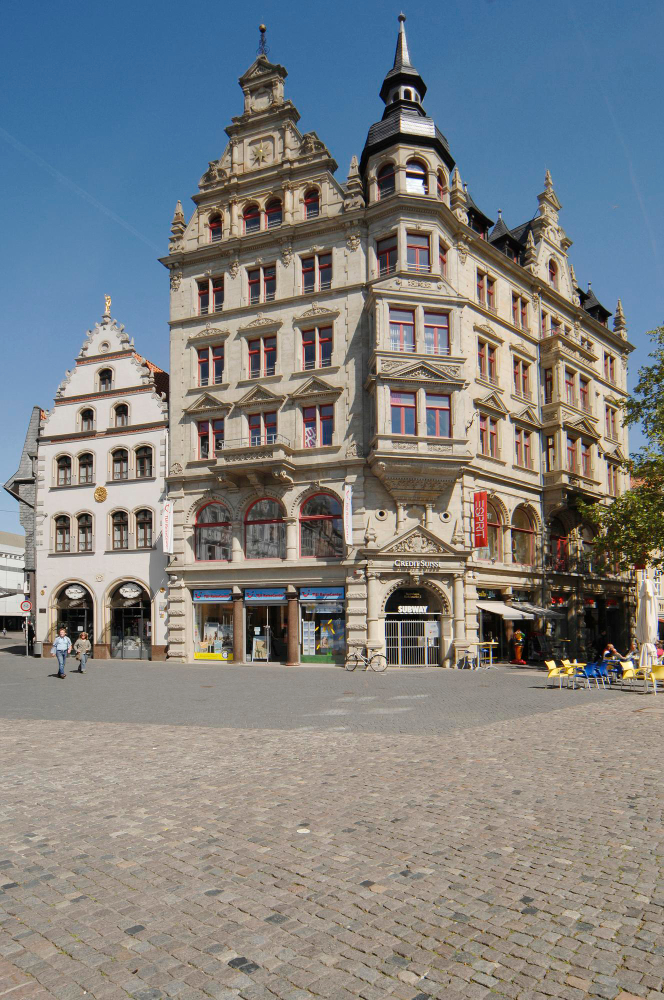
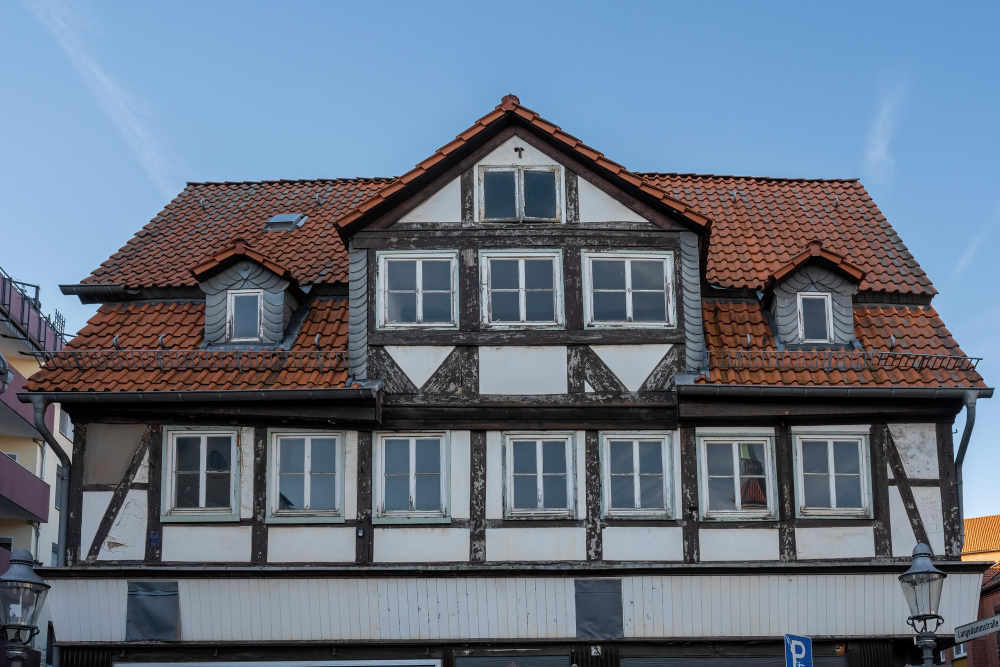
The Legend of the Restless Soul – It is said that the ghost of ‘Tempel Anneke’ still finds no rest to this day. Some say her fate was so unjust that she has been trapped between worlds ever since. She can only be freed from her suffering once her name has been fully cleared. In the darkness of Braunschweig, stories circulate of nocturnal sightings of her ghostly shadow. Sometimes people claim to feel her cold hand brush against their skin like a breath, or to hear a whisper that seems to come from the wind. There are reports of wandering lights near her former shop and of people suddenly feeling an overwhelming sense of fear without knowing why. One particularly eerie legend leads us to an abandoned house in the old town, where her inn once stood. Those who linger there late at night speak of creaking doors, faint voices and icy gusts of wind that seem to come from nowhere. Some even claim to have seen a shadowy female figure with glowing eyes roaming through the ancient walls.
Truth or myth? The long shadow of the past – Although scientific analyses suggest that the reports about Tempel Anneke largely belong to the realm of fantasy, the question remains as to whether such stories might not, after all, be based on a grain of truth. Witch trials such as that of Anna Roleffes are a historical fact, and the cruelty of that era has left deep scars on the culture. The ghost stories that surround it could serve as a metaphor for the guilty conscience humanity feels towards the victims of such injustices. Although the light of the Enlightenment has illuminated the dark corners of superstition, the memory of ‘Tempel Anneke’ remains alive.
Modern adaptations: A new chapter in the legend – The story of ‘Tempel Anneke’ has long since found its way into popular culture. It inspires authors, filmmakers and artists to reinterpret its horrors. From dark tales that delve deep into the psychology of the witch hunts to modern horror films in which Anneke is portrayed as a restless spirit – her legend lives on. In doing so, she is increasingly becoming a symbol for all those who have fallen victim to injustice and slander. For several years now, historians and activists have been campaigning to bring the fate of Anna Roleffes and other victims of the witch hunts back into the public consciousness. In Braunschweig today, commemorative plaques mark the atrocities of the witch trials, and there are organisations campaigning for the posthumous rehabilitation of the victims. For one thing is certain: even if the legend of ‘Tempel Anneke’ continues to strike fear into our hearts, we must not forget the lessons of history.
A Glimpse into the Darkness – The story of ‘Tempel Anneke’ is more than just a horror story. It is a warning of what can happen when fear and superstition gain the upper hand. At the same time, it is a call to confront the shadows of the past and to understand them. Often, in the darkest chapters of our history, we find not only horror, but also valuable lessons about humanity, justice and the power of memory. In the night-time streets of Braunschweig, where old buildings and cobblestones seem to make time stand still, one almost feels as though one might encounter Anna Roleffes herself. Whether her restless spirit truly lingers here, or whether she is merely a product of our collective guilt, cannot be said with certainty. Yet one thing is clear: as soon as night falls and the shadows lengthen, her name begins to whisper in the silence – ‘Tempel Anneke’. And with every whisper, one senses the darkness growing a little denser.