 Isabella Mueller Baroness of Stainton le Vale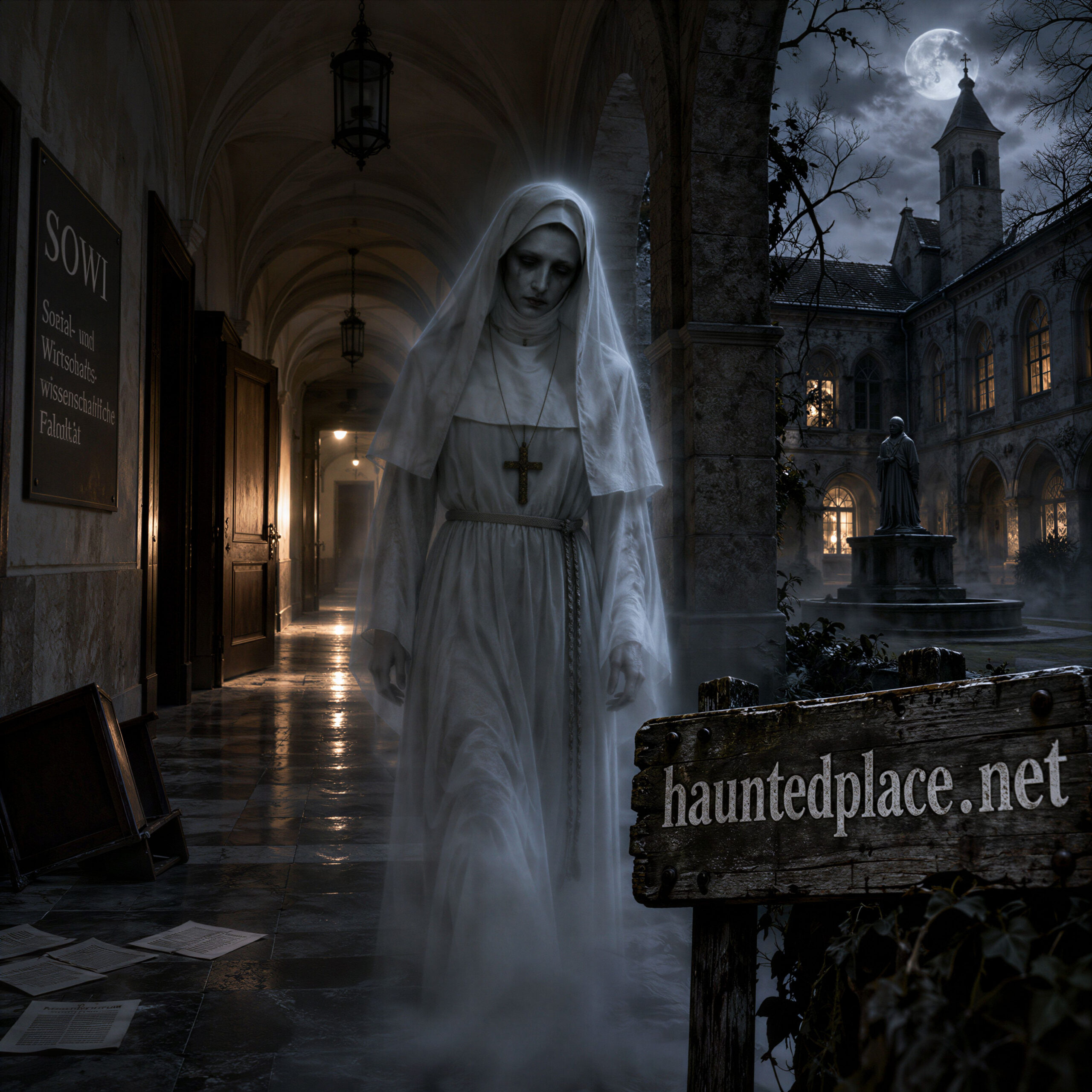
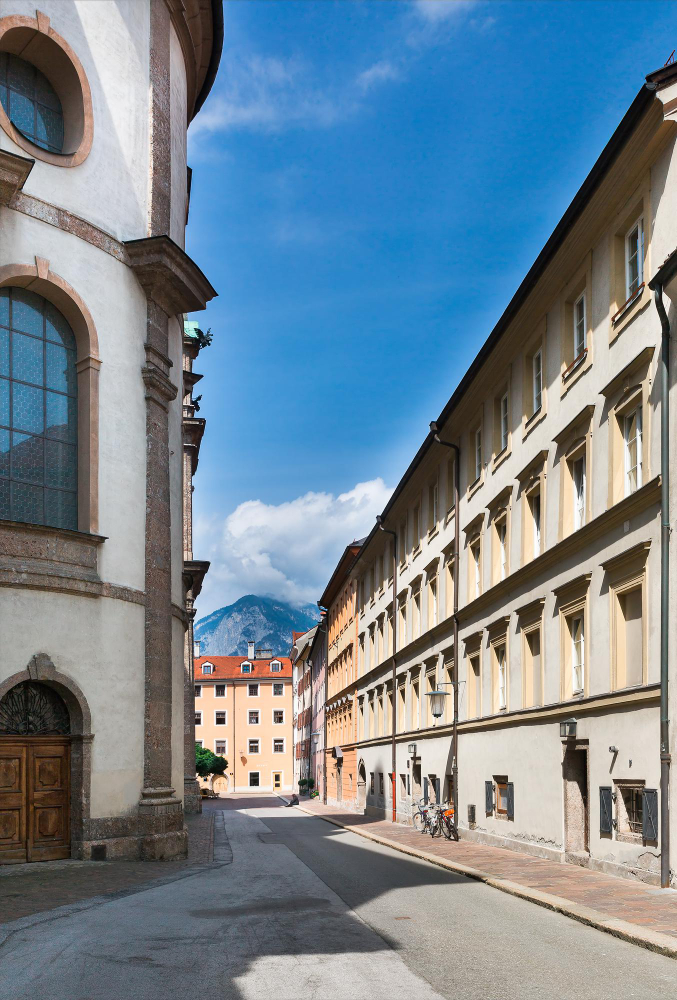
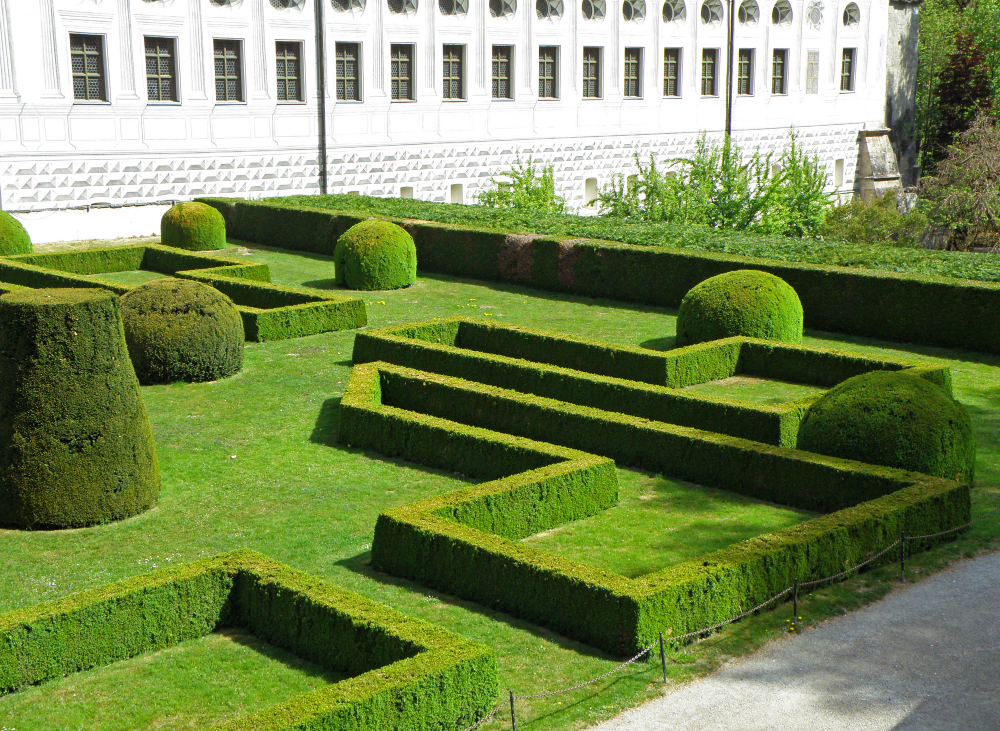
Hidden within the venerable walls of what is now the Faculty of Social and Economic Sciences (SOWI) at the University of Innsbruck lies a dark story dating back to the 17th century. Where lively student life and academic pursuits now dominate, the so-called ‘Locked-Up Convent’ is said to have once stood – a place that not only offered religious devotion but was also the scene of eerie events that are still recounted as legends to this day. At the heart of this mysterious haunting is the ‘haunting nun’: a ghostly apparition repeatedly sighted by eyewitnesses, whose presence gives rise to puzzling phenomena.
Historical Background: The Locked-Up Monastery and its Dark Shadows – In the 17th century, the site of what is now Universitätsstraße was a spiritual oasis – at least at first glance. The so-called ‘Locked-Up Monastery’ served at that time as a home for a monastic community whose strict way of life and isolation soon became a source of rumours and fears. A monastery that was ‘locked away’ already implies a certain seclusion and control, and perhaps also a hidden history not intended for all to see. According to historical records and local lore, life within the monastery is said to have been turbulent, due not least to conflicts with secular and ecclesiastical authorities. Moreover, the 17th century was a time of great hardship: plague epidemics, wars and social upheavals shaped life in Tyrol as well. Such adverse circumstances often gave rise to secret tensions within closed communities such as a convent, which found expression in legends surrounding inexplicable phenomena.
The Legend of the Haunting Nun: Reports and Apparitions – The figure of the nun, who is said to haunt the grounds of the former convent and what is now the SOWI Faculty, is more than just a figment of the imagination. Time and again, reports emerge of a female figure in a white habit wandering through the corridors or the courtyard at night. Eyewitnesses describe a strangely melancholic glow accompanying the apparition, and an icy chill that suddenly spreads through the surroundings whenever the nun is nearby. Various sources – ranging from local newspapers and first-hand accounts to popular science compilations of regional legends – describe similar phenomena: doors that open or close of their own accord, inexplicable movements of shadows, whispering voices in deserted corridors and sudden power cuts. It is particularly striking that these events frequently occur in places where parts of the convent once stood or where an auditorium or faculty office is about to be converted. One theory suggests that the ‘haunting nun’ may be the ghostly form of a missing or tragically deceased nun whose soul cannot find peace. According to Christian belief, any physical injuries or psychological torment suffered by the girl or woman whilst living in this environment may have laid the foundation for a kind of restlessness that continues to manifest itself today in the form of apparitions.
Scientific explanations and scepticism – Of course, there are also rational explanations for the seemingly paranormal events on the SOWI site. Psychologists and physicists point out that many haunting phenomena can be explained by natural causes: draughts in old buildings, unusual refractions of light, fluctuations in electromagnetic fields, or even hallucinations in the semi-darkness can deceive people and fuel fears. The university itself has not yet published any official investigations into the alleged hauntings, but some students and staff confirm that there is certainly a certain, almost tangible atmosphere of unease in the oldest parts of the buildings. Whether this is a psychological effect or actually due to supernatural causes remains open to question.
Similar phenomena in Tyrol and beyond – The myth of the haunted nun is not an isolated case. Similar stories exist in many European monasteries and former ecclesiastical institutions. In Tyrol, for example, legends surround the ghostly figure of the ‘White Lady’, who is also frequently sighted at religious sites. Such apparitions often symbolise guilt, penance or unfulfilled longings – motifs that are deeply rooted in the collective imagination. Perhaps the most famous examples of this kind are the ‘Nun of Monthermé’ in France or the ‘White Lady’ at Hohenzollern Castle in Germany. In all these cases, the apparitions – which are not only eerie but also melancholic – attract visitors and those curious about the uncanny.
The Haunting Nun in Popular Culture and Her Impact Today – The story of the haunted nun on the SOWI site has now become part of local culture: city tours exploring Innsbruck’s dark secrets often include this tale. Online forums and social media also regularly document new sightings and accounts, contributing to a living, albeit sceptically viewed, tradition. For many residents of Innsbruck and students, the ghost story is more than just a bit of spooky fun; it conveys a sense of connection to a history long past, which mysteriously touches the present. At the same time, it encourages people to critically question old structures and stories and to reflect on the significance of space and memory.
Between history and legend – the eternal spell of the haunted nun – Whether it be shrill cries in the night, cold draughts in deserted corridors or the fleeting glimpse of a white figure – the ‘haunted nun’ on the grounds of what is now the SOWI Faculty is a legend based on historical facts, yet one that retains its mystery. She reminds us that places breathe their own history – stories so vivid that they echo through the centuries. Anyone walking through the corridors of Universtätstraße today should keep their wits about them. Perhaps they, too, will encounter that shadowy nun, whose sorrowful veil hovers between the past and the present – an enduring symbol of the inexplicable amidst the rational.