 Isabella Mueller Baroness of Stainton le Vale
Medieval castles are not only architectural masterpieces of their time, but also the setting for numerous legends and dark tales. One of the most moving and, at the same time, most eerie stories comes from Dobele Castle in Latvia. It tells of the tragic fate of a young woman who fell victim to the tyranny of her greedy father – walled up alive within the cold stone walls of the fortress. Even today, numerous accounts and mystical apparitions surround the ghost of this ‘walled-up daughter’, who is said to haunt the ruins even centuries after her death.
Historical background of Dobele Castle and the Commander – Dobele Castle was built in the 13th century by the Teutonic Knights and served for a long time as a strategically important stronghold in the region of Courland. Its Commander was a powerful figure with far-reaching authority, as much feared for his harshness as he was respected for his influence. In those days, power, wealth and marriage were often closely intertwined: a union between noble families could secure political alliances or weaken rivals. According to tradition, the Commander of Dobele had a beautiful daughter whose beauty was legendary throughout the surrounding region. To him, she was a valuable asset, whose marriage was intended not for her own happiness but to secure his position. A wealthy knight from a neighbouring noble house was considered the perfect candidate – though he was known for his cruelty and ruthlessness. The young woman, however, had lost her heart to a simple, local youth – a relationship her ambitious father could never accept.
The Tragedy – Walled Up for Honour and Anger – When the daughter vehemently rebelled against the arranged marriage, her father flew into a rage. To assert his authority and preserve the family honour, he made a cruel decision: he had his own daughter walled up alive within the castle walls. Although this cruel practice, also known as ‘living walls’, was not widespread historically, isolated reports can be found in medieval sources of such punishments or sacrifices, which were intended to symbolise the unity of the fortresses. This act reflects the patriarchal and authoritarian structures of that era, in which the individual had virtually no rights and the patriarch’s will was, by law, the ultimate authority. The legend of Dobele suggests that the daughter was locked away in a hidden vault or within a wall of the main tower – a place that has since been associated with tragic fates and inexplicable phenomena.
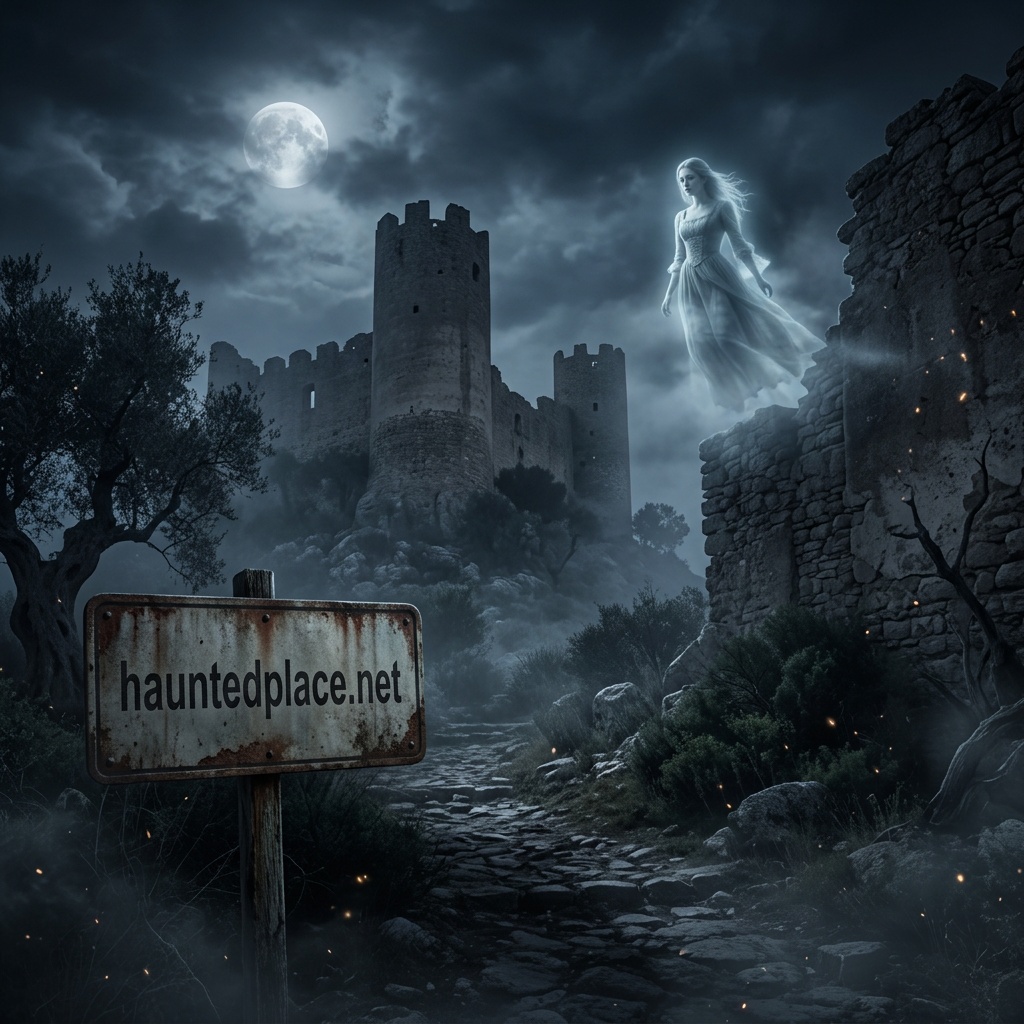
The Haunting – Apparitions and Accounts – Even today, visitors and guards at the Dobele ruins report that on misty evenings a white, shadowy figure roams the ruins. Eyewitnesses describe a pale young woman in a long dress who wanders along the stone walls, weeping softly. Her weeping echoes through the dilapidated rooms, as if she were trying to warn the world or beg for redemption. Local chronicles from the 19th century record several sightings of the ghost – particularly by walkers and foresters who were out and about near the castle at night. The renowned Latvian Folklore Archive also documents similar accounts, which interpret the ghost as a symbol of female oppression, but also of undying love. Experts in paranormal phenomena see the story of Dobele as a classic example of a so-called ‘spiritual anchor’, in which a person’s unfulfilled longing and tragic fate leave behind a kind of energetic trail that can manifest itself in apparitions.
Parallels and historical contextualisation – The motif of the walled-up daughter is not an isolated case in European folklore and history. Similar legends exist, for example, at castles in Scotland or Germany, where young women were cruelly punished for political or family reasons. These stories often reflect a conflict between the personal desire for freedom and rigid social expectations. The case of Dobele thus forms part of a broader narrative tradition that portrays the Middle Ages as a dark era characterised by often brutal power dynamics. At the same time, it highlights the role of the individual woman in a patriarchal society – the young woman as a victim of male violence and domination.
Scholarly Research and Archaeological Findings – Archaeological investigations at Dobele Castle have so far found no direct evidence of the exact location of the alleged walling-in. The ruins are badly damaged, and many areas are difficult to access. Nevertheless, excavations in the 20th century have uncovered evidence of hidden chambers and niches in the walls, which may have served as hiding places or even as prisons. Historians emphasise that the story has been passed down primarily through oral tradition and therefore contains elements of legend. However, there is evidence of strict social and familial norms during the era of the Teutonic Order, which make such dramatic measures theoretically possible. A well-known Latvian historian, Dr Jānis Lapiņš, describes the legend as ‘a symbolic representation of the abuse of power and personal suffering within a historical context’. The fact that this legend remains alive to this day testifies to its profound emotional power and its significance for the region’s cultural memory.
The Ghost as a Warning and a Reminder – The story of the walled-up daughter of Dobele is more than just a grim legend – it encapsulates human tragedies, social constraints and the struggle for freedom in a gripping narrative. The ghost said to wander through the ruins is a symbol of lost hope, unfulfilled love and the dark sides of human history. For visitors to the castle, the legend offers not only spine-tingling moments, but also the opportunity to engage with Europe’s complex past and reflect on how much suffering may lie hidden behind the walls of these once-proud fortresses. Anyone setting out to explore Dobele in the fog should therefore not only admire the architecture, but also listen to the stories the stones seem to tell – especially that of the walled-in daughter, whose spirit is still searching for freedom.